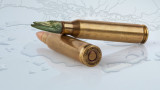
00:00:07 Speaker 1: A man's wife has just been killed. It appears to be a tragic hunting accident. But instead of calling the sheriff, he loads his wife's dead body into his car and drives straight to the funeral home. From there, he makes three calls to the same person. When detectives learn who that person is, that accident starts to look a whole lot more like something else. That's next on Blood Trails, brought to you by Tecova's. On the morning of October 23, 1990, a Chevy Suburban pulled into the parking lot of Olcott's funeral home in Red Lodge, Montana. The occupants weren't there to get their affairs in order. They were ready to put someone in the ground. Court records describe the incident like this. 00:00:55 Speaker 2: A woman, Anita Greenlee, had been shot while hunting with her husband, Cary Greenlee, his daughter, Tika Greenlee, and Anita's father, W.H. 00:01:03 Speaker 3: Padgett. 00:01:03 Speaker 2: Anita Greenlee was lying in the backseat of Carrie Greenlee's Suburban, parked in front of the funeral home. 00:01:09 Speaker 1: Funeral home employees didn't know what to do, so they called law enforcement. When Carbon County Undersheriff Gary Jensen arrived on scene, he found Tika and Padgett sitting in chairs inside the parlor. Carrie was talking on a phone behind the desk. Anita was still in the Suburban, so Jensen went out to confirm that she was, in fact, dead. When he stepped outside, he saw a buck strapped to the top of the vehicle. When he opened the suburban door, he saw that the 34-year-old woman inside had been shot in the chest, just below the sternum. There didn't appear to be an exit wound. According to court records. 00:01:47 Speaker 2: Undersheriff Jensen asked Kerry Greenlee what happened, and he stated that all four of them were hunting about 15 miles west of Red Lodge at the O'Shea Ranch. Kerry Greenlee told him that Tika had found her mother in some brush where she had been shot. According to Carrie Greenlee, he then ran to where Anita Greenlee was, and he thought she was dead, but he tried CPR. 00:02:07 Speaker 1: Padgett, Anita's father, told Jensen that when he saw his daughter was dead, he walked back to where he'd parked the Suburban. By the time he returned, he saw that his son-in-law had carried Anita back to the barbed wire fence, set her on the ground, and dragged her underneath the lowest line. Then, Padgett and Carrie laid Anita in the back seat of the vehicle. No one saw the shot that killed Anita. Tika said the last time she saw her mother alive, Anita was walking away with Carrie. As Tika made her way up a hill in the opposite direction, she heard a shot. A few minutes later, she heard another. 00:02:43 Speaker 2: She thought maybe her mother had shot a deer, so she decided to go back and help her. Tika Greenlee indicated when she came over the hill a few minutes later, she saw her mother lying in the brush. Tika Greenlee said she hollered to her mother, but she did not answer. She then ran down to a fence close to her mother, and she could see that something was wrong with her. 00:03:01 Speaker 1: Tika fired three shots in the air to call for help. Then she saw her father coming over the hill, and you already heard what happened next. What we don't know is what happened in the minutes after Tika watched her parents walk away. Alex Nixon, who serves as the attorney for Carbon County, Montana, told me investigators focused their efforts on that crucial time period. 00:03:23 Speaker 4: You have the situation where you've got... husband and wife walking away together. Nobody sees them. There's a couple of shots and then the wife's found dead. So it's, that's kind of a head scratcher. 00:03:35 Speaker 1: Kerry maintained that his wife accidentally shot herself, but that was perhaps the strangest part of the entire story. Taken together, something didn't add up. 00:03:46 Speaker 4: Just looking at those very initial circumstances, it seems truly odd to begin with. Who throws their dead family member in a Suburban and drives him straight to the funeral home. 00:03:59 Speaker 5: And then as the investigation. 00:04:01 Speaker 4: Continued, you just find more and more of these strange circumstances. 00:04:06 Speaker 1: Kerry was praised by his family and friends as a godly leader, an upright husband, and an exceptional speaker. But as investigators dug into his personal life, they heard whispers that his outwardly happy marriage wasn't as happy as it appeared. 00:04:22 Speaker 3: There was. 00:04:23 Speaker 1: It turned out reason to wonder if the strange circumstances of Anita's death pointed to something more nefarious in the hills of southern Montana that October morning. As former Carbon County attorney Bob Edelman told me, this is one of those stories that only gets weirder the deeper you go. 00:04:41 Speaker 3: This is one of the strangest cases I've ever come across. Just reading tons of case law, reading about tons of criminal law, this is one of the craziest cases I've even ever heard of. Honestly. 00:04:54 Speaker 1: I'm Jordan Sillars, and this is Blood Trails. The strange death of Anita Greenlee. Investigators had their initial suspicions about Carrie's story, but their first objective was to go out to the scene and get their heads around what happened. So they called Kerry to ask if he'd go out to the O'Shea Ranch and walk them through the previous day's hunt. 00:05:25 Speaker 4: I believe it was the next day when law enforcement contacted Greenlee. 00:05:29 Speaker 5: He was very defensive about, like, why do you want me to go there? I'm not going to go up there. Things like that. 00:05:35 Speaker 1: But Kerry eventually agreed, and he met up with Undersheriff Jensen and two deputies with the Carbon County Sheriff's Office. The ranch is located about 13 miles northwest of Red Lodge, Montana. We don't know how the Greenlees got permission to hunt that private parcel, but it's a beautiful piece of country. 00:05:51 Speaker 3: It's a gorgeous area over there between Red Lodge and Roscoe, Montana. And it's grass, and then there's the buck brush, but there's not a lot of trees, and there's no sagebrush, stuff like that, that we have a lot of in Montana. 00:06:06 Speaker 1: The Greenlees had gone out to the ranch in honor of Tika's birthday. Anita shot a buck shortly after they began, but they decided to keep hunting. Their plan, according to Carey, was for himself, Anita, and Tika to walk down the coolies while Padgett sat at the bottom. A coolie, for those unfamiliar, is a gorge or ravine running up a mountain that is usually dry but was once cut by a stream or river. Their hope was to push the deer down those ravines towards the older man. 00:06:35 Speaker 3: The daughter and the granddad headed over to the left and they went up over the hill and then wife and Carrie, they left to the right and crossed the fence and then kind of started down this other drainage over to the right. 00:06:52 Speaker 1: Carrie said that as they were walking, Anita told him she was tired and needed to use the bathroom. The husband left his wife in a patch of brush along a cow trail and kept walking towards the next coulee to the east. Carrie told undersheriff Jensen that he reached the next coulee by walking in a northeasterly direction south of the hill separating the two ravines. This route would not have taken him past where Anita had been killed. After Kerry walked north up the coulee to the east, he saw a deer and took a shot. He missed and kept walking in a northwesterly direction. He made it about 300 yards before he heard a second shot. About a minute later, he heard Tika's three distress shots and made his way back down. The account seemed plausible enough, except for one thing. According to court documents. 00:07:39 Speaker 2: As undersheriff Jensen and Kerry Greenlee walked east down to the coulee where Greenlee previously indicated where he had walked, Jensen could not see any footprints in the mud. 00:07:48 Speaker 1: However, when the pair reached the cow trail about 100 feet below the death scene, Jensen saw footprints that appeared to match Kerry's stride and the tread of boots. 00:07:57 Speaker 3: He was wearing. 00:07:58 Speaker 2: According to Undersheriff Jensen, if Cary Greenlee had in fact walked in the direction that he had just shown him, there would have been no reason for Cary Greenlee's footprints to be on the trail leading down into the coulee below the death scene. 00:08:10 Speaker 1: This description is a little hard to follow, but if you need to visualize it, you can check out the maps we've published over at themeateater.com slash bloodtrails. You can see both the interactive onyx map of the area, as well as the map that Undersheriff Jensen drew after his interaction with Cary. But the important thing to know is that Kerry's first account of where he went the previous morning didn't have him walking past the death scene. 00:08:35 Speaker 2: Under Sheriff Jensen asked Kerry Greenlee if he was sure that he had cut over the hill before getting to the death scene. Kerry Greenlee immediately asked why. What's wrong? Under Sheriff Jensen told Kerry Greenlee that he just wanted to make sure where everyone was or had been. Kerry Greenlee then replied, well, something must have gone wrong or you wouldn't be doing all of this. After he again asked Greenlee if he was unsure, he observed Carrie Greenlee step back, look west up the coulee towards the gate, and then look down the coulee towards the east and state. Now I think, yes, I did walk down here in this brush where Anita was found, and went down this trail and then around the hill into the other coulee where I had shot and missed the deer. 00:09:14 Speaker 1: Detectives are always suspicious of anyone who might be lying to them, and officers thought Carrie might be trying to hide his proximity to his wife's dead body. Now, people who experience a traumatic event, such as finding your wife shot to death, often have trouble remembering details. But Undersheriff Jensen pressed Carey on this point because he knew that his truthfulness would be crucial to this investigation. 00:09:37 Speaker 3: The problem is with the body being moved and the scene not, you know, they were basically having to take where everything happened secondhand. You know, the truck shouldn't even have been moved. So they have to rely on what everybody's saying. And of course, the father is kind of the guy telling them. everybody, oh, yeah, we were over here. 00:10:02 Speaker 1: The position of Anita's body, the location of the gun, evidence and items dropped and left behind, all of that information would have given investigators a clearer picture of what happened. But because Kerry had decided to bring his wife to the funeral home rather than calling the sheriff, They didn't have any of that. All they had was Carrie's theory about what happened. And that theory raised some eyebrows, both then and now. 00:10:28 Speaker 4: One of the things that disturbed women in the office that were working with all of us was just the story about how she died, where she was supposedly using a rifle to prop herself up as she urinated on a hard-packed cow trail. I think almost a unanimous consensus was that that's not how women go to the bathroom. You certainly don't use a rifle to point it in your chest to prop yourself up. And you don't go to the bathroom on a cow trail. 00:10:57 Speaker 1: This was one theory for how Anita could have shot herself in the chest with her own rifle. Carey said he found his wife lying on her right side directly on the cow trail with her head facing east. Her pants were down at her knees and her knees were bent. He said he saw Anita's Remington Model 788 rifle lying at her feet. and Padgett said something similar about the rifle's location. Padgett also told the Billings Gazette in 1993 that his daughter wasn't always careful with guns, and Carey said the same. Tika, however, told the same outlet the opposite. She said her mother was afraid of firearms and so was often more careful than the rest of them. However seriously Anita took gun safety, you can imagine a scenario where she props the rifle up while she relieves herself, but it falls towards her. If the rifle's safety wasn't switched on and a stick was caught inside the trigger guard, the gun might have gone off as she tried to grab it. That might seem unlikely, but reports from the medical examiner and ballistic technicians didn't disprove it. According to court documents. 00:12:02 Speaker 2: Anita Greenlee was shot at close range by a high-velocity penetrating gunshot that injured her liver and probably her heart, resulting in a large hemothorax in the right side. 00:12:11 Speaker 1: The ballistics report found gunpowder on Anita's clothing, including on the sleeve of her jacket. When lab technicians recreated the shooting, they determined that the shot most likely came with the muzzle 12 to 14 inches away from her body. They also confirmed that she was killed with a bullet from her own rifle, which was chambered in 7mm-08, which most hunters refer to as 7mm-08. The bullet entered her body from the front but likely struck her spine and was lodged just below the skin of her back. The medical examiner concluded that Anita would have died 10 to 30 seconds after being struck by the bullet and would have immediately lost the use of her lower extremities. Technicians tested Anita's rifle extensively and could not get it to misfire. Carey claimed he'd recently sent that rifle to Remington to have it serviced, but the gunmaker didn't have any record of that request. Still, the shot's close range supported Carey's theory, and when combined with Tika's testimony, appeared to give the hunter an alibi. Tika told investigators that as she was hunting, she heard what she believed was her father fire his Ruger Model 77 rifle chambered in 270 Winchester. Then, about 10 minutes later, she heard her mother fire her rifle. It took Tika about 90 seconds to walk to the fence, where she could see her mother lying on the ground. 00:13:35 Speaker 3: She came over a hill and when she could see her mom laying there, he comes up over a hill and he popped up over down to her left. And there was just, you know, it's 600 and some yards away. 00:13:48 Speaker 1: Carrie is the he Bob Edelman is referring to. Carrie was actually about 600 feet away, not yards. But Tika was adamant that she spotted her father walking over the hill after she fired her three distress shots. If Tika was right and only one to two minutes elapsed between hearing her mother's rifle go off and seeing her father running over the hill, it was virtually impossible for anyone to kill Anita but Anita. Kerry would have had to shoot his wife at close range, run that distance, and immediately turn around and walk back. When investigators revisited the scene in December of that year and recreated the scenario, they determined that the distance was too far. The investigation may well have ended here. And it almost did. Within days of the incident, the Carbon County coroner ruled Anita's death an accident. And by November 16th, 1990, the Carbon County attorney at the time, a guy named Tony Kendall, decided that no further action was necessary. But then, just a few weeks later, the investigation took on new life. And it wasn't due to new evidence. At least, not exactly. Cary, it turned out, had secrets. And he couldn't keep them to himself for long. Part two, a very enviable marriage. On November 6th, 1990, less than two weeks after Anita's death, Cary Greenlee told the elder board of the Church of Christ in Billings that he planned to marry again. Not at some distant point in the future, not to give his kids a stepmother, and not to some unknown hoped-for woman. He was going to marry a 21-year-old named Terry Clausen, and they planned to be wed within the month. Even before Anita's death, Carey had allegedly dropped hints about his feelings. 00:15:40 Speaker 4: October 20th, 1990, you've got Carey at a church youth camp who, according to witnesses, says that he loves a woman other than his wife. And by early November, they're engaged. And by December, they're married. So, I mean, you're looking at a pretty accelerated timeline here. 00:16:03 Speaker 1: When investigators with the Carbon County Sheriff's Office got wind of this development, they decided to take another hard look at Carrie and Anita's relationship. And what they found was concerning, to say the least. Carrie and Anita Greenlee were married on April 7, 1973. Carrie was 20 and Anita was 16. When Anita was killed in October of 1990, they were 37 and 34, respectively. They had two kids at the time, Tika, who had just turned 17, and Eric, who was 10. And yes, your math is correct. Tika was born in October of 1973, and her parents were married just six months earlier. That's not a great look if you're planning to be a minister, though we don't know what Carrie's plans were at that time. That also means the couple had sexual intercourse when Carrie was at least 18 and Anita was still a minor. Anita's family hailed from Lubbock, Texas, and that's where she and Carrie got married. In 1980, the year Eric was born, the Greenlees moved to Miles City, Montana, where Carrie served as a minister. Then, after another brief stint in Texas in 1988, they moved to Billings, Montana in 1989. Carrie served as a pastor there as well, but he supplemented his income by working as a roofer. Anita was a secretary for a general contractor in Billings, and between the two incomes, the family could afford to live in a modest 1,100-square-foot house with four bedrooms and two bathrooms. We don't know a whole lot else about Anita's life and background. We reached out to Carrie, Tika, and Eric, but never heard back from Carrie or Eric. Tika responded, but she ultimately decided not to sit down for an interview. She said some interesting things that we'll cover later in this episode, but she didn't offer any more information about her mother. All we have comes from Anita's brief obituary published in the Billings Gazette. Her mother and father were married and alive at the time of her death. She had two sisters and a brother, all of whom lived in Texas. She attended community college when she lived in Miles City, though we don't know what she studied. She was also active in her church, loved singing, and was an avid hunter and outdoors woman. Carey maintained that he loved Anita until the day she died. When investigators began looking into their marriage, he told the Billings Gazette, They couldn't find many people, but there were some. A co-worker of Anita's named Mark spoke with investigators, and he recounted a conversation he had with Anita three or four days before her death. He could tell Anita had been crying, and when he asked what was wrong, she said, quote, Don't ever get married. My marriage sucks. Mark said Anita made it clear that she'd been arguing with her husband, and she was so upset Mark wasn't sure if she was safe to drive. Another of Anita's co-workers, a woman named Catherine, told investigators that Anita had actually been distraught for several weeks before her death. According to court documents. 00:19:06 Speaker 6: Sometime. 00:19:07 Speaker 2: Prior to her death, Anita told her that she had asked Carrie to tell Terry Clausen not to call the house so much. Ms. Treat recalled that subsequent to that request, Anita caught Carrie talking to Terry again late at night, and Anita went to bed crying. 00:19:20 Speaker 1: It's worth noting that investigators apparently weren't able to find any of Anita's close friends or family who would corroborate the unhappy nature of Anita's marriage. But this wasn't the only evidence they collected. Agent Tom O'Brien learned that Carrie and Anita had known Terry Clausen since she was about 12 years old. The Greenlees and the Clausens were family friends, and they were very close. In fact, when Terry was 21 years old in 1990, she lived with the Greenlees in Billings from March to April, and then again from July to August. By this point, according to one of Terry's college friends, the young woman was already infatuated with the much older man. 00:20:00 Speaker 2: Shauna was a roommate of Terry Claussen when the two of them attended York College of Nebraska. Shauna indicated that Terry Clausen confided in her and told her that she was in love with Cary Greenlee and wanted to marry him. Ms. Jacobson recalled that Terry Clausen received numerous phone calls from Cary Greenlee while she was attending York College of Nebraska. Terry Clausen would make comments like, if Anita was to ever die or they weren't to work out, I would love to marry Cary. 00:20:24 Speaker 1: These phone calls were especially suggestive. From August 15, 1990 to November 9, 1990, while Terry was attending a church program in Lubbock, Phone records show that someone at the Greenlee residence called Terry 26 times, and Terry called the Greenlees 29 times. Most of the calls were late at night, and the total duration was 28 and a half hours. The frequency of these calls ramped up in the days leading up to Anita's death, but perhaps the most suspicious calls took place at the funeral home. There, Carrie called Terry at 11.52 a.m., 11.53 a.m. and 12.29 p.m. While we weren't able to reach Carey for comment, we found an archived blog post he wrote back in 2010. It's a detailed account of his side of the story, so much of the information you'll be hearing is from that post. Carey claimed that these calls, both from the funeral home and otherwise, don't constitute evidence of an affair. Other people at the Greenlee residence talked to Terry as well, including Tika and Anita. One of the calls the day before Anita's death was Terry calling to wish Tika a happy birthday. Others, he said, were Tika and Terry working through a Bible study over the phone. As for those three calls from the funeral home, he said he was calling Terry to help him get in touch with his parents. The problem for Carey was that investigators had more than just phone calls. 00:21:51 Speaker 2: Agent O'Brien located a motel receipt that indicated that on March 24th to 25th, 1985, Carrie Greenlee and Terry Claussen met in Denver, Colorado, and stayed together in a motel. 00:22:02 Speaker 1: Carrie said the pair got separate rooms and had a chaperone, but it wasn't the only motel meetup. The next year, Carrie drove Terry down to that church camp in Lubbock. 00:22:12 Speaker 2: A motel receipt dated August 8th, 1990, was located for the Holiday Inn in Pueblo, Colorado. Carrie Greenlee admitted to staying with Terry Claussen in the motel on that date. Carrie Greenlee admitted to paying for the motel with Anita's Visa card. Carrie Greenlee also admitted that they requested and received a room with a hot tub. 00:22:30 Speaker 1: Then in early October, Carrie and Terry stayed at another motel, this time in Amarillo. When pressed, Carrie admitted that he spent those two nights at the hotel with Terry. Carrie maintained that in all of that time spent alone with a 21-year-old, he remained faithful to his wife. He admitted that he and Terry were close, but claimed that they never tried to hide that fact. What's more, investigators never found hard evidence of an affair. Kerry admitted to sending Terry flowers on one occasion, but no love letters or physical evidence of a sexual relationship was ever uncovered. Still, the accelerated timeline of their relationship after Anita's death didn't stop with an engagement. 00:23:13 Speaker 4: He admits to days later, you know, resuming or having a sexual relationship with her. 00:23:19 Speaker 1: Kerry told investigators that he and Terry had sex 10 days after his wife died and three days after they laid Anita to rest. Even at the funeral, witnesses said Kerry was acting more like a man in love than in mourning. Here's former Carbon County prosecutor Bob Edelman. 00:23:36 Speaker 3: At the funeral, at the gravesite, the girlfriend... And Carrie remained, they were the last people there. When they came back, they were holding hands and smiling and laughing as they walked back. 00:23:53 Speaker 1: This was told to one of the investigators by a friend of the family, so we weren't able to independently verify this information. Still, even without that damning anecdote, everything else, the rocky start to their marriage, the admission of love for another woman, the phone calls, the hotel visits, the sex... it all pointed to one of the key elements in any murder. 00:24:14 Speaker 2: Motive. 00:24:15 Speaker 5: Everybody who at least looks at it sees, like, this is wildly. 00:24:19 Speaker 4: Strange in a lot of ways, and there's a lot of reasons to be concerned. 00:24:23 Speaker 3: You know, you take some stuff, but when you stack it on top of the others, you know, when there's smoke, there's fire. 00:24:29 Speaker 1: And that smoke wasn't just metaphorical. As investigators soon learned, the Greenlees' house had nearly burned down just a few weeks before Anita's death. That incident opened the door to a whole new set of reasons Cary Greenlee might want his wife out of the picture. That and much more is next on Blood Trails. Part 3. The Fires On July 20th, 1990, a small fire broke out at the Greenlee residence. That one caused minimal damage, but then on September 5th, the Billings Fire Department was called to the Greenlee house once again. Kerry told investigators that he woke up around 4 a.m. to the sound of sizzling and explosions coming from the garage. According to court documents. 00:25:23 Speaker 2: The Billings Fire Department determined that the fire started in the garage in a container that appeared to have some motor oil in it, along with other possible flammable liquids. The cause of the fire was an electric handheld charcoal lighter, which was placed in the container and then attached to a blue extension cord running out of the north side door of the garage to an outlet located on the north side of the house. 00:25:44 Speaker 1: They thought the fire was clearly set on purpose. The question was, who did it? When a Carbon County detective heard Kerry's account of what happened that night, he had serious questions about the minister. Here's Bob Edelman. 00:25:58 Speaker 3: There was an arson investigation. I mean, basically, they thought that he had tried to burn down his house. 00:26:05 Speaker 1: Kerry said that his family had gone to bed around 11 p.m., but he stayed up and spoke to Terry on the phone for about an hour. Kerry said he went to bed, but woke up between 1.30 and 2 for some, quote, strange reasons. He went into the living room and noticed that the sliding back door was open. When he went into the backyard to investigate, he found that the gate to the alley was open and his dog was gone. 00:26:29 Speaker 2: When asked why he didn't call the police department at this time, Greenlee stated he didn't have much faith in the police and decided to investigate himself. 00:26:37 Speaker 1: But he didn't find anything, so he went back to bed. As the firefighters worked to put out the fire in the garage a few hours later, Carey allegedly showed them the open gate in the backyard. That's when firefighters noticed four gun cases located on the ground just inside the fence. 00:26:54 Speaker 4: The fire crew show up and notice that some of his property is taken out of the garage and laying in the backyard. You know, according to stories like him, luckily his rifles and such were laying in the backyard while the garage was burning. 00:27:09 Speaker 1: To make this strange incident even stranger, Carey also told the firemen that one of his guns was missing. However, according to court records, he never told the firefighters about finding the sliding door open or wondering whether the person who broke into his house had also set the blaze. That story didn't come out until Carey went into the sheriff's office to give a formal interview. This was all extremely odd, but it was hard to see how the pieces fit together. 00:27:36 Speaker 3: I think they investigated it fairly thoroughly, but they didn't think they could prove anything. that he was the one that did it so they didn't bring charges against him. 00:27:46 Speaker 1: At first blush, the incident didn't seem to be connected to Anita's death. But according to Billings police detective Brett Lund, Anita seemed upset about the fire for reasons beyond the arson itself. Detective Lund told the Billings Gazette in 1993 that he asked Anita if she feared something more serious might happen if they didn't solve the arson case. At that point, he told the outlet, quote, she just broke down and started crying. And that's the last time I saw her alive. What's more, Carey himself mentioned the fire during an interview with law enforcement in December of 1990. 00:28:20 Speaker 4: And you actually have Greenlee saying that's one of the reasons he needed life insurance because of a fire scare. 00:28:30 Speaker 1: Between February 25th and September 9th, Carey applied for four life insurance policies that made him the beneficiary in the event of Anita's death. The Alden Life Insurance Company would pay $ 10, 000, AAA would pay $ 1, 500, and JCPenney Life Insurance would pay $ 20, 000. Now, some of these policies covered Carey as well, but the $ 10, 000 policy did not. What's more, Carey took out a $ 100, 000 policy on Anita with the Union Life Insurance Company, which went into effect October 1, 1990. Detectives asked Carey why he'd taken out so much life insurance on Anita when she only made $ 6, 000 a year and had never had life insurance before. He explained that even though Anita didn't earn a huge amount of money, he realized they were still dependent on her income after she'd been away for three weeks over the summer. He also said, quote, right after she got back, we had a little fire scare in our garage. It scared us to death. Between the two of those, we just decided we needed life insurance on her. You can understand how a house fire set intentionally by an unknown intruder would make the Greenlee family think about preparing for the future. The problem is the timeline doesn't match up. The second house fire, the one Carrie was referencing to investigators, took place on September 5th. But according to court documents filed by Carbon County prosecutors, Carrie applied for that $ 100, 000 policy two months earlier, on July 23rd, The fire couldn't have been the reason for Anita's big policy because it hadn't happened when Kerry initially applied. Maybe you chalk that up to a faulty memory, but investigators in 1990 found evidence to suggest Kerry wasn't being forthcoming. Carbon County deputies sent copies of the insurance documents along with samples of Anita's signature to the FBI. While analysts couldn't say with 100% certainty, they did find evidence that on the $ 100, 000 policy, the two signatures didn't match. 00:30:33 Speaker 2: Thus, it was determined from reviewing the known signature of Anita Greenlee that the signature on the union's central life insurance policy application for insurance signed Anita Greenlee was forged. 00:30:44 Speaker 1: When detectives asked Carey about this assessment, he denied signing his late wife's life insurance application. He said, quote, I did not forge her signature and I did not do anything like that at all. At this point, the Carbon County investigators and prosecutors thought they had a compelling case. I don't know how many homicides have been motivated by love or money, but both were in play here. Carey had acted suspiciously after Anita's death. He appeared to have lied on several occasions, and he was even willing to forge his wife's signature. However, officials wanted to make absolutely sure, so they took what they'd found to the Montana Department of Criminal Investigation, or DCI. 00:31:25 Speaker 3: And it's kind of like Montana's FBI. And they brought an investigator and then they went over everything. And there was just no way that he could have got up there and shot and killed his wife and then come over this hill that was, you know, a quarter mile away. Just a couple of minutes after the daughter, you know, the daughter was heading towards her and then saw her dad. 00:31:51 Speaker 1: In other words, while investigators could prove motive, they weren't as confident they could prove opportunity. The order and timing of those shots on the mountain made it seemingly impossible for Carey to kill his wife from close range. The Carbon County prosecutor at the time was a guy named Tony Kendall. Alex, who again is the current Carbon County attorney, recalled speaking to his predecessor about this case. 00:32:15 Speaker 4: He just didn't see it as a provable case, I guess, and said that one of the other DCI agents simply didn't agree with some of his... his coworkers' analysis. I think it's just a mountain of circumstantial evidence. You just don't have a lot of really hard evidence. 00:32:33 Speaker 1: DCI agents and prosecutors spent hundreds of hours poring over the available evidence. But in the end, they collectively decided to close the investigation, return Kerry's rifles, and spend their limited resources going after other alleged bad guys. We reached out to Tony Kendall, but he declined to speak to us. Several other of the investigators from the early 90s also declined or have passed away. So we don't have an inside look into what went into this decision. But I did reach out to Ryan Weldon, an experienced state and federal prosecutor in Montana who was not involved in this case. He told me that because the case rests on where Kerry was standing when the shots went off, proving his guilt was always going to be an uphill battle. 00:33:18 Speaker 6: The defense is going to say that there was this entire crime scene that was in the control of the state. They went up there. They could have secured it. They could have identified where all of the footprints were located and definitively proven where each individual was located. They didn't do that. And so that alone creates reasonable doubt. 00:33:40 Speaker 1: Prosecutors, Ryan theorized, didn't want to risk Kerry winning at trial and then being acquitted. There is no statute of limitations on murder, so they knew they had time for new evidence to come to light that might strengthen their case. Investigators weren't finished with their number one suspect, but Carey didn't know that at the time. He was free to start his new life with Terry and continue his ministry. But here's the thing about ministers. They talk, in public, a lot. They say things that offer a window into their personality, their passions, and sometimes... their past. And Carrie Greenlee was no exception. Part 4. Carrie's Corner. 00:34:28 Speaker 7: You have somebody that's really loved you well. Maybe it's your stocks. For me, it's very definitely Carrie. But she, in so many ways, saved me. I don't work to earn her love because she's already given it to me. But I do long to please her because she has loved me so well and so deeply. And she saved me. She saved me from a miserable life. 00:35:02 Speaker 1: That's Kerry speaking to what sounds like a Bible study group. He and Terry had moved to Oregon in the early 90s, and Kerry opened a successful roofing business and worked as a pastor. The recording was published as a podcast titled Kerry's Corner, And this episode came out on October 23rd, 2022, the 32nd anniversary of Anita's death. Kerry explains that the miserable life Terry saved him from was the prospect of raising his kids by himself. And the couple certainly had their share of kids. In fact, that's how Kerry explained their lightning quick engagement. He wrote in that 2010 blog post that they married so quickly so they could adopt, quote, two precious little girls that our families loved. He doesn't explain when these adoption plans took shape or if he and Anita were working towards that before her death. But while that particular adoption didn't work out for the new couple, others did. Kerry writes that they had 11 children by 2009, and the Billings Gazette reports that most of them were adopted. We don't know how Tika and Eric Greenlee responded to these new additions to the family. However, we do know that, at least for a time, Tika wasn't satisfied with how her father justified his accelerated engagement. She told the Billings Gazette in 1993 that, quote, they got married so fast, it makes me wonder. She told the outlet that prior to her mother's death, Terry was her best friend. Only four years separated the two young women, and you can imagine how close they became during the months Terry lived with them. Tika was blindsided when, just days after her mother's funeral, Carrie told her of his plans to marry her best friend. That news broke her relationship with both Terry and her father. Less than a year later, in June of 1991, Tika filed for a temporary restraining order against her father. She had moved out of the house by that point, and she claimed in her affidavit, quote, Since my mother died in October 90, he has mentally abused me. He threatens to arrest me if I take my belongings. I am afraid that it will get violent if he finds me. I am really scared of him and always have been. The judge did not grant that order, but that wasn't the only legal action Tika took against her father. 00:37:19 Speaker 4: Certainly there was a time in her life where she thought it appropriate to sue him. 00:37:23 Speaker 1: Remember that $ 100, 000 life insurance policy Carrie took out for Anita? The Union Life Insurance Company got wind of the accusations surrounding Carrie, but instead of doing their own investigation, they asked a federal court in Texas to decide who should get the money. In March of 1993, Tika filed a claim, arguing that her father participated in her mother's death and was therefore disqualified from receiving payment. It's safe to say that there was some tension between the father and daughter, but it didn't last. Tika and Carrie settled their legal fight before it got to trial, and the judge ordered that Carrie should get about half of the money while the other half was split between Tika and Eric. Tika also changed her tune when it came to her father's treatment of her. She said in 1993 that she wasn't actually afraid of her father. She told the Gazette, She said she still doesn't talk to Terry, but that her relationship with her father was much better. Of the ongoing investigation into her father, she said, I didn't see the gun go off, but I don't think my dad did it. I don't want them to drop it because I want to know what happened that day one way or the other. Even if they convict my dad, I want to know what happened. She's maintained her belief in her father's innocence even to this day. When we reached out to her about participating in this episode, she asked why we were interested in her mother's death. She said, quote, blood trails is about crimes. My mother's death was an accident. Tika's stance was shared by her grandfather, W.H. Padgett, and Alex said their support of Kerry would have made prosecuting him especially difficult. 00:39:07 Speaker 4: You also have the strange circumstance where the father of the victim is very supportive of the suspect. 00:39:16 Speaker 5: And, you know, so you have Tika. And, you know, they're both supportive of him. 00:39:20 Speaker 1: This is perhaps the strongest argument in favor of Kerry's innocence. Neither of the people who were there that day think he did it. There are reasons to question their conviction. and we'll get to those soon. But no one ever claimed to have seen Kerry pull the trigger. At the same time, Kerry didn't make it easy for investigators to leave him alone. 00:39:40 Speaker 6: You know, I'm pretty stupid. 00:39:43 Speaker 7: I have realized 20 years after the fact that I did something that was very wrong and very sinful. 00:39:50 Speaker 4: And what could scare me is. 00:39:55 Speaker 7: Thinking about the possibility that I've done 4,000 other things that I didn't even realize were sin. 00:40:03 Speaker 1: Kerry doesn't elaborate on what this sin might be. I doubt it has anything to do with Anita's death. But I do think it illustrates an obliviousness that, if he's innocent, makes him look really, really guilty. His decision to marry Terry so quickly is what sparked the renewed homicide investigation, and he laments the gossip that followed his second matrimony. But even in the comments he made years later, he publicly demonstrates a shocking level of disinterest in the mother of his first two children. In 2012, Terry published a collection of articles Kerry had written for his church bulletin. These were written while he was preaching at the Pilot Butte Christian Church in Bend, Oregon from 1999 to 2001. Of the dozens of entries, only one mentions Anita. He writes, quote, He continues, quote, A little human blood and a lot of hunting crud inside. It was a job I dreaded but could never ask another to do. He doesn't mention how he felt after losing his wife. He doesn't say anything about her personality or interests, nothing even about where his children were or how they felt. Instead, he explains that a friend walked into the room, kissed him on the cheek, and offered to clean the Suburban for him. Carey writes, quote, What a gift he brought, a bit of peace in the midst of turmoil. A pure kiss of love in the middle of a perverse society. God's light in the middle of darkness. Kerry may have appreciated the gesture, but I have to assume Carbon County prosecutors read that entry with regret. If Anita's death had been treated as suspicious immediately, that suburban would have been searched with a fine-toothed comb. As it turned out, Kerry's friend did exactly the opposite, cleaning away any potential evidence in service to his friend. But while the Suburban's contents had been washed away, the memory of Cary Greenlee was alive and well in Carbon County. Investigators couldn't forget what they'd seen, and it was only a matter of time before Cary found himself once again in the crosshairs of the law. That's next on Blood Trails. Part 5. Charged. 00:42:38 Speaker 5: I'd become. 00:42:39 Speaker 3: fairly recently the county attorney, but I walked in and in the courthouse in Red Lodge and across the aisle or across the hallway from the county attorney's office to the sheriff's office. And I just walked in one day and I happened to mention, I said, Hey, is there any, any old cases you guys got that bug you or something to that effect? And there were two deputies sitting there and he goes, yeah, the guy that shot and killed his wife and got away with it. 00:43:07 Speaker 1: Bob Edelman was appointed to be the Carbon County attorney in 2006. He hadn't heard about this case, so as you can imagine, he asked for clarification. 00:43:15 Speaker 3: What do you mean somebody shot and killed their wife and got away with it? And so then they kind of started filling me in. They're going, oh yeah, this guy shot his wife and heck, they drug her under the fence and threw her in the back of the Suburban and drove to Redline. I go like, I guess truth can be stranger than fiction, but it was like, what? 00:43:37 Speaker 1: After Bob read the case file, he asked Tony Kendall why he didn't press charges. Tony explained everything you've already heard, that even though there was plenty of circumstantial evidence, they didn't think there was enough time after the second shot for Kerry to get away. Bob wasn't convinced. 00:43:53 Speaker 3: After I read it, I go like, I was kind of a different prosecutor. I'm going like, I'm going to bring the case, I don't care what. With the facts of the case was, honestly, I read it and I just, in my mind, there was no reasonable doubt. 00:44:10 Speaker 1: Bob was a prosecutor, not an investigator, so he decided to bring in a retired detective named Kobe Thede. Kobe and Bob talked to the original investigators. They went out to the scene of Anita's death, analyzed all the available evidence, and interviewed Carrie, Tika, and everyone else who was involved and still alive. When their work was concluded, Kobe proposed a theory that made all the pieces fit together. 00:44:34 Speaker 3: Kobe came to me and basically goes, He shot her with the first one and then, you know, set the scene up, went down the, down the coulee and then shot the second shot. And it's just like, you know, boom, all of a sudden it just, to me, it just became so much clearer. 00:44:55 Speaker 1: Kobe was a lifelong hunter, so it struck him as unlikely that Tika and Padgett could tell the difference between the sound of a 7mm 08 and a 270 Winchester. especially as the shot report bounced around the coolies from some unknown distance. If the first shot was actually the 7mm08, not the 270, Carey could have killed his wife with her own rifle, walked up the hill, and taken another shot with his 270. All he had to do after that was wait for Tika to find her mother, walk back down, and act as surprised as anyone else. Alex pointed out that there was also reason to believe it was Carrie, not Anita, who was carrying that 7MM08. 00:45:39 Speaker 4: What you find is that she's killed by the 7MM08 that the last witnesses saw Carrie carrying. And I believe she actually has 270 shells in her pocket. So we know that she's killed with the rifle last seen by anybody else being carried by Carrie Greenwood. 00:46:00 Speaker 1: Both Tika and her grandfather told investigators that the couple had switched rifles prior to Anita shooting her deer that morning. When they saw Carrie and Anita walking away together, Anita still had the. 270 and Carrie had the 7MM08. Carrie claimed they switched rifles again after they got to the gate, but neither Tika nor Padgett saw that happen. This new theory of the case depends on the likelihood that someone can distinguish these cartridges by the sound they make when fired. We'll never know the answer definitively because we can't get into the minds of Tika and her grandfather. But since this is Meat Eater and I've covered firearms for a long time, I figured we'd test this ourselves. 00:46:42 Speaker 6: Listen carefully. Yeah, we're good. 00:46:55 Speaker 5: Did you catch it? 00:46:56 Speaker 1: The first shot was from a 7MM08 and the second was from a 270 Winchester. We obviously don't have the rifles they were using that day, but we did shoot each cartridge from a bolt action long gun. The microphone in all of these was located about 200 feet from the rifles with a building in between. We don't know exactly how far Tikka was from each shot, but it was likely quite a bit further. The sound also would have echoed around at least 100 feet of elevation. Here are two more shots. If you're listening carefully and standing on flat ground, you can definitely hear a difference. The 270 Win is a much bigger cartridge, so the sound it produces is deeper and slightly louder. We backed up to 800 feet, which put another building and some trees between us and the shot. Even then, I and my panel of listeners agreed that we could hear a difference, and I think that difference comes through in the recordings. On that last one, the first shot was the 270, and the second was the 7mm. Of course, this is a best-case scenario. My panel was composed of experienced rifle hunters. We were standing quietly and paying close attention. If we were walking up a coulee and thinking about something else, I'm not sure I could have been so confident. After some pressing from Kobe, Tika wasn't so sure either. In her re-interview in 2008, she walked back her original contention. Instead, she told Kobe she assumed the 7mm08 fired first based on the apparent direction the shots came from. She believed her father was further away because he usually walked more quickly, but she admitted that she never actually saw them after they walked away together. And she wasn't the only one to change her testimony when Kobe talked to them. Kerry admitted in a 2008 interview that he forged Anita's signature on one of the documents for the $ 100, 000 policy. He claimed he was told to do so by the insurance agent because the form itself was, in his words, not important. but it proved that Carey had lied to investigators in the early 90s. He also switched from claiming he shot at a doe at 80 yards to a buck at 200 yards. It's a small detail, but also the kind of thing most hunters would remember. Much of the physical evidence was gone or never collected, but Bob's case didn't just rely on witness testimony. For example, the autopsy reports showed scratches going down Anita's legs. 00:49:32 Speaker 3: So what does that tell you? It tells me that the Somebody, she's laying there, they unbutton her jeans, you know, the jeans are tight, and as they're pulling the jeans down to her knees, they scratch the side of her legs. That was evidence. 00:49:50 Speaker 1: Bob had a theory to explain the rifle shots. He had a mountain of evidence proving motive, and his prime suspect admitted to lying to investigators. He decided he had more than enough to move forward. 00:50:02 Speaker 3: There's clearly, clearly enough for probable cause to file the charges, and then you turn it over to a jury. That's what we do. 00:50:11 Speaker 1: On June 5th, 2009, Carrie Greenlee was arrested in Bend, Oregon and extradited to Montana. Assistant Attorney General Brant Light had assisted the Carbon County Attorney's Office to compile an extensive 38-page affidavit outlining all the evidence and charging Carrie with one count of deliberate homicide. Now the case turned to the courts. After 19 years, the public would finally get a chance to see all the evidence and a jury of Carey's peers would issue a ruling. At least, that's what was supposed to happen. What actually happened, well, no one, not even Carey, could have predicted. Part 6. Without Prejudice The first sign that the prosecution of Kerry Greenlee might not go as planned came in December of 2008. In that month, Bob Edelman, who you've been hearing from throughout this episode, was indicted by the federal government on cocaine charges. He and his girlfriend had purchased cocaine from a suspected drug dealer, and they'd allowed their house to be used to store and use small amounts during parties in the early 2000s. Bob resigned from his position in Carbon County, pleaded guilty to the charges, and served 30 months in federal prison. Alex had been Bob's deputy county prosecutor, and he was familiar with the Greenlee case. He worked with Brant Light, who I mentioned earlier, as well as another state attorney named Dan Gaczynski. You might remember Dan from episode 7 of season 2, when we talked to him about the prosecution of Dustin Gersom's killer, Darren Abbey. Alex told me that their first hurdle would be to prove that Kerry could get a fair trial, even after nearly two decades. 00:51:56 Speaker 4: Ultimately, we thought we had good case law to allow us to prosecute. 00:52:02 Speaker 1: Kerry attended his hearings backed by family and friends from his community in Oregon. 00:52:07 Speaker 4: A very devoted group of people that followed him, they showed up, they all wore shirts in support, they packed the courtroom. So, you know, certainly he had people that, uh, that did have some respect for him and they did follow him. 00:52:22 Speaker 1: Kerry's defense began by submitting a motion to dismiss the case. Defense teams often submit such motions in criminal cases, but as long as the statute of limitations hasn't expired, they're almost never granted. The judge in this case was a guy named John Warner, who was recently retired but had served on the Montana Supreme Court. Alex still remembers Dan Gaczynski calling him when he heard about the judge's ruling on the motion to dismiss. 00:52:48 Speaker 4: Dan called me up and said, you're not going to believe this, but Justice Warner just dismissed the case. 00:52:57 Speaker 1: If you're like me, this decision is surprising, and that's putting it mildly. How could a judge decide to dismiss this case without even giving a jury a chance to weigh the evidence? 00:53:08 Speaker 6: So if you look just at the statute of limitations... This case proceeds without any issues at all. The reason it ultimately was dismissed is because separate and apart from the statute of limitations, there is something called the due process clause. 00:53:27 Speaker 1: That's Ryan Weldon again, the Montana prosecutor you heard from earlier in this episode. He said a decision like this is extremely unusual, but also not unheard of. 00:53:37 Speaker 6: It was essentially a claim that From Carrie saying, this violates my due process rights because all of this evidence has either been lost or destroyed. 00:53:49 Speaker 1: Carrie's side argued, and the judge agreed, that it was impossible for their client to get a fair trial because one of the key witnesses had passed away. Anita's father, W.H. Padgett, died of heart disease in July of 2009, just one month after Carrie was arrested. He believed his son-in-law was innocent, and his testimony would have been vital to carry side of the case. 00:54:11 Speaker 6: Those were critically important, given that the location mattered, the sound of the firearm, all of those details were important for the defense. 00:54:21 Speaker 1: What's more, a trove of evidence had been lost or never collected. The guns were long gone and so couldn't be reexamined for defects. The ammunition was gone as well, and the guy who hand-loaded it was no longer alive. Investigators had failed to take any photographs of the bottom of Carrie's boots, and only a single image remained of the footprint in the mud. Perhaps most egregiously, the state had lost the orange hunting vest Anita had been wearing, and they couldn't find an entire box of notes related to the state crime lab's forensic testing of evidence. Alex, Brant, and Dan had argued that none of this would have meaningfully impaired Carrie's ability to defend himself. Tika was there that day as well, and she could have testified about the order of the shots. Some evidence had been lost, but much had been retained, and Carey could still mount a defense with what was available. The judge remained unconvinced. He pointed out that Padgett was more knowledgeable about firearms than Tika and had been hunting longer. His testimony would have carried more weight, and without it, Carey wouldn't have been able to have a fair trial. 00:55:24 Speaker 6: In this particular instance, the judge said, that the burden had been met by the defense and dismissed the case. 00:55:33 Speaker 4: Really, that was the end of the case at that point in time. Unfortunately, it's one that never got to a jury. And I think it would have been a really pretty interesting trial. It would have been a long trial, just a world of circumstantial evidence. It's unfortunate it didn't get to happen. 00:55:50 Speaker 1: Kerry Greenlee had escaped facing a jury for his wife's death not once, but twice. No one I spoke with thinks it's likely that Carrie will ever see the inside of a courtroom again, at least not for this crime. But the judge did leave that door open. 00:56:05 Speaker 6: One thing that is incredibly important about that order is it does not dismiss the case with prejudice. 00:56:13 Speaker 1: Ryan explained that if the judge had dismissed the case with prejudice, it could never be brought again. A judge might do that if he believed the prosecutors had a personal vendetta against Carrie or were somehow acting in bad faith. 00:56:25 Speaker 6: But the court left open, there could be a refiling of the case at some point in time because it was not dismissed with prejudice. And of course, the court outlined that if there was additional evidence that may have been discovered, such as a confession, then that would justify the refiling of the case. 00:56:46 Speaker 1: I asked Bob what he thought when he heard the case had been dismissed. And it's easy to hear how this case has stuck with him even all these years later. 00:56:55 Speaker 3: Honestly, I mean, it's one of the biggest regrets in my life, you know, but that's just the way things turned out. But, I mean, I would have loved to have been the one to continue that case. You never know what's going to happen, but I would like to think that I would have actually put him in prison for the rest of his life. I would have hoped. But that didn't happen, and that was my fault. That was nobody's fault but mine. 00:57:24 Speaker 1: Part seven, in the eyes of the law. As far as we can tell, Cary Greenlee is still living in Oregon with his ever-growing family. In fact, in an echo of the circumstance that launched his legal trouble, he once called Alex with a request. 00:57:41 Speaker 4: After everything was dismissed, I got a call from Cary where he'd wanted me to do something to clear his record because he wanted to. 00:57:50 Speaker 5: Adopt a child. That was the only reaction after the case was all said and done. 00:57:55 Speaker 1: Kerry Greenlee might be a well-meaning husband and father who was caught in the wrong place at the wrong time. If he'd stayed with Tika or Padgett instead of going off by himself with Anita, none of this would have happened. Both surviving witnesses testified to his innocence, and yet he was hounded by gossip and false accusations. And maybe he had feelings for Terry while Anita was still alive, but he never acted on them. Once she died, the new couple decided that there wasn't any point in waiting. They wanted to grow their family, and that's what they did and continued to do. Or maybe Carrie Greenlee is a murderer. What started as an affair with Terry, fueled by late-night phone calls and multi-day hotel stays, had blossomed into something more serious. The couple decided they didn't want to wait, so Carrie took matters into his own hands. Maybe he killed Anita with the first shot, like Bob, Alex, and the others believed. Or maybe he killed her with the second, And in the trauma and stress of the moment, Tika doesn't remember exactly how much time passed. However he did it, he took out life insurance on Anita to fund his new marriage, and he's been lying ever since. Whichever Cary Greenlee you think is the real Cary Greenlee, one thing is clear. In the eyes of the law, he remains totally innocent. 00:59:15 Speaker 2: Mr. 00:59:16 Speaker 5: Greenlee was never convicted. The charges were never proved. 00:59:19 Speaker 4: And although certainly there's some interesting facts, he's not been found guilty of anything criminally. 00:59:30 Speaker 1: Thanks for listening to this episode of Blood Trails. If you'd like to see images from this case, including of Carrie, Anita, and Tika, along with a map of the area, head over to TheMeatEater.com slash Blood Trails and click on the case file for this episode. You can also watch any Blood Trails episode on YouTube. Big thanks to everyone who spoke to me on the record. Alex Nixon, Bob Edelman, and Ryan Weldon. I also appreciate everyone who spoke to me off the record. You know who you are, and your perspective was helpful as we tried to cover this complex case. Also, shout out to Jared Kavanaugh, Caleb Kriekbaum, and Christian Parr for their help with the rifle shots experiment. If you have any questions or tips about this episode, send me an email at bloodtrailsatthemeateater.com. I'd especially like to hear from you if you knew Anita or know anyone who might. We reached out to her siblings and friends, but no one responded. It would be great to know a little more about her and bring that to our audience. You can also send me an email if you know about another case you think we should cover. We rely on you to learn about other stories from out in the wild. So go ahead and send a note to bloodtrailsatthemeateater.com. See you next time. Stay safe out there.