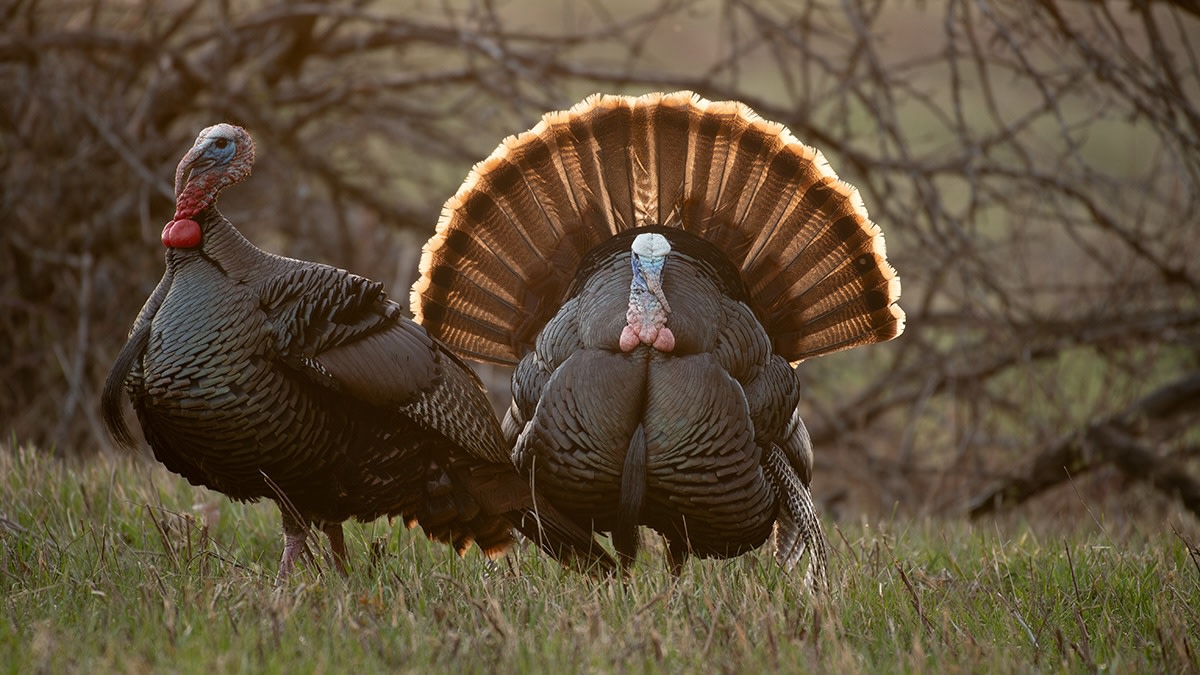

Ding ding. That’s the bell for any number of turkey hunters willing to go toe-to-toe over the morality of reaping a turkey, which consists of using a gobbler fan or decoy to sneak within bow or shotgun range of a longbeard and kill it.
Some hunters think it’s one of the most thrilling ways to kill a turkey. Others think it earns you a special place in hell. The opposed often site declining numbers and fair chase beliefs to defend their stance. Those in favor claim that reaping is no guarantee or that it isn’t that different from decoying. Whether you’re adamantly opposed or in favor of reaping, here are a few things to consider before slogging it to the death over this polarizing tactic.
Legality and Safety
Besides states where it’s been banned, reaping is largely a subjective issue. Personally, I’ve never reaped a turkey, but I don’t care if others do as long as it’s practiced safely and within legal limits. In fact, Alabama, Michigan, Rhode Island, New Jersey, and Pennsylvania have outlawed reaping turkeys, while Tennessee and South Carolina don’t allow it on public lands. Most of these bans cite safety as the main priority, not effects on turkey populations.
Reaping comes with an obvious safety risk: a hunter hides behind a turkey fan or decoy. Unfortunately, there have been countless turkey hunting incidents that didn’t involve a decoy. It should be obvious, but this tactic should only be used on private land in open fields or pastures. After all, that’s the main reason for using this strategy.
Also, this should go without saying, but never try to reap a turkey on public lands, especially in wooded areas. That’s a disaster waiting to happen, and it’s no surprise that most of the states that ban reaping have dense populations and forests.
A Time to Reap
For states where it’s legal, reaping allows you to approach a gobbler in the wide open while hiding behind your decoy/fan. This tactic gives hunters an obvious advantage with “field” birds or henned-up gobblers strutting around pastures. I know plenty of hunters who won’t fool with these kinds of scenarios because the odds aren’t exactly in your favor.
Reaping, on the other hand, drastically increases your odds. You might not convince a tom to come to your decoy spread if he already has a flock of hens, but if you can approach him with a strutting decoy, he has to either tuck tail and run or confront you. While it’s not a given, he’ll likely try to establish dominance and head your way. This dilemma puts the gobbler in a disadvantaged position, making untouchable birds fair game, but so do other hunting tactics. Right?
Is Reaping That Different from Decoying?
Let’s be honest: the only true difference between decoying a turkey and reaping one equates to an ambush versus a stalk. Both tactics take advantage of a turkey’s vision and their pea-sized brains. Turkeys already lack an advantageous sense of smell, so fooling them visually puts them at an even greater disadvantage.
Sure, you can theoretically approach a turkey while reaping, but even that is no guarantee. You still have to belly crawl within a reasonable distance to pique that longbeard’s interest and hope he doesn’t spook. It’s not like you can flash a fan from 400 yards away and expect him to come running. A gobbler in the perfect mood might, but he might do that with a full strut decoy, too. However, you still have to belly crawl, slip by hens and jakes, and not run off that longbeard. As much as anti-reapers would like to believe, the success rates lie far from 100%.
A Matter of Personal Ethics
Still, hunters against reaping claim that this tactic has led to a sharp decline in turkey numbers due to its “effectiveness.” This assumption is baseless at best, and there’s no research or numbers to support this claim. Sure, we’ve all seen reaping videos of a gobbler running to its death, but I bet you’ve seen the same for a traditional decoy spread. Heck, I’ve had multiple hunts where a longbeard pitched into my lap, and I was home before breakfast. Yet, no one chastised me for sneaking close to the roost or the expediency of my hunts.
Like other methods of take, reaping comes down to personal ethics (where legal). Sure, reaping might give you an advantage over a traditional decoy setup, but what about TSS loads? Red dots? Or shotguns in general. These tools make killing a turkey more efficient out to extended ranges. Forty-yard shots no longer qualify as long-range. Yet, I don’t see traditional archers calling for the ban of shotguns during turkey season. I definitely don’t hear folks bitching about red dots or TSS loads leading to the decline in turkey populations, but I’m willing to bet those technological advancements contribute to more turkey harvests than reaping.
You might not agree with certain legal hunting tactics, but that doesn’t make it inherently wrong. We’re quick to call for the ban of technology or practices that fall outside of our own hunting convictions without evaluating our own preferences or blind spots. In general, fewer hunting practices or opportunities don’t bode well across the board. So, the next time you get heated about new technology in the turkey woods, just remember, someone, somewhere is chasing a longbeard with a stick and string.
Stay in the loop with The MeatEater Newsletter
Shop
Related
Turkey
How to Reap a Turkey


Turkey
So You Didn’t Roost a Turkey, Now What?

Turkey
Bowhunting Turkeys Sucks, But You Should Do It Anyway
The comments section requires Functionality cookies. Please enable Functionality cookies in Cookie Settings to view this content.