
Words by Steve Reid
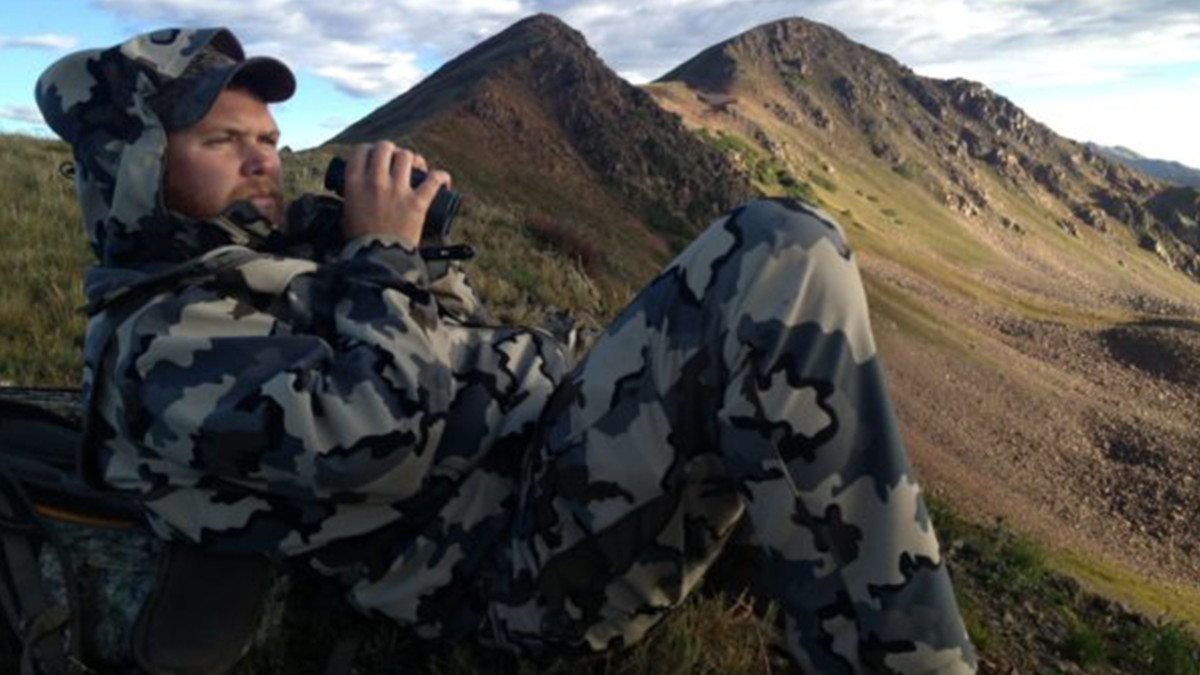
Spending time behind your optics can greatly increase your odds of harvesting a buck. There are three main factors that I focus on to maximize my glassing efforts: good vantage points, good optics, and patience.
Whether I’m hunting sage-covered hills or high alpine basins, I always find a vantage point clear of vegetation, where I can efficiently glass the surrounding landscape. It’s simple: the more country you can look over, the more deer you are going to find. Ideally, I like to be on a high ridge glassing across a valley or sage flat to areas where I think I will find deer.
Within my hunting area I’ll have three or four of these lookouts that I can use to find a decent buck. Once I find a promising buck, I start looking at how I am going to hunt him. The same vantage point that I use to find the deer will also serve as a vantage from which to study the buck’s habits as well as the terrain he is using.
When I’m glassing, I insist on getting set up well before first light. I don’t want to miss any deer movement during peak activity. And when I’m glassing a large area, I break it up into smaller sections by using landmarks like distinct logs or rocks to set the boundaries. This ensures that I take my time and study every square inch of the terrain, and it helps me avoid spending too much time looking at the same exact patch of ground.
As I examine each small section, my glassing movement resembles that of a typewriter. I will scan horizontally across the top of a section, drop down to the next level and scan horizontally again. I repeat this until I have finished scanning the whole section.
When I do spot deer, I switch to my spotting scope to identify the presence of a decent buck. If I am having trouble finding deer with my binoculars, I will use the same methods with my spotting scope. All the while, I keep the weather in mind. If the sun is out, I focus my glassing on the shady pockets of trees, rocks, bushes, etc. If it is windy or there is precipitation, I glass the areas where deer can limit their exposure to these elements.
As for patience, it kills! When picking apart mule deer country, you cannot be in a rush. Sometimes I will glass a particular area all day, constantly reminding myself to take my time. This is a must if I’m going to spot an ear twitching or an antler shining in the sun. I also take a little break now and then to rest my eyes and keep my brain focused on slow, steady glassing.
In short, finding mule deer comes down to sitting high, glassing with purpose, and exercising patience.
Stay in the loop with The MeatEater Newsletter
Shop
Related
Mule Deer
MeatEater Season 7: Steve and Brody Hunt Colorado Mule Deer

Mule Deer
How to Kill a Mule Deer Buck Before the Rut

Mule Deer
MeatEater TV Season 7: Archery Mule Deer with Joe Rogan
The comments section requires Functionality cookies. Please enable Functionality cookies in Cookie Settings to view this content.