
In deer camp last year, gunwriter Richard Mann and I were talking about rifle cartridges, and he made a great point about the guns people suggest youth and women shooters use for big game. Richard is one of the most knowledgeable shooters out there. He’s tested countless cartridges and shot game all over the world for more than 25 years. So the points he makes are worth listening to.
His big question was, why do we suggest women and kids hunt with cartridges like the .243, 6.5 Creedmoor, or .257 Roberts, then turn around and bring a .300 Win. Mag into the woods? We don’t expect those cartridges to kill animals any less dead than a magnum. So why don’t full-grown men take them instead, saving them loads of recoil? At that same camp, he shot a whitetail with a Nosler Partition from a .223 Remington, and it dropped in its tracks. Shooting big game is more about hitting where you’re supposed to, not bringing the biggest gun into the woods.
Why We Shoot Big, Heavy-Recoiling Cartridges
The big powder charge of a big rifle cartridge can give you a flatter shot in terms of trajectory. Couple that with long, high B.C. bullets, and you have something that can really punch through the wind and get out there. But the virtues of a flat shooting cartridge are almost moot when you consider how far we’ve come with optics and ballistic calculators. With the right setup and a good spotter calling shots, it’s almost just as easy for someone to make hits out to 1,000 yards with a6.5 Creedmooras it is with a 7mm PRC. The only differences are a few less clicks on the dials and a bit of a tighter wind call.
The reason flat-shooting cartridges became popular was because of the practice of shooting either a 200-yard orMaximum Point Blank Zero—both of which are less and less common in the woods today. The flatter the trajectory, the more distance a hunter could hold dead-on an animal and still get a killing shot. Shooters today are zeroing at 100 and dialing for everything, which makes flat shooting almost irrelevant within reason. If you can plot the trajectory of your bullet down to the inch, who cares how flat it shoots?
There was also a rise in bigger cartridges during the mid-20th century, partly because bullet design was still in its adolescence. In other words, many bullets on the market didn’t perform well or expand reliably. Today is the polar opposite. Bullets are incredibly efficient, and it’s hard to find one that won’t work as advertised. Further, bullets today are capable of amazing things like, reliably expanding at far lower velocities and turning lower-recoiling rounds into long-distance killers. Today, the focus on bigger powder charges and bigger cartridges has more to do with long-range shooting and the power a bullet will have out at distance. But let’s be realistic about this.
Why Velocity Matters
A big cartridge likea 7mm PRCwill give you more velocity at a farther distance than, say, a 308 Win. Velocity is important—some say more important than foot-pounds of energy—because that’s what causes a bullet to upset, mushroom out, or deform in an animal. It depends on your bullet’s design, but you can expect reliable expansion between 1,800 and 2,000 feet per second (fps).
Let’s take those two cartridges again as an example. At 500 yards, the 7mm PRC will be cruising at around 2,100 fps. This is well within that band of velocity for expansion. The .308 Win. at the same distance should fly at just over 1,800 fps, also well within the pocket for producing a dead critter. Beyond that, the .308 starts to fall off, but if you’re using a cutting-edge bullet like Federal’s Terminal Ascent or a Hornady ELD-X, you can expect expansion down to 1,500 fps. The cutoff for 1,500 fps is around 800 yards for a .308 Win. loaded with a 178-grain ELD-X. That’s a pretty long shot.
So How Much Gun is Enough?
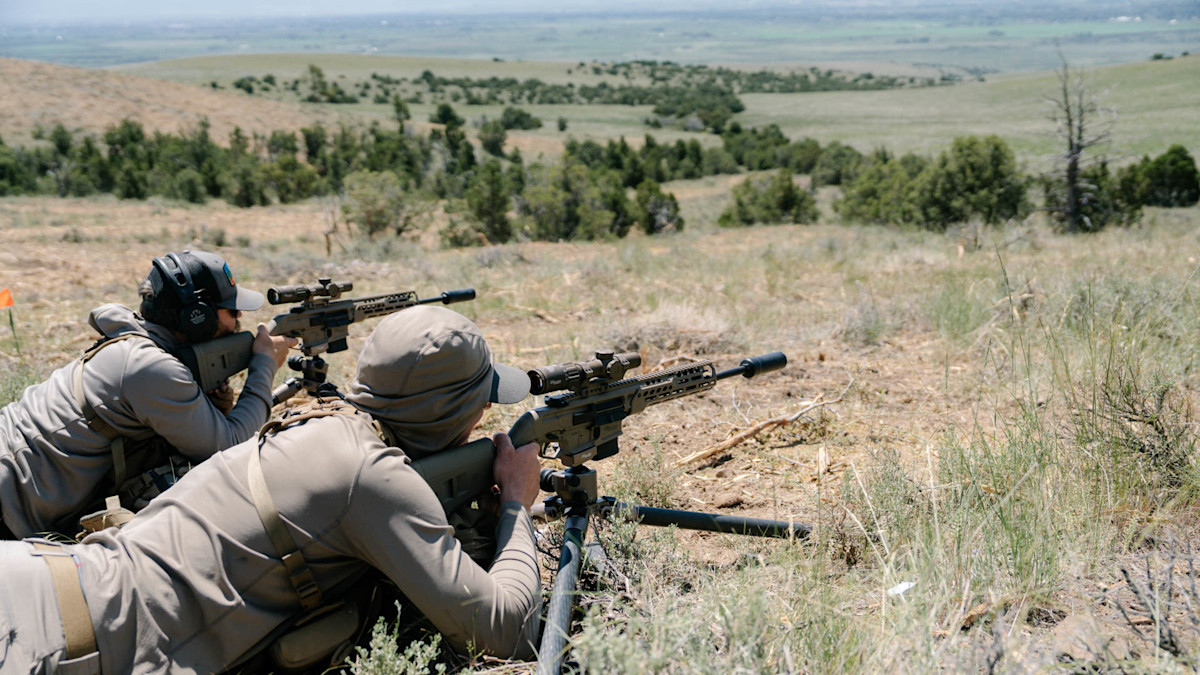
We can talk about how far a bullet should kill on paper all day, but the question we really need to ask ourselves is how far we actually shoot game. For myself, it’s around 400 yards and in. Beyond that, I don’t feel like I’m hunting. I like to stalk, and I’m fine with blowing a stalk while trying to get as close as possible. I have absolutely no judgment toward anyone who wants toshoot game at farther distances. For some, the challenge of making long shots is why they like to hunt, and I’ve shot with plenty of hunters who can reliably kill animals out well past 500, 600, or 700 yards. For them, they might want to get every bit of performance out of a big, fast cartridge like a magnum or PRC (certainly when it comes to wind calls and trajectory), and they’re right—especially if they’re trying to kill stuff beyond 800 yards.
Let’s say that you’re like me, though, and you’re lookingat shots at around 400 or even 500 yards and in. In that case, you don’t need a big honkin’ cartridge to cause reliable bullet upset as long as you’re shooting a good bullet—which is hard not to do these days. You also don’t need to deal with all of the recoil, which will make you a worse shooter. There’s just a point of diminishing returns when you start going bigger, even on bigger animals.
There are some exceptions, though. For dangerous game, you need an absolute steamroller of a cartridge with a monolithic bullet to achieve penetration on a frontal charging shot. Those frontal shots are usually executed by experienced guides or PHs when all hell breaks loose and you’re doing all you can to run or get out of the way. Typically, even the smaller-sized dangerous game cartridges are all big, give plenty of recoil, and have their own set of rules and expectations to warrant another story.
You also might want a hotter cartridge if you use a Maximum Point Blank Zero, meaning you’ll zero your rifle so you don’t have to dial for trajectory. In that case, you wanta flat shooting cartridgeto allow you to hold without adjustment out as far as possible. That usually tops out at around 300 to 350 yards for magnums.
Lastly, a magnum cartridge gives you more room for error if the wind is really swirling. Calling wind in the field can be difficult without sufficient practice. If you find yourself in these conditions, a bigger cartridge will let you take a shot from farther away without getting the wind call exactly right.
For most hunters who keep shots around 500 yards and under, you’d be fine with a .30/06, .270 Win., .308 Win., 6.5 Creedmoor, or 7mm-08 Rem. In the eastern hardwoods, where shots rarely exceed 75 yards, a .30-30 Win, .350 Legend, .243 Win., or even a .223 Rem. would work for whitetails as long as you shoot them where it counts.
A great place to experience the versatility of "smaller" cartridges in action is Africa. You can witness one gun take shots on numerous big game species from different hunters in camp and in varying scenarios. On a recent trip, we took severalMossberg Patriots with 16-inch barrels chambered in 308 Win. Just about all of my shots were within 200 yards, but several hunters took game far beyond that. The animals shot ranged in size from that of an American bull elk down to a Florida Key deer. When hit where it counts, they went down or ran about 50 yards before piling up. Our bullets did what they were designed to do, despite being fired from a puny .308. Better yet, we could save ice for drinks at the end of the night, rather than wasting it on our shoulders.
Stay in the loop withThe MeatEater Newsletter
Shop
Related
Firearms
You're Using Too Much Gun

Hunt
You're Giving Big Bucks Too Much Credit