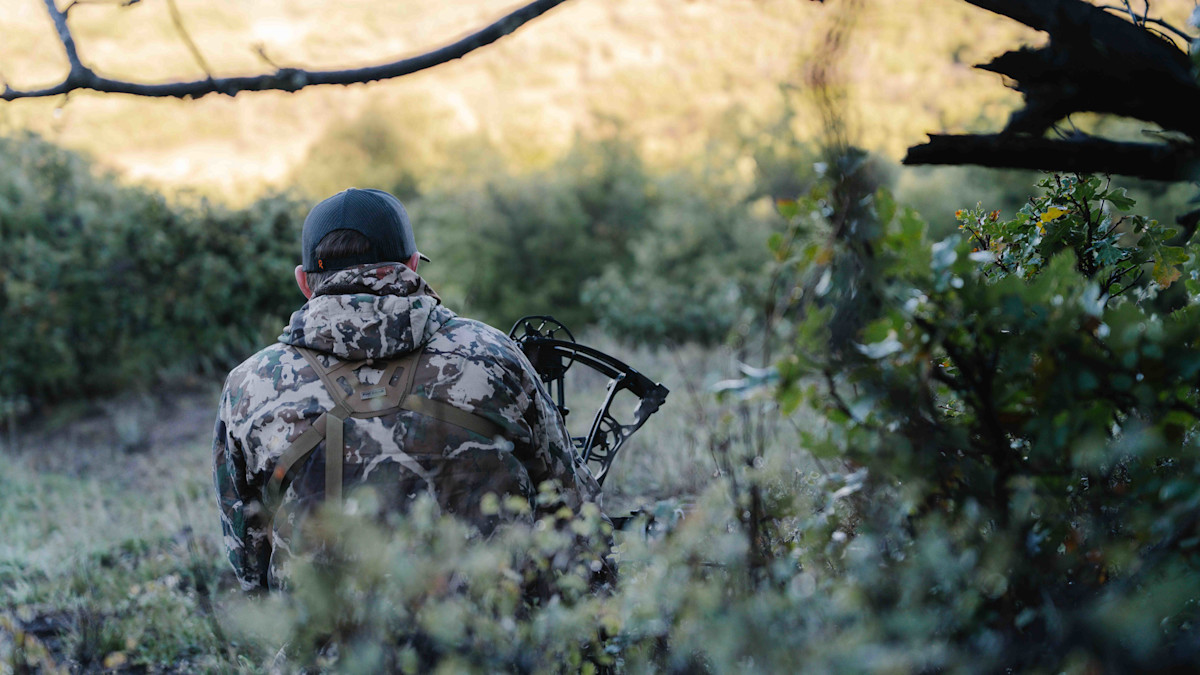

I’ve always been an elk hunter that doesn’t shy away from putting in hard miles. Once the season opens, I burn the boot leather, gaining and losing elevation like a B-17 bomber with an engine on fire. While this usually results in an elk encounter or two, the time inevitably comes when I need a sit-on-the-couch and do-nothing break.
While these mid-season elk hunting hiatuses are good for my physical well-being, they’re bad for my psyche. I constantly feel I’m missing my chance at a bull. Instead of beating the hell out of myself by hiking through every day of elk season, I throw in a few ambush hunts to break it up.
While it’s a similar concept, sitting on a good elk spot and waiting for a bull to come along is vastly different from waiting in a tree stand for passing whitetail. Unlike deer, which typically spend their entire lives in the same small chunk of habitat, elk can have a much wider home range. Not to mention, that home range can dramatically shift between the early and late seasons. That makes it even more important to pick the right spot when you ambush hunt for elk.
Scout and Then Scout Some More
Whether you’re hunting with a bow, rifle, or muzzleloader, you’ll need to scout a ton to find success. Look for good, fresh elk sign that was made within the last 24 hours. Scout food sources, trails, and even watch elk from a distance, if you can, before picking your spot.
Use onX to find equal amounts of open meadows, old burns, clear cuts, and even agricultural fields where elk can feed. Look for steep ridges with thicker, dark timber where elk like to bed. Pay attention to low point saddles between high peaks as well as gradually sloping drainages between feeding and bedding areas that act as natural travel corridors and escape routes.
Once you find these places on the map, you need scout them out on foot or glass them from a distance to confirm your intel. If you see elk feeding in a meadow in the morning and then moving through a saddle or other pinch point in the evening, or if you find a well-used elk trail with a lot of fresh sign in these areas, make a note.
There’s no point in hanging out in a spot where there aren’t any elk, so spend a good amount of time glassing and walking to confirm if elk are there. Once you locate elk, go out and find a few more so you have several options depending on the conditions.
Wallows and Water
If you don’t have a lot of time for excessive scouting, you can still find an appropriate ambush spot around elk wallows and water sources during the early season or when it’s unseasonably warm. Elk will use wallows regularly during the rut by rolling around in muddy pools mixed with urine and mud to coat their bodies to attract cow elk. They’ll also use wallows outside of the rut to cool themselves off and help regulate their body temperature, making them great late-morning and midday spots during hot days.
The easiest way to find an elk wallow is to walk along the fringe of a water source in elk country. Look for small, slow-flowing creeks, swamps, ponds, or marshes on a map and then hike in and check them out. Try to find elk trails that run to and from the water source and then follow them along until you find a particularly muddy or stinky spot with a lot of tracks and other sign that indicate where the bulls have been rolling.
Once you find an active wallow, move away from it as far as you can and look for a comfortable area to hunker down or set up a tree stand in range of it. While most hunters will try to find a good area on the upwind side of the wallow, I’ve found that bulls will usually circle the entire area before approaching wallows from downwind, meaning that they’ll inevitably catch your scent if you’re directly on or near their path. Accordingly, it’s best to set up at a crosswind angle either above or below that wallow and away from any obvious travel routes while still keeping it in sight. This will give you a shot window or an opportunity to stalk into range once a bull shows up and tries to circle downwind.
Travel Routes and Transition Zones
The late season can provide good ambush hunting opportunities when elk are stocking up for winter after the rut. It gives you a chance to set up on obvious food sources and wait for the elk to come to you. If only it was as easy as it sounds.
An elk’s feeding grounds can cover several square miles, and they may only frequent a certain spot a couple times a month. Accordingly, you’ll often have better luck ambushing elk along their travel routes and in transition zones that lead to multiple feeding areas rather than the food sources themselves, as long as you know where and how to set up.
Travel routes are generally well-used elk trails that lead from feeding to bedding areas. These can be hard spots to find as elk leave a lot of trails through the woods, so you’re going to want to find one with the freshest sign possible. If you’ve glassed elk moving in and out of a saddle or thick stand of timber, move into the area and try to find a trail with fresh tracks and moist scat. Set up in a sheltered area off the trail during midday or in the dark of early morning and then hang out and wait for elk to utilize the trail as they move into or out of their bedding area.
If you haven’t seen any elk recently and don’t have a ton of time to scout out a frequently used trail, you can still ambush hunt elk by hanging out in transition zones. These include south-facing hillsides where elk travel and feed either above or below thick timbered bedding areas or natural low points and gaps between ridge tops where elk can cross from one drainage to another. Spots like this can be tricky but effective to hunt if you’re patient. These areas might not be utilized by elk for several days before a herd suddenly decides to move in.
Whenever you’re blind hunting a transition zone, it’s important to keep thermals in mind. In the early morning, position yourself higher than or right where you expect elk to be moving before moving downhill to a new position. As cooler air begins moving down mountain slopes in the evening, you’ll want to do the opposite. You’ll have to make these adjustments around the early morning and late evening prime times; otherwise, the elk will bust you.
It’s a Trap!
As much as I love spot and stalk hunting and still hunting my way through thick timber, ambush hunting for elk can be an effective hunting strategy. It might not feel as productive as running and gunning, but it’s a fantastic way to intercept a bull while you sit and enjoy the wonderfully wild places that elk live.
Stay in the loop with The MeatEater Newsletter
Shop
Related
Elk
31-Day Elk Hunt: Part 2, Bad Luck and Good Buddies

Elk
31-Day Elk Hunt: Part 3, Coming Home

Elk
The 10 Biggest Mistakes Elk Hunters Make Every Year

The comments section requires Functionality cookies. Please enable Functionality cookies in Cookie Settings to view this content.