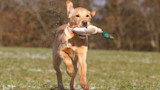
Training Mistakes That Can Set Your Duck Dog Up for Failure


Early on in my duck hunting journey, I lugged some wood duck decoys and a spinner deep into a chunk of public landin north-central Wisconsin. I’d stumbled across a pond in the parcel while scouting for whitetails, and figured it might pick up some wood duck andtealtraffic on the opener.
As soon as I tossed the first decoys in, my retriever followed. When I jammed the spinner into the mud and turned it on, her eyes bugged out of her head. It became pretty clear that I hadn’t trained that young Lab around decoys enough, and I was about to pay for it.
That mistake was dumb, but I’m not the only one who has made it. In fact, a hell of a lot of waterfowl hunters have trained their dogs all summer long for specific scenarios, while ignoring the other aspects of a hunt that are guaranteed to distract their retrievers, or worse, just destroy their ability to focus altogether.
This is no fun, but totally avoidable. You just have to think through what you’ll use during your average waterfowl hunt, and then try to incorporate that gear into your training sessions.

Decoy Distractions
As I mentioned, I made the mistake of not training my dogaround specific decoys enough. Given the different options on the market, many of which are designed specifically to move and splash, it’s pretty easy to understand how a dog owner can get into trouble.
It can be a pain to set up decoys for every summertime training session, but at some point, you should. In their simplest form, your decoys will float in one spot while they are anchored in place. A dog that has to swim through them to retrieve a real duck, better learn how to swim through them to retrieve a bumper first. If you’ve never seen a dog get caught up in some decoy cords, then you might not appreciate why this needs to be done. If you have, you understand completely.
Spinners, tip-ups, splashers, jerk rigs, and quiver dekes, are all options for giving your spread some extra life.They are also great at drawing your dog’s attention and causing all kinds of steadiness issues.If you don’t want to deal with that (you don’t), spend some time this summer training with the exact decoys out that you plan to use.
This goes for field hunters, too. If you like to flag geese orthrow up a tornado for snows, the same rules apply. The key is to not surprise your dog with anything during the hunt that he hasn’t already seen during calmer, low-stress training drills.

Blind Blunders
Full-sized duck blinds aren’t all that easy to find to train out of, which is unfortunate. Smaller, mud-hut field blinds are an easier proposition, however. If you plan to hide your dog in some kind of field blind, then you should plan to train your dog in one as well. This seems intuitive, and certainly is for a lot of folks, but it’s also extra work when you could just go toss some backyard bumpers for your dog.
The same rules apply for dog stands. Whether you employ one just to keep your dog out of the cold mud,or you’re a flooded timber hunter, your dog should be allowed to develop an extreme level of comfort with whatever stand you choose. Just like with the decoys, you don’t want to spring something on your retriever that is brand new during a hunt. This will only lead to a lot of frustration on your part and confusion on his.

Calling Chaos
No one with the IQ of your average cootwould take a dog duck hunting before conducting proper gunfire introduction. That would be the best recipe you could find for taking a retriever from hunting dog to house dog in a matter of seconds.
Yet, a lot of people won’t blow a duck orgoose callaround their dog until opening morning. While seasoned veterans who know the drill will look right past someone dabbling or honking away in their ear, younger dogs aren’t as likely to ignore calling.
Incorporating calling into summertime training sessions is easy and important. You want that sound to be associated with something exciting, but also, just be part of the overall background noise that they need to learn to ignore while they do their job.
In other words, do what you can to create real-world hunting scenariosduring your training sessions. The fewer surprises you have for your dog when the opening bell rings, the better his performance will be overall. That’s it, and it’s important.
Stay in the loop withThe MeatEater Newsletter
Shop
Related

Hunting with Dogs
Training Mistakes That Can Set Your Duck Dog Up for Failure

Hunting with Dogs
The Most Overlooked Hand Signal to Teach Your Dog