The Easiest Way to Catch Fish from the Beach
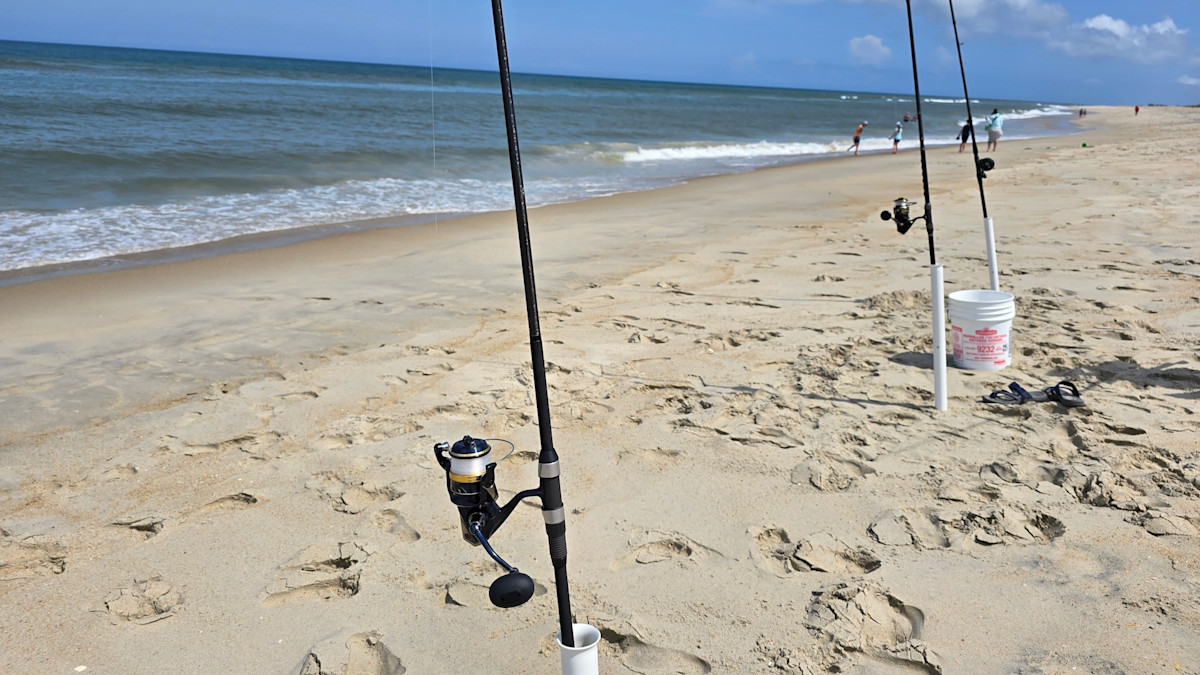

Ten yards down the beach, two kids build a sandcastle while their mom watches through sunglasses from a stretched-out beach towel. Some teenagers shove each other as they walk past me and head down the beach, and a couple of guys toss football near the dunes.
And I’m knee-deep in the Atlantic, two ribbons of squid threaded onto my hooks. I’ve been here since sunup, waiting for my rod tip to twitch, and my cooler already holds some evidence that I picked a good spot. It’s easy to stand on the beach and stare out across the water and think somewhere out there are fish. That somewhere is often a lot closer than the average beachgoer may think.
That’s what I love about surf fishing. You don’t need a boat cutting across the horizon or thousands of dollars in electronics to find fish. All it takes is a simple setup, a stretch of beach, some patience, and the ability to read the water in front of you.
Find the Right Stretch
You can catch fish from just about any stretch of beach. I’ve pulled flounder from crowded public beaches and pompano from stretches of sand so isolated and quiet I felt like I was the only human for miles. But some beaches are just better than others when it comes to catching fish.
While there are countless fish swimming the ocean, they aren’t evenly distributed along the coastline. Fish that hang out close to the beach follow food, current, and structure. The best surf anglers know how to spot where those things converge before they ever make a cast.
Look for places where the waves break differently. A gap between breaking waves could be evidence of a cut between sandbars. Cuts create current and pushbaitfishthrough predictable lanes. Similarly, patches of ocean that look darker than the surrounding water can be signs of deeper sloughs, where fish can move and feed without fighting the surf. These places naturally concentrate fish, and you don’t need to be an oceanographer to spot them.
Open beaches aren’t the only places fish like to congregate. Piers, jetties, and rocky structure also attract baitfish and the predators that chase them. If you have access to them, these can be great spots to drop a line.
Basic Beach Fishing Setups
Good surf fishing can require minimal gear, and you can catch plenty of fish with a simple setup. A medium-heavy spinning rod in the 9- to 11-foot range coupled with a 4000- to 6000-size saltwater-capable spinning reel is a good place to start. Spinning reels are easy to cast, forgiving for the novice, and plenty capable of handling many common East Coast species, from spot and croaker to red drum and pompano. If you want to target larger fish (think cobia and bull reds), you’ll needheavier tackle.
Load the reel with 20- to 30-pound braid and pair it with a 20- to 40-pound monofilament leader. A fishfinder rig is one of the most versatile setups, especially for beginners. It uses a sliding sinker above the leader. The design allows a fish to pick up the bait without instantly feeling the weight of the sinker, giving you more time to set the hook. You can find them pre-made in most coastal bait shops. Just add a sinker and some bait and you’re ready to go.
Another popular setup is the double drop rig, which uses two hooks suspended above a sinker. These effective rigs work well for smaller bottom feeders like spot and croaker.
Sinker selection is important when you’re fishing the surf. Round and teardrop sinkers may work fine in your local lake, but they roll around in breaking waves. Pointed pyramid weights or Hatteras-style storm sinkers work best on sandy ocean floors. Their shape digs into the sand and helps keep your rig from getting tossed around in the waves.
Some anglers choose to skip the fresh bait altogether. Artificial lures like bucktails, spoons, and soft plastics let you actively cover more water fast. They can work especially well for flounder, speckled trout, bluefish, Spanish mackerel, and red drum. However, artificial baits come with a steeper learning curve than soaking natural bait.
Surf Fishing Bait Choices
Like your setup, your bait choice can be simple, too. These options have proven to catch a variety of East Coast species in my experience.
Squid is a surf-angling standby. It’s inexpensive, stays on the hook well, and is appetizing to everything from palm-sized spot to larger predators. Shrimp is another reliable option that attracts flounder, speckled trout, and smaller bottom feeders. Sand fleas (mole crabs) are a favorite of surf-riding pompano. Large chunks of cutbait from menhaden and mullet work well for larger bluefish, red drum, cobia, and striped bass.
When in doubt, drop into any local bait shop before you hit the beach. The locals there are usually happy to share what’s working and what isn’t.
When to Fish the Surf
You can catch fish in the surf any time of day, but there are certain times that just naturally produce more bites. Like whitetails, most fish like the edges of daylight. The first few hours after sunrise and the last few hours before sunset often have a better bite because cooler temps and lower light can push feeding fish closer to shore. But, the tide is even more important than the time.
I’ve caught plenty of fish at noon with a strong, moving tide, and I’ve walked away with an empty cooler after fishing a gorgeous sunset. A moving tide is more productive than a slack tide in most situations. As the tide rises and falls, it moves baitfish, shrimp, crabs, and other food through the surf. During a slack tide, when the movement briefly stops at high and low tide, the bite tends to slow down if not stop altogether.
A moving tide also makes those cuts and sloughs you spotted earlier become even more important. That moving water creates a conveyor belt of feeding opportunity, moving the buffet around. Predators know how to sidle up to it and take advantage.
You should also watch the water for signs of feeding fish. Diving birds and skittering baitfish are signs that something is feeding beneath the waves. When it happens, don’t wait to cast into it. The action may move down the beach with the bait.
Stay in the loop withThe MeatEater Newsletter
Shop
Shop AllRelated
Fishing
The Easiest Way to Catch Fish from the Beach

Fishing
5 Weird Ways People Catch Fish