
Duration
1 hour
Serves
2 to 4
I’ve always held sandhill cranes in high esteem. Their alien, crooning caws are a comforting sound, and it’s easy to get lost in time observing their stalking gait amidst tall, wetland grasses. But in recent years, I began to hear more and more talk of the of the culinary merits of the famed “ribeye-in-the-sky.” With a nickname like that, they quickly gained ranking on a long list of animals that I’d like to have in my freezer.
I recently went on a hunt with Delta Waterfowl in Canada and had the opportunity to shoot some of the giant migratory birds. I witnessed flocks of hundreds of sandhills flying the expansive sky of the Prairie Pothole Region, far more than the sparse pairs I’ve frequently observed in my life. Needless to say, my cooler bag was heavy on the plane ride home, and I couldn’t wait to get some of the birds into a pan.
I wanted this recipe to highlight this bird for what it is—exceptionally high-quality meat. As such, the preparation is simple. The pan sauce with capers is complementary but optional. I’m a saucy gal, so I like having something to dip my protein and sides into, and I think it’d be a shame to waste all that perfectly delicious fond that remains in the pan after searing and basting the breasts.
Ingredients
- 2 sandhill crane breasts, cleaned and trimmed
- Kosher salt
- Fresh ground pepper
- High-heat cooking oil
- Aromatic herbs such as rosemary and sage
- A few smashed garlic cloves
- ½ stick butter
- 1 shallot, fine dice
- 2 tbsp. capers
- 1 cup dry, white wine
- 1 to 2 cups dark stock (e.g. venison, beef)
Also works with
Preparation
- Ensure your crane breasts are cleaned of any feathers, fat, BBs, blood from shot, or connective tissue—simply put, it should look nice. Place on a rack over a sheet tray and season liberally with kosher salt. If you can do this a few hours or a day in advance, great; allow them to sit in your fridge uncovered. If you plan on cooking within an hour or so, allow them to sit on your counter and come up to room temperature, dabbing off any moisture on the surface with paper towels as needed. Once dry, season both sides of the breasts with a few good cracks of fresh ground pepper.
- Turn on the oven to 400°F and heat a large cast iron or stainless steel pan on medium-high. Once the pan is hot, add high-heat cooking oil until it coats the bottom in a thin, even layer. Carefully place the flatter side of the breast down in the pan. Sear for about 5 minutes, or until the bottom is evenly browned.
- After the first side is browned, flip and add herbs, crushed garlic, and a few pats of butter to the pan. Place pan into hot oven.
- Pull the pan out every few minutes, use a large spoon to baste the breasts with the garlic and herb-infused butter, and feel for doneness like you would a steak—you’re aiming for medium rare. If you’d like to use a thermometer, the temp should register between 128°F and 130°F.
- Once the breasts are cooked, remove them from the pan and allow to rest on a cutting board for about 10 minutes. Remove the herbs as well, you can place these atop the meat as it rests if you’d like.
- There should be a good amount of butter in the pan, but if you’re lacking, add some more oil or butter. Turn your burner back on medium and add the shallots to the pan. (And be careful! That pan just came out of a hot oven.)
- Allow the shallots to caramelize to a golden brown color then add the capers. Sauté for about 30 seconds, then pour the white wine into the pan. As the wine cooks down, use a wooden spoon to scrape down the bottom and sides of the pan, incorporating all of that tasty fond into the sauce.
- Cook the wine until au sec, or until almost all the liquid has evaporated. Next, add a cup of the stock and allow this to reduce by half. Once the sauce looks very thick, add enough stock to thin it out.
- Finish the sauce with the few remaining pats of butter. Swirl the pan to emulsify and taste for seasoning.
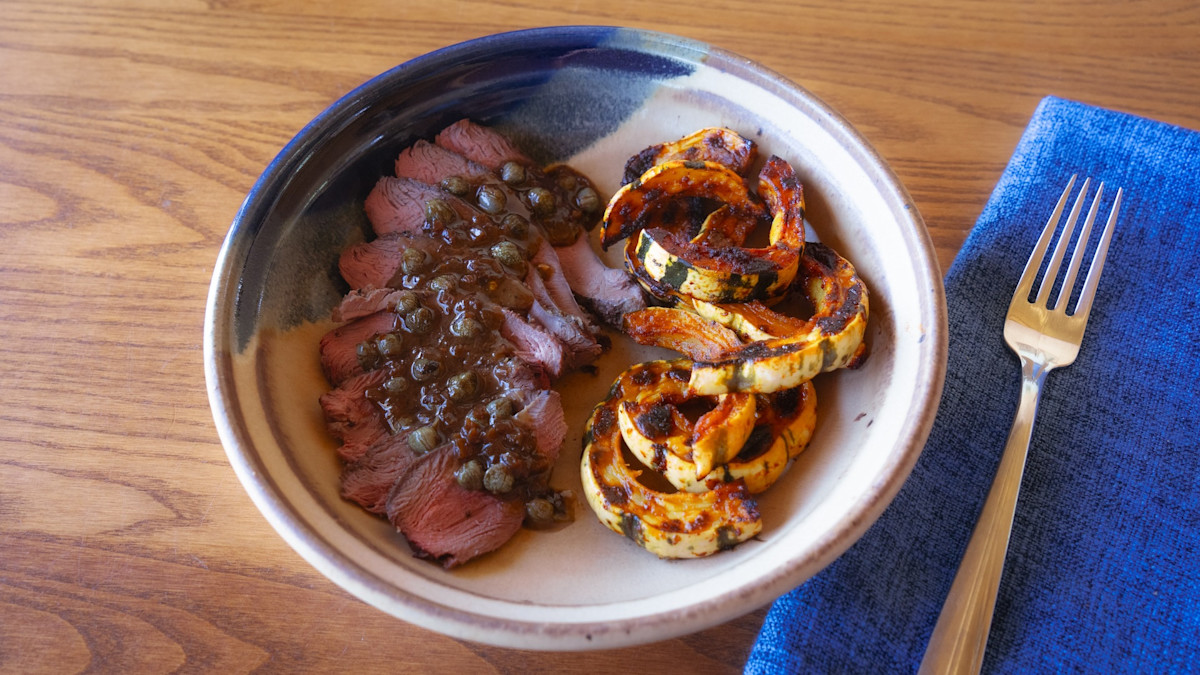
- Slice the breasts thin and serve with roasted vegetables or sides of your choosing with a healthy portion of pan sauce on top.
Stay in the loop with The MeatEater Newsletter
Shop
Related
Recipes
Sous Vide Crane Leg Confit
(2)
Recipes
Peanut and Soy Braised Sandhill Crane
(1)

Recipes
Pan-Roasted Turkey with Hunter’s Sauce
(3)The comments section requires Functionality cookies. Please enable Functionality cookies in Cookie Settings to view this content.
Pan-Seared Sandhill Crane with Caper Sauce
Duration
1 hour
Serves
2 to 4
I’ve always held sandhill cranes in high esteem. Their alien, crooning caws are a comforting sound, and it’s easy to get lost in time observing their stalking gait amidst tall, wetland grasses. But in recent years, I began to hear more and more talk of the of the culinary merits of the famed “ribeye-in-the-sky.” With a nickname like that, they quickly gained ranking on a long list of animals that I’d like to have in my freezer.
I recently went on a hunt with Delta Waterfowl in Canada and had the opportunity to shoot some of the giant migratory birds. I witnessed flocks of hundreds of sandhills flying the expansive sky of the Prairie Pothole Region, far more than the sparse pairs I’ve frequently observed in my life. Needless to say, my cooler bag was heavy on the plane ride home, and I couldn’t wait to get some of the birds into a pan.
I wanted this recipe to highlight this bird for what it is—exceptionally high-quality meat. As such, the preparation is simple. The pan sauce with capers is complementary but optional. I’m a saucy gal, so I like having something to dip my protein and sides into, and I think it’d be a shame to waste all that perfectly delicious fond that remains in the pan after searing and basting the breasts.
Ingredients
- 2 sandhill crane breasts, cleaned and trimmed
- Kosher salt
- Fresh ground pepper
- High-heat cooking oil
- Aromatic herbs such as rosemary and sage
- A few smashed garlic cloves
- ½ stick butter
- 1 shallot, fine dice
- 2 tbsp. capers
- 1 cup dry, white wine
- 1 to 2 cups dark stock (e.g. venison, beef)
Also works with
Preparation
- Ensure your crane breasts are cleaned of any feathers, fat, BBs, blood from shot, or connective tissue—simply put, it should look nice. Place on a rack over a sheet tray and season liberally with kosher salt. If you can do this a few hours or a day in advance, great; allow them to sit in your fridge uncovered. If you plan on cooking within an hour or so, allow them to sit on your counter and come up to room temperature, dabbing off any moisture on the surface with paper towels as needed. Once dry, season both sides of the breasts with a few good cracks of fresh ground pepper.
- Turn on the oven to 400°F and heat a large cast iron or stainless steel pan on medium-high. Once the pan is hot, add high-heat cooking oil until it coats the bottom in a thin, even layer. Carefully place the flatter side of the breast down in the pan. Sear for about 5 minutes, or until the bottom is evenly browned.
- After the first side is browned, flip and add herbs, crushed garlic, and a few pats of butter to the pan. Place pan into hot oven.
- Pull the pan out every few minutes, use a large spoon to baste the breasts with the garlic and herb-infused butter, and feel for doneness like you would a steak—you’re aiming for medium rare. If you’d like to use a thermometer, the temp should register between 128°F and 130°F.
- Once the breasts are cooked, remove them from the pan and allow to rest on a cutting board for about 10 minutes. Remove the herbs as well, you can place these atop the meat as it rests if you’d like.
- There should be a good amount of butter in the pan, but if you’re lacking, add some more oil or butter. Turn your burner back on medium and add the shallots to the pan. (And be careful! That pan just came out of a hot oven.)
- Allow the shallots to caramelize to a golden brown color then add the capers. Sauté for about 30 seconds, then pour the white wine into the pan. As the wine cooks down, use a wooden spoon to scrape down the bottom and sides of the pan, incorporating all of that tasty fond into the sauce.
- Cook the wine until au sec, or until almost all the liquid has evaporated. Next, add a cup of the stock and allow this to reduce by half. Once the sauce looks very thick, add enough stock to thin it out.
- Finish the sauce with the few remaining pats of butter. Swirl the pan to emulsify and taste for seasoning.
- Slice the breasts thin and serve with roasted vegetables or sides of your choosing with a healthy portion of pan sauce on top.