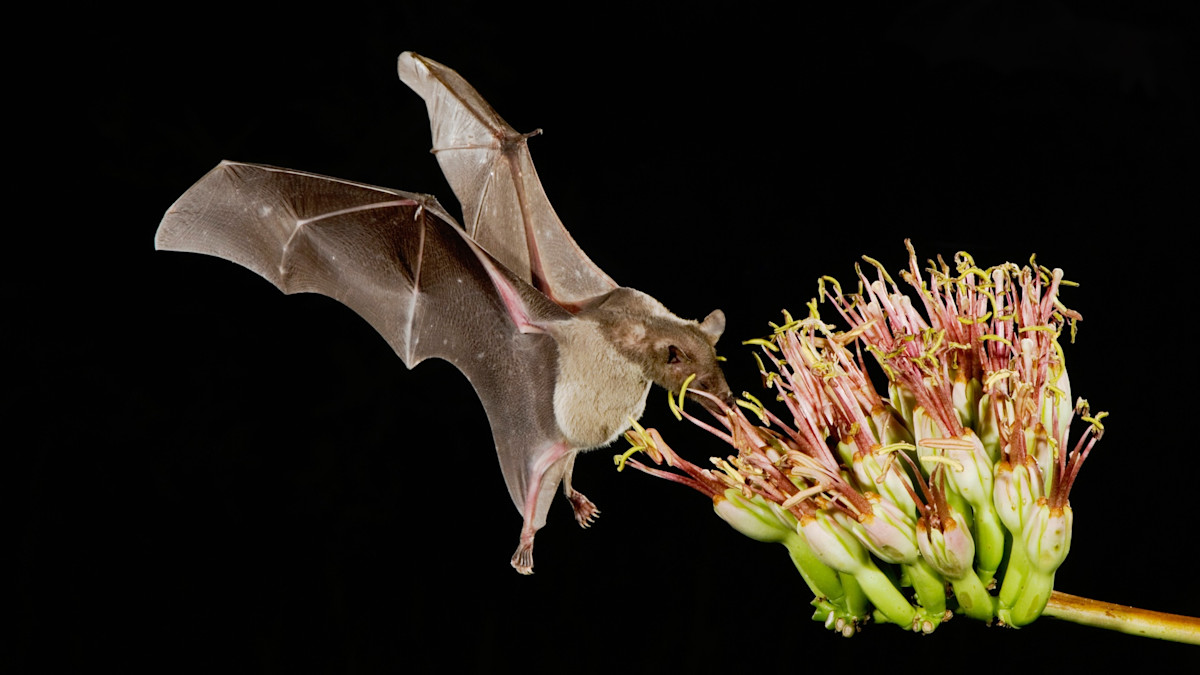

Halloween is bat season. And tequila season. And the two are connected. Whether you take it straight up, in a margarita, or, like Danielle Prewett, use it to flavor your turkey tacos, if you enjoy tequila, you are in debt to a bat.
Hunters and anglers understand that the earth is the source of all our food, but the relationship between bats and tequila is a mystery suited for the spooky season. In fact, some fear that if we aren’t careful with the way we grow and distill tequila, the relationship may collapse, spelling disaster for bats and drinkers alike.
Every brand of distilled spirits comes from a certain plant: vodka from potatoes; gin from grain alcohol and juniper; whiskey, corn or barley.
Tequila comes from blue agave, a succulent plant that grows in arid regions of Mexico. The word “tequila” comes from a town in the Mexican state of Jalisco. History tells us that in the 1600s, the King of Spain banned the pressing of grapes in Mexico to protect the market for Spanish wine. Deprived of vino, the locals turned to distill the juice of the pulpy heart of the blue agave.
Tequila has become one of Mexico’s greatest imports and a favorite spirit of drinkers worldwide. Mexico is home to 100 distilleries offering nearly 1000 brands of tequila. If you want to get technical about it, mescal is alcohol distilled from any agave plant. Tequila is a specific form of mescal derived from blue agave. Either are potent enough to kick your ass, between 35% and 55% alcohol.
Planting, tending, and harvesting agave plants is a labor-intensive process. Workers called jimadores specialize in that work. However, they can’t do the job alone. They need bats.
Bats are secretive and ancient. They’ve been on Earth for about 50 million years. They are the only mammals that can truly fly. Because bats have long filled an ecological niche with little competition, they have evolved an unusually diversity of types and lifestyles. There are about 1,400 species of bats worldwide, ranging from the smallest bats that are only a bit bigger than a butterfly to huge tropical “flying foxes” with a wingspan approaching that of an eagle.
Bats also have evolved a wide variety of food specialties. Most bat species you see zipping over a lake in the evening eat flying insects. Vampire bats, of course, lap blood from their bites on cattle and other large mammals. Many bats depend on fruits and flowers. As with insects and birds, certain plant species have evolved symbiotic relationships with certain bat pollinators. Like giant bumble bees, fruit bats seek nectar from flowers and, in return, spread pollen from plant to plant.
Some 300 fruit species worldwide depend on bats for most or all of their pollination. These include the saguaro cactus of the American Southwest and crops like mangoes, bananas, and avocados. Three species of bats specifically co-evolved with agave.
Two of these bats are listed as endangered by the U.S. Fish and Wildlife Service: the Mexican long-nosed bat and the lesser long-nosed bat. The third, the Mexican long-tongued bat, is listed as a species of concern.
Bats face a variety of threats worldwide, particularly habitat destruction and diseases. An exotic fungus in North America, for example, is causing devastating outbreaks of white-nose syndrome that has wiped out entire hibernating colonies of some bat species.
Industrial agriculture can be hard on bats because pesticides reduce the numbers of flying insects which some bat species depend upon, and by clearing natural habitats for cultivation. Certain modern methods of mass-producing agave plants can also short-change bats, by using artificial fertilization and harvesting agave before it fully flowers.
Conservation groups are scrambling to find ways to conserve bats and provide for agave harvest. While bats may lack the charisma of some other types of wildlife, groups like Bat Conservation International are dedicated to the task. Bat conservationists are working with bartenders, scientists, distillers, and tequila consumers to promote bat-friendly practices. Learn more at the Tequila Interchange Project.
Meanwhile, cheers. And say gracias to a bat.
Feature image of bat feeding on agave blossom at night via Adobe Stock.
Stay in the loop with The MeatEater Newsletter
Shop
Related

Anthropology
The Most Secluded Humans on Earth


Wildlife Management
A Brief History of Manatee Hunting


Wildlife Management
A Knife Fight with a Brown Bear: The Story of Gene Moe
The comments section requires Functionality cookies. Please enable Functionality cookies in Cookie Settings to view this content.