Record-Low Water Levels Spur New Colorado River Management Plan
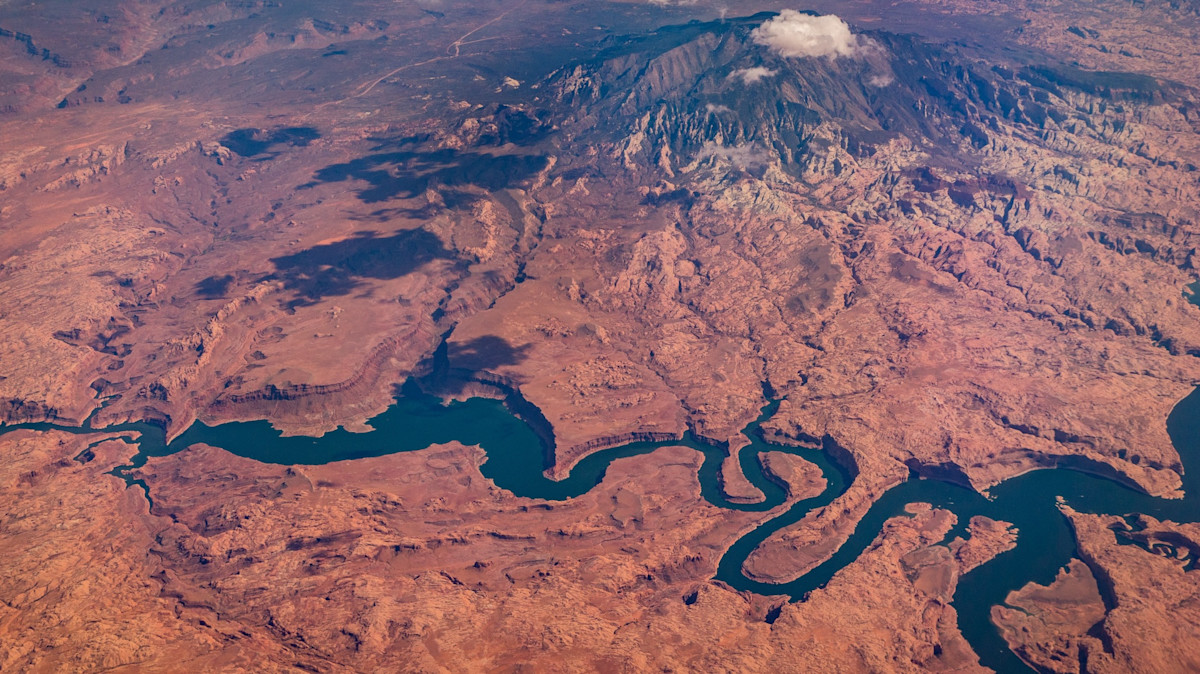

On July 31, the Bureau of Reclamation released theFinal Environmental Impact Statement(FEIS) for the future management of the Colorado River through Lake Powell and Lake Mead. This 10-year plan will replace the 2007 operating guidelines currently in effect.
This marks the first instance of the federal government stepping in to manage the waterway. Previously the seven basin states, Wyoming, Utah, Colorado, Nevada, New Mexico, Arizona, and California, have collaborated on creating long-term plans for the river. But the last three years of negotiations have failed to yield an agreement.
The twenty-year-long “megadrought” currently plaguing the west is likely to blame for the inability to decide on a path forward between the basin states. The Colorado River provides water for more than 40 million people. It also fuels hydropower resources in seven states, serves 30 tribes and two Mexican states, provides for 5.5 million acres of agricultural land, and supports critical ecosystems and species in the West.
Year after year of lower snowpacks and less rainfall are adding up for the Colorado.According to the Bureau of Reclamation, Lake Powell is currently at 22% capacity, and Lake Mead is sitting at 27%—the lowest the levels have been in these two key reservoirs since 1957.
These two reservoirs were built following the Colorado Compact—a 1922 agreement to equally divide the water between the upper basin states (Wyoming, Colorado, Utah, and New Mexico) and lower basin states (Arizona, Nevada, and California.)
This new plan will cut water availability from the lower basin states exclusively, even though they currently use the majority of the water.
According to the DOI, between 2020 and 2024, the average consumptive use was 13.1 million acre-feet. Of that total, the three lower basin states used 6.5 million acre-feet (49%) of the flows, while upper basin states used only 3.8 million feet (29%). Additionally, Mexico and evaporation each account for 1.4 million acre-feet (11%).
How Water is Distributed
Currently, the Colorado is collectively managed by “The Law of the River," a mishmash of compacts, federal laws, court decisions and decrees, contracts, and regulatory guidelines. The Colorado Compact was the first agreement among many to form the Law of the River.
Its biggest flaw? The Law of the River over-allocates how much water is available in the river to both upper and lower basin states as well as Mexico. When flows were originally measured, primitive stream gauges were used during an especially wet decade, leading lawmakers to believe the Colorado had more to offer. It’s estimated that baseline flows average around 13.5 million acre-feet, but the legal framework is based on baseline flows of 16 to 20 million.
This means the states currently have the legal right to use more water than is actually available in the river. The new plan seeks to address this and modify water allocations accordingly.
How States Are Reacting
“While the final details are still being analyzed by Upper Division States, we are encouraged that new operating guidelines will better reflect existing water supply, which must underpin any practicable plan going forward,” thegovernors of the upper basin states said in a joint statement.
On the flip side of the coin, the lower basin states aren’t as excited about the new restrictions they’ll likely face in the near future.
An article from theArizona Mirrorcalled the new regs “draconian,” claiming the federal plan could mean water cuts of up to 77% for the Grand Canyon State. “Such reductions would devastate Arizona’s water users and its economy,” the Arizona Department of Water Resourcessaid in a statement.
Arizona is likely to be the hardest hit in these new guidelines because water law functions on a general understanding of “who had the water first gets to keep the water last.” The canal system built to carry water from the Colorado over to big cities like Tucson and Phoenix is at the crux of this issue. The 336-mile concrete-lined aqueduct stretching from Lake Havasu to Tucson was declared complete in 1993, making the two desert cities some of the last places with access to the water.
California and Nevada won’t be left out of reductions, either.
“If carried forward, the plan outlined in the FEIS could have devastating economic and environmental impacts on Nevada,” Governor Joe Lombardosaid in a press release.
“Nevada has consistently demonstrated that economic growth and responsible water management can go hand in hand, and I remain committed to working with our federal partners and the other basin states to reach enduring solutions that strengthen the river system while protecting Nevada’s future.”
How Will This Impact Fish and Wildlife?
This year, the Flaming Gorge reservoir on the Wyoming/Utah border sent one million acre-feet of water downstream to Lake Powell to ensure it didn’t reach the critical low-level minimum power pool threshold of 3,490 feet required to keep the Glen Canyon Dam generating hydropower.
The 91-mile-long reservoir hasdropped over 12 feet over the course of the summer, and the Bureau of Reclamation estimates water levels to fall a total of 35 feet by next April. Flaming Gorge is a famed fishery known for trophy lake trout and kokanee. These are cold-water species that rely on deep lake water to remain cold throughout the year.
And that’s only one example of one reservoir slowly being drained to sustain the behemoth water system that is the Colorado.
Before the Colorado Compact, the use was unchecked to the point that the river would dry up before even reaching the Gulf of California. While dams and years of legal fanagling prevent this from happening nowadays, we know thatfish and dams don’t get along.
Even with the new management plan, the Law of the Water is designed to allocate the entirety of the river’s resources based on human needs. It fails to take fish, waterfowl, and other wildlife into consideration when dispersing flows.
“The story continues to be about water supply and water management, and how to continue to drain the river to support the growth economy,” Gary Wockner, executive director of the nonprofitSave the Coloradosaid. “There’s been very little discussion about the ecological health, wildlife, and habitat.”
Persistent drought conditions in the area impact so much more than the flows of the river. Wildfires are more common and intense. Birds might skip breeding cycles without sufficient water available. Springs are drying up, threatening the existence of local invertebrate and amphibian species. Mammals may be forced into areas with increased predation or human conflict in search of water.
The ramifications of a limited water supply reach far beyond the legal battle of who is entitled to how much. While this new plan is a step towards modernizing Colorado River water management, the inevitable impacts of this drought cycle will continue to emerge over time.
Stay in the loop withThe MeatEater Newsletter
Shop
Related
Public Lands & Waters
Record-Low Water Levels Spur New Colorado River Management Plan
Public Lands & Waters
What the Record-Low Snowpacks Mean for Fish and Wildlife in the West