Do Cover Scents Actually Work?
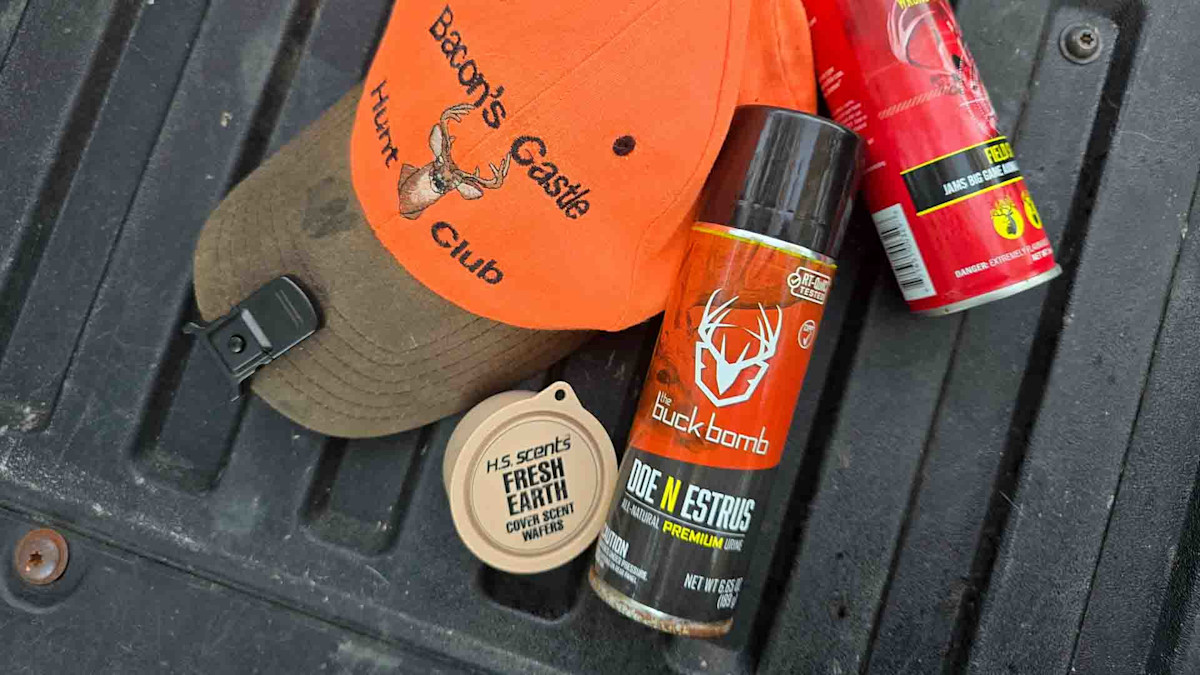

I’d been sitting 20 feet up a water oak watching two fox squirrels cache acorns for over two hours when I heard the gentle shush, shush, shush from behind me that had to be an approaching deer. I was right.
I caught a glimpse of antler as I slowly turned to look over my right shoulder, my head moving like it was caught in a jar of maple syrup. My shoulders tensed with a familiar thrill of adrenaline, but my heart dropped when I realized he was coming from downwind. I never expected that approaching buck to turn into a shot opportunity. I’m a religious believer in the gospel of the wind. I’ve always heard deer can smell a human from nearly a county away. I figure there’s no way to hide that kind of sin when the wind isn’t right.
But I cast a few prayers to the powers that be, hoping my fresh-earth wafers, one pinned to my hat and another on my jacket between my shoulder blades, would somehow outfunk whatever human scent was wafting on the wind.
That deer stopped once, pointed his nose up, then twiddled his antlers in some low-hanging branches. Then he squatted to pee and stepped straight onto the oak flat. A few minutes later, he was lying on the ground.
What the Wind Carries
I was no more a cover-scent skeptic than a cover-scent evangelist before that hunt. I pinned on those wafers before I left the truck because I had them and because I figured they weren’t going to hurt. I figure deer hunting is as much gambling as it is skill, and I’m game for pretty much anything that might tip the odds in my favor.
Whitetail deer have some of the most sensitive noses in the animal kingdom. One frequently cited estimate puts the number of scent receptors in a deer’s nose at nearly 300 million. Compare that to the less than 5 million scent receptors humans have, and you can start to get an idea of just how good a whitetail sniffer actually is.
With numerous intricate folds and substantial surface area inside the whitetail schnoz, there’s a good chance deer can also distinguish multiple smells at once, although it’s difficult to distinguish exactly what deer can smell since they aren’t exactly filling out surveys for us. Suffice it to say, a deer can probably pick out each individual ingredient in a stew, even when the pot is simmering on a stove somewhere down the holler.
But just because a buck can smell something doesn’t mean he’s going to react to it. Deer come across strange smells all the time. What matters to a hunter has less to do with what that deer can smell and a whole lot more to do with how it affects his behavior. The big question is whether layering a specific scent on top of human odor changes the response.
Under Cover
Hunters tend to lump a lot of different products under a cover-scent umbrella. But there are several different categories, all of which are designed to pull different types of wool over a whitetail’s nose.
Environmental Scents
Like my fresh-earth wafers, this type of cover scent is intended to make a hunter smell more like the woods around them. Think dirt, acorn, pine, and other woodsy scents. The idea is that it works kind of like your camo, so your scent blends into the background of other aromas a deer is used to.
Urine-Based Scents
These products use non-deer animal urine, including the little brown bottle of fox pee my dad used back in the 1970s. Other predator urines, like bobcat and coyote, are a different story. They are sometimes marketed as deer deterrents because predator urine can sometimes trigger avoidance by whitetails. That’s not exactly the kind of response you want when you’re sitting in a treestand.
Attractant Scents
This category includes doe-in-estrus urine, buck urine, tarsal gland scents, and other products intended to get whitetails interested, especially during the rut. Food-based scents, like sweet corn, apple, and acorn, can also fall here. Instead of masking human smells, these products are supposed to draw deer in.
Novelty Scents
Vanilla, anise, and other scents that don’t necessarily imitate something a deer’s nose is familiar with fall in this category. They’re often marketed as cover scents, but how they actually work isn’t always clear. Some theories suggest they mask human odor. Others suggest they distract a deer’s nose or create curiosity.
But Do They Work?
In 2009, Field & Stream ran an experiment that pitted a German Shepherd K9 named Blitz against a number of scent control products, including several cover scents. Blitz was tasked with finding a person hiding in a box. During different phases of the test, different scent products were used to see if they affected the dog’s ability to find the hidden human.
The cover scents didn't completely fool the dog’s nose, but they delayed detection by up to 45 seconds.
Of course, the experiment was informal. It didn’t take place in a completely controlled environment. It only involved one dog and zero whitetails. But hunters make decisions based on anecdotal evidence all the time. It’s why so many still believe the first cold snap in November triggers the rut. But there’s a difference between noticing something happen and proving why.
There’s only so much you can accomplish by layering one scent on top of another anyway. Spritzing some Nose Jammer on a turd doesn’t mean you stop smelling the turd. Before you start worrying about cover scents, start with the basics. Practice good hygiene, ditch the perfumy personal care products, and try not to haul the aroma of gas station into the woods with you. That’s a pretty good place to start. Just know, you’ll never completely fool a deer’s nose even with the strictest scent control regiment.
Final Thoughts
I would never completely change my whole approach to cover scents based on two fresh-earth discs and a single deer on a single day. I can’t explain why that buck kept coming toward my stand with the wind blowing in his face. Maybe he didn’t smell me. Maybe he was hellbent on the acorns. Maybe he just didn’t care.
But my son, who was hunting the other side of some cutovers on the same farm that same night, had a single doe approach his stand. She came from downwind. He was wearing two fresh-earth discs. That might be enough to make me a believer, or at least enough to make me pin earth-scented wafers on my lucky hat. Just in case.
Stay in the loop with The Wired to Hunt Newsletter
Shop
Related
Hunt
Do Cover Scents Actually Work?
Hunt
Blind Calling Strategies for Whitetails that Actually Work

Manage
Do Antler Point Restrictions Work?

The comments section requires Functionality cookies. Please enable Functionality cookies in Cookie Settings to view this content.