Wired To Hunt
Ep. 905: Cal and Kenyon Crash Washington DC for Public Lands and Wildlife
Play Episode
1h09m
This week on the show I'm joined by Ryan Callaghan to recap our Washington DC visit last week to meet with elected officials and advocate for our public lands and wildlife.
Connect withMark KenyonandMeatEater
MeatEater onInstagram,Facebook,Twitter,Youtube, andYoutube Clips
Subscribe toThe MeatEater Podcast Network on YouTube
00:00:01 Speaker 1: Welcome to the Wired to Hunt podcast, your guide to the whitetail Woods, presented by First Light, creating proven versatile hunting apparel for the stand, saddle or blind. First Light Go farther, stay Longer, and now your host, Mark Kenyon. 00:00:19 Speaker 2: Welcome to the Wired to Hunt podcast. This week on the show, I'm joined by Ryan Callahan to recap our recent visit to Washington, d C. To advocate for our public lands and wildlife. All Right, welcome back to the Wired to Hunt podcast, brought to you by First Light, and today we are recapping for you a recent trip that I took just last week actually with mister Ryan Callahan to visit Washington, d C. We were speaking there with our elected officials about the importance of our public lands, our wildlife, hunting and fishing opportunities, and everything in between. And if you have been following the news and various outlets that cover conservation and public lands and wildlife related issues, then you're probably aware of some of the things going on. If not, maybe you're a little bit out of the loop. We've tried to cover some of this here on Wired to Hunt. We actually just had cal on the podcast maybe a month and a half two months ago to talk about some things, But since then there have been all sorts of new issues and updates when it comes to what's happening with environmental protections, with public land related regulations and protections. There have been a number of proposals that raise some red flags when it comes to the future of these things. Take, for example, proposals from the current administration to possibly sell public lands for housing. There have been other serious discussions within Congress about using the sale of public lands to fund some of our budget issues at the moment that are being debated within the budget reconciliation process. And that's something that's particularly dangerous and concerning because this whole reconciliation process. To forgive me for getting some jargon here, but when a bill is passed through reconciliation, it does not require the sixty votes that most bills require. It can be passed with a simple majority, so fifty one votes could get something passed. And oftentimes in this reconciliation process, they lump a whole bunch of issues into these budget focused bills, so stuff can get passed as part of one of these budget considerations that just kind of gets tacked on to the end that could have far reaching implications. So in this case, a serious sale of public lands, something that would have generational impact for many of us, could possibly be slipped into this thing and then have to get passed because it's a party line kind of thing. So that's why this stuff is really getting a lot of people's attention right now. There's countless other specifics that we could get into that we won't, but rest assured there's been more news and proposals and action item type emails and action alerts sent out over the last few months that I've seen in years and years and years. And we've got to be paying attention to these things, and we've got to let our voices be heard and letting people know, whether they are Democrats or Republicans or something in between, let them know that we care about our public lands, we care about wildlife, we care about conserving these things and protecting these things for the future, for a sustainable, long term future. And that is why me and Cal and a whole lot of other folks visited Washington, d C. Last week to make sure that those kinds of ideas, that those causes and values are represented there in the halls of Congress. So today's podcast is me and Cale recapping that trip. We discussed what we did there, why we were there, the issues we talked about, the people we spoke with, some of these broader things going on. There was a number of kind of conservation related events going on there. We talked about that a little bit, but I think most interesting to you guys will be kind of the takeaways we had from these conversations. You know, what do these meetings with a congressional representative look like. We visited the offices of the House representatives, and we visited offices of senators. We met with everything from senior staff members to sometimes the senator or representative themselves. We talked to a lot of people. We got a very interesting kind of look behind the curtain when it comes to what's happening right now related to the issues we care about. So we wanted to report back to you on what we learned on kind of what the vibe is there right now, how concerned people are about these issues, or are not concerned about these issues, and lots in between. So we're going to talk about that. We're going to talk about tactics a little bit about how you can use some of the strategies and framing ideas that we used to advocate for these things to these people how you might be able to use that yourself when making a phone call or having a meeting of your own. And we talk about some of the things that all of this has made us realize about the future. What this entails we do in the coming months and years to make sure that we've got wildlife and wild places where we can hunt and fish and camp or climb or bike or whatever does he like to do. We want to make sure that can continue to happen. And if we want that to be the case, it's going to require not just me and Cale going to Washington, DC, but all of us doing our part, having meetings, making phone calls, sending emails, letting our elected officials know that this stuff really matters. So that is our podcast here today, and it's a special joint episode. So Cal and I we're both hosting this one and we're both releasing it on our individual podcast channel. So hopefully you know that Ryan Callahan has his own podcast. It's called Cal's Weekend Review. It's another show on the media or network just like mine. And you definitely should go over there and tune into that show and subscribe if you're not already. His show every week is a recap of the most important public land and wildlife and conservation related news and issues and updates. So it's a great place to stay aware of everything going on, so make sure you do that. And speaking of you know, back in the day, when I first started this podcast some like twelve thirteen years ago, I frequently reminded people to subscribe to the podcast, to leave a review, to share it with their friends and family. But I have not done that for a long time, and I've kind of gotten complacent on that because I just sort of assumed that everyone knows that and does that. But you know, this is a great reminder as I'm plugging Kale to also plug this one. If you're not already, please subscribe to this podcast. You can get every single new episode popped right up into your podcast app, so you don't miss one. If that's something you're interested in doing. Price to subscribe or follow, please leave a review if you haven't yet. We've been doing this podcast for free for more than a decade and if that has in any way benefited your life, which which I really hope it has. That's been the goal all these all these years. If that's the case, I would love to hear about that. I'd love to see your feedback there in the reviews and share with a friend, share it with a friend, excuse me, share with a family member. Anything along those lines would would be rific. So thanks to that in advance. Thanks for tuning into this one. Thank you for joining me and Cal and trying to fight the good fight to make sure we have these incredible opportunities and places and critters that make our way of life possible. So that's what today is all about. That's what our visit last week was about. And I hope you enjoyed this one. 00:08:25 Speaker 3: Hey, what's happening in Meat Eater universe. This is Ryan cal Callahan, Cal's We Can Review Cal the wilde Podcast Channel. I'm joined Todave for another special interview series with the one and only Mark Kenyon of Wired to Hunt Fame. This guy's been on the front page of Field and Stream. He's a cover boy, as they say in the biz. 00:08:54 Speaker 2: That's a deep cut. That's an old, old reference there. It's been quite a while, so you're digging out the archives. My friend, Well you got. 00:09:03 Speaker 3: I mean, you're I guess in the zeitgeist. I guess is what they'd say. He's a well cataloged human. He's been putting out content informing folks, I would say, primarily on the white Tail front for a lot of years. He's also an author working on book number two. I'm not sure if that's public knowledge yet, but it is now and today we're going to talk about being advocates, following through with our duties as citizens and voters in these United States taxpayers to inform our duly elected, let them know what they're doing right, what they're doing wrong, and what they could do better from are very specific points of view. 00:09:52 Speaker 2: Yeah, I got to jump into kil and just say that, if you've got free time once a week, I would for you to introduce me on every one of my podcast episodes too, like that. I could really use a hype man. You do a hell of a job, So thanks for that. 00:10:08 Speaker 4: Well, let's hear your let's hear your Wired to Hunt intro. 00:10:12 Speaker 2: Let's go the Wired to Hunt intro. I would, uh, you know, I'd open it up with the typical welcome to Wired to Hunt this week on the show and then what I would say is something along the lines of the fact that you and I crashed Washington, d C. Last week and had a lot of really interesting conversations about a lot of interesting things with people all throughout the nonprofit conservation ranks, the government, and points in between that that were a, I thought really interesting and important. But B and here's my hype man moment for you, kal H. We're just really eye opening for me with what you bring to the table as far as a leader in this space. So I really appreciated how you were able to communicate with some of our elected officials and the representatives and advocate for the stuff we care about, which is, you know what we're going to talk about here today. But long story short, I liked seeing how the sausage is made, I think, is what I'm getting to. I liked the fact that we're able to kind of see both inside the gears of our government a little bit. And then I also got to see into the world of Ryan cale Callahan, the fearless leader of Cal's We Can Review, and saw how you not just talk the talk, but walk it. So yeah, man, I'm glad we can catch back up here today to talk about everything that happened to talk about you know what? I have always watched from Afar and wondered, you know, what's really happening there? Does a visit there matter? Does it actually make a difference? What's that? You know? What could that lead to? I've had a lot of questions over the years, and so finally getting to be a part of that myself was very eye opening. I guess I've said a couple of times, but eye opening. So how do you want to do this? Where should we start? 00:12:10 Speaker 4: Cail, Let's say, what what were we there to do? What? What did we hope to accomplish? 00:12:18 Speaker 2: Yeah? What about you got there a day before me? Right, so I'll let you, uh, I'll let you lead with what you thought you were going to accomplish and what you wanted to do. 00:12:27 Speaker 3: I had a very, as it turns out, fortunate travel schedule where I and I really haven't even got around to talking about this elsewhere, but I got to join West Virginia Backhuntry Hunters and Anglers, the West Virginia Chapter, as well as several members of the West Virginia Department of Natural Resources on a about a fifty to fifty split private land, public land turkey hunt, and we floated the New River Gorge just gorgeous and awesome and super fun, and camped out on the river and hunted public land birds and public land off of the New River, and we got skunked on the birds. I had some fun encounters in there, busting through some West Virginia rainforest and then essentially in a not efficient route, went directly to d C. I had a firearm which I had needed to return back to my home, but anyway, so I landed in DC, went directly to Senator she He, which Tim she is our freshman senator here in Montana. He won the tightest race that we had this past election series with an incumbent Democrat, John Tester. 00:14:04 Speaker 4: Who has been. 00:14:08 Speaker 3: Really really solid on public lands, public access, and wildlife habitat issues during during his run as a senator here in Montana. And Senator Tim Shee is a freshman, he's brand new. So we had him on the Mediator podcast a couple of weeks ago. I think he did a good job. We talked about fire management, land management, and you know, kind of got to know him and his perspective a bit, which is always valuable, especially when you want to do what we're going to talk about, which is get your prerogatives across, right, And I met with one of his staffers with folks need to understand, like you don't always get to meet with the elected official, you get to meet with their staff quite often, and that you need to treat as valuable time because I know lots and lots of stories of it's it's. 00:15:21 Speaker 4: Like a mini government. 00:15:22 Speaker 3: Okay, So like your senator is your your head of state, and their staff is there to cover certain spheres of interest and then inform the head of state as to the whole situation, the feedback that they're getting, and probably more than likely offer an opinion as to what they think they should do. 00:15:59 Speaker 2: Yeah, the gate keeper, the prioritizer, right. 00:16:02 Speaker 4: Yeah, Yeah. 00:16:03 Speaker 3: And you know, I've talked to folks who have been staffers for a lot of different elected officials and they all have stories of this is why you need to take a staff position seriously. And one person in particular, they're working for an elected official in Colorado who had no hunting and fishing experience, but they're well aware that there are many hunters and anglers in the state of Colorado, and despite having zero hunting and fishing experience. That elected official had staffers who had hunting and fishing experience in spades. That's part of what he was rounding out in his cabinet, if you will. And they were able to pass a series of really good wildlife bills through that office, and largely on behalf of around on the shoulders of the staffers in that office. It looks good for the elected official. They're not tied to it in the way that that folks who hunt and fish all the time are. But they were good enough, smart enough to understand that they needed those people in their office. And so if you go in and you talk above their heads and you don't try to get to know them and treat them with respect, you can imagine like the type of report that's going to go back to the elected official right at the head of state, it's not not going to be a good one. And these are people that are in their orbit there, they are intimately familiar with each other. So, and I guess while we're on this topic, I will also throw out this something I was reminded of on this trip. DC is a very expensive place to live. As such, there's people who just stay in DC. So your staff are for your home state or state representative that you want to speak with you, it's you shouldn't assume that they are from the state that they're representing, which is an odd things go. So I like to say, hey, this is what I want to talk to you about today. How familiar with this topic are you, and again trying to approach things in a non confrontational, friendly way of like, we're here to exchange some knowledge, hopefully for the collective benefit. So if you tell me you don't know, I'm not going to be like, Okay, dumb ass, find me somebody else. 00:19:04 Speaker 2: Yeah. 00:19:05 Speaker 4: Right. 00:19:05 Speaker 2: One thing I did find in my experience too, and talking with some other folks, was that the educational side of things is just as important as trying to influence because in a lot of these cases, they simply, you know, especially with staffers, don't know about some of these specific issues that we're talking about, or maybe don't understand the full story. So yeah, just starting with that building a foundation is if that's all you did in these types of visits, that would probably still be worthwhile, just to make sure we're all looking at the same set of facts, at looking at the same deck of cards. 00:19:42 Speaker 3: You know, absolutely absolutely, and you know, I mean we're all subject to headlines, and there's a lot of headlines I would say the majority out there that aren't getting the real story across. And it's like you said, probably worthwhile to make a phone call, shoot an email over and just provide some some real facts and wildlife management is not a casual thing to read up on unless you're actually interested in them. Yeah, so so, yeah, I met with the Josh guy in Chihi's staff. We had a good conversation about a number of things. And this is kind of like to our goals of what we were trying to do encourage elected officials to stand strong on public lands, meaning we don't want to see public lands sold off. If we have to sell public lands at Darnshire, better go through the system that's in place so the American people understand exactly what they stand to lose, so they can make a better decision. 00:20:57 Speaker 4: During the public comment period as to. 00:21:04 Speaker 3: If they think the juice is worth the squeeze, which is something we heard a lot last week. And uh, by standing strong, we mean co sponsor Ryan Zinke's Public Lands in Public Hands Act. If you can't co sponsor. You should sign up and join the caucus public caucus. Yeah, yeah, make a statement and in return, we are more than happy to support you back. Let people know that you did a really good thing, and then you know, there's lots of data that we can provide as to why this matters, uh, financially and just in the American interest level. Something I did consistently across the board with everybody I spoke with was talk about the Grasslands Act, and as you and I discussed a little bit, one way that I did that was through talking about the Lesser Prairie Chicken Landowner Alliance, which is, you know, I'll just say, like a bunch of conservative ranchers who are trying to save ranching, and by saving ranching, they're going to save our most recently added used to be huntable species, the lesser prairie chicken, something that happened on our watch as hunters. It's sickening to me, but the lesser prairie chicken used to be a huntable species. Now it is not, and ninety percent of that population lives on private land. If they want to save ranching and do a good thing in turn for this endangered speed which I think a lot of Republicans perked up their ears on because the ESA is is quote unquote under attack right now, they can support the North American Grasslands Conservation Act, and in so doing they'll provide a funding mechanism directed specifically at ranchers who are trying to improve native grassland habitat which the lesser prairie chicken needs. So that was a big ass. And then another one that I think is a softball and something that a staffer could take immediate action on was and this is something that came up through chapter feedback at the BHA level, our chapters at Backcountry Hunter's names, they work a lot with state agencies, volunteering for different habitat projects and certainly lobbying for good bills when their states are in session, lobbying hard for good state management species and habitat. 00:24:20 Speaker 4: Well. 00:24:20 Speaker 3: The feedback that we're getting from our state agencies is that because of staffing shortages created by DOJE actions or through DOJE actions, either the early termination fork in the Road email which allowed for early retirement, early termination with some benefits to federal employees, or elimination of positions the office that approves and cuts the checks out of the Wildlife Fund, which is funded through Pittman, Robertson and Dingle Johnson dollars, excise tax dollars and then matched three to one with our license and tag fees at the state level. And these are are on the ground state projects that this administration is supposed to prioritize. They are not getting those funds. 00:25:28 Speaker 4: That the rank and file. 00:25:34 Speaker 3: State citizen wants and the state agency wants to make happen. They're not getting that cash to make these projects happen because there's nobody in that federal office to approve the project. Slash cut the check for the project that's already been approved. And that's a major issue, and that's how we're already seeing some impacts of some of these layoffs. So that's a really good one because it's some phone calls, some pressure that needs to be put on, said, hey, we need people back in this office. 00:26:11 Speaker 4: You're hurting your voters. 00:26:14 Speaker 2: Yeah, And. 00:26:16 Speaker 3: It's cash that doesn't need to be appropriated. It's a separate fund. It's our money, our sportsman angler dollars and our recreational shooting dollars and our hunting dollars that are going to hunt to fund our you know, more habitat and more access work. So those are three consistent ones across the board. 00:26:52 Speaker 2: So I guess to kind of recap with every one of these meetings, it seemed like there was there was like a three or four part framework. It was, you know, we came in number one, established you know, who we are, and then what we wanted to speak about, which was generally public lands and wildlife related issues. And then we spent some time more establishing Okay, you know this is who we represent. We represent mediator or first light or backcountry hunters and anglers, and you know, these are the things, These are the kinds of things that we care about. This is the kind of scale we have, This is the the community that we represent and reach. So that I think that was just setting the stage for hey, we represent a lot of interest, and we also we are worth listening to. I suppose would be a little bit of what some of that framing would be at the beginning. And then it was okay, now, given all that, here is why public lands and wildlife and these things we just mentioned, this is why they matter to our community. This is why they matter to your constituents. People that live in your state or your district, so we tried to, you know, share a little bit that would help connect those dots. And then finally what you just described there was the ask, so here's a specific way that we would like you to take action on this issue for us. And then finally, I guess, so this is more like a five part piece. We typically always ended with a little bit of that relationship building back and forth, which was, hey, how can we help you If you are willing to support these things, what can we do to make that easier for you? Or how can we support that? Or what can we further educate you on or what materials do you need or whatever it might be to help make this stuff happen. Because I can't remember if it was you who said this or somebody else, but you know, oftentimes these meetings are just a step one. This is that foot in the door which hopefully leads to maybe an email back and forth or another visit down the road or whatever it is that leads to you know, you getting one step closer to actually seeing the kind of action that you want to see happen. And so it was it was that basic recipe for every one of these meetings right, Kill, and I had let me see what my numbers are here. I had eight of these, and I think you had something pretty similar. So so I'll run through the list of the offices I met with, and then I want to hear what yours were. I met with Senator Risch's office from Idaho, Senator Heinrich from New Mexico, Senator Danes from Montana, Representative Zinki from Montana, Representative More from Alabama. Rep. Latta from Ohio, Salazar from Florida, and Malyotakis from New York. Who all was on your list? You mentioned Shehi already? Who else or what other offices did you hit? Kil? 00:29:43 Speaker 4: Let's see, I guess in order. Well, I had that evening. 00:29:49 Speaker 3: I went to the Ducks Unlimited Bank what they're in DC, and fat with you know, the new in our CS team, so freshly appointed National Resource Conservation Service team, which I thought was was great to get to know some of those folks, a lot of hunters and some ag backgrounds there. 00:30:19 Speaker 2: There. 00:30:19 Speaker 3: There are a couple of folks that I spoke with. They're definitely coming from different backgrounds in a lot of ways, but the similar parts were great. 00:30:31 Speaker 4: In the fact that. 00:30:35 Speaker 3: They have some bag background, there's some bird dog owners in there, there's some hunters in there. And you know, the National Resource Conservation Service is the largest conservation org. 00:30:50 Speaker 4: Would be. 00:30:52 Speaker 3: Agency, would be the largest conservation agency in the world, and they got hit pretty hard during the DOGE process. So I'm optimistic that these folks are going to be able to understand the benefits that they can provide to our egg producers, and we need as sportsmen and women, we need to understand that making sure our egg producers stay producing also keeps, quite selfishly, all that open space open, as in not developed. And they're going to do some habitat and some drought tolerance and fire tolerance work, and work on native species and work against noxious weeds and all those things that nrcs can do good good habitat work, providing perpetual ease months and keeping producing land producing while all also producing good habitat benefits. 00:32:02 Speaker 4: So that was great. 00:32:03 Speaker 3: I spoke with a bunch of folks in the Department of Agriculture on the topic of are we going to get a new farm bill and how can we help make that happen? Farm bill For everybody listening, it's not just for farmers like, there is a ton of conservation work that's balled up in the Farm Bill. Everybody thinks about CRP, but you also need to think about there's a private land hunting, private land public access program in there, and. 00:32:46 Speaker 4: More habitat work, more water development work. 00:32:49 Speaker 2: The EQUICK program is huge for getting cost share out there for habitat projects and technical expertise. Yeah, it's the biggest source of conservation dollars on a basis across the government. 00:33:03 Speaker 3: Huge, and it's getting long in the tooth. We're on our second extension and it needs to get updated and put into some more modern terms here, so super interested in that. Everybody listening should be interested in that, and you know, we'll do our follow ups and see what we can provide more information wise. Brings us to a next point. It's great to walk into somebody's office and say, hey, love your position on this, thank you so much for making it happen, which we did with Senator Danes and Danes's office, he has stepped in and been a big proponent of getting cash authorized for the VPA hip program, which is something that's buried within the Farm Bill. But that's a good access program and dollars for these private producers. So thank you to Senator Danes on that one. And I met with Crapo's office, which would be Idaho, and same deal, talked about public Lands, just kind of laid some things out there, made them aware of. 00:34:23 Speaker 4: Who we are. 00:34:26 Speaker 3: It's probably a little unclear, but I was kind of wearing two hats. I was there as the North American board chair for back Country Hunters and Anglers, So I would talk about our network of chapters, our diverse membership, how we're broken down politically, which I just said is diverse. So we have a lot of Independents, a lot of Republicans, a lot of Democrats, and it were hard to pin down, which is great. So we lean quite a bit independent, and we're right across all fifty states, and you know, our membership's just a little over north of thirty thousand, but it's growing like crazy right now, with you know, public Lands being so squarely in the headlines. It's kind of waking folks up again. So if you're not a member of BHA, please become a member of BHA. And I'll tell you why over and over again. But it's so you can have somebody in the room advocating for things like this, and then on the other side of my head, my bald head, I was representing meat Eater as the director of conservation and the fact that we have a office of business in four states. We have Phelps in Washington, Dave Smith Decoys in Oregon, First Light in Idaho, Meat Eater, and FHF based right here in bos Angeles, and we depend on public lands, public wall, public wildlife, and access to those things in order to sustain our business. And even going all the way back to like early days first Light sales, it wasn't just people in Idaho buying our gear, as people from all across the US, and their dream, if not reality, is to buy this stuff and wear it when they're when they're hunting or fishing or exploring our public lands and public waters in pursuit of public wildlife. And then I would throw some some business stats at them, how big our reach is, our podcast network, how many people we talk to, how many how much feedback we get get back from the outdoor population here in the United States, And you know, drive home the fact that even though some recent headlines have said, had oh Western states love public land or just Montana loves public land. That's not what our data says. Yeah, this is a national issue and we need you to stand firm on this because if you don't, you're going to be on the wrong side. So that was Crapo's office, and then I met with Senator Kramer's office. Can't remember what day that was at this point over there in North Dakota, And you know, I had a great conversation over there. Lots of overlap. Senator Kramer's done a lot of good things for national parks and we need to see that kind of same passion on just the regular old public land side of things. And had had a good, good conversation over there, but need to follow up. 00:38:03 Speaker 4: And then. 00:38:07 Speaker 3: Had the TRCP dinner that night. And so the Teddy Roosevelt Conservation Partnership of which Steve is well, Steven Ronelle is a board member, and he likes to host that thing mc it. 00:38:20 Speaker 2: Does he like to or does he get roped into it? 00:38:24 Speaker 3: I think he likes to do it because you know, when you're on a board, as you know, everybody kind of has their strengths and you want to play to those strengths when you volunteer. And so This is like one of the ways that Steve gets to publicly volunteer for the conservation organization that he sits on the board with. 00:38:50 Speaker 2: It's a good point. He does a good job. He did a good job. You and I got to kick back and enjoy our dinner while while poor Steve was up there working the room. 00:39:01 Speaker 4: Yep, yeah exactly. 00:39:05 Speaker 3: But that room is so they always give one of the Capital Conservation awards to a Democrat, a Republican, and then. 00:39:21 Speaker 4: Uh someone in in. 00:39:23 Speaker 3: In the field that's probably not an elected representative. And so it's a really good diverse room. There's lots of different organizations present. There's lots of lobbying groups present. There's lots of newly confirmed for for this year anyway, positions of leaders leadership. The Chief of the Forest Service was there. 00:39:52 Speaker 4: I did not get. 00:39:53 Speaker 3: A chance to talk with mister Schultz there. I really would have liked that. Lots of kind of movers and shakers. So when you're in that room, your you know, your job is is really to have those conversations, introduce yourself, speak to people, say hey, you know, thanks for joining the civil service. Being the chief of the Forest Service. These are the things that really matter to us. I'd love to sit down and talk with you more about it later, try to get a meeting that way, at least make the introduction. And it's also a great information gossip circle, especially if folks get a little couple of cocktails in. 00:40:42 Speaker 2: Them and start getting the real scoop. 00:40:45 Speaker 3: Yeah, you can hear like, well, what are you hearing and what's happening on this topic and the topic reconciliation and it it does matter, And. 00:40:58 Speaker 2: You hear about this networking bus word right, And that's one of those things they say in business or whatever. You got a network, You got a network. But man, it's it's so true that oftentimes relationships and who you know or if you know this person, that stuff matters even in this world too, just with you know, having someone you can call who might know the guy who understands what's actually happening, or might know the woman who can get you up, you know, some face time with such and such persons. So yeah, an event like that awards dinner is about as good as you can get. And I'm sure the du dinner the night before was similar. Just being around people who are involved with the decision making that impacts our public LANs and wildlife and all those people in that room have you know, really really important touch points to those things. So, just like you, it was all about talking to as many people as you can, building those connections because you never know when there might be when there might be cause to give that person a call or also, you know, making sure that people know that you're available, right. That was a big thing for me too. I was talking to folks in different organizations and you'd figure out, oh, we care about some similar things, or there might be something that I could do to help them out that I would like to help with that I never knew about. So lots of stuff kind of comes out of those random meetings at an event like that, And I think that for anyone listening, there's going to be like local versions of that, whether it's like a BHA pint night or a Ducks Unlimited banquet or a volunteer event with a state game agency, like any one of those events is worth being at because of that community you might be able to build, because of those connections you might need, you might be able to foster that who knows, might help you someday down the road, whether it be you know as an advocate for these places or who knows what? 00:42:53 Speaker 3: Oh, and I mean if we're thinking, we're talking really about something that's huge, right, We're talking about the National Day and the idea that our federally managed lands could be sold in order to somehow satiate the national debt somehow. It's going to take a broad, diverse coalition of people to get on the same page and kind of have the same language and make the same statement, No, this is not. 00:43:27 Speaker 4: Going to do it. What else you got? 00:43:29 Speaker 3: Yeah, don't you think having these lands working on our behalf is going to pay more dividends in the long run than selling them right now and never getting them back. 00:43:41 Speaker 4: Things like that. 00:43:42 Speaker 3: So yeah, you know, talking with those folks that aren't in the hook and bullet community and letting them know that, yeah, you're available. We're absolutely on the same page, like very very valuable. 00:44:00 Speaker 4: And you know, just like you and I do. Folks listening do when. 00:44:07 Speaker 3: You know, like I see somebody in a three piece suit and fancy shoes with you know, those no sock thing that's going around, you know, I'm like, oh, this person's not necessarily one of my folks. How are we going to handle this? I see somebody coming in a plaid shirt, jeans and flip flops. It's an easy approach, it's an easy conversation. You know, folks in DC are the exact exact same, So when they know your name, when when anybody knows somebody's name, they're eighty percent more likely to open that email instead of blow right past it. This So you got to make these connections. You got to reach out to folks that don't look like you, act like you, dress like you, and say, yeah, this is this is where we overlap. We'd love to work with you on this. And my point also is you may not divulge as much to somebody who visibly doesn't look like they care about the same stuff you do. So when you're in these gossip circles, you can be like, oh, that's interesting. I met with them today too, and they actually told me this. And if you and I are on the same page on this public lands thing, I have no problem sharing that with you. And I had several versions of that conversation last week, and you know I'm here to win on this public lands deal. 00:45:54 Speaker 4: So. 00:45:56 Speaker 2: Whatever it takes. Yeah, So cal out of all these conversations and you had you know, all these various dinners and press conferences and then the office visits, like we were just discussing, you know, I had a few things that stood out to me as far as like high level takeaways or I guess lessons or vibes that I kind of picked up. And I'm curious if you felt anything similar. But one of the things that was a this was a little bit more personal for me, less so probably for you. But going and doing this, this is my first set of hill visits like this. I came out of it much more confident in my ability to do more of that kind of thing. I think before you go into this, there's a certain level of intimidation or this idea like, oh gosh, this is going to be like an interrogation. You're going to go in there and they're going to be like arguing with you or trying to make you feel stupid, or you know, it could be confrontational in some kind of way. And every one of these meetings was was so far from that. All of these were much more low key than maybe the average person thinks. This is literally showing up walking into an office saying, hey, I'm here to see Kate and sitting down for a nice chat, and they all you know, were polite, interested, maybe ask a few follow up questions. In every single one of these meetings, I generally felt like I knew more or just as much as, if not more than they did about these issues. I came in, We came in as the subject matter experts. And I think most anyone who's into this kind of stuff and wanted to make a phone call like this or go in person to a state capital or the nation's capital or whatever it might be, they're probably going to be in a similar boat because again, like we talked about the beginning, we're meeting with staffers. We are not meeting with the you know, secretary of the interior or something in most cases who is entrenched in these things. So you can go into this again feeling pretty confident that you know what you're talking about. This is your issue, this is your passion project. And so this was a great reminder, and what I want to pass on to people listening is that, you know, do not feel like this is above you or beyond your capabilities. If you care about this stuff enough to listen to a podcast like this, you are probably armed and ready to go and have a chat like this with someone in one of these offices. So that's number one and number two, And this is something that I'm I think that you heard as well. But from the outside looking in, over the last handful of months, I think a lot of us have said like, oh wow, this feels crazy right now, this moment feels unprecedented. There's been a lot of that kind of terminology thrown around the news, and I felt that way myself. What was interesting was that I was hearing that from people in these offices too, So this wasn't just like an outside Oh it seems crazy from the outside. Everyone on the inside said the same thing, both sides of they all too. This was I was hearing this from Republicans and Democrats, things like everything's so uncertain right now, this is wild, this is unprecedented. Anything seems possible, nothing's off the table. Oh I thought this kind of thing would never be possible, but now anything is. I heard so many versions of that from many different people that, again, I think, just shines a spotlet on how important what we're talking about right now is. Because if anything's possible, then these issues that we care about, it's more important than ever to make sure that we're on the right side of them. So anything else for you stand out from all your conversations, or was there a big like consistent through line across the border or anything else for you. 00:49:53 Speaker 3: We definitely heard a lot of I mean, I'll definitely back you up on that. There's a great quote of and this is coming coming from a senior policy person in a Republican office saying, Uh, guys, I'll be honest with you. Trump has been really shaking the snow globe here. Our job is not easy right now, and you may have more information than than we do on some of this stuff. So that is interesting. And I will tell you and the listeners past administrations, including Trump's first term, there was way more information and way more access purposely coming out of the administration to get people on the same page, get them informed early so they can be prepared for to make next steps. That is largely not going on. It's it's kind of stealed rooms at the top top. And just from my experience, I did notice a lot of people who are way more informed paid to be way more informed than I am, taking real notes of what I was saying. After recapping a meeting because as we've already discussed, like different communicators get different information and slightly different versions and different levels of access, and that could be based off of that representative or to offfer just being tired and later in the day, or they're more energized and earlier in the day, or you know them or their family member, or you have some sort of a personal connection to a place or resource or something that connects with them and they go, all right, I got to tell you what's going on. So it is an interesting time. I will say that. I would say one of the other themes that we heard was working in a bipartisan manner, trying to work across the aisle. And we definitely saw this in Trump's first administration, where things kind of deadlocked after midterms, and you know, really the things that moved were the outdoor bills, like positive things because those are largely nonpartisan issues and folks want to get some stuff done and get some wins. And there's a lot of that talk going on right now too, which is like, yeah, we are working Zinky, working with Gabe Vasquez, Congressman Vasquez out of New Mexico, Danes making some positive statements on some some Democrat led things. Heinrich may making some great statements. Heinrich, a Democrat of New Mexico, making some some very positive statements about Danes and and Zinki as well. 00:53:54 Speaker 2: So you know something that yeah, speaking of that, something that I just was remind kind of which I hadn't heard as much about in recent months, but it was nice to hear. When you and I sat down with Senator Heinrich and you guys were recording that podcast. One thing he mentioned that I was really excited about was that he is definitely feeling bullish about the prospects of getting recovering America's Wildlife Act, you know, reintroduced and pushed forward again in this Congress, and that there was energy from both sides of the aisle again supposedly, and that's something that again would be a really important funding source for state wildlife agencies and their wildlife management plans. So you mentioned the Endangered Species Act earlier and how that's something that gets a lot of people really fired up. That's kind of like an emergency room for wildlife. Well, REIWA would be, you know, as Senator Heinrich said, is more like the primary care So like that's where we can deal with wildlife issues before they're at serious risk of death or in this case, you know, extinction species wide. So that's a bipartisan one right there. That would be a huge win if we could somehow get that to move forward at this time, given all the other things and cuts being met other places, I think that securing some kind of funding like this for wildlife would be really important. And then the one other thing I'll add on that front was that on my first day there, you had I think your press conference and stuff like that during the TRCP Joint Corporate Council and Policy meeting, and that was something that I did attend. And during that we basically had a bunch of representatives from conservation organizations and from the hunting and fishing industry, so representatives from companies, and then we were all meeting together with a number of different speakers talking about issues impacting hunting and fishing and conservation and all the stuff going on with the current administration and politics and ramifications for hunting and fishing and public lands, YadA YadA. One big stand up point there too was just what you said, which was the importance of trying to have a non partisan angle on this because you know, there certainly are things coming out right now that most of us would say is not good for hunting or fishing or wildlife for public lands. Right. But if all you ever do is scream bloody murder about those things and villainize the administration for all that, you would never have an opportunity to work with them on anything good too, or to establish communications or to help, you know, inform these people about different ways to think about things. And so a key theme of the TIERCP meeting was how do we address these issues in a way that's good for hunting and fishing and wildlife and public lands, but at the same time gives us an opportunity still to have influence with whoever is that the is at the levers these days, no matter if it's a democratic administration or Republican administration. We want our issues to be at the table. We want our voices to be heard. So, you know, I think that's an important thing. Whether you are an individual or a conservation organization or a larger group like the TRCP, or a business that's thinking about how to engage in this stuff, I at least certainly think that you can be more effective for the things you care about. If you simply say, hey, I'm going to work with whoever. I don't care who's doing things. Let's just make sure we are being heard, and then we have some ability to have some kind of influence to move you know, maybe it's five yards down the football field right now. That's certainly much better than going twenty yards backwards. And you have no chance to do that at all if you are not even in the rooms and not even having your phone calls answered or your emails read or whatever it is. So that really stood out to me. And you know, coming out of this, you know, handful of days there, I guess it gives me maybe a little bit more hope that those kinds of things are possible because there was, you know, some degree of talking about it. So I don't know, I certainly hope that there's more momentum there to be had. 00:58:08 Speaker 3: Yeah, I'd hope as well. And you know, it's just a consistency game, right. You can't let people think that you're going to ease up or this is no longer an issue, because there's always issues popping up and there's so many things that will fill that space if you aren't being consistent on these asks or educational moments or whatever you want to call them. 00:58:41 Speaker 1: You know, So. 00:58:43 Speaker 2: That was the single biggest thing, and started jumping on you again, kill But the biggest eye opener, like the biggest takeaway from my entire visit was this. It was walking through the hallways of the Senate office buildings and the House office buildings, and especially saw on the House side there were just hundreds and hundreds and hundreds of people all walking around these same hallways as you and I were flooding all of these offices with their own issues and with their own pet causes and with their own concerns. I mean, there were thousands of other people, and I'm sure this is happening every single day, day after day after day, talking to these elected officials about Hey, pay attention to this, Hey, listen to me on this. Hey be careful about this. Hey watch out for this. Hey please advocate for this. Hey a b CD e FG right. They're getting it from Sony different angles on so many different issues that you know, any one single phone call, any one single meeting, it's going to get lost in the noise. It has to be, you know, to move the needle on this kind of stuff. I this like just I knew it intellectually, but it became like real in a tangible way after seeing this. It's like you have to be doing this over and over and over again, and with so many different people doing it from so many different angles, all kind of beating the drum for the same cause, and only in that kind of way. Like if you if you imagine like a snowball, like what you and I did the other day was we got a little snowball kind of rolling down a hill, and then someone later in the day was hopefully going to take that same snowball and keep rolling it down the hill, so it got a little bit bigger, and the next day, the hope is that there was somebody else there from another similar organization who's rolling that snowball a little bit more, and it gets bigger and bigger, and over days and weeks and months and years, you finally break through the noise and people can't ignore you anymore, or you stand out above all of these other things. It just seems like this is this is even more I don't want to say daunting, because daunting sounds disheartening, but this requires all of us, This really requires all of us. And it's not something we're going to solve with one thing. It's it's just one straw on the camel's back and you just got to keep on stacking them. And that was my big takeaway. I realized like, oh wow, this can't be a one time thing. I'm going to have to come again, and I have to come again. And actually, when I was in the airport flying home, I called my representative because I'd wanted to stop in his office and we didn't get to. So I left a voicemail and said, Hey, I was just walking by your office earlier today wasn't able to stop, and but hey, want to remind you about AB and C and and something you said to me earlier this year cal on this issue was that we should be making plans to check in with our elected officials on a weekly basis. And I remember thinking, like, WHOA, I'm not doing it that much. I thought I was annoying with how many times I was emailing or leaving voicemails. But now I realized that you weren't kidding. We really do need to ramp it up. Whatever level you're at, it's you got to go up another level. If we want to stand out in this moment. I saw a whole lot of folks walking around with last week killer. We got to make sure that somehow our folders are a little bit more attention worthy, is what I'm trying to say. 01:02:08 Speaker 3: Yeah, and man, trying to get across it's not a trope cliche. 01:02:20 Speaker 2: Thing. 01:02:20 Speaker 3: It's like everybody does have a voice, and people are checking those boxes. Right. So when we go into an office and we talk about managing for fire, they're like, oh, okay, yeah, you guys know your stuff, and that's that's great. A couple of hunting guys don't really understand what you do. 01:02:50 Speaker 4: Podcast people cool. 01:02:54 Speaker 3: They need to hear that from a couple of dudes who are like, yeah, hey, we're plumbers in you know, the Gallatin Valley making money hand over fist right now with the crazy housing boom. What we do with our cash. The only reason that we suffer through being on call and working crazy hours and going from job to job to job is because we want to hunt. And good fire management provides excellent hunting opportunity. 01:03:27 Speaker 4: This is super important. 01:03:29 Speaker 3: And you know, like the law and care people and every single order of society, right, like, hey, I'm a childcare specialist. This is what I do. I work in the hospital. All everybody has a voice. And by making these phone calls and emails and visits, pretty soon like that spreadsheet of interests is going to be filled out. 01:04:00 Speaker 4: I'm gonna be like Jesus. 01:04:02 Speaker 3: People are spending a lot of their own time, own money to get here or make a phone caller or write an email, and they're coming from all walks of life, and they're all basically saying the same thing. I should probably think really carefully before we sell off public land or we don't sign on to this bill. 01:04:23 Speaker 2: Yeah, I'll give one encouraging anecdote on that front. When you and I were going to visit with a Senator Risch's office there from Idaho, you had to bounce for the Zincy podcast, and so I took that meeting on my own. And something that stood out is I kind of gave the I kind of ran through our bit talking about the importance of public lands and you know, the value that they provide to hunters and anglers and our community and our business audience and all these different things. And I made some kind of line or kind of common at the end, just something on the lines of you, I hope you've heard something like that from many other people. And she stopped and she's like, oh, trust me, we have heard this from a lot of people lately. So she looked over like there was an intern with her and like they kind of looked at eyes. So I feel like we are not alone in this right now, like there has been a lot of that. And you know, a good example, this is what there were several different groups of conservation organizations. They are around the same time that we were, so like the outdoor industry like not hooking Bullet, but more of like your ARII crowd, the Outdoor Industry Association and the Outdoor Recreation Roundtable, a bunch of these groups that bring together those industries. I know that they were there in town recently around the same time, probably talking about some of these same things. So you know, when we work across the board in that kind of way, it's it's good. It's gonna do just like what you said, spread our message from many different angles to the point it's it's undeniable. You can't ignore it anymore. 01:05:57 Speaker 3: When that happens, that's right, that's right. So we got to just keep on keep on trucking, all right, have a b h A meeting that I'm four minutes late for. 01:06:16 Speaker 2: On that note, then you better, you better get out of here. It's not as bad as the time I forgot to pick up my kid during our last podcast. 01:06:23 Speaker 3: So oh, I know, I know, But yeah, Mark, We're gonna do more of this. We're gonna, i think, hopefully get across to more people that just because we're a for profit business doesn't mean that we can't be in the business of advocating for our customers and ourselves and public lands, waters and wildlife access to them. And you know that brings a certain something to the table. And and when we do our jobs as volunteers for n d A or b h A, that brings us certain something to the table. And then our personal experiences bring a certain something to the table. 01:07:05 Speaker 4: And I have no doubt. 01:07:08 Speaker 3: Even if we made zero impact last week, that what we're doing advocating for these things matters. And even if it made zero impact, we did get her foot in the door. We got on a first name basis with some folks. We got to follow up and our next trip or next round of emails or phone calls is going to carry a little more weight. 01:07:38 Speaker 2: Absolutely, we're gonna keep on pushing that snowball down the hill. And I'm glad you're you're there right there alongside me doing a kill. 01:07:44 Speaker 3: Thank you, No, buddy, man, you're you're leading the charge. 01:07:47 Speaker 2: Man. 01:07:47 Speaker 4: I love love the communication. You're you're you're crushing it. 01:07:52 Speaker 3: So if folks have anything to ask old Mark Kenyon, ask him yourself, go over listen to his podcast. If you really need to, you can write me. 01:08:02 Speaker 4: At ask c Al that's Askkal at the meeater dot com. 01:08:05 Speaker 3: Let me know what's going on in your neck of the woods. And uh, you know, I like hearing that. 01:08:11 Speaker 4: I'll get back here. 01:08:12 Speaker 2: And if you're listening to this on Wired to Hunt, make sure you go over to Cal's Week in Review, subscribe to his podcast, set him an email, do all those things you just said, and get your weekly dose of conservation news and whatnot for mister Ryan Cale here. 01:08:28 Speaker 4: Thanks a bunch. We'll talk to you next week. 01:08:35 Speaker 2: All right, And that's a wrap for our episode. Thank you for tuning in to this special joint meeting of the minds with me and Cal discussing our DC trip. Hopefully that was eye opening for you and insightful and like we said there at the end, please subscribe to Cale's podcast. Tune into him every week, Subscribe to this podcast if you haven't yet, and uh until next week. Thank you for being here, and stay wired to Hunt.
Presented By
Featured Gear

While you're listening

Public Lands & Waters
Florida Bill Threatens Public Advocacy for Lands, Water, Wildlife

A concerning bill is moving through the Florida legislature that would make it legally and financially jeopardizing to publicly criticize agricultural products and practices. While it may seem, on the surface, like an attempt to protect farmers from defamation, this provision could serve more as a...
Maggie HudlowFeb 4, 2026
Read MorePlay Now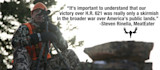
Public Lands & Waters
Roosevelt, Robber Barons, and the Continued Fight for Our Public Lands

Last week, we all witnessed the beauty of democracy in a vivid way when Utah congressman Jason Chaffetz withdrew a piece of proposed legislation called H.R. 621. If passed, this bill would have instructed the Secretary of the Interior to begin disposing of your federally managed public-land hunting...
Steven RinellaFeb 8, 2017
Read MorePlay Now
Wildlife Management
Washington Wildlife Commissioners Who Axed Bear Hunt Criticized for Misconduct

In November 2022, the Washington Fish and Wildlife Commission voted to permanently eliminate the state’s spring black-bear hunt by a 5-4 margin. Now, the Sportsmen’s Alliance is seeking to remove four of the five commissioners who voted against the hunt, claiming that they “demonstrated incompetence...
Eli FournierAug 7, 2025
Read MorePlay NowConversation
Save this episode