Wired To Hunt
Ep. 1098: Big Buck Success and Rut Hunting Lessons with Dan Johnson and Jake Hofer
Play Episode
1h22m
This week on the show I'm joined by Dan Johnson and Jake Hofer to discuss our recent rut hunting success, the lessons we learned, and how to apply these ideas to your remaining hunts.
Presented by Moultrie
Connect with Mark Kenyon, Jake Hofer, and MeatEater
MeatEater on Instagram, Facebook, Twitter, Youtube, and Youtube Clips
Subscribe to The MeatEater Podcast Network on YouTube
Shop Wired to Hunt Merch and MeatEater Merch
00:00:01 Speaker 1: Welcome to the Wired2Hunt podcast, your guide to the whitetail woods. Presented by First Light, creating proven, versatile hunting apparel for the stand, saddle, or blind. First Light, go farther, stay longer. And now, your host, Mark Kenyon. 00:00:19 Speaker 2: Welcome to the Wired2Hunt podcast. This week in the show, Dan Johnson, Jake Hofer, and myself are recapping our 2026 ruckcation exploits and sharing with you the key lessons learned and what led to our success. All right, welcome back to the Wired to Hunt podcast brought to you by Moultrie. And today, as I just shared, we are talking rut recap. Myself, Dan Johnson, and Jake Hofer are going to be sharing what we just experienced over the last couple weeks of November and late October, what worked for us, what didn't, What kinds of lessons did we learn along the way? And how might those things be able to help you in the coming days and weeks as you wrap up the month of sweet, sweet November? You're going to hear about at least two beautiful bucks with tags on them and one very, very close call. But I'm not going to tell you who did what. We'll leave a little bit of suspense there for you. But that's the plan for today's show. I do want to plug and just remind you that the Rut Fresh Radio podcast that Jake hosts that comes out, I think it's every Wednesday on the Wired to Hunt feed, that has so much up-to-date, you know, recent intel that can help you with your upcoming hunts. Make sure you're checking that one out every week, especially during these final weeks and months of the season. 00:01:47 Speaker 3: It's going to help you. 00:01:48 Speaker 2: If you still haven't filled that tag, this is going to be the intel that I think can help push you over the edge. 00:01:53 Speaker 3: So check that out. 00:01:54 Speaker 2: And without any further ado, let's get to my chat with. 00:01:57 Speaker 3: Dan and Jake. 00:02:03 Speaker 4: All right. 00:02:03 Speaker 2: With me on the show, I've got Jake Hofer and Dan Johnson. This is a, uh, a podcast host trifecta rut recap, extraordinary episode. 00:02:16 Speaker 3: How are you two guys doing? Doing well. Great to be here. 00:02:21 Speaker 2: I appreciate you both making time here fresh off of the first two weeks of November. 00:02:26 Speaker 3: Uh, not a lot of sleep, a lot of chaos, a lot of excitement. I'm sure. 00:02:29 Speaker 2: Um, But on a 1 to 10 scale, Jake, I'm going to steal your job here a little bit. On a 1 to 10 scale, looking back at the first half of November, how would you rate your activity, your experience, the rut? And I'm going to go with you, Jake, since this is usually your game, but I'm spreading it out a little bit. 00:02:52 Speaker 3: First two weeks of November, how was it, 1 to 10? 00:02:56 Speaker 4: I'm not going to say it was the best November ever, so I have to spare the 10. But overall, I mean, it was a lot of fun. Deer were doing what they're supposed to. Like a 6.7 or so. And the only reason I say that, the weather was really strange for November. I mean, we still hadn't had a hard frost. There's a lot of crops still in. A lot of things that you take for granted in the first half of November weren't quite there. So it wasn't, you know, in August when I was daydreaming what November was going to be like, it wasn't exactly like that. But overall, it was still November. It was still fun. It was still great. You still learned lessons. So it was a, yeah, 6.7, 6.8, something in there. I love that level of detail too. Like you're not even going like whole numbers. We're not even going half numbers. We're going 0.7, 0.8. You really gave us a lot of thought. I imagine that our next person is not going to give this much thought. Dan. 00:03:52 Speaker 5: Dude, but just wait a second. Wait a second. That's how we're starting this episode off. 00:03:57 Speaker 3: Yeah, it is. 00:03:58 Speaker 5: By just going right into it. There's no, like, we're not going to talk about, like, right before I walked up the stairs, I had a perfect pee. Dude, we're not going to talk about, like, I wanted to ask Jake, because I don't know if I've ever really talked to Jake. Like, dude, what are your thoughts on grown men eating peanut butter and jelly sandwiches? I had a peanut butter and jelly sandwich right before I came up here. And then I thought to myself, like, do real men eat peanut butter and jelly sandwiches? 00:04:28 Speaker 3: That's my sandwich of choice. That's my sandwich of choice. 00:04:32 Speaker 5: Oh, it is. 00:04:33 Speaker 4: It is. 00:04:33 Speaker 5: PB & J. 00:04:34 Speaker 3: Tree stand. That is my sandwich. 00:04:36 Speaker 5: Yeah. What about like at home, normal day? 00:04:39 Speaker 4: Not a big sandwich guy, but we, we actually, so like getting ready for all these rut hunts, I was like, I can't remember the last time we bought a loaf of bread. A jar of peanut butter and a jar of jelly. So I don't know. I'm a big taco guy. Tell me you don't have kids without telling me right there. 00:04:57 Speaker 5: I do know exactly. 00:05:01 Speaker 2: I can't remember the last time we've gone to the grocery store and not bought bread, peanut butter, and jelly. 00:05:07 Speaker 3: It is a stable. 00:05:08 Speaker 5: We go through, I'm not joking, one pound of grapes a day in our house. And grapes are like eight or nine bucks a pop, like for a bag of grapes now. So my son, he's addicted to grapes and we let him, we let that slide. He's it's, it's, it's good anyway. 00:05:27 Speaker 2: So, and that's going to be a wrap for us today, folks. Thanks for joining us on the wire podcast. 00:05:32 Speaker 5: Yep. 00:05:34 Speaker 2: Yep. 00:05:34 Speaker 5: So I had to, I had to throw my sauce in there a little bit. Cause I don't want, I can, we can't, we can't just go right into deer hunting. You're right. 00:05:43 Speaker 3: What made the perfect pee the perfect pee, Dan? I got to ask now. 00:05:46 Speaker 5: Dude, I hit the flush on the perfect time. 00:05:50 Speaker 3: You're one of those guys. I remember you talked about this. 00:05:52 Speaker 2: You like to time the flush to the ending. 00:05:55 Speaker 3: Is that right? 00:05:56 Speaker 4: Yep. 00:05:56 Speaker 5: So the last drop of pee hits the toilet as the last drop of water is getting flushed down. And then it's just perfect. And then you're like, dude, I'm the man. Yeah. 00:06:08 Speaker 2: Did, did we talk about this on a prior episode or did you post about this on social media? 00:06:13 Speaker 5: No, we talked about it on a prior episode where I asked you if you'd ever did that. And you said, no, then you said I was weird for doing that. And by the way, most of the wired to hunt followers thought you were weird. So suck it, Mark. Joke. 00:06:29 Speaker 3: Joke was on me. I got to eat my words on that one. Yes, you're right. 00:06:34 Speaker 4: Yeah. 00:06:34 Speaker 2: Um, Answer the dang question though. The original question, Dan, on a one to 10 scale. 00:06:39 Speaker 5: Well, nine, nine, but, but that's as high as my scale goes. 00:06:46 Speaker 3: You are full of it today, Dan. 00:06:47 Speaker 5: I know, right? I'm fired up. Told you. Listen, listen, my, it rained the first, I don't even know how many days, the first five days in November, three days in November. And not only did it rain, but the farm that I was at where all my shooters were at, was, um, was wet. And I mean, standing water everywhere, crops in everywhere. 00:07:13 Speaker 3: Yeah. 00:07:13 Speaker 5: Wet. I couldn't drive my truck back there. I could barely get my e-bike back there. My e-bike took a shit. So now I'm walking from where I park my truck. Cause I can't get any closer all the way back there. And it honestly, it just, that part sucked. However, every sit minus one, Mature white tail, shooter white tail, tons of, and by the way, all of them were by themselves. I did not see one deer over four year old or older chase anything. The two year olds, three year olds, the spikes, all them, they were chasing like going crazy after these doe groups and they just weren't ready yet. And the big dogs knew that. And so the big dogs were laying their scrape line in these pockets of no rain, Finally, the front moved through on November 5th. And dude, I had the best morning of whitetail hunting I have ever had in my entire life. 00:08:15 Speaker 3: Period. 00:08:16 Speaker 2: Well, I was going to make you wait to the very end of this podcast to tell your story, but you were so eager. You've just jumped right into it. So I'm going to let you, I'm going to let the big dog eat. And what I want to do here is each of us to tell the story of our ruckations of our, you know, first half of November fun. And then I'm going to, you know, all of us can kind of press each other on some of the key lessons learned, maybe any mistakes we made, things we would have done different, stuff like that. But you're already there. So give me a little bit more detail. Is there anything else leading up to November 5th you need to tell us about? 00:08:49 Speaker 3: Otherwise, give me the details. 00:08:51 Speaker 5: Actually, two things. So this last March, I go shed hunting, okay? And I was really optimistic about the group of three-year-olds that we found that we had the previous year, maybe even a four-year-old found a ton of deadheads this year. And so I was just kind of bummed, not really knowing what was going to happen while we were on our shed hunt though. I knew I had an upcoming knee replacement surgery that took place in March. And so while I was there, I set up, moved and set up three different tree stands. And the tree stand that I eventually, you know, fast forward, killed my deer out of this year was 30 yards off the action last year. And so I took it down. I moved it right to the, where I felt the action is. I'll get into the details later about that. But that whole, that whole thing started last, last March where, um, the key word here is observation, dude. Like if you're going out in the woods and you're not observing and mentally banking deer movement, you're not, you're not improving yourself for the next year. If you want to stair step up to better deer movement or you know understand deer behavior on your farms and things like that so it was uh very important to me on all my farms to observe deer movement And that's going to tell you a lot of what you need to know, whether that's getting closer, trying to kill a doe, a buck, whatever, whatever you want, right? You got to observe. So I observed the deer movement. So fast forward to November 1st, you know, got to do Halloween with the kids next morning, load the truck up, drive in rain the whole way. So the evening of November 1st is my first hunt. I am, I've, I use an e-bike to get back there because of the mud and how wet it was. Couldn't drive. So throw the e-bike on, get all my stuff set up. I know exactly where I'm going. I got a South wind. I get in there and the chain breaks November 1st on that, on it. So I had to, I had my stand on my back. I was like, okay, I'm going to, I'm going to make it a huge adjustment. I got a South, uh, yeah, Southwest wind. And I'm going to set up in this fence row where I have a trail camera pictures of a shooter coming out really close to daylight. But most of the time he's, you know, an hour into a nighttime and like at that six, you know, six o'clock, seven o'clock timeframe, which is dark. And so I set up there, no action. I saw one doe a long ways away. I end up, getting my bike, having to push it through a picked bean field, standing water the whole way. Now everything is wet that I own. 00:11:42 Speaker 3: Okay. 00:11:44 Speaker 5: The next morning I decide to lay off. I don't hunt. I drive to the next biggest town that has a e-bike repair. They fix the, they fix the chain, uh, and it works good. The net that night I'm back. I go into a spot. I'm able to get all the way back there. Um, with the chain on. And that's when I saw my, uh, in a pocket of a pocket of rain, just like a no rain sun came out just for a little bit. And, uh, I had a typical, another, a different typical mainframe 10 with each, uh, split G twos. I just found out about him earlier this year, but he moved into the area and, um, he made himself known on trail cameras throughout the year. And, um, so I, I park my, uh, park my e-bike crest a hill i go down to this spot it's floodwaters i mean i'm walking through standing water to get i don't know if you guys follow me on uh instagram but i like had a river yeah i had a river underneath me like heavy flowing water yeah and i sat in it but it didn't stop the deer from crossing it which i thought they would just just go their own directions but they were crossing it And so I had a, I had a hundred and I'm going to guess him low one seventies, maybe one 65, somewhere in that, um, that range. He popped out and by, again, by himself worked a scrape line away from me. I threw a couple of grunts at him, some snort wheezes at, at him. He looked in my direction and he just was, I thought I was going to catch him with the one grunt, you know, the BAP. And then he turns his head and turns around. It was windy, too. He couldn't hear me real well. Worked his way over. About 15 minutes later, 150-inch 10. Dude, this buck looked old. 00:13:39 Speaker 3: You must live in Iowa. 00:13:40 Speaker 5: Yeah, I must. That's my advice. Dude, I made a comment to a guy online as a joke. I knew a guy that I posted on, but the guys that follow him don't know who I am, right? 00:13:56 Speaker 2: So. 00:13:57 Speaker 5: Um, my advice was, Hey, move to Iowa and hunt private ground. That's the, that's the strategy that I have. 00:14:04 Speaker 2: Right. 00:14:05 Speaker 5: I don't know why everybody isn't doing that. And so this guy just got so pissed at me. 00:14:10 Speaker 3: Right. 00:14:10 Speaker 5: He's like, Oh, you know, like rabble rabble. And so anyway, um, but yeah, dude, the first night of no rain, uh, just like a pocket of no rain, dude, I saw two giants hitting scrape line and I'm just like, bingo. 00:14:25 Speaker 4: Right. 00:14:26 Speaker 5: They're here. They're not on does right now, and it's going to be a good. 00:14:33 Speaker 2: Hunt. And this was pretty warm there in Iowa too, right? I mean, this was rainy and warmish during that period? 00:14:39 Speaker 5: Yeah, it was rainy, 65 degrees, you know, just dull weather. 00:14:44 Speaker 3: Yeah. 00:14:45 Speaker 5: Like, it just sucked, man. 00:14:46 Speaker 4: Yeah. 00:14:47 Speaker 5: And so I'm on my way— But they're still doing their thing. They're still doing their thing, man. And that's what I feel like most people— like, there's—depending on— who you listen to or you follow for your information or entertainment or deer hunting, whatever strategy, get in the woods. Like, what are you waiting for? Like, why are you waiting for the perfect wind? If you only have five days of PTO to use, why are you waiting for this giant cold front to come through? I'm telling you, they're doing their thing, whether you're in the woods or not, or the temperature biggest, one of the biggest bucks I ever saw eight pointer six-year-old just on his feet cruising 85 degrees November 4th one year right so they're they're doing it yeah right there you just got to be in the woods so yeah. 00:15:38 Speaker 2: So it's warm it's rainy you see two big old bucks cruising checking scrapes that's November. 00:15:44 Speaker 3: 2nd second I believe yes so. 00:15:46 Speaker 2: Now you're amped up your e-bike works again you're feeling like it's going to happen what do you do next. 00:15:52 Speaker 5: So that night across the hill get on my e-bike drive back Four bolts on my e-bike shear off. Oh my gosh. And I have to push this e-bike through the pouring rain and mud and everything all the way back to the truck. 00:16:08 Speaker 3: What are you doing to this thing? Like, have you just left it? 00:16:11 Speaker 2: Have you left it outside for three years straight without covering it or? 00:16:15 Speaker 5: No, dude, I used the shit out of it. 00:16:17 Speaker 3: Right. 00:16:17 Speaker 5: Like I took that thing to South Dakota one year and I went six miles back on public ground because you can. 00:16:25 Speaker 2: Right. 00:16:25 Speaker 5: So, um, I, I, uh, I was doing a whole bunch of like, I just used the shit out of it. 00:16:31 Speaker 3: Do you do wheelies? 00:16:33 Speaker 5: I can't on that thing. I tried to trust me. I tried to, I, I have jumped it. Uh, my neighbor across the street, Pete, um, he's, he's really good at building stuff. He built a ramp for me and my kids and I ramped the e-bike off it. So anyways, e-bike e-bike is toast. Now I go the next morning. I go back into, um, I go back into town to see if they can fix it. They can't fix it. I come back. I hunt that night. I have, I have to shift winds, uh, again on a S what was it? It was a Southwest wind. And I, that spot that I was telling you about, I got to have a West Northwest wind and that was coming the next night. So essentially I was sitting off a night. I was sitting off of a pinch point. I was sitting in a spot where I probably wasn't going to run into any of the shooters I could have, but I just was like, this isn't where I want to be, but the wind needs to be good in my other spot for me to go there. And so long story short, I kind of sat off. I watched deer movement. I had a couple young bucks walk through, uh, the doe groups came within shooting range and that's all I really care about this time of year. And, uh, so that, so that was the third didn't see any shooters. Um, next morning pouring again and again, did not see anything. And, um, so I didn't go out then what a, Then that night of the fourth, I went out, I sat in, what did I do? Trying to think. I sat in a different tree stand with a south wind. Didn't see too much. Saw some does come through. And then overnight, the wind shifted from south to west as that entire front that we had soaking for like, was, felt like four or five days. Finished up going through. It was sprinkling that morning. But the morning of November 5th, now I have never, November 5th is my birthday. I have never shot a buck on November 5th. I shot shipwreck on November 5th, but that doesn't count because I didn't kill him. 00:18:51 Speaker 4: Right. Yeah. 00:18:52 Speaker 5: So that morning I have to walk all the way back there because I don't have an e-bike and I can't drive my truck. So I'm walking a mile, maybe a little bit more. And for Iowa public, I'm an Iowa public land hunter, of course. So, I'm not used to that shit. 00:19:09 Speaker 2: Right. 00:19:10 Speaker 5: I should be able to drive a four wheeler or a side by side up to about 50 yards of my tree stand. 00:19:15 Speaker 4: Yeah. 00:19:15 Speaker 5: Get out. Right. 00:19:16 Speaker 3: Come on. 00:19:17 Speaker 5: Come on, dude. And so I, I have to walk all the way back there. I get back there. And the second I step into the timber, there was like 50 turkeys in the trees above me. And for the next 45 minutes, turkeys were just going crazy, flying out of the tree, making noise. 00:19:36 Speaker 3: It's kind of nice for your access. 00:19:38 Speaker 5: Yeah, that's great. But I thought it was like, for some reason, I thought it was going to ruin it because they weren't pitching down like normal. They were flying back into the timber and then making a whole bunch of noise. And and then I get, uh, I get in my stand, I get buckled up, the turkey shut up, things start to calm down. And I mean, immediately in gray light deer are cruising, getting sucked back into this, uh, into this timber. That is what makes this property so awesome. is that I have the bedding, very limited food on my property. So they are, other than the clover that's kind of mixed into the pasture grass, they are leaving at night. And we talked about this years ago, identify the dead zones. 00:20:28 Speaker 3: Yeah. 00:20:28 Speaker 5: Dude, that whole property is a dead zone in the middle of the night. 00:20:31 Speaker 3: Yeah, that's great. 00:20:32 Speaker 5: And so it's just the access route where there's no deer. I can get in there. I had the right wind, right access route, bingo. Deer start cruising. And from gray light until 12 noon, I had deer galore, deer chasing. I had encounters with one, two, three possible shooters. One was that big mainframe eight that has the drop time with the hook on it that I showed you. I had another 150-inch deer. a different 150 inch 10 show up 140 inch eight with a kicker off the side. There were three dough groups all trying to get in here. And these spikes and forkeys would come in, bump them out. And that was the whole morning. Another dough group would come in. Another buck would chase them out. And that was just all the way until noon. And then it just died. No, no sightings for an hour. Uh, sat ate my lunch. And what was it about one o'clock, one 15 about these three does tried to work their way in. 00:21:42 Speaker 3: You stayed out there all day. 00:21:44 Speaker 5: Dude, don't tell anybody. Okay. 00:21:46 Speaker 3: Wow. 00:21:47 Speaker 5: Number one, I didn't have. 00:21:47 Speaker 3: Any new knee, new knee, new knee, no bike and. 00:21:50 Speaker 5: No bike, no e-bike, no e-bike. And I was just like, yeah, right. And so I said to myself, this is just too good to leave, right? This is what I need in order for me to stay. And so I'm sitting there going, ah, I should probably get out and I should probably get out. I get out. And then this doe group comes through and a spike bucks chasing them, just blowing the woods up. And then they run out the opposite direction. And so it's about one 45 and I see a back of a deer and I'm thinking, Hmm, That is a– that coat looks like a mature buck coat. So I put the binos up, and it's about 85 yards through, like, just a whole bunch of thick nastiness. And his head comes up, and that right there is when I knew shit was about to go down. 85 yards facing me. That's my number one hit lister. Typical 12. And put the binos down, and then it– you know– it's kill mode at this point, right? Like my heart rate's going crazy. So I have to like put my head down to not look at this buck. And I'm telling myself, Johnson, you need to calm down right now, or you're going to F this up. Like you F up every single year and you got to get your, you know, get your shit together. And I want to. 00:23:15 Speaker 2: Take a timeout real quick and just tell you that if you just heard about this, like Neuralink stuff, right? One of Elon Musk's companies where he can kind of like, you know, wire into your brain supposedly. And then there's all these things, you know, I don't know. Technology is getting out of control these days. I'm becoming more of like an old geezer who doesn't like technology, but I see one great use for Neuralink someday. If they could someday connect me into Dan Johnson's mind so I can hear your internal dialogue when a buck is coming in, I would pay a lot. 00:23:46 Speaker 3: Of money to listen to that conversation. I really would. 00:23:49 Speaker 4: Yeah. 00:23:50 Speaker 5: Yeah, it was, uh, it was interesting. It was very interesting. I'm like, dude, don't blow this dude. This is the, this would have been one of the, uh, since shipwreck, I had one other deer about this caliber that I, I messed up on. Okay. Uh, maybe two over the years and I didn't want to mess this one up. And so he's walking straight towards me. Now I'm facing him. I'm facing North on the left-hand side of my tree. it's going up and it, uh, it's probably from my stand to the bottom. It's probably 10 feet. That's it. Yeah. On the other side of the tree is 20 feet straight down. So I'm where a crit comes in. It's an embankment. And as the crit comes through this timber and meanders through, it kicks these banks up steep drops off drop-offs. And when they come away from the bank, they smooth out, which all the deer come in those smooth areas. Right. So I was in one where all these trails connected and all the does were coming through there all morning. The bucks were trying to come through there all morning. And he was at that point. And I was kind of I didn't know where he was going to go, if he was going to go down or if he was going to go up. And he kept like weaving in between trees. And so I'm in my stand standing, kind of going left and right, left and right. Then he committed high. And so he's just walking straight towards me, heads down, very relaxed. I knew I was going to have an opportunity at him. So that made me calm down because his head wasn't up searching for anything. He gets behind this big Osage orange tree. I come to full draw and I am following him through these, these branches. He steps out and right as I squeeze off the shot, cause he's stopped and I think it was a leaf. I'm not a hundred percent sure. It falls out of the tree and just kind of like grazes my face, which made me blink. And so the arrow goes, I don't see the shot hit him, but I hear the shot hit him. And when I opened my eyes, he's at five yards standing directly looking at my tree and just blood is pumping out the front of his chest. Like, right. Like, like it almost looked like I was a frontal shot and I'm like, how, how is it a frontal shot? If I, I just had him broadside at 15 yards. 00:26:26 Speaker 2: Yeah. 00:26:27 Speaker 5: So anyway, he's just dumping blood and you know, I'm always under the impression, get another, if they're still there, get another arrow. Not. 00:26:36 Speaker 1: Yeah. 00:26:36 Speaker 5: I get another arrow. Not, um, I'm trying like he's now behind me. He's walking, but I'm still seeing blood dump out of there. This is where I take a timeout and I reflect back on all the other deer I've shot over the years. I've put shots on deer where I've double lung smoked them, no blood. I've also put shots on deer where it was not fatal, tons of blood, right? So if I look back and could play that over again in my head, I'm not knocking another arrow. I'm hanging my bow up. I'm sitting down and I'm watching him walk away. dumping blood. And eventually I feel like he would have sat down within sight of me and probably died. But I knock an arrow. I lean back. I'm trying to like, like find a way to lean back in my tree stand. My saddle tether is wrapped around me at this point. So I can't, you know, like when you're wearing a saddle, you can only rotate one time before your tether is too tight. So I had to let down, give myself more slack, sit back again, come to full draw. And I just saw his neck, like front shoulder and neck. So I tried to sneak one into his neck. Fuck dude. I smoked a tree and it was so that tree, that arrow is going to be in that tree until someone chops it down or like they, they find it a thousand years from now, but it goes bong. He blows and he's not running, but he trots up the hill and he disappears. I say to myself, dude, like what happened? I'm trying to, I don't have a shot to see, to know where the shot was at. All I have is the aftermath. I have good blood. I have bubbles in the blood, but in a wet weather that hits the leaf and it can create its own bubbles, right? Like, so it was good blood, had a lot of it. I'm calling people from the tree stand. I'm looking for advice. I'm running it off other buddies. When in doubt, back out. 00:28:55 Speaker 3: Right. I back out. It's usually the same thing. 00:28:57 Speaker 5: Yep. I back out, especially with a deer of this caliber. Like even if the coyotes get him, at least I still have the rack. That may sound insensitive, but what do you want to do? Bump him and not find any of them. 00:29:11 Speaker 2: Right. 00:29:13 Speaker 5: And so I go home. I eat my birthday cake. My dad made me a steak and I couldn't celebrate it because I'm all, I'm just worried about this buck. I called some dudes to help me in, uh, help me the next morning, thought about getting a drone. Luckily, I kind of wish I did have a drone cause I would have went and found him that night probably, but didn't do the drone thing. Um, waited for a couple of buddies the next morning by eight o'clock started following the blood and it hit, he, he goes straight out of the timber into a standing cornfield. And I'm just going to tell this next part real quick, followed really good blood into the cornfield. And then it stopped. And I would have found this buck eventually through grid searching if I wasn't able to follow him. But in the wet conditions, his tracks led me to the next blood spot. So not only did I have a blood trail, I had his hooves in the wet soil leading me right through. 00:30:15 Speaker 3: That's nice. 00:30:17 Speaker 5: And so the blood started picking up a little bit and he went from following the rows to crashing through them. the opposite side. And as soon as he started doing that, I knew he was going to, he was going to be dead. And then, I don't know, total of 250, 300 yards till I found him. And, uh, and there he was. 00:30:36 Speaker 3: So where did you hit him? 00:30:39 Speaker 5: Okay. Good question. 00:30:40 Speaker 3: You beat me to it. 00:30:41 Speaker 5: Yeah. My, my assumption is that his front leg was way back in his stride. Like maybe even maybe even turning to, you know, how they put their head down and they'll turn and sniff. Yeah. This front leg that was close to me was way back. I actually hit him in the shoulder. Okay. It came out his armpit on his other side. 00:31:04 Speaker 4: Okay. 00:31:04 Speaker 5: So I hit jugular or all the arteries above the heart. I don't think I got heart. I think I got, because I think he would have died instantly at that point. I would have saw him fall over dead. But I think I got in the cavity. I hit the arteries above the heart. And, um, came out that way. But what happened was when I saw he brought his leg forward and he's standing with his two feet as far forward as you can. And the hide rolled over his shoulder and it looked like the wound was way more forward than it actually was. So, uh, I'm guessing if you know that crease we all look for in that front shoulder, I was probably four inches in front of that. Okay. 00:31:48 Speaker 4: Did you find your arrow after you got down? 00:31:51 Speaker 3: It was a pass through. 00:31:52 Speaker 5: Pass through. Yep. Okay. Yep. So that helped as well. 00:31:57 Speaker 2: And he looks like a giant in the pictures. It looks like an amazing deer, but how big is he really? Like, I mean, you said he's like the same caliber shipwreck, like that. 00:32:05 Speaker 3: Big, big. 00:32:06 Speaker 5: Oh no, his, his body is bigger. Shipwreck was actually a short buck. This bucks, I'm guessing he's a seven year old. His head is gigantic. It is the biggest whitetail head I've ever shot out of a buck. his body, I'm going to guess like in the two 50 range, he's not the biggest, he's not the biggest bodied buck I've ever killed. I killed him in 2012. I, I truly believe I shot a buck that was 300 pounds, but this buck I'm guessing was two 50 ish, uh, area, big bodied, mature white tail. He had all the sags, right? Like the, the saggy neck, the sway back, like he had all that. Um, and so big head, And I, I don't know. Like I'm, I measured him one time with two 10 year olds on the tailgate of a truck. The first time I measured, it came out 199 inches. 00:33:04 Speaker 3: And really he's that big. 00:33:06 Speaker 5: No, no, no. He's not that big. 00:33:08 Speaker 2: Right. 00:33:09 Speaker 5: And then that 10 year old looks at me and goes, Dan, I don't think is my buddy. My boy's best friend, Dan. I don't think that deer's 199 inches. And I'm like, yeah, me neither, buddy. And so we measured it again. I added on two additional mash measurements. I think you're only supposed to have four on each side. I thought it was in between every point. And I guess it's not. So I had to take, I had to go back, look it up, take those off, remeasured him. And he's 174. That's awesome. 00:33:44 Speaker 3: That's an amazing deer. 00:33:45 Speaker 4: Yeah. One question I had when you were tracking him through the mud, wet conditions, was it super obvious it was his track? Was he struggling with it being in the shoulder shot? 00:33:55 Speaker 5: That's a great question. You could tell on his front left foot, he was going the tip of his, almost like he was limping into it. So when he was going to put the pressure on his front hoof, it was going deeper because more of his body weight was coming on. It almost seemed like it was, um, it almost seemed like it was slipping. And like, I don't know, like if you ever walk with a, I've ever walked with a limp, you're like the one leg goes down hard. And so that's what, that's what tipped me off. And I knew it was him that in the fact that the tracks were so fresh compared to all the other tracks that had been waterlogged and soaked for the entire, you know, however many days. 00:34:42 Speaker 4: So there was a, Did this deer show up new, or was this one that you had pictures of if he's seven? Like, oh, dude, he's been 160, and he made a 15-inch jump or something like that? 00:34:53 Speaker 5: Three years of history with this buck. Here's the crazy thing, dude. This deer shows up. I have no velvet pictures of this buck. I have one picture of him this year, and this was pretty standard. And I felt like this buck was... this was way outside of his core area. Maybe he came in and checked it a handful of times, but I would have one picture of him the last three years in October, two times in November, I would catch him. And then last year I caught him one time in December and no other times in December previous years. So I felt that this buck was like this farm was on the outskirts of his core area. But we had the does, right? So what do bucks want? They want the does. Now I say to myself, this buck here is, I'm on the outside of his core area. I didn't think I was going to see this buck this time, which tells me, I bet you he was betting a lot closer to my farm than what I thought. And that you truly do not know core areas, unless you're like, you have a thousand trail cameras out and you know exactly where, you know, the exact route this deer is running. This deer, I had my phone shut off in order to save power. Uh, cause I, I had gone through a lot of it all the way until noon. So then I shut it off and I said, I'm going to pick, turn it back on at like two 30 or something to save battery life. And when I turned my phone on, after I shot him on the way back to the truck, he was on trail camera. Okay. So I'm looking at that and I go, dude, you have no idea what these deer are doing. 00:36:43 Speaker 2: Right. 00:36:44 Speaker 5: You have one little sliver of information that these trail cameras are telling you. Yeah. They're in some good spots. One's a mock scrape. I have other pinch point cameras throughout the property, but like, you don't know this deer, this deer could have easily just walked right outside of that other trail camera. You would never know he was there. And so, yeah, man, I, I, I say, I know, but I, I don't. 00:37:08 Speaker 3: So you shot this deer in the two o'clock-ish hour, you said? 00:37:11 Speaker 5: 145. 145. Okay. 00:37:13 Speaker 3: So are you going to hunt middays more often now? During the rut? 00:37:24 Speaker 5: Dude, the only thing that kept me in the woods that day was the amount of activity in that one bedding area. 00:37:31 Speaker 2: Don't you wonder how many other 170s over the last 15 years have walked by your tree stands while you've been in the house nursing your knees, right? Yeah. 00:37:41 Speaker 5: Yeah, you're funny, dude. You're funny. 00:37:45 Speaker 3: It's a valid question, Dan. It's a valid question. 00:37:48 Speaker 5: No, dude, maybe. 00:37:50 Speaker 3: Maybe. 00:37:52 Speaker 5: Like, it got me thinking. 00:37:54 Speaker 3: Yeah. 00:37:56 Speaker 5: It got me thinking, I'm not going to lie. 00:37:58 Speaker 3: Right. 00:37:58 Speaker 5: What, what am I missing? But at the same time, I haven't had the activity like that since 11, 11, 11 was the last time I had that much awesome activity with like every big buck in, in the surrounding farms, all in one place. And so, man, I'll, I'll be considering it. Now here's the deal. This is a caveat and you're going to love this because you, you think I'm old and I am right. 46 years old. And I grew up on the lone wolf assault, smaller platform, smaller seat, right? You're I'm, I'm six, one, I'm two 30, something like two 20, something like that. And I feel like this. So a while ago, I hung up a summit, an old summit that I had and dude, huge platform, huge seat. I'm sitting back there just reclining. I'm not tired. My back doesn't hurt. My knees don't hurt. I'm just like in a recliner up there compared to what I'm used to. And that had something to do with it too. 00:39:05 Speaker 3: Dude, you're just like your buck. You're a big bodied guy. You got all the sags. You need a big tree stand. 00:39:11 Speaker 5: Yep. That's a fact, dude. That's a fact. 00:39:14 Speaker 3: I can respect that. 00:39:15 Speaker 4: Yeah. 00:39:16 Speaker 5: And so, Man, comfortable tree stand. Dude, I'm even thinking about getting one of those Millenniums, like the 450 or whatever it is. You can land a plane on the platform. It's a seat that sits back. Yeah, I might even be getting one of those, dude. 00:39:29 Speaker 3: You know what? 00:39:30 Speaker 2: You're getting to that age, Dan. You got to really enjoy every season you've got left. So you should be comfortable up there. 00:39:36 Speaker 5: You never know when the last one's coming. 00:39:41 Speaker 3: Real quick, before we get to Jake's story. 00:39:43 Speaker 2: A single, if you had to put a pin on it, what was the key element To this kill, to that buck being there at that time and you getting an arrow in. 00:39:53 Speaker 5: Dude, you've heard me talk about this a thousand times before. When you have days upon days of precipitation, you got to get in the tree stand immediately as soon as that rain stops. 00:40:09 Speaker 3: Those are great days. 00:40:11 Speaker 5: That deer is going to go downstairs on my wall and he's going to sit next to 12 other bucks that I have killed using the exact same strategy. Get in a really good pinch point where there's does, betting, staging type area, and they're going to come at some point and explore that betting area, scent check, lay scrapes, and they're going to run their circuit after that rain. And I just happened to be in his circuit that day. 00:40:45 Speaker 3: Sometimes you don't have to overcomplicate it. Especially during this time of year. 00:40:48 Speaker 4: Nope. 00:40:49 Speaker 5: And observation. I do not kill that buck keeping my tree stand in the same place as last year. 00:40:57 Speaker 3: Because that little tweak. 00:40:58 Speaker 5: That tweak, that micro adjustment to the spot. I had probably 30 deer off and on the entire day within shooting range. And when I say shooting range, I mean inside 20 yards. Yeah. 00:41:13 Speaker 4: Wow. 00:41:13 Speaker 5: It was in the right spot. And that doesn't happen if you go, I'll get it next time. 00:41:17 Speaker 3: Yeah. 00:41:18 Speaker 5: Yeah. 00:41:18 Speaker 3: The little things, man, they matter. 00:41:20 Speaker 5: Yep. 00:41:22 Speaker 2: Let's pivot a little bit. Jake, you had some success too. I got to believe that you did it in. 00:41:33 Speaker 4: Time. 00:41:34 Speaker 2: I'm trying to think of a good way to dig Dan here, but I'm not going to try, actually. I'm just going to ask you, tell me how you did it. Tell us how your first part of November. 00:41:43 Speaker 3: Went, and then I'll find a later opportunity to get it, Dan. Yeah, for sure. 00:41:46 Speaker 4: So the deer I ended up shooting was one I passed a handful of times last year. He had a really cool frame. His name was Lefty because his two and three were really close together, and so his left side stood out. And in years past, I feel like I'm just constantly chasing my tail of the what-if bucks, the maybe bucks. 00:42:07 Speaker 3: And I'm like, this deer's cool. I want to kill him. 00:42:09 Speaker 4: And I'm solely focusing on this deer. 00:42:12 Speaker 3: And so he, once again, no velvet pictures. 00:42:16 Speaker 4: I think back on a lot of deer I've killed, I typically don't have a ton of velvet pictures of a lot of those deer. They move into different forms of habitat. And so it's somewhat anticlimactic. I hunted him one time, October 30th. 00:42:29 Speaker 3: Walked in. 00:42:30 Speaker 4: To a set that I hung in the summer, um, along a Creek. And I saw multiple of the other really nice bucks that were on that piece. And it was like, man, it's a great hunt. And then I ended up checking, you know, the cell cameras afterwards, like, Oh, he was a hundred yards away in that thicket. So it was like, still felt good. He was bedded likely where I was anticipated anticipating. And then from that point on just shuffling around a lot, scouting, moving cameras around, just observing and really just other spots in case I got a what if buck so I could do the exact opposite of what I just said I wanted I wanted to reserve that right and so it was November 4th and I went in for my first all-day sit and it's like historically he makes a lot of moves around this time of year and I'm just gonna sit up here and it's a spot where I can see really far but it's still tight enough where you can have some legitimate archery opportunities so it's kind of the best of both worlds what. 00:43:22 Speaker 3: Makes that what makes that happen like what's the habitat there. 00:43:26 Speaker 4: Um, picture a lot of CRP, some broken fragments of timber, rolling terrain, repairing system rolling through, um, just a beautiful, like one of the prettiest farms that I have the ability, ability to hunt. And I always hunt this stand when it's super windy. And every time I'm like way up on this perch, like I am above all the wind for a long ways. 00:43:48 Speaker 3: And I'm like, I'm so dumb. 00:43:49 Speaker 4: Why do I hunt this every time with a stupid strong wind where it's like, you can't hear yourself think you're looking around. And I texted a buddy. I was like, dude, they're going to sneak up on you today. Like it's wet, the ground's wet and it's super windy. And so I've been sitting all day. I saw a lone yearling at like, seven 30 ish come into a pond, drink some water. And that was the only deer I had in bow range for a long time, but I could see bucks cruising around and doing their thing. And it was really entertaining. And it was around noon and I was having the Dan Johnson thoughts. It's like, good, good. 00:44:21 Speaker 3: Get down. 00:44:22 Speaker 4: Like, you know, it's, um, my stomach is wind burnt. It's gone through my, and so I'm glassing passing the time. And then, uh, feel my phone vibrate handful of times, like whatever, wait another 20 minutes, check my phone. get caught up on text. And then I checked the cell camera. I had a camera like 40 yards behind me. That deer snuck behind me at noon at 1215. And I was like, I don't know if I got busted. I don't know if he saw me moving around glass. And I don't know if he stopped and watched me for 20 minutes. I have no clue. And I'm like, that's not good. That's not what you want. Like, that's the deer I'm trying to kill. And he snuck past me at. 00:44:59 Speaker 3: 1210, 1215. 00:45:00 Speaker 4: And I'm just like, how devastating was that in that moment? I was mad for maybe 30 seconds. And I was like, wasn't meant to be like, I'm going to kill him. Like it just, it didn't work out, whatever. 00:45:10 Speaker 3: He's, he's here. 00:45:11 Speaker 4: Uh, he was within 25 yards of me. And so, um, you know, sorry for myself for about 30 seconds. And then this, you know, wrote it out. And then the wind started to finally start to die down around three o'clock. 00:45:25 Speaker 3: And then I'm. 00:45:26 Speaker 4: Looking more like, okay, all this stuff that's happening 300, 400 yards away does not matter for the next two hours. I need to pay attention to what's in front of me. And sure enough, came out of a thicket. And, um, He's probably 80 yards away. It's real thick, like tall grass, scattered honeysuckle, autumn olive, oak saplings, everything else. And he just starts raking this tree about 80 yards away. And I'm like, oh, he's in a good mood right now. And I try throwing a grunt at him. Still windy, probably 12, 13 mile per hour winds. I hit him with one grunt. Doesn't hear me. He's working away. He's probably around 100 yards away at that time. 00:46:01 Speaker 3: I hit him with a snort wheeze. And he stops, like, breaks. 00:46:06 Speaker 4: Stands there for maybe 30 seconds and then just loops right to me. And he gets downwind of another scrape. He's licking his nose, doing this, trying to figure out where it's at. Because it's so windy, he couldn't tell exactly where I was at too. And so he's still angry. He's raking. He works another scrape. And then he starts working away again. How far is he from your scent cone? So my scent is blowing into a pond, a farm pond. And that pinch is 20 feet away or 20 yards away. That plays into that. And throughout that, I'm like, I don't know if it's going to work. Like he's, he's angry. Like he's in the mood to fight and figure out what this deer is. They keep snort wheezing at him and grunting at him, which I only snort wheeze at him once yet. So then he works further away, goes further South and he's raking a cedar tree. And I'm like, I didn't want to call out him again, like within a 60, 70 yard bubble. Cause I didn't want him to pin me down exactly. So he's working away, works another scrape, rakes a cedar tree. And I hit him with the snort wheeze again, and my scent is blowing into this pond. And I'm like, if he gets downwind, I'm going to have a 20-yard shot. And I hit him with the snort wheeze, and he just... And it was like out of a movie in my own brain of just like, this is exactly what I wanted to happen. And he just walks right down this trail. There's big, tall cedars, draw back, and then I shot him. 00:47:24 Speaker 3: And it was just like. 00:47:25 Speaker 5: Wow. 00:47:26 Speaker 3: That was. 00:47:27 Speaker 4: almost too anticlimactic of how all of this, like that was the deer I wanted to shoot. That was the deer I was hunting. And this is my first all day sit. 00:47:33 Speaker 3: I see him. 00:47:33 Speaker 4: He snuck by me at noon and then just reading his body language with a string of November luck too. And it just, it just came together. And what confused me too, is he has a really wide frame, not super tall tines. And I kept glassing him and he's got these two little inside points on each side of his main beam. 00:47:50 Speaker 3: And I kept glassing. 00:47:51 Speaker 4: I was like, that's gotta be that deer. That's gotta be that deer. And then I realized he broke his G2. And I was like, I'm still going to kill him. 00:47:58 Speaker 5: What's cool. I'll tell you this. What's cool about what you did is again, observation. You observed his body language and you made a judgment call that he's worth calling. I feel like where a lot of guys go wrong and where I went wrong a lot when I was a newer hunter was the fact that I would over call in a scenario like that. I'd throw out the, the rattle right away. I wouldn't observe his motion. If he's coming through nervous, oh, let's rattle at him. Let's snort wheeze at him. And then he's gone. And then the moment you hit him with that second snort wheeze and he turns around, you just knew. 00:48:39 Speaker 2: From experience it's over. 00:48:41 Speaker 4: He's going to follow this on a string, right? Exactly where I thought. It was probably a five to ten minute interaction all within 100, 120 yards, which was cool, right? 00:48:49 Speaker 3: And I agree, Dan. 00:48:50 Speaker 4: Like, When you start calling out of desperation and not out of strategy, that is a recipe for disaster, and we've. 00:49:01 Speaker 3: All done it a million times. It's so hard not to do it. Please come back. 00:49:04 Speaker 4: But he was all fired up, and he was all by himself, and it was really cool for it all to come together and snort wheeze in a deer. It's so cool when it works, like and they do exactly what they're supposed to it's it's it's so cool yeah. 00:49:18 Speaker 2: Was he was he like cruising a route you had expected him to be doing that like when when he showed up that second time and you actually saw him what was he doing. 00:49:26 Speaker 4: So what's interesting is he went south at noon and then he came from the north the second he made a huge loop a huge loop looking for a doe i assume And, you know, that spot typically it's, you know, in between multiple bedding areas where my scent was blowing because it kind of shifted throughout the day where it would be going off like a north face of this cliff where not a huge opportunity of deer being there or getting in trouble with my scent. But it's super thick to the west of it. And so it's like, you know, a lot of times on these super windy days, too, I've noticed they want to get on the leeward side of that hill where it's super thick and they're out of the wind. And so I, I had hung this stand talking, this is playing into you, Dan, too. So the set where he walked by that camera, I hung that set in October. Cause like, if we have a Northwest wind, I'm better to be another 20 yards this direction and have it shoot into the pond from this direction. And, um, you know, both times, if I was in that other stand, I would a probably go to got winded at noon. Uh, but it would have been right in the chips too. So I think sometimes we all get, um, a little analysis by paralysis, paralysis by analysis of like, which is the perfect tree. We'll just hang two stands because there's going to be days where one's better than the other. 00:50:36 Speaker 5: It's a good point, dude. Even, and that's, that's a strategy that I feel like the smaller, the property, the more options you have to have because I, you know, like, ah, that, you know, Dan Johnson, he hunts in Iowa and he has a thousand acres of permission ground that he can go hunt. Yeah, I do. But, In what, well, what I'm getting at is. 00:50:57 Speaker 3: End of story. 00:50:58 Speaker 5: Yeah. Flex, but, but no, like that bedding area that I killed my buck out of. And it sounds like the, where that area, that little small part of that property is it that's it. And so I don't care what wind direction is, is in that property deer are going to be there. So I want to, uh, probably in March again, I'm bringing another tree stand in there and I'm going to hang a set in that for an east wind. So that way I could take my same access route. My scent's going to be blown over into a cornfield and sounds like you have that same thing where that pond helped you out, but that you have another wind direction for that other tree stand. And my goal in life, I don't care how many acres it is, but if it's a good area, I want four stands surrounding whatever that terrain feature is. for the best, for any wind direction. And then you're going to have to sacrifice your wind at some point to some direction throughout the course of that hunt. But still, you get in the tree stand, and if it's a good spot, it's a good spot. 00:52:08 Speaker 4: And I had spent a ton of time on this farm last year. And so it's a spot where where you're in, you're pretty much committed to an all day set. It's very similar to where there's not much food on it. So when they move into, you know, to bed during the day and they get up to mill and then they move off the farm in the evening. So it's pretty much, it hunts best as an all day sits, you know, farm, which I was forced. I mean, I shouldn't say I was forced. I sat that farm a bunch last year. So that was the other thing too. It's like, yeah, I killed them on my first all day sit and my second hunt, but it would, it was really like the 30th hunt for, that year to some degree. Cause I had so many encounters with them last year, saw them, saw his tendencies. And, um, so like, I don't want that to get lost in it. So even for someone that's struggling through the season right now and spending a bunch of time is, oh, it's. 00:52:53 Speaker 3: Just not coming together. 00:52:54 Speaker 4: You, you learn so much, even in your subconscious next year, you're going to be so much more dialed and it's going to be like, oh, that was easy. It wasn't because you struggled this year and next year is a lot more straightforward. 00:53:05 Speaker 1: Yeah. 00:53:06 Speaker 2: So you guys, you guys gave me a very interesting transition to my story. Because both of you had success during the rut, and it came down to a lot of iteration, right? 00:53:18 Speaker 3: You guys spent time in this. 00:53:20 Speaker 2: Area, you observed the area, you adjusted, you fine-tuned, you prepared well, and that led to you being able to have success. 00:53:29 Speaker 3: I did not have success. 00:53:30 Speaker 2: During the rut, but I came really, really, really close. And the reason I did not have success was because I did not have that prepared location perfectly dialed, perfectly set up for the moment. 00:53:44 Speaker 3: And I'll explain why. 00:53:44 Speaker 5: What state? 00:53:46 Speaker 3: Michigan. Okay. So as you guys both know, very, very weird year for me this year, right? I moved to. 00:53:52 Speaker 2: Montana and that led to a couple different interesting things. 00:53:57 Speaker 3: Number one, it led to me not being able to hunt like I usually hunt. 00:54:01 Speaker 2: I couldn't get a tag in Montana this year, so I have no local whitetail hunting to do. Um, you know, any over the counter white tail hunting options are 15, 20 hours away. 00:54:11 Speaker 3: Um, so that's one thing. 00:54:14 Speaker 2: So the only rut hunt I was going to get this year was going to be a drive back to the Midwest to hunt Michigan. And this year, given the fact that I'm gone, I figured if I'm going to be back to Michigan after moving away, I'm going to do my one Michigan hunt, you know, at the family deer camp. I'm not going to go hunt some other place. If I'm going to be in Michigan, I should be hunting my family place. I have never hunted my family place during the rut for myself before. Because historically, growing up as a kid, I would go there for gun season, you know, for a couple weekends. But then once I graduated college, that's when I got like the big buck craze. And there were not many deer up there. There wasn't any big deer up there. So I realized like, oh, during the rut, I'm going to hunt all these other places with higher deer densities, bigger deer, etc., So I spent the last 20 years during the rut hunting Southern Michigan, Iowa, Ohio, et cetera, et cetera, et cetera. All the stories I've told on this podcast. I would go back to the deer camp, but it would always just be for gun season. And, you know, it would be for a lot of years there, I had been doing some work on the farm as I document on some shows and stuff like that. 00:55:31 Speaker 3: But it was to try to set up for my dad. 00:55:33 Speaker 2: I had been trying to you know, set up these food plots and ground blind locations where my, where my dad could get a buck. So I have spent a handful of days there during the rut, but it's been literally sitting with my dad, um, in a couple of spots that are set up to be able to see decent ways. Um, and then I had kids and then all of my trips up to Ken Roven, our deer camp, we're just sitting with my kids. Um, all this is to say, I have not actually hunted it myself and like tried to hunt it myself. 00:56:01 Speaker 3: Um, almost ever in. 00:56:03 Speaker 2: A very, very, very long time. Um, That said, I decided this year I was going to do that. But because we were moving, because life has been chaos this year, I really didn't have almost any time to do anything up there. I went up there for one day in the spring and did some frost seeding, tried to do some work on our food plots. 00:56:19 Speaker 3: And then I was up there another day in the summer. 00:56:21 Speaker 2: And that was basically making sure the ground blinds were up and set up for the kids come gun season and for the family stuff. 00:56:27 Speaker 3: And put up cameras. 00:56:29 Speaker 2: And that was the extent of my preparation. And then I was going to show up and I was going to figure it out. I had some ideas coming into this year, again, knowing like, all right, I'm going to have, you know, six, seven days during the rut to hunt there for once. 00:56:44 Speaker 3: How do I approach it? 00:56:45 Speaker 2: How do I do things different here than I have in the past? Because again, you know, growing up, we just threw a dart at a wall and sat next to a tree. And then as I got older, then it became like, how do I set up something for my dad or my kids so they can see deer maybe, but we just weren't consistently seeing bucks in any of these places. So as I, kind of took a step back and decided, let's look at the map and let's think. 00:57:08 Speaker 3: About how deer move through this area. This is northern Michigan. It's big woods. 00:57:14 Speaker 2: There's very little agriculture, very little openings. There's nothing but swamps and woods. And there are a few fields on some neighbors. But there's not traditional pinch points. There's no terrain changes, so there's no topography that funnels deer. But what there is in a few places... And in one place in particular, there's a bunch of habitat changes between cover types. And so what I decided to do is try to find where is the spot or two spots that I can hunt in this area where the most different edges come together. And I identified one of those places where there is a stand of hemlock trees, which is like an evergreen tree. 00:57:54 Speaker 3: So it's a seven acre block of these. 00:57:56 Speaker 2: And then there's an old clear cut on a neighbor's property that was maybe cut 10 years ago. 00:58:01 Speaker 3: And then there is. 00:58:02 Speaker 2: A pipeline, like an old natural gas pipeline that was cut along that edge that creates a different habitat type. 00:58:07 Speaker 3: And then there's a swamp. 00:58:09 Speaker 2: And there is a location where all of those four different habitat types all come together in one like asterisk. And I circled that as like, hey, this is where the most different edges all come together. And any one of those edges, as you guys know, deer travel edges a lot. So as much of a funnel as I could ever ask for, it's not a traditional funnel, but it's a concentration of a bunch of different lines of movement close to some bedding on that old clear cut. And so I identified that as probably my best place for a rut activity center where there might be a little bit more deer movement than anywhere else. Again, very low deer density. This isn't the kind of place where I'm going to get a whole lot of positive feedback. But I decided, okay, this is probably the best spot. And I am going to take a different approach during the rut than I take on many of my Southern Michigan, Ohio, Midwestern kinds of places where I would traditionally bounce around a lot, I decided I was going to try to volume hunt. If the wind would allow it, and if you know, things seem like they weren't getting blown up, I was just going to dedicate myself to that spot when the conditions were right. I was going to hunt that place and give it time because, you know, there's maybe one mature buck in the area. Um, and in this kind of area, it's not, he's going to be there all the time. He's like doing a big circuit probably around this broader, big country area. He might not pass through more than once every four days. So I need to be there when it actually happens. That was my plan going into this. I did put a trail camera up at the center of that asterisk because I had identified this place before that last scouting trip that day I had. So I had a camera there and then I returned October 28th. 00:59:52 Speaker 3: 29th, something like that. 00:59:54 Speaker 2: And here's where it comes down to the preparation. I had had enough time to put a camera there to set up the blinds for the kids and my dad, do all that stuff. 01:00:02 Speaker 3: I did not have time to set. 01:00:03 Speaker 2: Up a tree stand or prep a tree or cut shooting lanes or do anything. So I was showing up day one with zero location set up for a saddle, zero spots for me to actually bow hunt. But I knew this place is where I wanted to be. The wind did not set up right for that spot the first night. So I hunted like a safe observation stand the first night and next morning. Midday the second day, I moved into this place that I wanted. slipped in there and I should take one step back. That camera that I had set up there over the last two months or three months had shown a decent, you know, number of deer, you know, a deer to every couple of days, which is good for around there. Um, and a buck that was a mature buck, like a deer, I would definitely shoot up there. And he was coming up and down this pipeline. Um, you know, I got a handful of summer pictures, um, Um, and so there'd been a handful of times he passed through in September and then once October hit, you know, maybe once a week or so he would roll through there. So it's kind of confirming that theory. Like he's somewhere in the general zone, but you know, it's not gonna be an everyday thing, but if I spend a week here, especially now that we're in late October, early November, you might start cycling through a little bit more. 01:01:19 Speaker 3: I get in there. I, struggle to find a spot. 01:01:23 Speaker 2: Where I can be in the right location where I can shoot to where all of these different lines of travel come together. 01:01:27 Speaker 3: But I also have some kind of lane. Again, everything's thick. There's, there's no openings. 01:01:32 Speaker 2: It's just pine trees and shit everywhere. Um, so I had to make some sacrifices, but finally I was weighing, you know, do I be where the most shots are or be where, um, I have some kind of visibility. I tried to weigh that. I also brought a pole saw. It was a windy day and I brought a pole saw and said, all right, if I can get couple little holes open without needing to walk out in front of me where the deer will be. 01:01:55 Speaker 3: I'm going to try to do that. 01:01:57 Speaker 2: And so I was able to walk within like five yards out from the tree and I cut down three limbs or so. Every time there was a gust of wind, I would slowly saw just to open up a few pockets. And I thought, okay, that's enough where I have some holes, but I'm not going to spook deer. Hopefully I'm not going to be walking around, you know, where they're going to walk through. And that was the extent of my prep. Sat that night and saw deer. which was a really good sign. If you see any deer up there, you're having a good hunt. So I think I saw a doe or two that night. One of them came within range the next morning. 01:02:28 Speaker 3: Same thing. 01:02:28 Speaker 2: I think I saw two year and a half old bucks and a doe and seen multiple bucks on a set up there again. 01:02:35 Speaker 4: Very good. 01:02:36 Speaker 2: So I was like, all right, this is, there's deer moving at this concentration as I expected. 01:02:42 Speaker 3: I'm seeing bucks, the wind's working out well. I'm going to go there again. 01:02:46 Speaker 2: So this is night number two or three. Um, And this is kind of the, the, the crux of the hunt. I go back to that spot and what this buck had been doing multiple days, you know, over the course of the last few weeks have been coming up and down this pipeline. And I'm sitting there looking down the pipeline. It's the last hour of daylight. And I hear a splash, like a big crash in the Creek way back in the swamp. And I think that could be him. Cause I think I kind of assumed he's probably betting back in that swamp somewhere. And, uh, Not, I don't know, three, four or five minutes later, I look back up in that direction and he's just standing right there. 01:03:26 Speaker 3: Just a huge bodied, you know, this is no Iowa buck, Dan. 01:03:30 Speaker 2: This is probably 115 to 120 inch buck. But I was thrilled. Like this is the, he's the dude here. By far the biggest body. He was, he was here last year. I do have pictures of him last year in this area. And, and he did exactly what I had hoped he would do. And when I had set things up for that hunt and I made those couple cuts, I remember thinking to myself, I tried to be as thorough as I could thinking through, okay, if this buck, if they come down this pipeline, there's a scrape right where that camera is. I made a mock scrape in front of the camera. They'd been hitting that mock scrape. And I'd watched the trail camera videos of this buck coming through here. And I had watched what direction he left the scrape. And then when I was sitting at the tree the day or two prior, I was thinking, okay, it looks like he turns kind of left as he leaves that scrape and follows the northern edge of this pipeline out. And so when I picked these couple holes I was going to try to trim, I tried to make sure that that northern path was the one that I had a couple shots to. Well, he comes to that scrape. He's at probably 28 yards away at this scrape. I can see him perfectly, but there are a handful of limbs there. across him and so i remember thinking to myself when i had you know sat down the first time i hunted there the day before i thought through all the spots i could get shots and i had thought through well if he comes to that scrape he's going to continue walking and he's going to pass through here and here which is where i can take my shots if i had to if he was at the scrape and he turned to go the other direction i could stand up and lean out and get a shot but he should come this way in this spot in this spot so i had these different lanes picked out where i He's at the scrape, 28 yards, 30 yards, something like that. And I remember thinking to myself, okay, he's there, he's doing his thing. I am not going to force that shot because I know he's going to continue down just like he's done every other time I've seen him pass through here on that camera. And he's going to come and give me a clear, perfect shot in these two other locations that I have prepared where I have a well-opened shooting lane. Not where I'm going to try to have to force through these little branches. 01:05:41 Speaker 3: And he does the scrape. He does the thing. He turns. He starts walking. I lean out. I get prepared. 01:05:46 Speaker 2: I draw back for him to step out walking down this trail. But instead of doing the northern trail, as he had done every other time I had him on camera, he angled to the south and went behind all of these pine trees where I did not have any lanes. And he walked through very quickly. 01:06:07 Speaker 3: I'm drawn back. 01:06:07 Speaker 2: And I'm thinking, oh, no, he's not coming where he's supposed to. Can I get a shot through here? Can I get a shot there? I'm doing, you know, the up, down, leaning back, doing all the things, trying to find a hole. And yeah, to make a several minute long story short, he walked through at 20, 21 yards probably. And I couldn't get a shot of them. And he walked right through, walked down wind of me, got my wind blue, ran out of there. And I was sitting there, uh, with the very first mature buck encounter I've ever had up there in 36 years of hunting at my family deer camp. First mature buck I've ever had while actually hunting myself, had him at 21 yards and I couldn't get a shot. 01:06:51 Speaker 3: And, uh, you know, in the moment it really sucked. 01:06:54 Speaker 2: I was very bummed because it's so, so rare to get opportunities up there. And I finally pulled it off and then couldn't get the shot. And then, you know, over the next like half an hour, I'm thinking through, okay, what should I have done differently? Should I have, you know, basically it came down to should I have taken the shot at the scrape? And I remember in that moment hearing the voice in my head that's like the one piece of advice you hear from people, which is take the first good shot you get because you don't know when you're going to get another shot, right? And the question then was, was that a good shot or would that have been a forced bad shot that could have, you know, A, wounded him, could have missed him, or maybe you could have got a better shot later. In retrospect, I think I probably made the right call, but I don't know. Maybe I could have stood up and leaned forward and slipped a shot through at the scrape at 28, 30 yards. And maybe I'd have a, you know, my first mature buck in my family deer camp to talk about, or maybe I would have tried it and I would have missed him or hit a branch and then felt really. 01:07:56 Speaker 3: Bad about doing that. 01:07:58 Speaker 2: But what I did not do, what I didn't have time to do or didn't make time to do given the life stuff this year was I didn't have any lanes cut. I hadn't prepared this place. If I had had this place prepped, that deer would have been dead all day long. 01:08:13 Speaker 3: Right. 01:08:14 Speaker 2: And I ended up going back and hunting there and I'll make my short, very, my story very short from here. 01:08:20 Speaker 3: I spooked him that night. 01:08:22 Speaker 2: I pivoted for the next two days, moved to another place, a couple hundred yards off where I know he had moved through in the past where there's still some possibility for some red action. I wanted to kind of shift off of where he'd winded me, but still be in a zone. Um, saw some other deer passed on some younger bucks, then came back to this same area and hunted it for the final three days of my hunt. Um, and never saw that deer again, but I did have another buck that I probably would have, I would have shot probably a three-year-old, um, that came through within range. Again, this one chasing a doe, but behind trees, couldn't get a shot. And then had another younger buck that I almost shot that I'm glad it didn't, that did come through within range and I could have easily shot him. Point being, I found a place where there was actually a concentration of red activity, but I just didn't have it prepped right. And because of that, two opportunities, a mature-ish deer in a place where you never see that kind of thing. And I have nothing to show for it. So, those great lessons learned. Like I saw, I saw 10 bucks over the course of that rut hunt, which I probably hadn't seen 10 bucks up there at my family deer camp in total in the first 25 years of hunting there. 01:09:32 Speaker 3: Wow. 01:09:33 Speaker 2: And I saw 10 deer in six days of hunting, 10 bucks in six days of hunting. 01:09:36 Speaker 5: Yeah. 01:09:37 Speaker 3: Uh, and many more does. 01:09:38 Speaker 2: So it was, it was a phenomenal hunt, saw 10 bucks, could have shot in four of them, had two shooters in range. 01:09:47 Speaker 3: Um, so yeah, in retrospect, pretty successful. 01:09:52 Speaker 2: Awesome to get to be at my, you know, the place that built me as a hunter and get to be, you know, close to. 01:09:57 Speaker 3: Having to come together. 01:09:58 Speaker 2: And now I just know that, okay, now I've got a spot that's worth bow hunting. And there's a few places that I think I can come back to next year and do the stuff that I do in all my other places, right? Which is have stuff fully prepped, have lanes, have things set up. And that this year just, you know, didn't, didn't have time or I guess I didn't prioritize putting the time because of everything else going on. 01:10:20 Speaker 3: So that was my questions. 01:10:22 Speaker 5: I have questions. 01:10:23 Speaker 3: Yes. 01:10:24 Speaker 5: Was that scrape a key part of like, did you think that that buck and other bucks were hitting that scrape routinely? 01:10:37 Speaker 3: I do not think so. 01:10:38 Speaker 5: Okay. 01:10:39 Speaker 2: I don't think that, I think that that scrape was simply, uh, It's a location they're passing through. 01:10:46 Speaker 3: A few deer are passing through for other reasons. 01:10:50 Speaker 2: And I think that if they happen to be passing through, they would stop, sniff it, scrape, move on. But I did not see a single deer hit that thing on purpose. 01:11:00 Speaker 5: Until that buck did it. Yeah. 01:11:03 Speaker 2: And even after that, other deer would occasionally come down that path and they would check it. but it wasn't like it was a destination. It was simply a thing that was there along a route that a few deer would take. Um, and this, this kind of place, it's, it's so different than like the stuff I hunt in Iowa or Southern Michigan or Ohio. Um, it's just all cover and see most of the deer kind of randomly doing things. You see one here and then the next day you see one over there. Uh, this one place that has a little bit of structured movement, right? Cause there's some of these edges, but even with those edges, um, it wasn't like they follow them all the time. It was like, you would just randomly have a deer pop out here and it was just a nexus of activity. Um, and by far the most activity I'd seen in one, any one place around there ever in my 36 some years, you know, that I can remember being up there. Um, so I found a little concentration and, you know, knowing now this time of year, also, as I mentioned, all of my other hunts here had been during gun season when, There's all sorts of people up there. There's all sorts of pressure. It's a big social thing, right? That might have been part of the reason why I saw more activity was I'm hunting at a time of year when there's not a bunch of commotion. There's not a bunch of people around there. My family isn't making a bunch of noise up there. So there's a little bit of that sweet spot of, okay, the place is a different kind of place on November 1st as compared to November 15th when it's different. 01:12:32 Speaker 5: You get Michael J. Fox. shows up at your door with the DeLorean, and he goes, let's go, Ken, and we're going back in time. And he takes you back to Ken Roven. What are you doing differently to capitalize on what you know about that particular buck? Are you just trimming more branches? Are you keeping your stand in the right spot? What are you doing different? 01:12:58 Speaker 2: Yeah, I think the only thing I would do different is just cut one more lane I mean, it's set up so perfectly for the wind. Um, it's the, I mean, it would have been a slam dunk, you know, 15 to 20 yards, 20, 21 yards to where he walked through or the other lane he could have walked through would have been like 15. Um, it would have been just as easy and beautiful as you could ever imagine. I just needed to have cut more. Um, I, you know, that, that tree I picked ended up working very, it's, there wasn't a lot of good options for trees because most of the trees there are all like these hemlock trees. So it's either like super thick that I couldn't get in a hanging hunting or they're old mature trees. So there's no cover at all till you get a hundred feet up. Um, but there was one, I guess it was, uh, what was that? 01:13:46 Speaker 3: I can't remember. 01:13:47 Speaker 2: Maybe an old maple that I was in and it just basically had a fork. And so I got up to where the one fork was at, maybe 16 feet, 17 feet, something like that. And I set my saddle up in between the forks and use that as cover and nothing saw me. 01:14:03 Speaker 3: Um, and so that worked well, uh, the wind was set up well for that. It just, I just needed a shooting lane. 01:14:10 Speaker 5: Yeah. 01:14:10 Speaker 2: And you know, same thing that other buck came in and chased a doe into probably 25, 30 yards and That would have been great, but just thick, thick, thick. So that's where they want to be. They want to be in this thick. They want to be in this cover. They want to be where all these transition edges are. But I just wasn't prepared. 01:14:31 Speaker 3: Yeah. 01:14:32 Speaker 5: Yeah. Well, now you know. 01:14:35 Speaker 4: Now I know. 01:14:36 Speaker 5: And he'll be bigger next year. 01:14:37 Speaker 3: Hopefully. 01:14:40 Speaker 4: When you reflect on this season, is it going to feel like the year Michael Jordan decided to play baseball? No. 01:14:49 Speaker 3: You know, that's a great question, Jake. It is the weirdest, it is the weirdest hunting season in my life. 01:14:55 Speaker 2: I mean, not since, you know, prior to college have I hunted as little for whitetails. 01:15:01 Speaker 3: Um, so it's been super weird. I mean, I got to do, I. 01:15:06 Speaker 2: Did a Wyoming hunt that was pretty quick and then I couldn't do anything again until this Michigan hunt. And then from November 4th until now, I've just been sitting on the sidelines watching other people, um, And so that has been a struggle. Um, but I've, I've done some like scouting here in Montana. I've been glassing and driving around trying to find spots. Um, and I, you know, as you know, I'm, I'm going back for gun season here. So there's a chance for, for redemption still. And I've got some other whitetail hunts later this season. Um, but yeah, I do hope that this is going to be one of those years that looks like Jordan taking a break and then he comes back and wins three more championships. Um, And, and I've got plans for that. I think, I think Montana is going to be really good. Once I do have a resident tag, I found a lot of nice deer, a lot of areas with high deer densities and good and sure bucks. 01:16:02 Speaker 3: Um, so that'll be fun. And then, you know what? 01:16:04 Speaker 2: Maybe just like this little change of pace has been good for me in the long run. Like, because I couldn't get a big game tag, I've taken my boys out grouse hunting, which is something I've never done ever in the fall. Cause I'm always just obsessed with the whitetails and that's turned out to be really fun. 01:16:18 Speaker 3: And the kids have had a blast. 01:16:20 Speaker 2: Um, so yeah, sometimes change is good and, uh, I'm just going to try to make the best of my opportunities that are, that are still here. 01:16:29 Speaker 5: Amen. 01:16:29 Speaker 3: I like it. 01:16:30 Speaker 4: Amen. 01:16:31 Speaker 3: Okay. 01:16:32 Speaker 2: Um, one key piece of advice for people moving forward. So let's assume people are listening to this on like November, you know, What's it? 01:16:45 Speaker 3: It says the 16th. So they're going to listen to this like the 19th. So the last two. 01:16:49 Speaker 2: Weeks-ish of November, there's still some sweet November to go. Give me one suggestion for somebody listening now who's feeling, there's that feeling that I think a lot of us get when the middle of November hits, where you know like, oh, the first two weeks are like the Super Bowl, and now I'm getting a little desperate. I'm getting worried if I haven't filled a tag yet. 01:17:10 Speaker 3: What do you tell that person, Jacob? Stay positive. 01:17:15 Speaker 4: I know that sounds so cheesy, but it's so easy to beat yourself up as you march through November. Maybe they have a similar story to you in Michigan. Like, should I shot? Should I not shot? Like all these different things. They probably have something like that. But we're still going to be begging for it to be the last two weeks of November as soon as it flips to December. And so I think you just have to make the most of it. And ultimately, the Bucs are still going to be cruising. There's a lot of seasoned hunters. 01:17:41 Speaker 3: I've never. 01:17:42 Speaker 4: everyone says the week of Thanksgiving, I've never had that much luck. I usually had to get back to reality and get some work done. Um, but like it's revered for a reason. So if you have a chance to sneak out before Thanksgiving dinner and go out, and I think the deer have been harassed, the deer have been pressured, all these different things like go to a, if you have a sneaky hunch, go follow it and see what happens. 01:18:02 Speaker 3: Cause you're not out anything. Yeah. What about you, Dan? 01:18:07 Speaker 5: Go sit in a tree stand is my advice. 01:18:10 Speaker 3: That's great advice. 01:18:12 Speaker 5: No, what I mean by that is here we are again, a couple podcasters telling everybody our story of how awesome we were going in and all the details to the hunt. Dude, go hunt. Who cares about the details? If you're on your last day of PTO or you're on your last day or your non-resident hunt, go hunt a spot where there's been deer before and sit in it. It's not rocket science. It's And you just go and have, have a last ditch fun effort. And maybe you get busted. Maybe you don't. And they come from a different direction or whatever, but. sitting here right now, it's November 16th. We're on the backend of the Midwestern rut. You know, obviously what we're talking about, it doesn't affect the Southern guys too terribly much, but we're sitting at the tail end or the backend of the Midwestern rut. And again, It's all going to get worse every 24 hours from now, right? Every single day from now moving forward is probably going to get a little worse and a little worse and a little worse until, like Jake said, it's December and now you're going, now what? Now what? So give it hell right now. Go hard, dude. Go hard right now. Burn your bridges. Miss your kids' baseball games or whatever. That's horrible advice. That's horrible. But get in the woods. 01:19:38 Speaker 2: But in all seriousness, what I would also add, my suggestion would be to also remember what you just said, Dan, is true, except there are these punctuations of magic that can still happen in late November where you can all of a sudden have a day that feels like November 3rd. If you happen to be out there at the right time, there's still these pockets where there's going to be a hot dough that's still out there. and chaos ensues, and it can feel like you are in the first week of November or the second week of November, but most people don't experience it because they're back to work or they've given up or they think it's all getting worse and getting worse, and so they don't do it. So that's the key thing to remember is that you still have those opportunities for magic. 01:20:22 Speaker 3: There can still be great days. 01:20:24 Speaker 2: If you at least do what you just said, which is get out there, keep trying, keep believing, and then every once in a while, you hit it right. And so it is not the end. What's the line? It's not over till the fat lady sings. Well, the fat lady has not sung, and there's still some November left to be enjoyed. 01:20:42 Speaker 3: So enjoy it. 01:20:44 Speaker 5: When is this episode going to launch? 01:20:47 Speaker 3: I think it's the 19th. 01:20:48 Speaker 5: Okay. So, yeah, man, we're still talking about zombie buck territory, right, where a random cruiser you've never seen before comes through, and you're not in the woods because of some– reason that you made up in your head. So just go sit in your best stands, dude. 01:21:06 Speaker 3: Yeah. 01:21:07 Speaker 2: I think all the same rut logic still applies, right? It's just maybe they're more pressured. Some people have gun seasons that have opened. That, of course, changes things. But take that into account. Overlay that over top of your standard rut strategies that we've been talking about for years that everybody knows. 01:21:25 Speaker 3: Put in that time. Have fun. And good things can happen to you. 01:21:31 Speaker 2: So Gentlemen, I appreciate you making some time here in mid-November to talk, to share your stories. You've inspired me. You've given me hope that I can still get it done. And I will try to come back with a story from deer camp after round two. Except for this time, I'm going to be hunting with a six-year-old or an eight-year-old with me. So it's going to be a little bit different. 01:21:52 Speaker 5: He's showing up, dude. He's going to show up with a six-year-old. How cool would that be? In the blind, dude. Hell yeah. 01:21:58 Speaker 3: That would, you know, I have wondered. 01:22:00 Speaker 2: Like maybe fate didn't want me to shoot that buck yet because I'm supposed to kill him with the boys. And with that, we will wrap this episode up. So thank you for joining me, folks. Best of luck out there. 01:22:14 Speaker 3: And until next time, stay wired to hunt.
Presented By
Featured Gear

While you're listening

Hunting
Big Game Success Starts with Squirrels

I recently took my two daughters on a mule deer hunt during Montana’s two-day youth season in mid-October. One of the most important things that needs to happen when guiding two kids on a hunt is deciding who gets the first shot. My girls, Aina, age 13, and Mabel, age 10, made a tally of all the...
Janis Putelis Nov 27, 2024
Read More Play Now 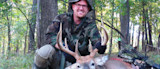
Hunt
Mobile Hunting and the Big Buck Killer

Earlier this spring on Wired To Hunt we profiled a seriously successful DIY public land bowhunter name Joe Elsinger in one of our Q&A blog posts. And what he had to share was so interesting that I then invited him to later join us as a guest on the podcast. As I figured it would be, that episode was...
Mark Kenyon Jun 5, 2017
Read More Play Now 
Freshwater
Lessons From Trout Fishing With Kids

I don’t think I'd appreciate wild trout so much if I didn’t spend so many years chasing stocked trout. For me, growing up in New Jersey, it wasn't that wild fish weren’t available, it just took effort and time to get to them. Meanwhile, there were four stocked streams within 5 miles of my house...
Joe Cermele Feb 11, 2022
Read More Play Now The comments section requires Functionality cookies. Please enable Functionality cookies in Cookie Settings to view this content.
Save this episode