Popular searches
Articles
Series
Topics
Shop
Recipes
The MeatEater Podcast
Ep. 930: The Helicopter Elk Hunt Debacle
Play Episode
1h42m
Steven Rinella and the MeatEater Crew Discuss: Outdoor Life’s public land helicopter debacle; Etsy is the Devil (maybe); does fishing save you money; will MT send a smoke-jumper to Congress; and more!
Connect with Steve and The MeatEater Podcast Network
00:00:04
Speaker 1: Welcome to the news show, everybody. This week, we've got a market report on halibut prices and what those prices mean for dudes who fish. Former smokejumper and public lands advocate Sam Forstag is here to give us an update on his U.S. House of Representatives race. Helicopter hunting in Wyoming goes all wrong for an outdoor life editor. Etsy becomes the devil incarnate. That's hyperbolic. And more. Not really, though. But first, on to our news.
00:00:38
Speaker 2: Our news.
00:00:40
Speaker 1: Okay, I'll tell you about our news. Quick. Quickly. I was trying to explain something to Seth before the show, but I didn't get time, so I'm going to tell him now. Are you aware that there's this whole thing right now of freeze-drying beef guts and making dog treats out of them?
00:01:00
Speaker 2: I'm not aware.
00:01:01
Speaker 1: Are you aware?
00:01:02
Speaker 3: I've seen it. Liver, I've seen. Dried liver.
00:01:05
Speaker 1: Lung, liver, kidney.
00:01:08
Speaker 2: I mean, I've seen all sorts of dried stuff in the pet store, but I don't think it's freeze-dried.
00:01:13
Speaker 1: Freeze-dried.
00:01:14
Speaker 4: Freeze-dried for cats, there's minnows and chicken hearts.
00:01:17
Speaker 1: Well, great.
00:01:18
Speaker 5: Big cat guy.
00:01:19
Speaker 4: He and Seth, big cat guys.
00:01:22
Speaker 1: There's a thing I know about that I'm not even going to talk about because I don't want to spoil it. But anyhow, I just seconds ago ordered us up a freeze-dryer for the office here.
00:01:34
Speaker 5: So we can make our dogs treats?
00:01:36
Speaker 1: You know how we make videos where we have people try stuff? We're going to save all the weirdest junk we can think of, freeze dry it, and then have dogs eat it and see what the dogs say about it.
00:01:46
Speaker 4: This is a good idea.
00:01:49
Speaker 1: But I'm going to picture that you have all this junk you freeze dried, and you let a dog smell it so he knows. You give him a whiff. Then you bring the dog out of the room. And you lay all, we set up cameras and you lay it all around and we see what guts, what freeze dried guts do dogs really want? Yeah. And then you like ask the dog about it.
00:02:10
Speaker 5: You can do like eyeballs and telling you what kinds of things.
00:02:12
Speaker 1: And not only that, you can, I'm going to start making my own freeze dry backpacking food now and then. Yeah.
00:02:17
Speaker 6: Yeah.
00:02:17
Speaker 3: I'm surprised you didn't say that first and then do the dog thing, but I see where your priorities are.
00:02:22
Speaker 1: I know, but I had to find a way to justify it.
00:02:24
Speaker 2: When, when, when our dogs die, when our dogs die, we can freeze dry them.
00:02:29
Speaker 1: It's never-ending. Yeah, so this freeze dryer is gonna become like a major YouTube fixture.
00:02:34
Speaker 5: Yeah Right good investment.
00:02:36
Speaker 4: Do you have a dog in mind that I'm gonna freeze-dry? No, there's gonna be your tester You're sitting in all this all.
00:02:43
Speaker 1: This place is his dog. Yeah, I'm bringing all those dogs.
00:02:46
Speaker 4: But there's some I would like put in tears as like these I trust more than this other batch of dogs Oh elaborate I did have to think about well like your dog is dumb.
00:02:55
Speaker 6: Very He was hell on grass on Monday, though.
00:03:00
Speaker 4: There you go.
00:03:01
Speaker 1: It'll be two to three weeks before we take possession of this freeze dryer. This is the most exciting thing I could think that ever happened to me. Getting a freeze dryer.
00:03:09
Speaker 5: I'm glad you're talking about it.
00:03:10
Speaker 1: I got a thing. I'm going to freeze dry, dude. I'm not even telling nobody about it.
00:03:15
Speaker 5: Is it an animal product?
00:03:17
Speaker 4: It is.
00:03:19
Speaker 1: But I didn't know about doing minnows, man. Old bait. We've got a new... So stay tuned for that. Coming up down the road. I was mainly just filling Seth in on this development.
00:03:31
Speaker 7: I like it.
00:03:31
Speaker 1: This is going to be the world's greatest video.
00:03:34
Speaker 2: I've several times in my life Googled freeze dryers and just see how much they are.
00:03:39
Speaker 5: And then that's about as far as I get.
00:03:41
Speaker 1: I was pleasantly surprised to see they got a massive sale right now.
00:03:45
Speaker 2: Oh.
00:03:45
Speaker 4: Guess what Steve paid?
00:03:46
Speaker 5: What'd you pay?
00:03:47
Speaker 1: I could tell you what I paid.
00:03:48
Speaker 4: Well, I thought it was for the office. You can't just. We talked about a punt gun that we bought. That was a stupid price.
00:03:53
Speaker 1: I don't want to talk about it yet because it was more than I figured. But it wasn't like that much.
00:03:58
Speaker 5: Was it more than the punt gun?
00:04:00
Speaker 1: No.
00:04:01
Speaker 2: How about the Warner Bratzler machine?
00:04:03
Speaker 1: Where does it fall? Probably in that ballpark. That was a waste of money ultimately, but I think I'm more optimistic about this.
00:04:09
Speaker 2: This time it'll be different.
00:04:12
Speaker 1: No. No. That was a dumb, ultimately like a dumb purchase. We've got a new segment today called the Market Report. It's premiering today called the Market Report where we're going to examine Weird price increases and decreases and other things of interest regarding wildlife resources and commodities. So think of the 2025 explosion in skunk tail prices or the black market boom for American eel elvers about a decade ago. Looking at when you see wildlife resources have a moment of weirdness. And we're going to talk about what drives those moments of weirdness. Um, but today we're just going to, we're kicking off the segment. Brody's going to share something with us. And this came from, we, we, we came back from Alaska, big, you know, annual fishing trip. And then I can't remember who it was.
00:05:07
Speaker 3: I was in Costco. I was like, Holy shit.
00:05:09
Speaker 1: Well, that was, you initiated it. All of a sudden someone sends Brody sends a, a photo of Costco halibut. The price.
00:05:19
Speaker 4: Yeah.
00:05:20
Speaker 1: I was like, good Lord. And I always like seeing that kind of stuff because it makes me feel like I'm being frugal when I go fishing.
00:05:29
Speaker 2: But this is one thing Kelsey says this all the time. She brings up the price of the fish that we bring home to justify it as like, we spent a bunch of money to go to Alaska and catch all these fish.
00:05:41
Speaker 3: I'm going to get to that later. There's something to it.
00:05:43
Speaker 2: But I tell her, we wouldn't buy that fish anyway.
00:05:48
Speaker 1: It's true.
00:05:48
Speaker 6: Yeah.
00:05:49
Speaker 1: But it's all just in your mind. Yeah. I don't, I'm not going to go down to Costco and buy a halibut.
00:05:53
Speaker 2: Like if I didn't go to Alaska ever again, I still wouldn't go buy halibut.
00:05:57
Speaker 1: Right. Get me a couple of big old jugs that olive oil down there, but I'm not going to go down there and buy, or you know, those things, those peanut butter pretzels, everybody's like, I just bought those yesterday. I could buy their damn fish. Anyways, let her rip.
00:06:12
Speaker 2: Yeah.
00:06:12
Speaker 3: So, um, You got the beginning of the story of me going to Costco after we got back from the shack. But this year, we caught so many fish. The fishing was so good at Steve's Shack that we drove up the price of Costco halibut to $ 29 a pound. The thing that was surprising to me about this.
00:06:34
Speaker 1: I thought it was more than that. Okunos was a two-pound piece. Yeah.
00:06:38
Speaker 3: Normally at halibut, you'll see a square block of meat. from a big old worm-infested 150-pounder. They don't get the good stuff at Costco. I think you might have something to say about that.
00:06:52
Speaker 1: Can I tell that story? Yeah, yeah, yeah. I don't want to name the guy because he's in the biz, but I got a friend who charters but also does some commercial fishing. He one day sends me a picture of just one of those giants, like a 300-pound halibut. And I said, well, that'll fill, I text, he texts me the photo. I text him, well, that'll fill your freezer. He says, are you kidding me? That's the kind of stuff they have down at Costco. Meaning the quality of a halibut is in, the quality of a halibut's flesh sits in an inverse relationship to its size. Size goes up, quality goes down. So he was just making a comment that Costco buys big, cheap, bad halibut. Yeah. So you're not even looking at premium halibut.
00:07:49
Speaker 3: Yeah. And that's what was surprising is that these were packaged like two to three pound fillets. I'm guessing from halibut that were like 12 to 15 pounds alive. Like the ones we catch a lot. I was very surprised.
00:08:03
Speaker 1: Oh, so it wasn't like chunks that look like firewood. No, no.
00:08:06
Speaker 3: It was like. You know, the stuff that's going across the fish table.
00:08:11
Speaker 1: Okay. I take it back about Costco. Cause I was just sitting here thinking how they're going to send us a cease and desist letter. Yeah. But we're already clear.
00:08:17
Speaker 3: Um, but it was still spendy, right? Like still spending for, for halibut. Um, the, another surprising thing I saw there, I didn't send you guys the picture, but same day they had, uh, chunks of troll. It said right on the label troll caught King salmon for 18 bucks a pound. I was like, Holy crap, that's cheap.
00:08:37
Speaker 1: Um, so I don't know if that was like, that seems very cheap.
00:08:40
Speaker 3: I don't know if that was like lower grade stuff or it had been sitting in a freezer for a long time and they just broke it out and they were sitting, you know, it was, that's why.
00:08:49
Speaker 1: It was cheaper.
00:08:50
Speaker 3: Cause that's like very cheap for, for, uh, for King salmon. Um, and we saw a bunch of those power trollers this summer, Jason Kings, Jason Kings. Um, and. The thing about Costco fish is like it's flash frozen. In some cases they have, I think they have their own processing facilities in Alaska where they package and freeze the stuff. And then they thaw it out for display in the store.
00:09:15
Speaker 1: Well, they do.
00:09:16
Speaker 3: I think I'm pretty sure that's.
00:09:17
Speaker 1: How it works. Well, that would make totals. Yeah.
00:09:19
Speaker 3: For like a place like this.
00:09:20
Speaker 1: Cause in this display case, it's always sitting there thawing.
00:09:23
Speaker 2: Yeah.
00:09:23
Speaker 6: Yeah.
00:09:24
Speaker 8: Yeah.
00:09:24
Speaker 3: Um, so if you want like the really good stuff, like we got good fresh caught stuff, um, You either got to like catch it yourself like we did, live close to where it lives or order it online. And this past weekend I was in Seattle with my family going to a baseball game and doing some other stuff. And we were down checking out the waterfront and there's several fish markets, like touristy fish.
00:09:49
Speaker 7: Markets down there.
00:09:49
Speaker 1: Where they throw the fish back and forth.
00:09:51
Speaker 3: That's the one. There's a few other ones. Yeah. But it's fun, like people watching and stuff. And so the price is there. were kind of what you'd expect. Like if you were going to order stuff online and have it overnight at your house. Halibut, 42.50 a pound. And this is what you were talking, Seth, because like I brought back a couple of fish boxes worth of halibut, so close to 100 pounds. So like the math is, pretty easy 42 times 100 so like people.
00:10:23
Speaker 1: It's not easy for me well.
00:10:24
Speaker 3: It's like four grand it's like four grand um so like people are always asking us like does wild game meat like offset the price of hunting and it usually doesn't but i don't know there's an argument to be made here that maybe it does it.
00:10:40
Speaker 1: Can't my boy was pointing this out to me the other day where i had him pick up a what used to be called in Montana, the single, single region antlerless whitetail tag. It's got a different name now, but it's the same thing.
00:10:55
Speaker 5: Right.
00:10:55
Speaker 1: And it's, it's a resident tag.
00:10:59
Speaker 3: It's like five bucks or something.
00:11:01
Speaker 1: It was $ 10 for a white, a resident tag for a whitetail doe. Yeah. That like, if you just shot the doe. Out your window or something.
00:11:10
Speaker 3: Or five of them.
00:11:12
Speaker 1: Yeah. And you don't go far. Yeah. And he got one very local. Right. It's like, then you can be like, man, look at all this money I'm saving.
00:11:22
Speaker 7: Yeah.
00:11:23
Speaker 1: Because I just shot hundreds of dollars worth of venison for the cost of an expandable broadhead and a $ 10 tag.
00:11:29
Speaker 8: Yeah.
00:11:29
Speaker 4: But.
00:11:31
Speaker 2: But when I drive nine hours to go kill a mule deer bucket in another state.
00:11:36
Speaker 6: That's how I justified my Colorado tag to my wife. It came out without gear I'd already bought. It was like two grand for the tag, the gas, everything.
00:11:44
Speaker 3: You're not going to get there, man.
00:11:46
Speaker 1: What do you mean?
00:11:47
Speaker 6: No, it came out. I got about 200 pounds. It came out to about 10 bucks a pound. And I told her, hey, listen, if you go down to Whole Foods to buy organic whatever, it's going to be 10 bucks a pound.
00:11:57
Speaker 5: And I got an experience.
00:11:58
Speaker 1: You should tell her, say, listen, man. I either go on this hunt, or I'm going to go down and buy 200 pounds of halibut at the fish market in Seattle.
00:12:09
Speaker 3: That's right.
00:12:09
Speaker 1: And then we'll see who's... But what I'm interested in... And then we'll see who's right.
00:12:14
Speaker 6: I've never been to Alaska. What's the cost of getting up there? What are you in to get up there and get a big old box?
00:12:20
Speaker 4: We don't talk about money.
00:12:22
Speaker 1: A couple dollars.
00:12:24
Speaker 3: Anyway, $ 42. 50 for halibut. King salmon, also $ 42.
00:12:28
Speaker 5: 50.
00:12:30
Speaker 3: Ling Cod, and I don't understand this commercial fishery for Ling Cod because you can't put gear out for them.
00:12:35
Speaker 1: No, no, no. There's a whole commercial Ling Cod fishery in Oregon, Washington.
00:12:40
Speaker 3: Just rod and reel.
00:12:41
Speaker 1: Yeah, but there's like specific gear they use.
00:12:44
Speaker 7: Okay.
00:12:44
Speaker 1: Yeah, but there's Ling Cod.
00:12:45
Speaker 3: I was a little confused.
00:12:46
Speaker 1: And then there's Ling Cod from Bycatch that make it in the market.
00:12:49
Speaker 3: Speaking of Bycatch, there was Yellow Eye there, $ 30 a pound. Pacific Cod, $ 25 a pound, which seemed a little spendy for Pacific Cod.
00:12:57
Speaker 1: These people got it all wrong, though. On the market. Because Pacific cod. Should be the most. That's the son of a bitch you want. Yep. But it's just got a reputation as being like, like the fact that you can get twice as much, almost that, that you can get twice as much cod. Yeah. As halibut for your dollar should leave you leaving the fish store laughing in the fish store's face.
00:13:19
Speaker 8: Yep.
00:13:19
Speaker 3: But meanwhile, they're like, meanwhile, those commercial crab fishermen are using that stuff for bait.
00:13:25
Speaker 1: Peacod, you know? Oh, what was the talbot? cheap heads and collars.
00:13:30
Speaker 3: Uh heads were a dollar a pound collars were five dollars a pound and it was just like a random selection of look at.
00:13:37
Speaker 1: That tub yeah brody's got a great photo of the tub oh yeah it's like the gut tub.
00:13:42
Speaker 3: Yep i don't know how much they sell that stuff but i'd be buying some of it if i lived there.
00:13:48
Speaker 1: Can i tell you a quick favorite story of mine we were cleaning um I want to say Jaguar sharks, but that's from Life Aquatic. We were cleaning leopard sharks. We were cleaning leopard sharks one time in San Francisco Bay. And we're at a boat ramp cleaning leopard sharks. Yep. And there's this guy. There's this guy. I feel, I don't know, but from my conversation with him, which we weren't really able to have, I feel like he was Chinese.
00:14:17
Speaker 6: Mm-hmm.
00:14:18
Speaker 1: He is going through all the bins of guts. Everybody's cleaning all their fish. And he's going through the bins of guts getting out the fins from the leopard sharks. And this was a long time ago, and I wasn't, like, hip to the whole fin market.
00:14:31
Speaker 6: Right.
00:14:32
Speaker 1: So I go to him, and I'm like, hey, man. And I'm trying to give him a big leopard shark filet, like the whole side off a leopard shark. To which he... because we can't speak, to which he conveys like, nah, I'm good.
00:14:46
Speaker 5: Zero interest, yeah.
00:14:48
Speaker 1: Yeah, I thought, I'm like, oh, geez, man, he's digging through the trash, poor guy. And I'm like, here's a big old chunk of leverage. I was like, nah.
00:14:54
Speaker 3: He's getting what he wanted and he was getting it for free.
00:14:56
Speaker 1: He was not interested in a blade. He knew what he wanted. And maybe he'd be, and it was different with shark fins, but when we clean fish, when we clean fish in the Bahamas, the Bahamians will come down and they just come down with their tools.
00:15:14
Speaker 6: Yep.
00:15:14
Speaker 1: And they stand there and they shoot the breeze at everybody, but they got their tools and they just are cleaning fish heads. Yeah. They wait for you to clean. As you clean, they're standing there being like, may I? Yep. Split them, de-gill them, quarter them, and just cleaning them and bagging them up. Yeah.
00:15:30
Speaker 3: I mean, we do all right keeping some collars at your shack, but.
00:15:35
Speaker 1: Not the heads.
00:15:35
Speaker 3: Not the heads.
00:15:36
Speaker 1: No.
00:15:37
Speaker 3: And finally, the last thing in this fish market that I saw, it's for Steve, is the fish he likes... the most but just can't seem to ever catch them is black cod, which was 26.50 a pound. How did they do that cheap? They had some big ones there, man. I was thinking of you.
00:15:53
Speaker 5: That seems cheap.
00:15:54
Speaker 1: Just the other day, I'm talking to Kimmy Werner's husband, Justin, and they have a family place just north of us. I mean, same water, same water. They are knocking the piss out of them. I'm like, show me on a chart what you're fishing. He's fishing the same shit I'm fishing.
00:16:10
Speaker 3: You should explain black cod a little bit.
00:16:12
Speaker 1: It's a sable fish.
00:16:14
Speaker 3: Sushi, expensive.
00:16:15
Speaker 1: It's like a fish made out of butter.
00:16:17
Speaker 3: Butter, fatty.
00:16:18
Speaker 1: Oh, it's good.
00:16:19
Speaker 3: Yeah, so that was that. That's our market report for kind of like Alaska Northwest seafood.
00:16:26
Speaker 1: The next one I'd like to do, just to keep this in your little noodle there, is let's do a roundup on what bluegill fillets, perch fillets, walleye fillets, The normal freshwater take, what does that market look like? Yeah. All that stuff has a commercial market. Yep.
00:16:44
Speaker 3: Definitely.
00:16:45
Speaker 1: What is a dude paying for a pound of bluegill flays?
00:16:48
Speaker 3: Or a pound of Canadian perch.
00:16:50
Speaker 1: Yep. Or walley dogs.
00:16:51
Speaker 6: Yep.
00:16:52
Speaker 1: Are you making money when you fish walleyes?
00:16:54
Speaker 6: Right.
00:16:54
Speaker 1: That ain't.
00:16:56
Speaker 2: No, especially when you throw them back.
00:17:00
Speaker 5: Yeah.
00:17:00
Speaker 1: He basically sets up, they're just throwing $ 20 bills. Throwing $ 20 bills into the lake.
00:17:06
Speaker 7: Yep.
00:17:06
Speaker 2: Yep.
00:17:07
Speaker 1: Okay, now over to your news. Terrible.
00:17:15
Speaker 5: You know, I wasn't happy with that one either.
00:17:17
Speaker 1: Shouldn't be. Shouldn't be. Some of Phil's worst work. A man of normal genius, but just not. Great work. I'll do better. Your news is brought to you by Banish Suppressors, which I'm holding right here in my hot little hand. Let it rip.
00:17:39
Speaker 6: We had a listener write in and he says, dear Steven Rinella and the meat eater crew. My school has a policy for the amount of school someone can miss before they lose the credits for a class. That amount is 10 days in the entire semester. Then you are ineligible for the credit in the class. I was writing to ask Mr. Rinella if he could write a doctor's note so that I can skip school and go on a pack trip to go elk hunting because I know he's got some sort of decorate doctorate of some kind. Please let me know before November 1st. This is when my tag opens.
00:18:10
Speaker 1: I'd be more than happy to write him a note. I will. We could do it one better. Because if they catch that mine's honorary, they might throw him out of school. But Randall's is real. We'll get two doctors. Yeah. Double up.
00:18:24
Speaker 3: He got a second opinion.
00:18:25
Speaker 1: You know how we use the notary public next door? Yeah. I think she charges like 10 bucks. It's probably going to be like a... Like a $ 10 fee to sign doctor's notices? Yeah.
00:18:37
Speaker 6: The point is, we will rubber stamp your doctor's notes for to-go hunting.
00:18:42
Speaker 1: Yeah.
00:18:43
Speaker 6: I'll create a form.
00:18:44
Speaker 1: Yeah, you write whatever you want, and I'll sign it. Yeah.
00:18:48
Speaker 6: No, no, we'll have a form that people request. It is pre-signed about emotional health, being in touch with nature, et cetera, et cetera. And I'll just plug your name in, and you can take that to your professor. It'll be signed by Steve Rinella, doctor.
00:19:02
Speaker 1: You know what? Maybe what we do then, instead of charging them $ 10, they should just kick in on that little kitty we got going to get that dude's bison skull aged. Yeah, there you go.
00:19:12
Speaker 5: When you max that out, it just goes to the LAI.
00:19:15
Speaker 1: There you go. No, I'd be happy to sign him. We'll have Randall sign it, too, so it's like a double doctor.
00:19:20
Speaker 5: They can't refuse that.
00:19:21
Speaker 4: And Madison's on top of it two months ahead of time. He's writing in to ask for this.
00:19:26
Speaker 1: Or she. i ran up in this wall when i was in in college i ran up against this problem where if i missed another day it was november 15th if i missed another day i would i could do no better than a c and i went hunting anyway yeah c's are great well i went listen to what happened though like in hindsight there was probably no way. This is a long time ago. In hindsight, there's probably no way it was legal light. But I'm sitting there in the dark waiting for it to get light, and a buck is coming. And I'm not kidding you, man. This is terrible. I got down on the ground and put my cheek against the dirt trying to skylight his antlers. No.
00:20:10
Speaker 4: That's too dark.
00:20:11
Speaker 1: Was able to find his throat patch in my scope. It was early to class. In hindsight. But we didn't really know about that kind of stuff. It just wasn't a thing that was on our radar. That there was shooting light and all that. There was no way it was legal shooting light. It just wasn't a thing that my dad talked about. Like legal. It just was not No one talked about legal life when I was growing up.
00:20:40
Speaker 4: It wasn't printed in the reg books.
00:20:41
Speaker 1: Oh, absolutely. But it was also not a place I spent any time doing casual reading in the reg books.
00:20:49
Speaker 4: I recently heard someone say the best get out of class email that you can write to a professor is say you got sprayed by a skunk.
00:20:56
Speaker 1: That's great.
00:20:56
Speaker 3: What are they going to do?
00:20:57
Speaker 1: What does he want you to do?
00:20:57
Speaker 4: There's no proof. They're not going to ask you to come in. That should work. There's going to be a lot of people getting sprayed by skunks, I think, this year.
00:21:06
Speaker 1: Unless I'm the professor. Then I'm going to say, no, that's cool. Come on down.
00:21:10
Speaker 3: I love that smell.
00:21:11
Speaker 1: Come on down. In fact, come to my office early. I'd like to visit you about this. You want to be on the news show?
00:21:16
Speaker 4: Yeah.
00:21:18
Speaker 6: So write in, subject line, doctor's note, include the dates in your name.
00:21:22
Speaker 1: Yeah, happy to write those, and we'll double doctor them. Yep. We'll double doc them. Okay, over to Spencer Newhart now. Helicopter hunt, lay it out.
00:21:34
Speaker 4: I've got this story broken up into like three parts. And so I'm going to try to answer all your questions before you get to them. But just like trust that if something hasn't come up yet, hopefully it's going to.
00:21:44
Speaker 1: I'm just going to sit back and enjoy.
00:21:46
Speaker 4: About two weeks ago. This is why we're talking about this now. On August 26, 2026, Outdoor Life publishes an article from their hunting and conservation editor, Andrew McKean. Title, I was convicted of trespassing after covering public land access issues on our controversial Wyoming elk hunt. Subheader, we helicoptered into otherwise inaccessible public land to hunt elk and highlight landlocked issues in the West, but I made a terrible mistake. Those are all Andrew's words. The hunt Andrew is referring to took place in Wyoming, November, 2025. Andrew is there with three buddies, David, Ben, and Ryan, plus a film crew. They are recording the whole thing and using this as an example of how there are 16 million acres that we the public own, but we the public can't get to. 16 million is the number from Onyx that's been thrown around. David, one of the hunting buddies, has been planning this hunt for quite a while. It's a special piece of public land that the public can't get to without crossing a little bit of private land. Thus, it gives this rancher control of a whole bunch of public lands that he has paying hunters access via him.
00:23:02
Speaker 1: Got it. So he's outfitting.
00:23:04
Speaker 4: He's outfitting his land, but you can also reach this other public land.
00:23:08
Speaker 1: Yeah, he's not doing nothing wrong.
00:23:10
Speaker 4: Nope, nope. Everything is legal that he's doing. It's something he's been doing for quite a while. So the only way to get to this public, again, is by paying for a guided hunt or do what David and Ryan and Andrew did, and that's having a helicopter fly you in. David spent over 100 hours planning this hunt. One of the biggest obstacles was just simply finding a pilot to fly them in. At one point, he actually called a hot air balloon company and started asking them logistical questions about if they thought he could pull this off. And at one point, the guy was like, David, you know you can't steer these things, right? You're just going with the wind. And it kind of brought the hot air balloon fantasy to an end.
00:23:50
Speaker 1: Well, how are those guys all still alive?
00:23:52
Speaker 4: Hot air balloon folks? I don't know, I suppose they just have a general idea about what the wind is doing that day or where they're gonna come down at. Come on.
00:24:00
Speaker 1: They just land wherever?
00:24:01
Speaker 4: I don't think it's that simple, but I think there's some amount of mystery about where a hot... The point is, to make this journey from a public road to the public land, the guy talking to David is like, I don't think a hot air balloon.
00:24:14
Speaker 1: He's not that precise. He can't be that precise.
00:24:17
Speaker 4: So finally, on the 27th pilot that David calls, he found someone willing to take their business. And for about $ 2, 000 per person, these guys could take a four-minute helicopter ride into public land. That's how far it went. $ 2, 000 to get four minutes from a road to the public land to be legal beagle. Now, to go through the rancher to hunt there, as of 2024 pricing, I found on his website, $ 6, 500. So you're saving $ 4, 500 doing the helicopter route. That's what they decided on.
00:24:50
Speaker 1: But he's not just charging an access fee. It's got to be that it's a guided hunt.
00:24:56
Speaker 4: His website is vague indeed. You contact him, but he doesn't even really mention the public land on his website. He talks about all the acres of private he has access to and how, you know, we kill this many trophy bulls and these are your sleeping accommodations, but $ 6, 500 versus 2000, just if you wanna get to this public land. So I'm gonna tell this story in three parts. This is not how it happened in real time, but this is how this information was released to the public. So this is how I consume this story as it was happening over the last nine months. And if you're someone who isn't familiar with any part of the story at all, then you're going to consume it the same way that me and the rest of the public who was following this did.
00:25:35
Speaker 1: Great.
00:25:36
Speaker 5: Part one.
00:25:37
Speaker 4: This hunt got a lot of national attention right after it happened, but for a different reason than Andrew McKean's trespassing. This was the elk hunt where a rancher went onto public land to the kill site of a bull, and that rancher tried hiding the elk's skull that he found there. To be clear, this was not Andrew's elk that we're going to talk about in a little bit. This was a different elk that was legally killed by another member of the hunting party. We covered this on our website. We had a meat eater radio live interview with David Fabian about this exact story. He works for Guns and Ammo magazine, and he was one of the hunters there when this happened. He was holding the cell phone that sort of captured this encounter. Here's a quick recap of that encounter. That was day two of this helicopter elk hunt. David, who we see here, and Ryan both killed really good bulls on day two. On day three, they're still working on getting all the meat back to their camp. And while David and Ben are at David's kill site, they happen to spot someone at Ryan's kill site, which is a couple hundred yards away, and it's not anyone from their hunting party. They watch this person through their binos, as this person carries the elk skull into a ravine. Ben and David, they rush over there and they confront this man as he emerges from the timber. This leads to what David Fabian called, quote, the strangest hunting encounter of my life. It turns out that this guy is the rancher who controls the access to this landlocked land. He was a 70-year-old rancher. It's not clear to me if that's his exact age or just estimated, but he's an old-time rancher. And he is busted in the act of stealing their elk skull.
00:27:24
Speaker 1: On public land?
00:27:25
Speaker 4: On public land, firmly in public land.
00:27:27
Speaker 1: Okay.
00:27:27
Speaker 4: David gets out his phone. He starts filming the interaction between them. The rancher starts off by just like straight up lying and being deceitful. And he says something like, I don't know what bull you guys are talking about. And eventually he does fess up to it. And Ben says something like, why'd this happen? And the rancher answers, quote, because I don't want you guys hunting this outfit. So this is like the viral moment of this whole experience, sort of until now, that we'll get to in a little bit. David said in our interview on Radio Live that the elk skull was hidden in a way that you basically had to be on top of it to see it. And the rancher watches them crawl into this ditch where he hid the skull. They get their antlers back and everyone kind of goes their separate ways. And after these guys.
00:28:14
Speaker 1: I see these guys don't skin their... Skulls, that always kind of bothers me.
00:28:18
Speaker 4: They did at camp because if Phil goes back, a couple of photos, I think we see them skinned out. But at that point in the hunt, they were butchering two elk that day.
00:28:26
Speaker 1: Minor detail.
00:28:27
Speaker 4: It seemed like they just hadn't gotten around to it yet. So they go back to camp. They get their meat and their skull back. They get service at that point. They call the game warden. Game warden is very interested in their story.
00:28:39
Speaker 1: I got a question here. Whose creepy hand is in the top left corner of that?
00:28:44
Speaker 4: I think it's either David or Ben handing down to get the skull from the guy from where he hid it at. So this is like showing us the place where he placed this skull.
00:28:57
Speaker 1: This is him giving it back.
00:28:58
Speaker 4: Yes, this is the rancher handing it back.
00:29:01
Speaker 1: I understand.
00:29:02
Speaker 4: So they contact the game warden. Game warden says, I'll meet you guys, you know, like tomorrow and we can talk about it then. So this interaction with the rancher went viral, like mega viral. Between the videos, the national media coverage, podcast coverage, this story gets told to millions of people. We're looking at the original Facebook post here, which has been ripped off a million times, but just this first one, 10,000 likes, 700 comments, 300 shares. And if, like I said, this was like the defining moment of this whole thing. It was one of the defining moments of 2025. If the outdoors are something you're interested in, this probably came across your table at some point. If you want to hear more about this specific interaction, again, that was episode 813 of Media to Radio Live. We interviewed David for about 20 minutes.
00:29:51
Speaker 1: That's part one.
00:29:52
Speaker 4: Again, this happens on days two and three. Part two, we're going to back up to day one. Before the helicopter even picks these guys up, Andrew McKean delivers this message to a cameraman. He says, quote, the thing that's really interesting about it and kind of catches in my throat a little bit is this feels like it's so aggressive, like a little bit kind of a thumb in the eye to the landowners who control the access and probably have for years. But this is kind of but this is kind of like a measure of what's happened across the West, really. between the corner crossing issue, between people exploiting the resource one way or the other, either because they've got the access or want the access, there's kind of a land grab going on right now. So this is our testing of, I think, a way to like create access or provide access or get access. I don't even know what the verb really is. We're grabbing access is the way it feels from people who have always had it for a long time. So that is what Andrew says before the chopper even arrives to pick them up. So some real foreshadowing going on there. It's the first day of the hunt, and they could legally hunt on day one in Wyoming as long as they flew in and weren't doing any scouting. Again, the heli ride was four minutes, so no scouting done. They take off, land, set up camp, and they start hunting. That afternoon, they spot some bulls, and they get into position to kill one. Here's a screen grab from the video of the bull that Andrew eventually kills. And as they're waiting for the right moment, Andrew delivers another very foreboding message to camera. Here's the quote. So we're watching two bulls feed out of the timber. I'm pretty sure these are the two bulls we saw in the little clearing when we first got up above camp and glass them. One's kind of junior varsity, but one is a stud. They're at 408 yards right now. We got some mule deer between us and them that kind of had got us pegged. So we're just being super chill to see what they do. but the wind's good. I don't know. Everything is going right until it doesn't. We kind of got a tippy-toe because there's some private, like a quarter section up here. So we just have to keep watching to see where we are. Make sure that everything is good. But that just kind of adds one more little detail to it. We're on public, they're on public, but if they go a whole lot more south, they're going to be on private and there's no marker.
00:32:10
Speaker 1: Got it.
00:32:11
Speaker 4: Andrew's quote, it's like the last thing he says, basically, before he pulls the trigger, something. Andrew gets slightly repositioned. He shoots the big bull three times. It looks like all three shots land. We can't tell because of a camera cut, but it appears as though the bull runs about 50 yards between where shot one takes place and where the bull dies. And it's a whopper of an elk. This is a really big bull. So that's the end of day one. Day one, Andrew kills the giant elk. Day two, David and Ben kill good bulls. Day three, They have the encounter with the rancher who tries hiding the elk skull. And day four, they fly back.
00:32:47
Speaker 1: To their pickups.
00:32:49
Speaker 3: I gotta stop you.
00:32:49
Speaker 1: What do you got?
00:32:51
Speaker 3: They walk up to this bull that's dead. There's no like, oh shit moment or no like.
00:32:58
Speaker 1: Maybe that's in part three.
00:32:59
Speaker 3: I know.
00:33:02
Speaker 4: There are some disagreements or discrepancies between Andrew's account and... and the rancher who later gets interviewed by Cowboy Daily State News. I believe from like where the elk dies at and where you see some of the footage of them doing like the gripping grins and just like high-fiving and talking over the elk, the elk has now moved about 25 yards, I believe. Andrew says the elk died on a steep slope and they just naturally wanted to get down to the flat spot and it was easy to do. The rancher says that they moved it so fast that it's suspicious to him. that he thinks they moved that bull pretty quick and they knew.
00:33:40
Speaker 3: Something was up.
00:33:41
Speaker 1: Was he watching?
00:33:42
Speaker 4: No, but you watch the video and you see the elk die and they're still like, it appears as though you're still looking at legal shooting lights while they're standing over the elk and it's slightly been moved. Again, Andrew says they were just sliding it down the hill to a more natural spot to gut. The rancher says they moved it so quickly that it seemed as though they knew there was a problem. Okay, so outdoor life, outdoor life, who Andrew works for, publishes a 25 minute video of the hunt on YouTube in March, 2026. So about four months after the hunt takes place.
00:34:17
Speaker 1: Is that video like widely viewed?
00:34:19
Speaker 4: 230,000 people, I think. So yeah, it's a popular video. And again, this video was like being talked about before it ever came out because the helicopter thing was unique because of the interaction they had with the rancher who tried stealing the skull. So this was like, you know, set up to be viewed by people at that point. The rancher, the very same rancher who these guys interacted with on day three, watches the video and he recognizes that Andrew's bull is standing on his private land when he shoots it. And not only that, but the bull runs even farther into private land before dying. The rancher contacts the game warden. The warden comes out, compares the video with landmarks in person. Mm-hmm.
00:35:06
Speaker 1: Him having this realization when he watches the video.
00:35:10
Speaker 6: Yep.
00:35:13
Speaker 1: By this point, has he already been kind of like showcased and talked about? Yes.
00:35:18
Speaker 4: So the video comes out in March of the 25-minute hunt. The viral video of the rancher getting caught stealing the elk skull, that drops on like December 1.
00:35:28
Speaker 1: Okay.
00:35:28
Speaker 4: So it's been building for four months.
00:35:31
Speaker 1: Yeah. So at this point, he for months has been called out.
00:35:35
Speaker 7: Mm-hmm.
00:35:36
Speaker 1: Ridiculed um about a thing that like by all means the guy should not have hid people's stuff but he's been dealing with this.
00:35:47
Speaker 4: We'll address this in act three okay so the the rancher contacts award warren comes out he compares the video with landmarks in person uh i read that he found like the uh the land the public land survey marker in the ground uh just to be certain And the game warden determines that in fact, Andrew McKean's bull was standing about 35 yards inside of private land when he shot it.
00:36:11
Speaker 1: How would he not have known this?
00:36:13
Speaker 4: How would McKean not know this?
00:36:14
Speaker 1: Yeah.
00:36:14
Speaker 3: Nothing was marked.
00:36:16
Speaker 4: There's no fences on there.
00:36:17
Speaker 1: He's definitely running a GPS mapping plan.
00:36:23
Speaker 7: Understood.
00:36:25
Speaker 3: Understood.
00:36:26
Speaker 1: And he's talking about where the private land is.
00:36:28
Speaker 4: They said they felt confident in the boundaries that they could identify in person. So McKean is now written a ticket for trespassing. He pled no contest on August 24th to one count of Title 23 trespass and one count of the use of a silencer to take a big game animal while trespassing. He was fined $ 1, 270 and surrendered his skull to the state.
00:36:52
Speaker 6: Ooh.
00:36:56
Speaker 4: So McKean Pleads No Contest, August 24th. It's then on August 26th, two days later, when Outdoor Life publishes the article that I referenced earlier. It's titled, I Was Convicted of Trespassing After Covering Public Land Access Issues on Our Controversial Wyoming Elk Hunt.
00:37:13
Speaker 1: Do you think that was mandated by the prosecutor, or do you think that was just trying to get out ahead of it?
00:37:19
Speaker 4: I'm guessing he had that in the can for weeks or months. This all didn't unfold for Andrew, you know. in the course of a week. If that rancher recognized it in March and the game wardens alerted immediately, I'm sure this was on Andrew's plate for months at this point.
00:37:35
Speaker 1: That's a lot of stress to live with, man.
00:37:37
Speaker 4: So in the article, McKean takes responsibility for trespassing. He says it was an honest mistake. He says they studied the digital maps in the field and they thought the bull was standing 30 yards inside of public rather than 35 yards inside of private. In the article, McKean says he's, quote, deeply sorry. It was, quote, a profound mistake. Another spot, he says, quote, the most painful penalty is that, in this case, I became part of the problem. Later in the article, he talks about following the rules and being an ethical hunter and how landowners deserve rights. And he says, quote, to now publicly admit that I failed to uphold those values hurts beyond description. And as part of his conclusion, he says, quote, I will resign from my 25-year tenure as a Montana hunter education instructor, because I can't, in good conscience, teach prospective hunters about the importance of obtaining landowner permission with this incident on my record. I will accept judgment from friends, hunting buddies, and a legion of online commentators who have.
00:38:36
Speaker 1: Never met me. Man.
00:38:37
Speaker 7: All right, so that's part two.
00:38:39
Speaker 1: Man.
00:38:40
Speaker 4: Again, the McKean article. Here's part three. One week after McKean's article is published.
00:38:44
Speaker 1: I bought it in, though. That was a noble acknowledgement. I know we're only into part two, but that was a full-throated.
00:38:54
Speaker 4: Yeah, I assume you read the thing, Steve, but it's... Okay, yeah, he owns it up front.
00:39:01
Speaker 3: He's not trying to wiggle out of it.
00:39:02
Speaker 4: No, he owns it in the middle, and he owns it at the end. The whole way through, he's like, man, I made a stupid mistake.
00:39:07
Speaker 1: Because he could have been like, someone should have done a better job, you know what I mean?
00:39:11
Speaker 4: Okay, part three. One week after McKean's article is published on September 2nd, Cowboy State Daily posts an article about the whole situation. In the article, they provide an update on the rancher's own legal case and are able to interview him. So here's what we learned. Back in April, the rancher pleaded guilty to a misdemeanor theft charge for hiding the elk head. He was fined $ 220, so about $ 1, 000 less than McKean's fine for his two trespassing violations. Regarding the elk thievery, the rancher told Cowboy State Daily, quote, I saw where they had killed a bull elk the day before on the BLM land within one half to three quarters mile from our buildings. I got upset and let my emotions get the best of me and took the elk head and packed it downhill and put it in a deep draw. I was in the wrong doing it. I eventually apologized. We shook hands and they got their horns back. So that was one of the ranchers quote in this article. The rancher said the fallout from the event led to harassment and death threats. He said he just stopped answering his phone this year if it was a phone number he didn't recognize. Another detail, McKean says in the article that he attempted to reach out to the landowner in an attempt to meet and mend fences, but the landowner did not respond. In the Cowboy State Daily article, the rancher confirms that he got the letter and a voicemail from McKean and decided not to respond. Here is the rancher's quote. He put me through so much misery last fall and last winter. I don't have any desire to get together with him. And the last thing of note here is that the rancher says he's already aware of one group of hunters who have booked a helicopter to fly them in this fall. And he suspects there will be more. I wanna give my takeaway and then you guys have at it. I feel bad for everybody involved. Like, I don't think anybody came away from this feeling good or feeling like the winner, like both parties. made pretty bad mistakes. Both parties apologized and both parties had like really severe consequences. It just ends up being a black eye for like the public land hunters and a black eye for this kind of landowner who uniquely controls public land access. This is just like a rare lose-lose.
00:41:29
Speaker 1: Go ahead, Brody.
00:41:36
Speaker 3: I mean, it's real easy to judge Andrew from afar. Like things happen in the heat of the moment. But God, it's just a good lesson to not mess with animals that are flirting the private property line. Like that's such a small margin of error. Like walk away and find one that's half a mile from the line. You know, that like, that's my takeaway. Like I'd love to get in a helicopter and go hunt there. You know, if that's the only way you're going to do it, great. but it's just too easy to screw up.
00:42:11
Speaker 4: And they say in the video that Andrew's like, we gotta be careful because there's a quarter section, 160 acres. I went to Onyx and I feel like I've sussed out where this whole thing played out. And I'm sure like the frustrating part for Andrew and the others in his party is they are in kind of like a sea of public land. And this 160 acres is, when you look at it, you're like, oh, it's kind of meaningless. Like they could just, you know, find that bull again tomorrow. And I bet he's on the public or maybe they could wait 10 minutes. In this case, he was 35 yards inside the private. Yeah, but like Brody said, this is just like a familiar story. If you hunt in the West, you're used to being around unmarked boundaries. You're used to being around convenient fencing where the property line actually cuts across like a steep bank, but they move the fence 50 yards one direction or the other. And then that becomes like an unofficial property line, it's just something that like you're always dealing with these legal boundaries and it's a frustrating and like scary part of hunting within the margins.
00:43:13
Speaker 3: I'm constantly doubting where I'm standing versus what Onyx is telling me. And it like Onyx is probably dead nuts, right? But 30 yards, man, that's just like.
00:43:33
Speaker 1: You're right. The whole thing's painful. I applaud is not the right word because applause is not the right word. I understand, um, and would have no hesitation to do a hunt where you were accessing landlocked public land with a helicopter. Um, part of my comfort with it, right. is that I do a lot of hunting in Alaska where you use fixed wing aircraft to access stuff. And when you're flying along in fixed wing aircraft, you're often flying over land you're not allowed to hunt, right? Flying over native corporation land, whatever, and you land somewhere and you hunt and you don't even think about it. I think it seems surprising down here because it's just a thing that people hadn't thought of before. It's this new idea that you do something so sort of extravagant and expensive as hire, in this case, rotary wing aircraft, which I'll point out would be illegal to do in Alaska because you have to use fixed wing aircraft for hunting in Alaska.
00:44:47
Speaker 4: I didn't know that detail.
00:44:50
Speaker 1: In Alaska, you can't do nothing around hunting with a helicopter. You can't supply a hunting camp with a helicopter in Alaska. only fixed wing.
00:44:57
Speaker 4: Is that something you ever hear about them talking to change, or is that just part of the culture?
00:45:00
Speaker 1: No, because think about what it would mean for doll sheep. Think about what it would mean for everything. You can just land on anything.
00:45:10
Speaker 4: I assume they just loved airplanes up there. No, no, no.
00:45:13
Speaker 1: Picture what it would mean.
00:45:14
Speaker 4: I get it.
00:45:14
Speaker 1: You find a bull. You find a bull moose. You're just going to land on it. You find a doll sheep. You're going to land on it. There's no more hiking from the valley floor up to the top. You land at the top. it'd be, I don't want to be hyperbolic again and say that it would be the death of big game hunting in Alaska, but it would have enormous, enormous implications.
00:45:37
Speaker 3: Even with fixed wings, they bake that day delay in because you can still land in the path of a caribou migration, right? So at least you give them a day buffer.
00:45:48
Speaker 1: But yeah, wildlife resources in Alaska are often protected by the fact that you can't get a boat near it and there's not an airstrip near it. There's not a road near it. The minute you can just hop out of a helicopter on some marshland and chase a bull, it's, I don't want to say it's done, but it's done. People are always debating about like this and that thing killed Alaska.
00:46:08
Speaker 6: Yeah.
00:46:09
Speaker 1: You'd have a whole new, better argument about the helicopters killed Alaska. So, and that way, because I have like many decades of experience hunting in Alaska under those circumstances, the helicopter thing, I look at it, there's like an instinctive ickiness. to helicopters because I have the Alaska parallel in my head. However, I don't view it as wrong at all to use a helicopter to go hunt some land like public land. At all.
00:46:43
Speaker 3: Wrong.
00:46:43
Speaker 1: There's no question about it. The point I would bring up is if you are in a situation where you are showcasing the You're making a point about public-private boundaries. You're making a point about access. You're making a point about landowner-hunter relationships. You're selling your editors not on, hey, I want to go get a big bull real easy.
00:47:20
Speaker 7: Mm-hmm.
00:47:22
Speaker 1: Me and my buddies want an easy two, three day hunt where we all get bulls. You're going to your editor and you're saying, oh, we're going to do this whole showcase project and talk about land borders. It just seems, and this is so obvious, but it just seems you would be behaving in a way where you were bulletproof.
00:47:44
Speaker 4: You wouldn't give yourself a 35 yard potential stake.
00:47:49
Speaker 1: My kid has found Not found. My daughter has the lawn mower around it. There's a giant buck in my neighborhood. It scared the shit out of me the other day. There's a giant buck. Not giant, but a big buck. Like drop tines. Oh, he's a giant. He's a giant buck.
00:48:06
Speaker 4: Does he actually have a drop tine?
00:48:07
Speaker 2: Oh, yeah.
00:48:08
Speaker 1: One and a half of them, dude. Oh. A big drop tine whitetail that you got to mow around.
00:48:13
Speaker 3: You know what they say? He's going to die old age. He's either going to die old age or get hit by a car.
00:48:18
Speaker 1: I know where he's going to die. Yeah. I can tell you within 200 yards of where I'll find him someday headless on the road. Because he just, he's doomed. But my kid has baked up these various plans, you know, not even seriously, but he's just, he's mused about these various plans. And I have explained to him, should that buck leave and go, like if on its route, it winds up out of city limits, you know, which is uncertain. And if you look at that area, I'm like, you'd have to get permission from a lot of people. Because where you put the arrow into it isn't where it ends. As evidenced by a fact that a deer he got just recently with his bow was 130 yards from where the arrow hit it when we found it. And I'm trying to invite him to go like, let's go look at what 130 yards looks like. yeah oh that's not the neighbor in some cases that's not the neighbor's neighbor yeah all right so if your whole thing is that you're doing a thing about land borders and all that why are you messing around within 30 yards of an animal that if you've hunted it a bunch, can really, really take a hit.
00:49:47
Speaker 3: And it's 160 acres, right? So 400 by 400 yards, right? Quarter mile. The thing's not going to be in there forever, right?
00:49:57
Speaker 1: And you know they can take a hit. Yep.
00:50:02
Speaker 4: And the thing you're talking about of making this content around the idea of this is how difficult it can be to access 16 million of our acres. It involved outdoor life. It involved outdoor lives like social media, their publishing team, their video team. It involved David Fabian, who works for a totally different outdoor company, Guns and Ammo. So there's just like a lot of parties involved in making this thing just to show folks how big it was.
00:50:33
Speaker 1: Yeah, and to be clear, I've got friends that have had this problem happen. The fact that I haven't had this happen to me is just that I've just been lucky at times. I've played the fence game. You know what I mean? Oh, just jump the fence over on the place we're allowed to hunt. Get it! I'm just lucky that I haven't had this happen. So it's not passing judgment that it happened. If I had a buddy that had that happen to him, I would give it as much thought as it takes to go like, that's really too bad. You should be more careful next time. And they'd be like, yeah, no kidding. But just The point of what you're doing is that it just seems like you would have been so careful. So careful.
00:51:21
Speaker 6: Wasn't there already a question about the legality of the helicopter involvement? Like if he was packing them in and he needed a guiding license?
00:51:29
Speaker 1: Well, that's the thing. Spencer might be able to speak to this better, but that is a.
00:51:34
Speaker 1: Thing that people are poking at legally now and i think guides and outfitters association in wyoming perhaps is looking at this is when what is a helicopter operator becoming a outfitter i would also but then i would ask this question if i take an uber out to my hunting spots is the uber guy in trouble right of course not if i said no i ubered out to my buddy's farm and hunted No one would ever say, let's check with that Uber operator, make sure he's a licensed outfitter. It's like, come on.
00:52:07
Speaker 4: David, who did most of the hunt planning here, he put the screws to like the planning portion of this. And that was something that he cleared with Wyoming officials ahead of time. Like we're good to do this right. And this guy's going to be okay. And so they were confident going in that like everything involving the helicopter itself was totally kosher.
00:52:29
Speaker 3: I'll tell you one thing that could have happened also. And again, like I don't want these guys to think I'm passing judgment, but there could have been a situation where they notified, like obviously the landowner is going to see that helicopter, but months before the hunt, they could have been like, look, we're doing this just so you know, we're going in there. And perhaps some of that tension would have been mitigated as it happened.
00:52:58
Speaker 1: I don't think there, yeah. That would have been, in hindsight, maybe a nice move. And I don't think there's any way on earth There's no way on earth that McKean was like, oh, I know it's on private, but I'm just going to try my luck and drag it down.
00:53:12
Speaker 4: There's no way he made a mistake.
00:53:16
Speaker 1: He made a mistake. There's no way I think that he thought I'll just be clever and drag it out of the way.
00:53:20
Speaker 2: Yeah.
00:53:21
Speaker 1: It was a mistake. It was a mistake. And his apology is, like I said, it is a full apology. Yeah. There is no, well, you know, damn it. they should have moved the, you know, or someone should have put that marker more clear. You know what I mean? He didn't in any way try to put it off on somebody.
00:53:42
Speaker 3: Yeah. I wonder if it's a little bit of the, who says it, the Durkin that big bucks make people stupid. Maybe that bull made them stupid for a minute, you know?
00:53:52
Speaker 8: Yeah.
00:53:53
Speaker 4: And like, like a lot of haunts in those final moments, it happens fast. Like McKean delivers the message to camera about like, we kind of got a tippy toe because of, some of the boundaries and then all of a sudden the bowl is moving and McKean is moving and like the shot happens and the whole thing, I don't know the real time of it, but you would figure just a couple of minutes to like make all of those calls. And I'm sure they were obviously aware when it happened and like, oh, this could be close.
00:54:22
Speaker 1: Yeah. The sad part too is that the point they were, not sad part, a reality, Happy or sad, I'm not going to weigh in on that. The reality is the point they were trying to make in the end, they obviously only resulted in them creating more of a question around ethics and conflict, right? It didn't clarify anything. It's like you went to access some inaccessible public land and stirred some serious shit up.
00:54:53
Speaker 4: Mm-hmm.
00:54:54
Speaker 1: And cause people to have opinions about it that probably didn't have opinions about it before. Yeah.
00:54:58
Speaker 2: Yeah.
00:54:59
Speaker 3: And a state where the whole corner crossing thing kind of just got settled. And now there's this issue to deal with.
00:55:07
Speaker 1: You know, what's funny about stuff like that is the other day, I mentioned this before, but the other day we had a bear in our garage messing all around. I'm trying to get him out of there. And I'm thinking in my head, I told my neighbors. I was like, if I wasn't me, I would have shot it. But like, I can't do that.
00:55:29
Speaker 6: Yeah.
00:55:29
Speaker 4: The stakes are different.
00:55:30
Speaker 1: Because someone's going to be like, well, he had this and that and he attracted some of his compost pile and he had a, they were cleaning grouse and da, da, da. You know what I mean? So I'm like, I can't shoot it, but I would have shot it.
00:55:44
Speaker 4: Yeah. This isn't a lesson. It's just like an observation, the whole thing. But imagine if all of this would have went down with no cameras. like the rancher, he wouldn't have been charged with anything because that would have been a totally different story being told by the hunters about like what happened. And it's, you know, there's just no proof. And obviously McKean would have been seen shooting 35 yards inside of the boundary. It's just like, if that wasn't part of this whole thing, we wouldn't know any of this story at all. Nobody would have a charge. I don't, there's no lesson there. It's just like 2025.
00:56:18
Speaker 1: I wonder what, the pilot if the pilot is interested in taking another call from another potential client or if the pilot is like man.
00:56:31
Speaker 8: Y'all y'all got too much heat well the fact that i like it took them 27 tries so i think there must be a lot of helicopter pilots in wyoming that are like you know i live in this town yeah I don't want to deal with that.
00:56:47
Speaker 1: Yeah, they're like, yeah, I'm going to stick to the flight scene and all that kind of stuff.
00:56:51
Speaker 4: But then Pilot 27 is like, I don't know, a four-minute ride.
00:56:53
Speaker 5: For $ 2, 000 a person? $ 2, 000 a person for four minutes? That's a lot of money.
00:57:02
Speaker 4: It feels like this is wrapped up now. I think this is the conclusion of it all, which obviously none of them wanted. But it's been playing out for nine months, and it feels like it's come to an end.
00:57:15
Speaker 1: I respect that... I respect stepping away as a hunting instructor. But I also think that there'd be room to... There'd be room to just be a hunting instructor who's a real guy that made a mistake.
00:57:35
Speaker 4: Yeah, and be like, let me tell you about this, kids.
00:57:37
Speaker 5: Yeah, he could teach kids about that mistake.
00:57:40
Speaker 8: Yeah.
00:57:41
Speaker 1: I mean, you know, I'm always talking about all the rules we broke as kids, man. Like, I don't know.
00:57:48
Speaker 4: No cameras.
00:57:49
Speaker 1: Well, I'm telling about, I mean, I've written about them. Like, we broke rules that we didn't even, we didn't feel like breaking them because we didn't know that they were, a lot of times, didn't know they were rules. I don't know.
00:58:02
Speaker 4: Huh.
00:58:04
Speaker 1: What do you got, Seth? That's he. Yeah, what, yeah, this burns, this, this, this burns my ass.
00:58:13
Speaker 2: Um, so the Etsy, the Etsy, uh, fly. So it's not, it's not a fly ban. It's a fur ban. People are using fur to tie flies.
00:58:23
Speaker 5: Yeah.
00:58:24
Speaker 2: Um, so Etsy has started deactivating listings that contain animal products. As of August 11th, 2026, Etsy updated its animal products policy to no longer allow items made with real animal fur and clear, including common fly tying material, such as mink, fox, rabbit, badger.
00:58:45
Speaker 5: Coyote, raccoon.
00:58:50
Speaker 2: So I looked at the Etsy animal products policy and it says, note, this policy was updated on August 11th, 2026, right at the top. And then, so the first thing you see is like endangered, threatened and at risk wildlife products, which.
00:59:09
Speaker 5: Is like, a no brainer.
00:59:10
Speaker 1: Yeah. It's table stakes. It's like, no, no kidding. Yeah.
00:59:14
Speaker 2: Um, and it goes on to say like, you know, an important part of creating a sustainable future, protecting wildlife from extinction, uh, yada, yada, basically saying you can't sell anything that has anything to do with like CITES animals and stuff like Endangered Species Act animals.
00:59:32
Speaker 1: As it should. As it should.
00:59:34
Speaker 2: And it lists, there's a big list of animals, bats, bears, chinchillas, corals, crocodilians, elephants, you know, all the things. Pangolas or pangolins.
00:59:49
Speaker 1: And then I.
00:59:49
Speaker 2: Don't know the old, I couldn't find the old, like, policy, but there's a part at the end that says animal fur products. It says, in addition to prohibiting products made from endangered and threatened species, Etsy prohibits products made from containing natural animal fur, regardless of age or origin. This includes products like raw pelts, finished garments, accessories, and personal care items made with real fur from animals such as mink, fox, rabbit, badger, coyote, and raccoon dog. This does not include taxidermy byproduct materials such as leather, sheepskin, shearling, cowhide, wool, or mohair, or fur products from sellers registered with the Indian Arts and Crafts Board.
01:00:55
Speaker 1: Oh, that's an interesting distinction. Yeah.
01:01:00
Speaker 2: So I got to doing some digging around, and there's an organization called CAFT, the Coalition to Abolish the Fur Trade. They conducted a 58-day protest campaign across 17 cities that targeted Etsy headquarters.
01:01:20
Speaker 5: Board members, and affiliates.
01:01:22
Speaker 1: And the chicken shits caved. Yeah.
01:01:24
Speaker 2: This ban was announced after CAFT confronted the Etsy CEO at a Morgan Stanley investor conference saying that they continue or that they are continuing to profit off the bloody fur trade in front of.
01:01:41
Speaker 5: Investors, investors.
01:01:46
Speaker 2: So I went on Etsy to just look to see what's still there. And there are like, what, like, Clouser minnows that have, like, deer hair and stuff still on there. I don't know if it's, like, you know, stuff that they haven't... I was looking at descriptions, too, and it doesn't say, like, you know, deer hair or anything like that. But there's still products on there that are made from, you know, animal products, but it's probably just stuff that hasn't been flagged.
01:02:13
Speaker 1: But we had a guy write in.
01:02:14
Speaker 2: But a guy wrote in that ties flies and sells them on there and said that a lot of his listings.
01:02:21
Speaker 5: have been removed.
01:02:22
Speaker 1: What were some examples of flies that he's had removed? Um, I don't know.
01:02:27
Speaker 2: It just said there was a screenshot of, you know, Etsy emailing him just saying like, your listing has been removed.
01:02:35
Speaker 5: Um, it didn't say, he.
01:02:36
Speaker 6: Mentioned that it's just, if you're, if you mentioned the animal fur in it, so elk hair cats, like, or muskrat, whatever. And so him and a lot of his, his peers are just changing the descriptions that hopefully the AI overlords don't catch it.
01:02:52
Speaker 2: I did find, I did find on there, um, pheasant tails, like the fly pheasant tail. Um, and that was in the description and that was still up. So I don't, I don't know if it's feather, not fur.
01:03:05
Speaker 1: Yeah.
01:03:05
Speaker 5: Feather. But, but still, I don't, yeah. I don't know where they draw the line.
01:03:11
Speaker 1: You know, I can't believe they would cave to something like that.
01:03:18
Speaker 4: Yeah.
01:03:18
Speaker 1: Now, here's the other catch. Are they allowing people to sell? Can you still buy beaver wool felt cowboy hats?
01:03:29
Speaker 5: As far as I know, I don't think.
01:03:32
Speaker 1: Oh, yeah, dude.
01:03:33
Speaker 8: Really?
01:03:34
Speaker 6: I got a whole ton of listings for them.
01:03:37
Speaker 1: I guess so. But you can't buy a beaver fur hat, but you can buy a beaver felt hat. it's okay if you take the fur and turn it to felt.
01:03:46
Speaker 2: I'm sure there's all, I'm sure you could find, you'd go on there and just start looking around and find all sorts of examples like that.
01:03:52
Speaker 3: They also don't have a problem with like domestic animal products. Like they sell leather shoes and they sell jerky.
01:03:59
Speaker 4: And like, it's like, why?
01:04:01
Speaker 2: I think it's just something that they, they got a lot of heat and pressure from this, this organization. They got called out in front of board members and investors and whatnot. And they're just trying to do something to shut them up.
01:04:15
Speaker 1: And they capitulated. I bet you can buy Michael Jackson memorabilia on there.
01:04:20
Speaker 5: Probably.
01:04:20
Speaker 1: Why is that okay?
01:04:22
Speaker 2: Yeah.
01:04:23
Speaker 1: That's the thing I wonder about all the time. Why is it okay to sell Michael Jackson memorabilia but not a beaver fur hat?
01:04:35
Speaker 8: Yeah.
01:04:35
Speaker 1: Someone needs to make... I'll never do this, so I'm going to throw out a great idea for listeners. Someone needs to make a fake movie trailer. Okay? And it's like, from the producers of Michael comes Jeffrey. And it tells the story of Epstein. Rags to riches, but it just ends with him kicking it on an island.
01:05:04
Speaker 5: Yeah, like he's made it.
01:05:05
Speaker 1: Yeah, like he's made it. And it's like, I had my struggles, but by God, now I'm a billionaire.
01:05:10
Speaker 6: Yeah.
01:05:11
Speaker 2: And they leave out all the bad stuff.
01:05:12
Speaker 1: And then it just ends.
01:05:13
Speaker 3: Yeah.
01:05:14
Speaker 1: It'd be really funny. If I had time and expertise, I would make this fake trailer. But it'd be... I would just mimic the Michael trailer, but make it the Epstein... No, Jeffrey. The movie Jeffrey. And it would just end with him being like, I've arrived.
01:05:30
Speaker 5: Sell it on Etsy.
01:05:31
Speaker 1: Yeah. I could sell my movie on Etsy.
01:05:35
Speaker 6: Man, we covered this when they originally just banned fur like pelts.
01:05:40
Speaker 1: Yeah.
01:05:41
Speaker 2: And.
01:05:41
Speaker 6: It's just, hey, all the fly fishermen, man. That's why you should have cared then.
01:05:45
Speaker 1: Yeah, yeah. It's a squeaky wheel thing. When they were trying to plot, when they were plotting that fur sale ban for Colorado just recently, they knew. They're like the pushback from cowboy hat people. So like the pushback from tourists, the people that sell to tourists, and the pushback from fly fishermen, they like that pushback is gonna sink this initiative.
01:06:14
Speaker 3: Yeah, they carved out exceptions.
01:06:16
Speaker 1: So they said, oh, if you wanna tie flies with beaver fur, cool. If you wanna sell cowboy hats made from beaver fur, cool. But the rest of all y'all are out. And they anticipated the pushback. Cause like there's a specialness about a fly guy, right? They're like, we don't wanna mess with the fly fishermen. Because that's kind of like a certain class of individual that we don't want to tangle with. But these lower class ultra rednecks who would run around in a fur hat, screw those guys. But here, Etsy, they didn't take that approach. They didn't say, tourist shops selling cowboy hats, you're cool. Fly fishermen, you're cool. And now maybe they'll get the ire of the fly fishermen. And it will cause them to revisit. I don't know.
01:07:11
Speaker 4: In writing the intro for the show, Steve declared that they were the devil. And then he immediately backed off and said, well, maybe that was hyperbolic. So where do you land now? Are they still the devil? Are they not the devil?
01:07:22
Speaker 1: I think it's terrible that you would cave to something like that. And it's especially terrible that you would equate that you would even equate the contemporary market for fur products with some kind of like biodiversity campaign or some kind of sustainability campaign. When we are talking about an industry that is tightly regulated, it's, we're talking about animals that are IUCN species of least concern. The, the wild west days of, of the fur trade, imperiling wildlife species are, Which was absolutely the reality a long time ago. In fact, I've spent many, many, many days and hours making products, our Meat Eaters American History series, chronicling the destruction of the fur trade. I'm not whitewashing it. But those days aren't just done, they've been done. Those days are done. It is a tightly, tightly regulated industry that has... basically zero ecological impact and there is no questions of sustainability around regulated fur bears in this country there just isn't it's like you're making an issue where there isn't one and you're catering to people that are just making like an emotional plea and it opens you up to all the hypocrisy about the things that you therefore think are okay to.
01:08:59
Speaker 4: Sell so verdict is that they are a demon etsy they're not going to sponsor this show anytime soon if they come.
01:09:11
Speaker 1: I don't anticipate i don't anticipate i think we'll pass on that i don't anticipate them sponsoring the show i don't run around calling things like the devil and stuff like that so it's a little it's a little unusual for me i would i would say that that what they're doing is short-sighted and terrible and really opens them up to some amazing like like incredible hypocrisies that if they are morally if they are deciding that they're morally policing all of the things sold on etsy it makes me very curious what kinds of things are sold on etsy and then i must assume that the owners and investors and managers at etsy are morally okay with those products.
01:09:55
Speaker 2: Yeah here's a valentine's beef jerky flower bouquet for him.
01:10:01
Speaker 1: For him all right man sam forest eggs here what's going on.
01:10:06
Speaker 7: Not too much i'll tell you i was Stopping by UM not too long ago, and I think there's lots of students showing up after getting sprayed by a skunk.
01:10:12
Speaker 1: You were getting that vibe down there? Some that got sprayed by patchouli and some got sprayed by skunks.
01:10:19
Speaker 7: Well, I said that as a proud grist. Steve, thanks for having me again, man.
01:10:23
Speaker 1: I was so excited to see you. Before you came on, you came on before and it was the primary season. So tell everybody about what happened there.
01:10:33
Speaker 7: Well, I mean, I'm running for Congress in the first district, the western third of the state, and we had a crowded primary.
01:10:39
Speaker 1: Four people running.
01:10:40
Speaker 7: One fellow was the former Democratic nominee for governor, and we ended up pulling it out by just shy of five points. So, pretty good margin.
01:10:49
Speaker 1: I mean, we were talking about this yesterday. In politics today, that's a margin. Yeah.
01:10:54
Speaker 7: And I'll tell you, the last poll before that had me at 13%, and one of these fellows at 35%.
01:10:58
Speaker 4: You're kidding.
01:10:59
Speaker 7: So, it was an exercise in what's possible when you get people excited, and Frankly, people are excited to just have a normal working person running for Congress because you don't see that very often nowadays.
01:11:07
Speaker 1: When you look at those polls, and I'm sure you, well, let me ask you, do you obsess over them or you just kind of run your campaign?
01:11:15
Speaker 7: No, I don't. I mean, I got deep, deep frustrations with the way polling works in this country. And I mean, you look at the way some politicians talk and it's probably a string of 20 words that all poll tested really well. And when you put them together, it sounds like mush. And they end up saying things like public lands and public hands. And what does that actually mean? Well, it doesn't mean much the way they're legislating right now.
01:11:33
Speaker 1: Got it. So when you say you're skeptical of polls, because a lot of polls people cite, they're generating their own polls. And I noticed a thing lately that seems like people in the political sphere are doing, maybe you can comment on this, is they're running polls and then campaigning off polls that they make.
01:11:55
Speaker 7: Yeah, yeah.
01:11:57
Speaker 1: It's weirdly deceptive.
01:11:59
Speaker 7: It is, it is. I mean, I'll tell you, as far as polls go, The polling in this race right now has a set of dead heat for what it's worth. We're at 44-44 right now with the other fellow in this race. But more than that, it's, I mean, what I'm seeing on the ground, you know, last three days we had about eight campaign events. Labor Day is big. I mean, I was vice president. My union's local. And we got crowds as big as 200 showing up in places like Whitefish. And really the thing I'm most excited about in this campaign, I don't know if you've seen it, we just had a former Republican governor endorse the campaign in five Republican legislators, and we're doing these civil discourse town halls across the district too, where I co-host it with one of the Republican legislators. And we talk about the fact that kind of what we mentioned last time, you know, me and Brian Putnam and Columbia Falls, we don't agree on everything, but we agree on the basics. We agree you should be able to work one good job and get by in that. And there's nothing conservative about going into $ 40 trillion of debt, for example. And those are actually the most exciting part of a campaign to me. Like civil discourse ain't sexy, but it seems just as important as any particular policy we're fighting for.
01:13:00
Speaker 1: That's what I find. Some of the old definitions maybe that I was raised on, the old definitions about what conservatism meant, what liberalism meant, it's muddy.
01:13:16
Speaker 7: Yeah.
01:13:16
Speaker 1: It's become very muddy.
01:13:18
Speaker 5: Yeah.
01:13:18
Speaker 7: Conservatism was supposed to be, as I understand it, about standing up for our basic constitutional freedoms.
01:13:24
Speaker 6: Mm-hmm.
01:13:24
Speaker 7: About the fact that government should have no business dictating your private personal decisions.
01:13:28
Speaker 1: Mm-hmm.
01:13:29
Speaker 7: I don't see a lot of that right now in the way the show is being run. And as far as I'm concerned, government's got no business telling you whether you can own guns or telling you how to make a decision with your doctor. And government's got big jobs it should be doing, which I would offer is making sure you can meet your basic material needs when the market's not meeting them and it's failing at those ones. So let's just get back to the basics here and talk about the fact that, you know, Debbie at King Arthur Mobile Home Park, just outside of town here, well, Debbie's place was bought up by another private equity firm. And she's watched her lot rent double in the last five years and she's got nowhere to go. That's the role of government I'd offer is making sure that we don't have elderly folks getting forced out onto the streets in a place like Bozeman. Um, not as, you know, wasting its time trying to insert itself into private decisions where, well, they got no role in where I don't want a politician having any say in how I, how I live my life.
01:14:21
Speaker 1: How do you feel that the, the, the time you spent talking about public lands issues and when we, Well, let me back up a little because when you came on before, we talked a lot about what went on with land management agencies and what's going on with land management agencies in terms of funding, in terms of staffing public land management issues, in terms of the doge, what turned into sort of a doge debacle around public lands management. When you talk about these issues, how is it? how do you feel it's generally received by people? Because a lot of it's kind of, you know, the term wonky, like, like a lot of it's very policy specific. Does, does your message about public lands and public lands management, does it resonate with people or are people, or do people have that way low in their priority list around the state? Do you follow me? I do.
01:15:18
Speaker 7: I think in Montana, this is pretty high on people's priorities. Oh, And the thing I get the most is surprise. I mean, I, you know, I worked as a smokejumper till eight months ago. People are pretty surprised to learn that a smokejumper makes 15 bucks an hour. Your rookie year.
01:15:31
Speaker 1: Is that what it is? Yeah.
01:15:32
Speaker 7: People are surprised that, you know, when they fired 360 Montanans in the forest service, 85% of them were making 1970 an hour or less. Um, this is not the way that any of these cuts or that our public lands agencies are really being talked about is, you know, the fact that, well, our public lands are more than a bunch of lines on a map. It's a lot of people busting tail. To actually maintain them and make sure you can make it up a road to a trailhead or up a trail to actually access that forest. Um, and the, those people, often the lowest paid ones are the ones who've been taking the brunt of these cuts, these reorganizations. You know, I could go on all day about the fact that there are big inefficiencies in the federal government. Like the fact that, you know, job postings just closed three weeks ago for a firefighter position or a forestry tech that's going to be starting this coming May. That is inefficient. The inefficiencies are not, the GS2s we saw get fired last year making 11 bucks an hour. That's actually I would offer maybe inhumanely efficient if you're living in a place like Missoula.
01:16:28
Speaker 1: Yeah. What's it been like on the, what's it like doing what you're doing? I mean, you're 35 years old, right? 32, but my knees are in their 40s. So if I calculate your actual age and your knee age, I'm about right. 32 years old.
01:16:45
Speaker 7: That's the mean.
01:16:47
Speaker 1: A couple of years ago, you had, you had no idea this was going to happen.
01:16:49
Speaker 6: Yeah.
01:16:50
Speaker 7: No idea you're going to be in this situation. I thought I jumped till 57, till mandatory retirement.
01:16:54
Speaker 1: Yeah. So, so here you are, lay out like what life, um, what is life like on the campaign trail now?
01:17:02
Speaker 5: It makes fire season look easy.
01:17:04
Speaker 7: I mean, fire season was when I started two weeks on, two days off, um, day off every two or three weeks. But it's also getting to hear people's, I mean, most inspiring and vulnerable and terrible stories because a lot of people just want to be heard. And I mean, we're in a state right now where our congressperson, this seat has not had a town hall in more than three years. So people quite literally are not being heard and people have big problems. I mean, it's, it's heartbreaking. You know, I was sitting down with Debbie, the end of that conversation, she said, Sam, when I was your age, if old people had to live like this, I would be so angry. And we should be so angry. Um, and we shouldn't just leave it at being angry because it feels like everybody's angry on social media and screaming into their cell phone screen about everything that's wrong and complaining never solved a damn thing. Like we actually, it's our turn to step up and do something about it and stand up for our neighbors.
01:17:54
Speaker 1: That's one of the things I've liked about watching you do what you've been doing is that you just like talk like a, you talk like a person. Do you know what I'm saying?
01:18:07
Speaker 7: It's not kind of dumb, that's what you're saying.
01:18:08
Speaker 1: No, no, no. You just talk like a person who is sharing their thoughts, right? And just, and not so worried about being so damn safe. Yeah. Which really starts to drive me crazy.
01:18:21
Speaker 7: Well, I mean, if I had to define what like modern politics feels like, it feels like, can I curse on it? It feels like everybody's BSing us.
01:18:28
Speaker 1: Oh yeah.
01:18:28
Speaker 7: Like if, especially the highest levels of office, like whatever side you look at, they're just walking the line of whatever's poll tested.
01:18:34
Speaker 4: Yeah.
01:18:35
Speaker 7: And then, and then it's no surprise when people get elected and nothing changes.
01:18:39
Speaker 1: Yeah.
01:18:39
Speaker 7: And if it does, it often is not changing for the better, right? Like we're in a country where half of, America, half of Americans are making less than their parents were making at our age. Those are the kinds of changes we're actually seeing or on public lands, right? Since we spoke last, it's not just the cuts. It's not just the people being fired. Well, we've seen 3 million acres of protections rolled back down at Bears Ears and Grand Escalante. In Alaska, you saw 5 million acres rolled back where they're selling off for oil leasing now. And it's not just the fact that they're rolling these back in a place like Alaska or Minnesota. They're selling it off at a discount. I mean, they slashed leasing fees, royalty rates, by half. Back in, back, what, two Februaries ago, they're running our public lands agencies like a private equity firm. It's just like those mobile home parks, 4,000 of which are now owned by private equity in Montana. And that is why you're seeing the rents double. I mean, the bunkhouse that I spent my seasons two through four working wild and fire on, It's up in the Swan Valley in Condon, Montana. They are selling off those bunkhouses. And what I would offer is the most beautiful piece of property in the Swan. I mean, you got a view of Condon Peak and the Swan Mountains to the east. There's an airstrip across the way. They're selling that off. And the people on that hand crew, well, they're probably living in the back of their trucks. And if there are bunkhouses, they're leasing them up in Big Fork. We're selling off properties across board at our public lands agencies and then leasing those properties because it's cheaper in the short term but then we all end up paying so much more yeah for so much less in the long term.
01:20:11
Speaker 1: The i've been i've been outspoken about this people within the uh our organization have been outspoken about the roadless rule rollback yeah um and the thing that's frustrating me about it is i find this is going to be kind of in your in particularly in your wheelhouse is i find that people that are advocating on stripping the role, this rule away and opening up a lot of these areas to industrial development of various sorts tend to be a little less than honest about what the primary motivation is.
01:20:48
Speaker 4: Yeah.
01:20:49
Speaker 1: And they cite motivations that are sort of what I would regard them to be side benefits, fringe benefits, but they cite it as the main issue. So people, they're like, we need to roll. We need to roll back the role, this rule. And open these lands up because of wildfires. And I'm just like, dude, please stop acting like that is the main thing you're interested in is wildfire. You have a career in wildfire. When they're saying that, how real is that? When they're citing that that is the motivation, is fire prevention.
01:21:25
Speaker 7: Oh, it's an absolute red herring. I mean, 90% of fires that we see started are within, well, pretty damn close to a road. So we punch roads back 20 miles further in. Well, that's just more fires. Most wildfires are human caused in the west nowadays. Um, and I mean, yeah, the real reason is development, but I would offer, there are places where reopening roads makes sense. Um, uh, going with a broad brush and rolling back the roadless rule does not make sense. And when I go talk to loggers too, or when I go to the mill and deer lodge a few weeks ago and take a tour. I mean, there are big problems we need to solve so that we aren't left with zero milling capacity in the state of Montana. The problem is not the roadless rule. And they have enough time staying in the black, trying to get a timber contract in the front country, let alone trying to go 10 or 15 miles back. Like this is not going to be helpful for our sawmills, six of which are left in a state that used to have 50.
01:22:17
Speaker 4: Yeah.
01:22:19
Speaker 7: Um, what this is, is people who are running the show and do not actually understand how this works on the ground.
01:22:23
Speaker 2: Yeah.
01:22:23
Speaker 1: We have, we have thousands and thousands of square miles of roaded country that is not being properly timberly, that does not have proper timber management on it anyway. Oh yeah.
01:22:33
Speaker 7: We got a six to $ 8 billion backlog of road maintenance in the forest service. And I mean, if we got six to $ 8 billion to drop that I didn't know about, well, I, I would love to see it.
01:22:43
Speaker 1: And that's maintenance for roads that are there. Yeah.
01:22:45
Speaker 7: The ones that are currently open.
01:22:46
Speaker 1: Yeah.
01:22:47
Speaker 7: And I, I mean, again, like we, We are way behind on our forest management, right? We have a backlog because of excessive fire suppression in part of fuel that needs burned. I mean, you know this, right? There's certain timber models that should be burning every 15 to 20 years and haven't burned in 50 plus. Lodgepole pine can't reproduce without exposure to fire. The answer is not rolling back the roadless rule. The answer is not these categorical exclusions where you completely sweep away environmental protections. It's making sure that you can get a timber contract and a year if it's challenged in court, not in six years. It's actually fully investing in the public servants to do that work. Because what we saw last year is you fire all the NEPA planners, you fire the soil scientists, you fire the people who do the science when you're trying to get an environmental impact statement. And then the plans you produce actually do not pass muster. And so it takes longer and longer in court. And when I sit down with a logger, they tell me these cuts in the last year and a half have been terrible for the timber industry because they're having a harder time actually getting a contract through in public and federal public lands. Um, and, and I'd say that too. I mean, like wildfire always gets used as this excuse for these rollbacks.
01:23:54
Speaker 1: Yeah, always. It drives me a little bit bananas, man.
01:23:57
Speaker 7: And the reason we need logging in this state responsible timber harvest is not wildfire. Like logging is not the answer to the wildfire crisis. The reason we need it is because we build homes with wood. Let's be honest about that. And wildfire, if we want to get ahead of a wildfire crisis, well, maybe there's a, there's a 10 to 20% role with responsible timber harvest in the front country. The real answer is investing in fire mitigation and fuels reduction work and putting healthy fire on the landscape. And that's the sort of thing that you're not going to have a profit margin on. It's the sort of thing that you need to hire fuels crews and the sort of people they fired last year. And the example I give people is we had a fire last year outside of Helmville. They called it the Windy Rock Fire. It was 2,000 acres, and Helmville is not the most populous corner of Montana. That 2,000-acre fire cost the state of Montana $ 56 million.
01:24:41
Speaker 1: Is that right?
01:24:42
Speaker 7: 56 million bucks by my napkin math, you could pay 2000 people, 20 bucks an hour, 365 days a year to stomp around the woods with a chainsaw and actually actively manage our forests. And we don't pay our fuels for 20 bucks an hour. Like that is the investment you can make to actually save a whole bunch of money on the backend and to start getting ahead of this thing. And that would save us money or leave more money in the state of Montana and create good jobs. Cause we got these computers that can write their own code or legal briefs. They cannot stomp around the woods with a saw. And, you know, it wouldn't benefit someone who maybe owns a wildland fire contracting company. You know, someone like Senator Tim Sheehy, who just saw his first profit margin in the history of his company last year. But it would benefit us as taxpayers and it would save us money and it would help us to actually start managing our forests wisely and effectively.
01:25:28
Speaker 1: You know, when you, when you look back on, and you've been vocal about this, when you look back on, some people saw it immediately. It took me a minute to see, it took me a minute to realize what some people saw instantly was how ham-handed the Doge process was. It was like, I don't know, man. I just kind of weirdly for a minute tried to, I paused to try to understand it, right? Because of course, like you said, inefficiency is bad. I paused and then kind of very quickly like, oh no, no, this is totally ham-handed. especially when I was talking, especially when I started, we kind of interviewed a guy leaving the White River National Forest about what he had to do according to Doge cuts and just how much it set his agenda back, how inefficient it was. It became clear it was just a debacle. And not only that, I think the greatest testament to what a debacle it was, was that the people that were doing it all fled DC.
01:26:28
Speaker 2: Yeah.
01:26:29
Speaker 1: Yeah. They ran away. You know, is, do you see in the, do you see, if you look forward, Do you see that we'll gradually correct all that? Or did things happen, even though it was sort of almost as clearly as possible, it was declared a debacle? I mean, the formal understanding of what happened has become that it was crazy. And there aren't that many people who would argue otherwise.
01:27:02
Speaker 7: Yeah, they shut it down.
01:27:03
Speaker 1: And there aren't people going, there aren't people in the political sphere today citing it as an accomplishment. It's, it's either brushed under the, it's either brushed under the rug, nothing to see here, or people that are vocal point out how stupid it was or how poor the execution of the idea was. Do we gradually climb back out of that? In particular, I'm not talking about, I'm talking about the aspects of Doge that affected land management agencies and public land management agencies. Do we climb out of that or do you feel that there was a damage done that'll never be corrected?
01:27:38
Speaker 7: I think it's not a foregone conclusion, but I think we can climb out of it. And I think we, and people who actually do this work on the ground know where the investments would be to rebuild it in a way that works. Cause I want to be clear. This shit was not working perfectly before Doge.
01:27:54
Speaker 1: Yeah.
01:27:55
Speaker 7: I mean, I ended the 2024 fire season on a fire in the middle of the three sisters wilderness where we got a satellite call saying the forest service is 20 million in the red. And so half of the people on that fire are going to be out of pay status the second you leave that fire. You're not even going to have enough time to get paid to go clean out your locker at the smoke jumper base. Um, we need to rebuild this thing in a way that actually makes sense and does find efficiencies. And that means, well, it's largely the, the lower paid people in our lands, land management agencies. I think we should talk really openly about the fact that we should have a big reinvestment, expansive investment in fuels mitigation.
01:28:30
Speaker 4: Mm-hmm.
01:28:31
Speaker 7: And walking around the front country, making sure you have the people it takes to do a responsible prescribed fire in the fall and the spring when it's safe to do so. and actually clear out underbrush, that's gonna take a lot of manpower and it's gonna cost a lot of money, but it will save us so many hundreds of millions of dollars on the backend. So we do not have these mega fires like the ones I've been on in the last eight years where I've been on five fires that have all been the biggest fire in that state's history just in the last five years. And we all end up paying so much for it. I mean, it's like it says in scripture, I promise you'll pay every penny before you leave this place. We're paying every penny right now. We're just paying it in a crisis response mode of governance. And that's the least efficient way to govern.
01:29:11
Speaker 1: I've talked to so many people, friends of mine that work in different agencies that kind of impact the world that.
01:29:17
Speaker 7: We explore through this.
01:29:19
Speaker 1: Show and others. And so many of them are like, man, I would love to have a conversation about efficiency.
01:29:27
Speaker 4: Yeah.
01:29:28
Speaker 1: And through my career, I've seen a lot of opportunities to help with efficiency. But boy, did they get it wrong. Again and again and again. It was having someone taking a quick glimpse into a world that I understand really well and declaring, oh, that should go and that should go and that should go. And them sitting back saying, man, did you miss the bullseye? You missed the target. When they did that stuff, I.
01:29:55
Speaker 7: Think we need a real effort at government efficiency after this a good faith effort Yeah, if you want to tell people that this is still a country where we can make big investments and solve big problems You need to actually show folks that you're gonna be a good steward of taxpayer dollars They don't use them efficiently and we did this in the 90s last time we had a balanced budget as a country and the Clinton administration had a well a government efficiency effort and it worked pretty darn well and Um, we should do that again. If, if we are able to gain power and win seats like this, talk about how do we make sure that the federal hiring process doesn't take nine months for a GS four who makes 16 bucks an hour, because that's so many man hours. That is so much lost talent. We return direct hire authority. That's one great example. How do you make sure that a workman's comp claim for a smoke jumper who breaks their back on a practice jump? Like my good buddy did out of Grangeville does not take 18 months to chase down. Because again, we are all paying for the hundreds of man hours it takes to chase that down for an obvious claim for somebody who broke their back in the line of duty. Beyond that, I mean, I'll tell you, I was filling out, I was looking at the federal job application three weeks ago, right before it closed. And we are adding questions like this four question loyalty test. If you're filling out an application for a GS4 Forester, someone who's just, there's going to be timber crews and you got to answer a question about what is, what are your favorite two executive orders? And how will you in this job further the advancement of that executive order? It's insanity.
01:31:18
Speaker 1: Wow.
01:31:20
Speaker 7: And I'll tell you what, I was a GS4 once. I would have had no business filling out an essay question about my favorite executive order. Like I was drinking monsters and wearing an American flag bandana. You want to talk about losing good talent? Like we're doing reverse civil service reform when we should actually be reforming how our civil service works and having less of political appropriation. less political appointees instead of expanding them. These are big efficiencies that we could find. The same goes for forest management, for making sure you can get a timber contract in the front country. Yes, let's talk about that. And I think the best ideas come from the people on the ground doing the work.
01:31:56
Speaker 1: Here's a tough question for you. Let's say you get sent to D, let's say the voters of Montana, the voters of Western Montana send you to D.C. And how do you, how do you save Like, how do you salvage your purity?
01:32:12
Speaker 7: Yeah, no, that's a real question.
01:32:13
Speaker 1: And how do you keep, how do you stay like, no, I'm here to talk about the things we're talking about right now. And there's going to be so much pressure for you to take orders from someone who has a high position in the party and they have the people they're beholden to. And all of a sudden you want to talk about You know, you're here to talk about fire, land management, affordability, working class people. And all of a sudden you're just talking about something dumb that no one in Montana asked you to go talk about. How do you like, what are you going to do then? And they want you to spend your time on dumb stuff.
01:32:55
Speaker 7: I'll tell you what helps is I've been to DC twice and I think I'm going to hate it in that town.
01:33:00
Speaker 1: Okay.
01:33:00
Speaker 7: And so I'm not going there for a good time or a long time.
01:33:03
Speaker 1: Yeah.
01:33:04
Speaker 7: Like I would love nothing better than to go win this seat hold the people accountable who fired hundreds of my coworkers and union members and turn people's lives upside down, working in Montana's lives upside down. Um, and make sure that we still have a functioning forest service that I can go back to in four years.
01:33:20
Speaker 1: Yeah.
01:33:20
Speaker 7: I mean, I live right outside the smoke jumper base in Missoula and I got to watch the jump plane flying overhead and it kills me. I would love to be there. I'd love to be in their boots right now. Um, but yeah, after a year and a half of, of what people went through, like, I mean, I had a member Cara in the bitter national forest. She was 15 years into her service as a soil scientist. She got the news on Valentine's Day two years ago that she was losing her job.
01:33:46
Speaker 1: No notice.
01:33:47
Speaker 7: Not for performance because she took a lateral transfer that year so that she could do more remote work while she underwent chemotherapy. I got a guy in Ennis who was a member. He got a text in line at the airport to go to his grandmother's funeral saying that he'd lost his job and he's already locked out of his government devices. And he was only a GS-5 in the first place. He's probably making 16 bucks an hour.
01:34:06
Speaker 4: Mm-hmm.
01:34:06
Speaker 7: And he was the guy he's the guy who's making sure that your campgrounds are maintained. These people like we deserve not just efficiency in our government, we actually deserve good, wise investment in our public lands. And frankly, the people who bent the knee and voted for all this, when we could have been the most powerful state in the country, there's a narrow majority in the House. And a person who's a good representative in this seat should be standing up to either party. when they're full of shit, which comes from both parties. We didn't get that. And like, well, if they're going to come after my member's jobs, I'm going to come and take his. And they need to know there's a cost for this and that our democracy still works. And frankly, they need to know that working people can still actually attain these offices because that is the most frustrating thing I see is you look at the, well, United States House of Representatives, the average member of Congress is worth 4 million bucks depending on the day and how good the stock market's doing.
01:34:58
Speaker 1: What are you worth right now? Me? I'm, well.
01:35:00
Speaker 7: I'm uninsured right now because I can't.
01:35:02
Speaker 1: Afford the damn health insurance. I've seen your place, man.
01:35:06
Speaker 7: I mean, I'm barely getting by like most people.
01:35:09
Speaker 1: I brought this up before, but this dude's got bookshelves in his kitchen.
01:35:12
Speaker 7: Well, you never know when you need a good book.
01:35:15
Speaker 4: That's an endorsement.
01:35:17
Speaker 1: No, Joey, I don't mean to ask you what you're worth. That's part of what's drawn me. Part of what's drawn me. Personality matters to me. The way people talk matters to me. And also, man, this dude's a legit guy. that like has just been around and seen stuff and got motivated by what he's seen and motivated, just like motivated by things that didn't work. And I don't know, man, like want to like help. I like that stuff, man. Oh yeah. Thank you, Steve. It wasn't like a business. It's not a business move. No, no. Yeah.
01:35:50
Speaker 7: I was just getting the first shred of financial security that I'd ever had, frankly. Um, and my fourth year of jumping, I mean, your first year of jumping, you're a rookie. So, you know, it's not that fun because you're, you're taking all the shit and you're waking up early for coffee and you're making extra food and all the rest. And your second year, you're snooking. It's not much better. And you know, your third, fourth year, it starts to be more fun. You start to be more comfortable under the parachute. And, um, frankly, I didn't have health insurance or a retirement plan until my sixth year of fire. Like I was finally on that path. But if people like us don't actually step up and run for office, then it's just these folks who are so disconnected that are making all the decisions.
01:36:25
Speaker 1: Sure.
01:36:26
Speaker 7: And that's how we end up in this hole that they're digging on both sides. And that's how they end up talking about shit that, Nobody's actually talking about on the ground here when you're just trying to meet your basic needs.
01:36:33
Speaker 1: You see a lot of people enter politics that do it. It's like a thing they want to do kind of before they retire.
01:36:41
Speaker 4: Yeah.
01:36:43
Speaker 1: It's like a project they need to get taken care of.
01:36:45
Speaker 7: I made my millions.
01:36:47
Speaker 1: Sort of like to really fill out the old CV, you know, and your legacy move. And so to see someone come at it from the other end of the career thing, And from such an unusual position.
01:37:03
Speaker 7: Well, yeah, I hope we can, I hope we can save it. And I hope we can actually make the kind of reforms that we're talking about and make sure we don't, I mean, really lose what's left of the forest service in this state. I mean, this is a state, we got the first smokejumper base in history, right?
01:37:17
Speaker 1: In Missoula.
01:37:18
Speaker 7: Modern wildland firefighting largely began in Montana. Um, and we got national forests at the beginning of last year that were reduced to one trail crew member for the entire Bitterroot, for example. Um, And they're selling it all off at a discount. So I, yeah, I feel hopeful right now that we can make the sort of change we need when I'm having those town halls with, with the Republican legislator and people are showing up and saying that they have either never been to a political event or that they voted the other way last year. It makes me feel hopeful. And, um, yeah, I, it sounds cliche, but like, truly, I don't feel like the problem is in one party or the other part. The problem is, is in both parties. I mean, there are corporate. bought off politicians in both parties at the highest levels right now, because that is the way that our system has been designed. And the only way we fix it is by actually stepping up and making sure that working people who know what it's like to be on the wrong end of this stuff are in positions of authority to make decisions so we can fight for ourselves.
01:38:12
Speaker 1: Well, keep being a person. Then maybe make a sign, Sam Forest Egg, a person. Well, I'm a person.
01:38:22
Speaker 7: I'd be derelict in my duty to... I mean, if anyone wants to look up any of the details too, I mean, the website, samformontana.com, the most inspiring. thing is we got many thousands of volunteers who got us through that primary and who are helping us right now. Um, and I mean, we have something like 27,000 people who've pitched into the campaign and it's, you know, it's people pitching in 25 bucks cause that's what they can afford or 50 bucks. So that's what most of my friends can afford. And, um, That's the only way any of this stuff works.
01:38:50
Speaker 1: All right. Well, thanks for coming on again. Thanks for checking in.
01:38:54
Speaker 7: Thank you for having me.
01:38:55
Speaker 1: You got to make one promise though. If you win, you got to come back and do the final check-in. Oh, hell yeah. We talked to you pre, we talked to you before the primary. We've talked to you after the primary. We got to do a final check-in.
01:39:06
Speaker 7: And we can do one more two years later when I'm sick and tired of all this stuff.
01:39:09
Speaker 1: There'll be Sam Forstake signs off. That's right.
01:39:12
Speaker 7: Well, no, thank you for having me, Steve. Yeah, I'll be back. I'll tell everybody ballots drop in, Montana, October 10th, absentee ballots. Voting is November 3rd. You can register to vote until 30 days before the election in this state.
01:39:25
Speaker 1: Yeah, you know what's funny? All this garbage, not garbage, but all this consternation about mail-in ballots. Dude, I haven't been down. That's all I ever do. Does anybody here not mail? Do you guys all do the mail-in? Do you just show up and wait in line?
01:39:36
Speaker 4: I hunt that week every single day.
01:39:38
Speaker 5: Yeah, I do it in person. Always hunt.
01:39:39
Speaker 1: You go in person?
01:39:40
Speaker 8: Yep.
01:39:40
Speaker 7: You get the sticker.
01:39:41
Speaker 1: Is it fun?
01:39:42
Speaker 4: No.
01:39:42
Speaker 6: I have a very complicated relationship with voting.
01:39:46
Speaker 1: Hold on, do you not, you don't do the mail-in because you don't trust it or you just like to go down?
01:39:51
Speaker 5: Well, it's so complicated.
01:39:55
Speaker 1: Okay, we don't need to get into it. We don't need to get into it.
01:39:58
Speaker 5: Let's not get into it.
01:39:59
Speaker 1: Seth, do you do mail-in?
01:40:01
Speaker 5: I've done both, but mostly mail-in because I'm hunting.
01:40:04
Speaker 1: Brody? Same.
01:40:05
Speaker 3: I kind of like walking in there occasionally.
01:40:08
Speaker 1: You walk in there.
01:40:08
Speaker 3: I've done it, yeah.
01:40:09
Speaker 5: I think I've walked in like three or four times since I moved to Montana.
01:40:12
Speaker 3: It feels like more of a civil duty, but obviously it's not as convenient.
01:40:17
Speaker 1: When I think of walking in there, all I can think about is all the times I had to go with my mom when I was a little kid and wait in line while she voted. And then also my mom used to work the thing. Right.
01:40:28
Speaker 5: My mom took up working.
01:40:29
Speaker 1: The thing lately.
01:40:31
Speaker 5: The last election, yeah, she volunteered.
01:40:33
Speaker 1: When I do the mailing, though, I'm always worried, like, what if something terrible comes out about one of these guys?
01:40:39
Speaker 2: Yeah.
01:40:39
Speaker 1: And I already sent my thing in. If you walk in, you're operating on, like, it's done. You can make the final assessment, but picture how embarrassing it'd be. You vote for some guy, and then, like, you send it off, and then meanwhile, like, it comes out, you know, oh, my God, they found all these bodies in his yard. And you're like, dah!
01:40:58
Speaker 5: Oh no, they found Sam.
01:41:00
Speaker 3: Was that like a sneaky way of giving Sam some kind of like.
01:41:04
Speaker 7: You got bodies in your yard?
01:41:06
Speaker 1: Tell me now.
01:41:07
Speaker 4: We'll go take.
01:41:08
Speaker 1: Them out together.
01:41:10
Speaker 7: By the time this is all done.
01:41:12
Speaker 1: Oh, I do have one last question for you. This is going to be hard to answer this. But you know what people do? People find crazy stuff. If I ever ran for office, and I promise you I never will, I would start I would announce my campaign with a list of every bad thing I ever said or did.
01:41:30
Speaker 6: Huh?
01:41:32
Speaker 1: Yeah.
01:41:32
Speaker 7: Just front load it.
01:41:33
Speaker 1: Yeah. I'd be like, listen, it was more than you'd guess.
01:41:37
Speaker 7: I have had social media since I was 12 years old. So it is all out there in the open and it is embarrassing as hell.
01:41:42
Speaker 1: Yeah. Is it nerve wracking? It is. Yeah.
01:41:45
Speaker 7: I mean, the guy I'm up against welcome of the millennial generation is going to have a lot of public embarrassment.
01:41:52
Speaker 4: Yeah.
01:41:52
Speaker 7: Um, but no, the guy I'm up against, he had, uh, an AI super pack dropped 600 K just in the month of May to get the fellow I'm running against through his primary. That really is a terrifying prospect. I mean, millions of dollars a raid to make you look like the biggest monster that they possibly can. But I think what you just said is the only way you get through it is just keep being a human and actually showing up and talking to people. And like, I think that all that noise is not going to work this time around because people are, they're pissed and we are angry and we're sick and tired. And, um, I don't think, uh, $ 10 million worth of mailers is going to stop that.
01:42:25
Speaker 1: Got it.
01:42:26
Speaker 7: All right, man.
01:42:27
Speaker 1: Thanks for coming on.
01:42:28
Speaker 7: Thank you, brother. I appreciate it.
01:42:29
Speaker 1: Good luck, Sam. Thank you, man. Thanks, Sam. Thank you all.
01:42:32
Speaker 6: Thanks.
Presented By
Featured Gear
While you're listening
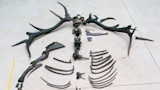
Anthropology
Wisconsin Elk Hunt: 1500 C.E.

Three times, they tried to push the herd out onto the ice, and three times, they failed. Scent alone wasn’t working. The wind dipped and swirled, and the daytime thaw and nightly freeze made the crusted snow impossibly noisy for stalking. The day was quickly turning to night and still they waited...
Keith Crowley
Aug 29, 2024
Read More
Play Now
Elk
Ask MeatEater: How Do You Hunt Elk in the Snow?

Every day, our fellow meateaters send us more than 100 emails regarding hunting, fishing, cooking, conservation, and more. So, we decided to publish a series dedicated to our favorite FAQs. Ask MeatEater is powered by onX, creators of the best digital mapping tool for hunters and anglers.
Snow gives...
Janis Putelis
Nov 16, 2021
Read More
Play Now
Elk
Love and Loss: Cal’s New Mexico Elk Hunt

For the third time that morning, I caught wind of it: a sour, slightly sweet odor beneath the dust rising from the piñon and juniper, almost an afterthought. The smell was strong enough to stir recollection, but not strong enough to command attention—a dead smell.
Bull elk get wounded while vying...
Ryan Callaghan
Oct 3, 2019
Read More
Play Now
Save this episode
Conversation