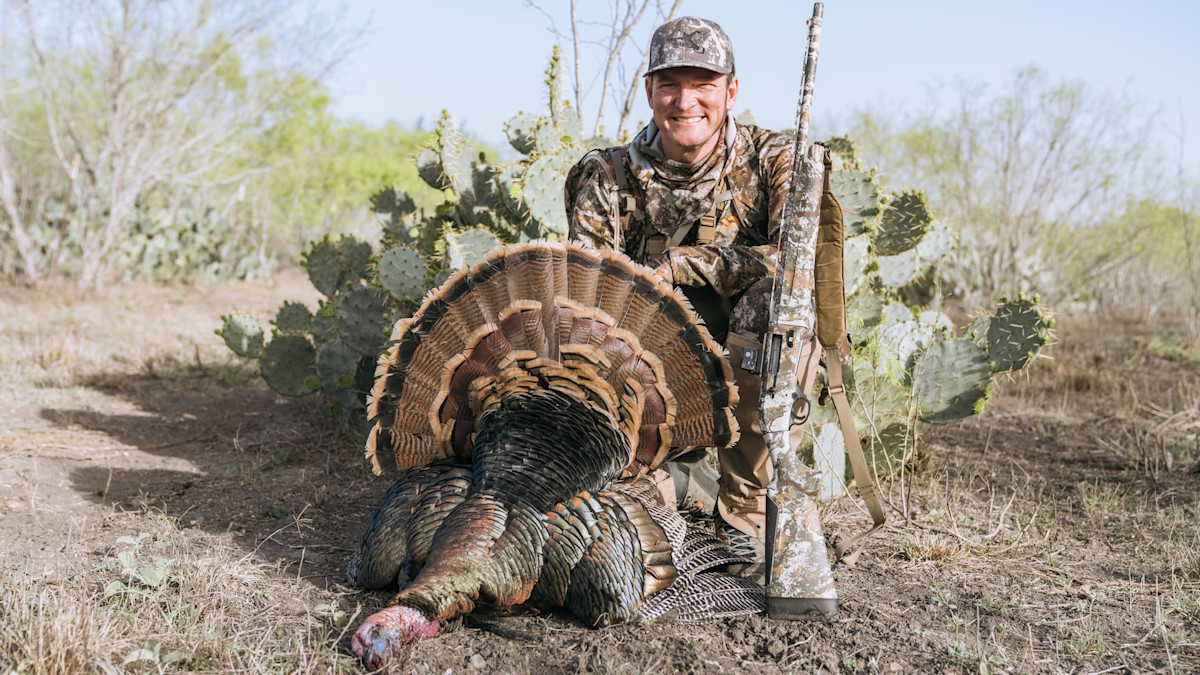

Most turkey hunters love to watch longbeards put on “the show.” There’s nothing quite like a tom gobbling his head off as he struts all the way to your gun barrel with iridescent feathers gleaming in the sun. Unfortunately, that’s not the case most of the time. Even though I’ll hunt four states and guide half a dozen hunters this year, I might get to see the show one or two times if I’m lucky.
In fact, most of the time the show gets canceled. This happens often in the early season when the toms are henned-up and spend the entire day shadowing their flock. Instead of calling it quits, I like to pivot to an ambush hunt. Merriam-Webster defines "ambush" as “to attack by surprise from a hidden place.” There are other methods of getting close to noncommittal birds too, like spot-and-stalk or reaping (the act of crawling behind a tail fan to get within range), but this is about finding a good hiding spot and waiting for the birds to come to you.
The keys to a good ambush are patience and knowing where the turkeys want to be and when they want to be there. Hopefully, you can glean some insights from the hunts detailed below for when the show inevitably gets cancelled for you.
Florida Osceola Dust Bowl Ambush
On my first day turkey hunting in Florida, I heard distant gobbles on the roost. I chased a few of those distant gobbles for the next hour until the jungle went quiet. So, I decided to pound some miles and look for sign.
By the time 11 am rolled around, the heat became unbearable. I circumnavigated a large opening, hundreds of acres big, but I wasn’t expecting to see birds in those conditions. So, I was quite surprised when I saw a flock of turkeys fleeing that opening. It was disheartening to spook the only birds I laid eyes on that day. Instead of chasing them, I went to investigate why they were there.
I immediately noticed a lot of dust bowls. Another road intersected the road I was on and trailed into the woods. The road showed lots of tracks going both directions. I figured the flock would be back the next day at about the same time and made note of it.
After a similar morning to the first, Richard, Garrett, and I headed back to the dust bowl spot around 10 am the next day. We hid in the shaded woods just off the road. After a few minutes, we watched the first hens peck their way down the road. Moments later, the first tail fan emerged. Eventually, the tom gave me a shot, and Richard turned his legs into arepas the next day, which you can watch here. No, it wasn’t the typical show, but it was a successful ambush and a delicious way to eat turkey legs.
Texas Rio Crossroads Ambush
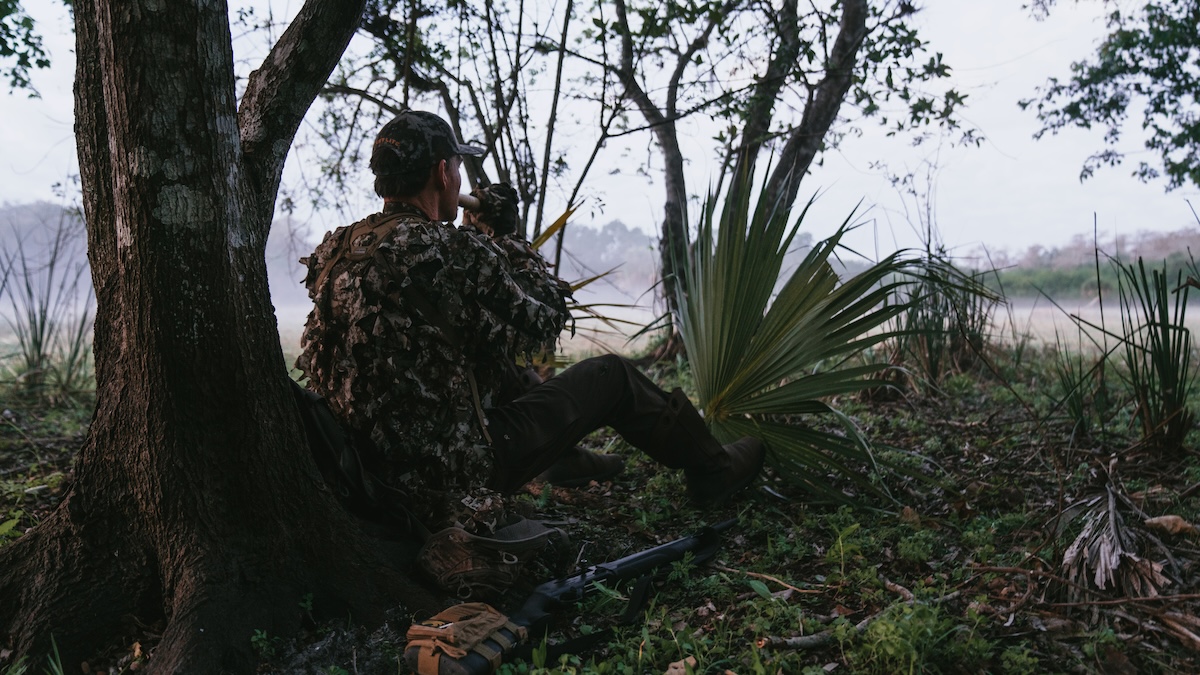
Max Barta and I were hunting Rios with Jesse Griffiths in Texas early last spring. Max and I roosted birds the night before, which made for great listening the next morning, but we could not convince the flock to come our way. Once the birds left our zone and went quiet, we looked at onX and realized they were headed in the general direction of a crossroads where Jesse had killed birds before. It was a spot where two grassy senderos (paths cut through Texas brush) met.
Knowing the birds traveled the senderos, we decided to set up where they intersected. We made a big loop, found a few big shrubs we could lean on, nestled in, and waited. About 45 minutes passed, and as I started thinking about our next move, Max whispered, “Here they come.”
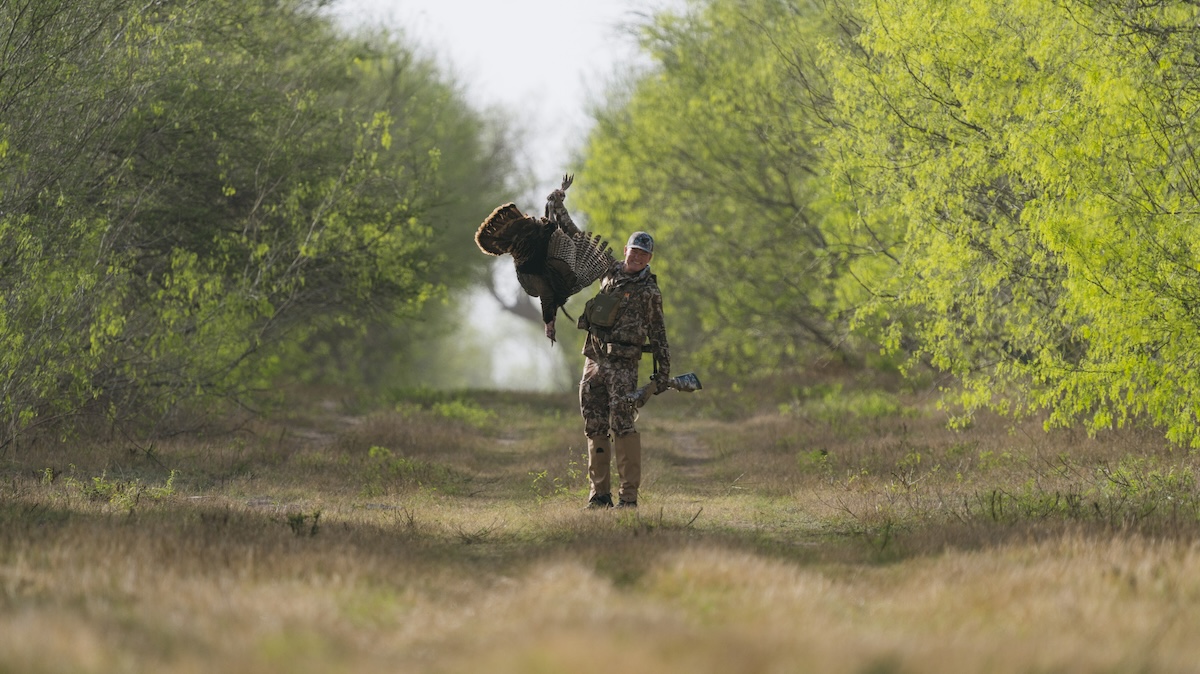
The flock filtered in and out of the brush. When a strutter entered my periphery at less than five yards, I couldn’t shoot. I was afraid to swing my gun barrel and spook the entire flock. I waited, and he eventually strutted right into my red dot.
“Blauksh” went the twenty gauge, and a few days later Jesse made the best fried turkey tender, mashed potato, and biscuit meal I’ve ever tasted. This was a travel route that these turkeys had probably taken thousands of times in their lives. We just needed to be there.
Nebraska Merriam’s Roost Tree Ambush
After three super early mornings in Nebraska’s Ponderosa pines, Brody Henderson and I were dragging our tails, with no dead turkeys to show for our efforts. We just could not seem to convince either of the toms to come our way after flydown. It occurred to me that these birds had shown a high fidelity to this roost location. There was a good chance they’d be back again. And this time, we’d be waiting for them.
We went back early that afternoon, just as the light was thinking about turning golden and soft. We planned to split the ridge. Brody would hunt the north end, and I would set up on the south end. As I crested the hill, I saw a hen and a tom feeding around the curve of a small finger ridge. I dropped back, made a small loop ahead of them, slipped over the main ridge, and sat down quickly next to a towering ponderosa. I readied my gun in the direction the birds should come from. They stuck to their path of travel, and I soon had a bird flopping down the grassy slope.
The Element of Surprise
The average turkey uses about 200 acres per day. Within those 200 acres are places they want to be, whether it’s for roosting, water, food, or loafing. Your job is to find these places and intercept the turkeys as they move between them. So next time the gobblers don’t want to play, don’t quit. Instead, head to the nearest spot you know they hang out late-morning and set the ambush.
Stay in the loop with The MeatEater Newsletter
Shop
Related
Turkey
How to Kill a Midday Gobbler

Turkey
How to Turkey Hunt in High Winds

Turkey
How to Tag Team Pressured Gobblers
The comments section requires Functionality cookies. Please enable Functionality cookies in Cookie Settings to view this content.