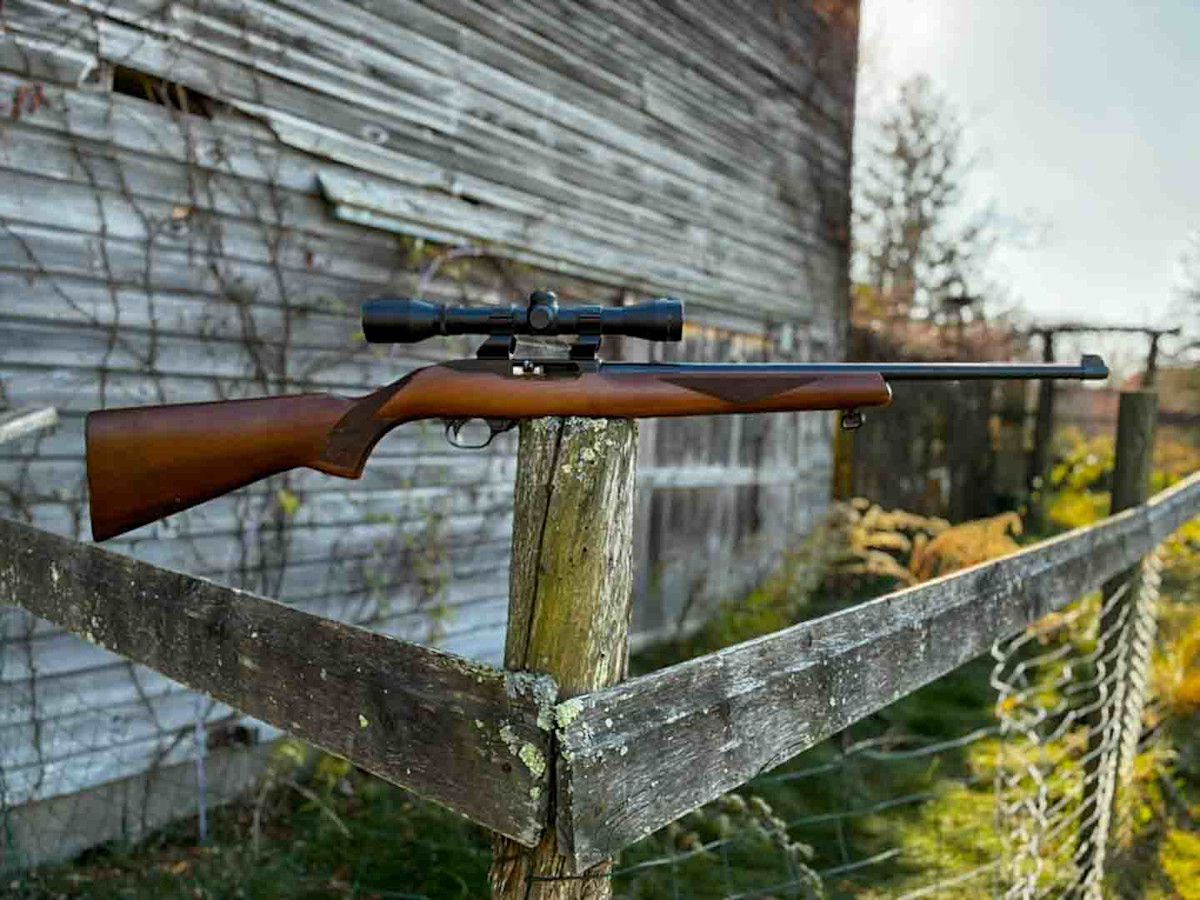

Designing a gun is like solving a puzzle. The gun has to work well, but it also needs to be produced at a massive scale to be commercially successful. This is something Bill Ruger needed to take into account as he went from wunderkind firearm designer in the 1930s to owner and founder of Sturm, Ruger & Co. in 1949. Perhaps no Ruger design epitomizes this more than the 10/22.
The Ruger 10/22 is practically standard issue in the U.S. Millions have been made and sold, and it has a following all its own with legions of fans customizing and modifying the gun. Released in 1964, the 10/22 was built to bring premium features to rimfire rifles at a cost that wouldn’t feel outrageous to the average consumer. From the day it dropped, it has excelled at this, setting a new baseline for 22 rimfire rifles.
The Story of the Ruger 10/22
The 10/22 is a case study in producing something better than the competition for around the same cost as the competition. To get to this, Bill Ruger started working on the rifle in the 1950s with designers Doug McClenahan and Harry Sefried. Together, they brought forward several ground-breaking manufacturing innovations. To the average shooter, these things aren’t as eye-catching as a decked-out M-Lok rail or fine engraving, but they are the reason the 10/22 is still with us today.
The first is the use of investment casting. Investment casting uses a mold for a rough part that gets filled with molten metal to produce that part. After the part is cast, a machinist might finish up some important cuts on a mill or lathe, but most of the work is done. When compared to machining a solid billet of steel or aluminium, investment casting is cheaper, and it still produces a quality part. In the case of the 10/22, the receiver is cast from aluminum, which makes it lighter to carry. But the aluminium also posed a bit of a manufacturing puzzle.
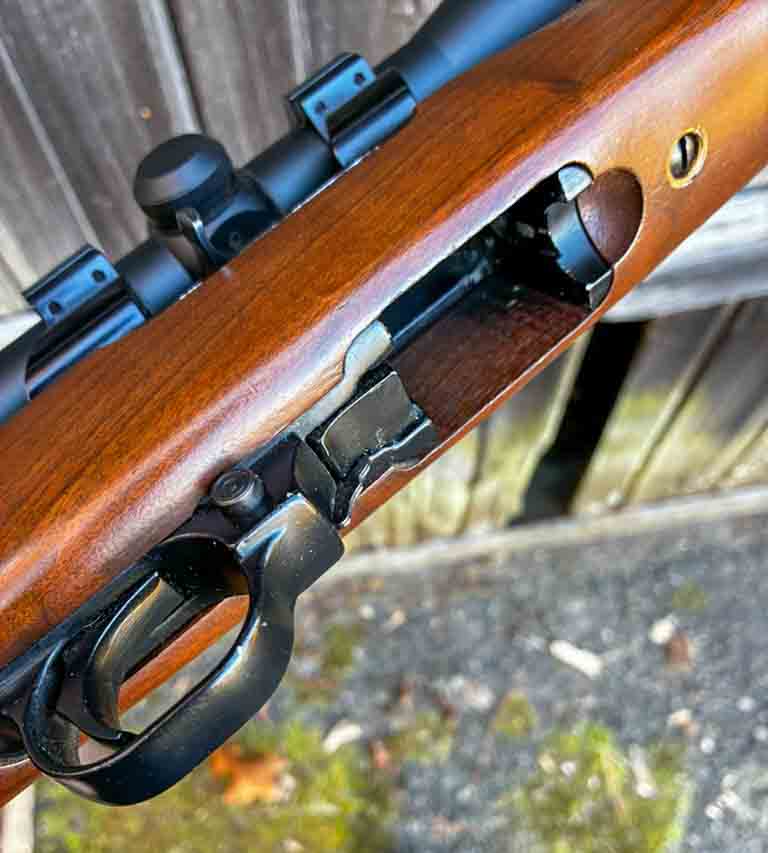
The barrel for the 10/22 had to be made of steel. At the time, Ruger needed to finish the steel barrel and aluminum receiver differently, before they were finally put together. Screwing the barrel into the aluminum receiver, as is done on most firearms, would inevitably mar the finishes on either the barrel or the receiver. To fix this, Ruger designed a dovetailed block with two screws to attach the barrel. This also makes barrel swapping easy, as many who want to customize their 10/22 with a new barrel have come to find out.
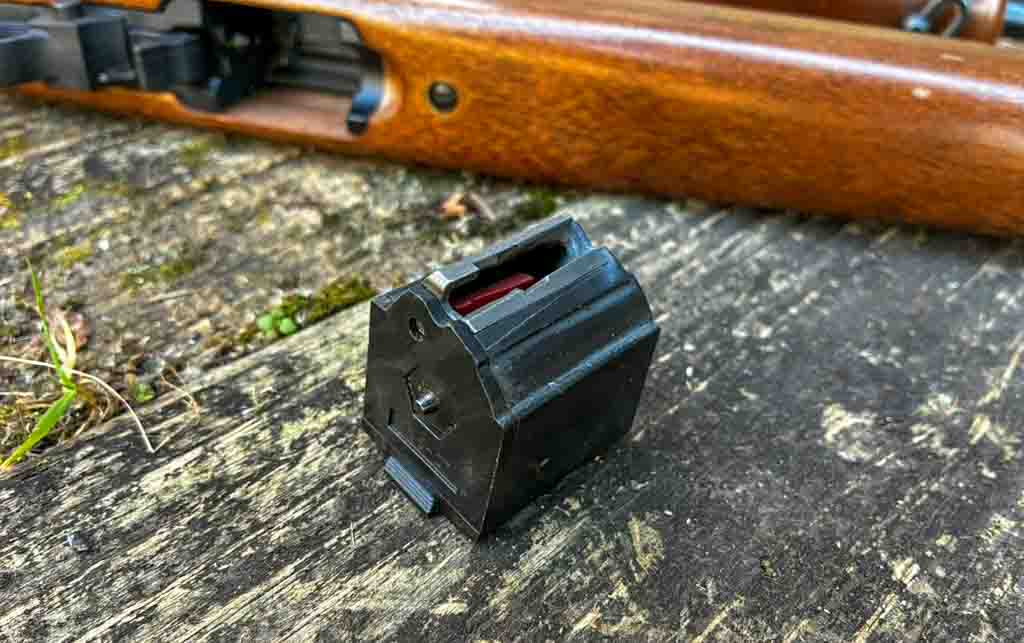
Another big breakthrough with 10/22 was its rotary magazine, which is pretty much perfect. At the time, Ruger had just employed an engineer named Harry Sefried. Sefried worked on the 44 Magnum Carbine with Ruger and was a wizard at simplifying mechanisms to be more effective in function and cost. From the book, Ruger & His Guns, Ruger describes Sefried’s work on the 10/22, specifically the magazine:
After the .44 Magnum Carbine [Sefried] had a great deal to do with the rotary magazine of the 10/22 Carbine; it was Harry who designed the subtly complex rotor which turned out to be the key to the way those cartridges lie in there so that the rims can’t catch on each other and the top cartridge is nicely pointed toward the mouth of the chamber.
By “nicely pointed,” Ruger meant that each cartridge was in the same position when waiting to be fed into the chamber. The rims also positioned themselves in a way where they would not lock and jam the gun. This was unlike typical box magazines, because varying spring pressure can slightly change the angles that cartridges sit, which leads to malfunctions. Successful, semi-auto rimfires using tubular magazines had been built before. But lifting cartridges from a tubular magazine to the chamber required extra moving parts—costing more money to manufacture and more chances for something to go wrong.
The last important innovation in the 10/22 is the genius “breechblock decelerator.” Using very few parts, the 10/22’s bolt is slowed down at the rear of the receiver. This gives more time for the next round to pop up in the magazine and get picked up by the bolt on its way forward. Rimfires that cycle too fast experience more failures to feed. With a reliable rotary magazine and a slower bolt, the 10/22 feeds right every time.
What Makes the Ruger 10/22 So Great
All of the manufacturing smarts that went into the 10/22 are great, but describing investment casting and magazine geometry to the average consumer isn’t going to sell guns. Hunters and shooters like the 10/22 because it was one of the first 22s to take itself seriously.
Ruger was a through and through gun guy. He knew what shooters liked and wanted, as you can see with guns like the No. 1, the M77, and the Mini 14. The 10/22 occupied uncharted territory in the market back in the 1960s, which is exactly why Ruger made it. Back then, rimfires were looked at as a step above a BB gun. They were youth guns and plinkers, not serious firearms. There were “trainer” rimfire rifles used by the military to take advantage of cheap rimfire ammunition, but there wasn’t really a 22 geared toward the serious shooter on the market.

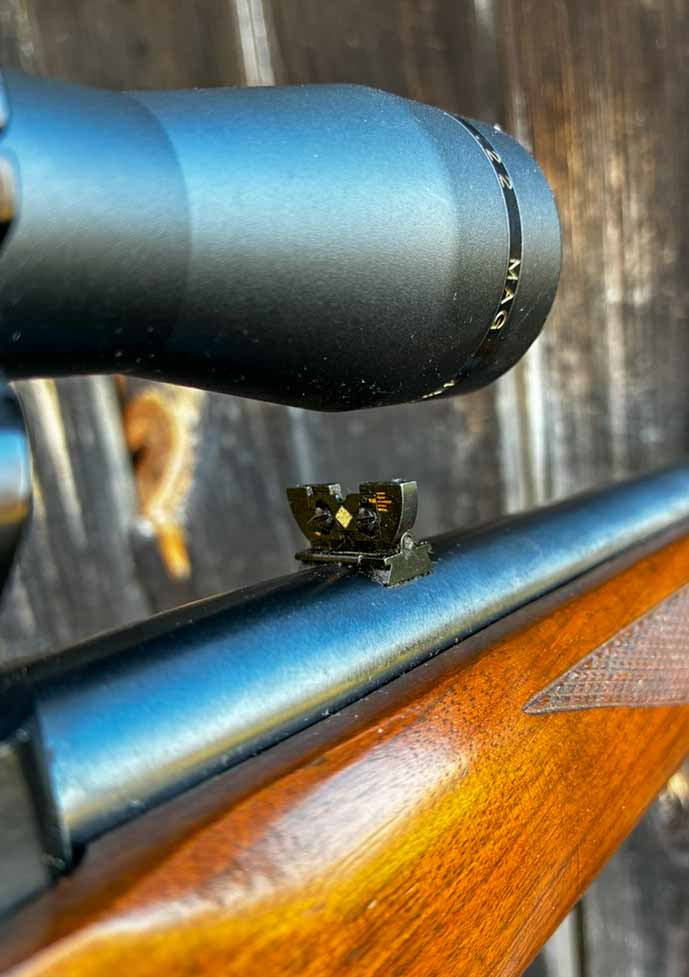
The 10/22 originally came with a nice walnut stock, solid metal parts, and sleek modern lines that weren’t too over the top. It was also scaled to more adult proportions. Ruger also contracted Lyman to make the sights, giving the 10/22 a nice set of irons right out of the box. It also used a crossbolt safety, which seems ubiquitous now, but was a more serious feature at the time that was found more on centerfires. More importantly, it also worked like a reliable centerfire rifle, whereas many semi-auto rimfires were finicky at the time.
The 10/22 has grown with the market largely because it works, but also because of the design innovations to help with its manufacture. Since its release, there has been a boom in aftermarket modification because the 10/22 is easy to modify. The rifle is like a Lego set for anyone looking to customize a gun because there is practically no machining work required to make upgrades. Want a new barrel? Simply swamp it with a couple of screws and an allen key. How about a new trigger? The entire fire control unit comes out for an easy change. Today, the 10/22 still can’t be beat for the money, and there are hundreds of ways to tailor it to your specific needs.
What to Look For in a Ruger 10/22
Ruger has made dozens of versions of the 10/22 starting in the 1960s. There are some with Monte Carlo combs, Mannlicher-style forends, fluted barrels, takedown survival models, laminated stocks, and a pistol version. All of them are good buys on the used market. Early guns were stocked in walnut, and later guns were stocked in birch, maple, synthetic, and laminate. Personally, I’m a sucker for walnut stock, but I’d be happy with just about any 10/22. Compared to newer 10/22s, early models will have more metal parts, like a metal fire control unit, but they will not have an extended magazine release.
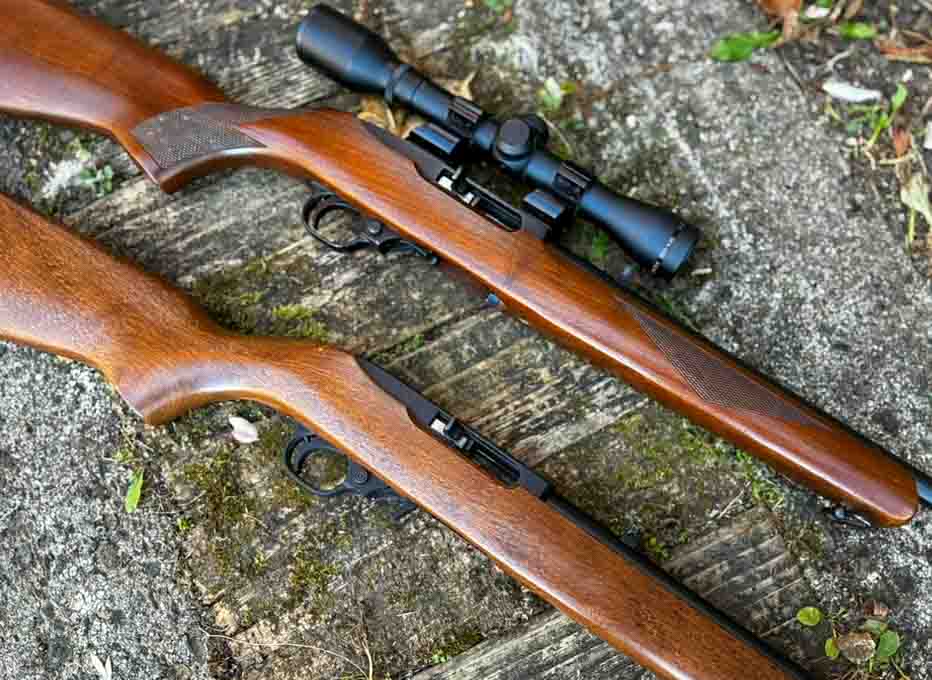
The used market is a great place to score a deal on a 10/22, but Ruger still produces the gun with several trim packages, and it almost makes more sense to buy new. The entry-level is the standard model with a wood or synthetic stock. There are also several takedown models, a line of carbon-fiber barrel models, and a more premium competition line. Ruger also makes left-handed 10/22s that are true left-handed guns and an SBR with a short barrel.
The most fun thing about the 10/22, though, is the ability to customize the rifle. Kidd and Volquartsen are two great aftermarket parts companies that stock everything from triggers to barrels. Bolt-hold-open buttons, magazine releases, and triggers are places a lot of people start, as aftermarket parts can be an upgrade to standard controls on vintage 10/22s. You can even start from scratch with an aftermarket receiver and build the entire gun yourself from premium parts.

Whatever you’re looking for, there’s probably a 10/22 that will suit your needs, from backyard plinking to squirrel hunting. And if you already have a 10/22, enjoy it. It’s still one of, if not the best semi-auto rimfire available today.
Photos via Matthew Every
Stay in the loop with The MeatEater Newsletter
Shop
Related
Firearms
Still in The Field: The Winchester Model 70
Firearms
Still in the Field: The Browning Auto 5
Firearms
Still in the Field: The Almighty Remington 870
The comments section requires Functionality cookies. Please enable Functionality cookies in Cookie Settings to view this content.