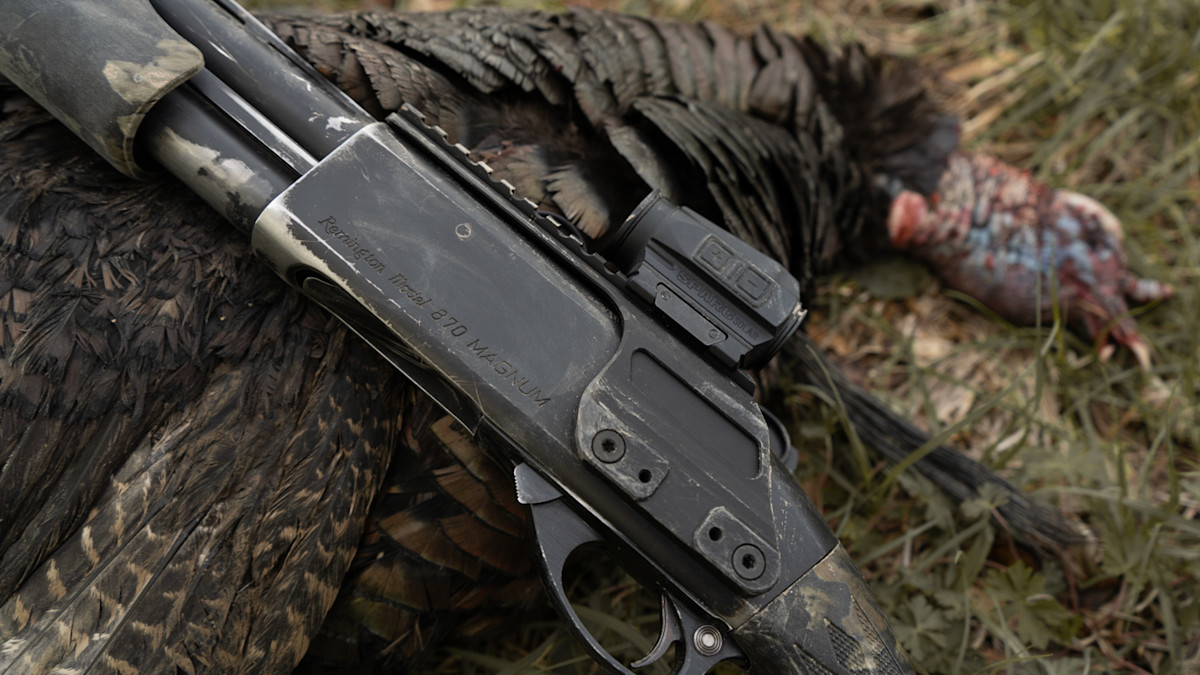

If you’re like me, your collection of shotguns is kind of like a set of golf clubs. Each is a different tool for a different purpose. I have a dainty, lightweight British 12-gauge for long walks and fast flushes. I have a smooth-shooting Remington 1100 for sitting still in the marsh. And I have a short-barreled 20-gauge for turkey hunting. But the most important gun in my safe is a beat-up Mossberg 500. I’ve used it to shoot deer, ducks, geese, turkeys, and pheasants.
I’m not enough of a golfer to think of a club that would best describe my Mossberg, but it is the toughest, most versatile shotgun in my safe. It isn’t particularly good at one thing—it’s good enough at everything. If you don’t have a workhorse shotgun like mine, you should probably get one.
I bought my Mossberg used for $150. For those unfamiliar with the Model 500, it’s a simple pump-action with a rust-proof aluminum receiver and a reputation for taking abuse. The 500 doesn’t have much in the looks or handling department, but it makes up for that with reliable feeding and easy maintenance without tools.
I can take my 500 into salt marshes and hose it down afterward without feeling like I’m ruining the gun. And should anything happen to it, I don’t need to take out a line of credit to replace it. Here are a few reasons why you might want a cheap, knockabout shotgun and how to go about getting one.
What to Look for in a Workhorse Shotgun
A solid, working shotgun should be simple to operate, simple to maintain, and durable. It should be able to put up with neglect, moisture, dirt, and the occasional dent or scrape. Their best virtue is that they are the gun you don’t need to think about. They let you focus on what’s happening in front of you and not on what’s happening to your gun. Collectors items are out, as are older, finicky shotguns. Pump-actions, over-unders, and inertia-driven autoloaders from reputable makers are all good choices.
Your gun should also be relatively affordable and replaceable, should something bad happen to it. It should also take a variety of shot types, from lead to slugs to steel. Weight is another factor. Too heavy and it will be a drag to carry in the uplands. Too light and it will feel whippy and all over the place in a duck blind. You’re looking for something with a little weight up front to help you swing on a bird or clay.
I prefer a 12-gauge. They pattern the best, and you can load them with anything from a heavy goose load to a light target load. Don’t rule out a 20 gauge, though. You can pass them down to younger shooters, they’re lighter to carry in the field, and will get the job done on just about any game animal in the US.
A workhorse shotgun should also be the first gun you buy.If you’re new to hunting or new to buying guns, picking a simple, reliable shotgun is a great way to go. Pump-actions and over-unders are easier to operate safely for beginners. After buying that first gun, you will probably buy a second and a third, but if your first is durable and reliable, it can pinch hit in a variety of hunting situations.
They Make Great Buddy Guns
Having a beater shotgun has saved quite a few hunts for me and my friends. I always pack one when I go to duck camp should my first choice break down, and more often than not, I’ve ended up loaning my Mossberg or Benelli M2 clone to someone else. A buddy gun is a great thing, because hunting with a buddy is better than hunting alone. If that gun is simple and easy to understand and operate, all the better.
Go For Something Easy to Maintain
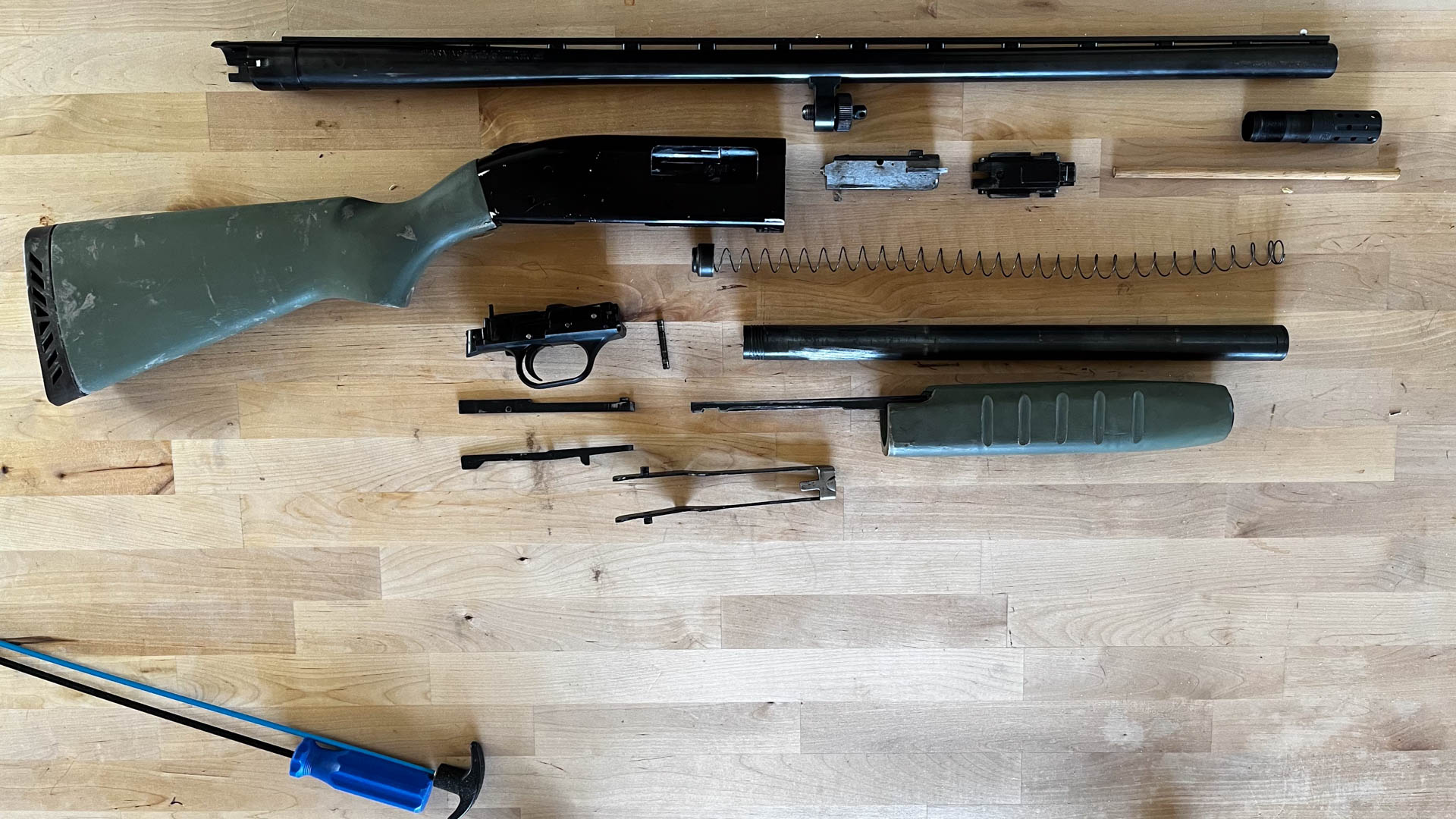
Guns that are easy to maintain are easy to break down to their smallest parts. After unscrewing the barrel, my mossberg comes apart with two pins that I can punch out with a screwdriver or a stick if I need to. The bolt is chunky, and it’s hard to lose a part when I have it stripped down.
This comes in handy should I need to break the gun down in the field—which I’ve done after getting it completely covered in snow and mud on a deer hunt. Another plus to big, loose-fitting parts is the gun’s ability to clear dirt and debris. Many think a gun that rattles around means it’s lower quality, but loose tolerances are the key to unfailing reliability. Guns with small parts and intricate mechanisms don’t make good working shotguns. And vintage guns with specialized parts are not ideal either.
Think General Purpose, Not Special Purpose
Your shotgun is going to have a long life of use doing a lot of different things. It should not be good at one thing. Spare barrels are easy to find and cheap on the used market for my Mossberg. I have several that I can take deer, duck, or turkey hunting, or I can throw on a short barrel to use it as a truck gun or camp gun for peace of mind. I also like that I can find cheap aftermarket stocks for it if I need to make the gun fit a smaller member of the family.
When you’re looking for a workhorse shotgun, go for the most versatile gun you can find with plenty of available aftermarket parts. I like pump-actions because I can easily switch barrels. They also have a higher capacity as a camp gun or something to carry in bear country.
Generally, American-made pumps are built to fit anybody, and their stocks can be swapped with a screwdriver if they don’t. More modern gun stocks also offer shims that are easy to change for new shooters. Your workhorse gun may not be great for one type of hunting, but it should be adequate at almost everything.
Chamber Length is Important
I almost never shoot 3-inch shells. Instead, I roll my own 2¾-inch bismuth duck loads and have been using a great low-recoil 2¾-inch TSS 12-gauge load for turkeys. But I do have an absolute pile of 3-inch steel shotshells should I need them, and all of my hardest-working guns have 3-inch chambers.
Think of a workhorse gun as a down-on-your-luck gun. It should have a strong, modern barrel that can eat anything from the cheapest steel shells to the fanciest custom loads. As someone who shoots a lot of vintage guns that are picky with ammo, having a couple more modern guns in the safe is a great backup. Bismuth is getting harder to find, and lead could eventually be outlawed, which would turn my old guns into wall-hangers. It’s nice to know that an ammo shortage wouldn’t keep me out of the field.
5 Great Hard-Working Shotguns
If I’ve convinced you of the merits of an affordable, durable, no-nonsense shotgun, you’re probably wondering what models to buy. Here are a few options that will serve you and your grandkids’ grandkids in the field.
The Mossberg 500
This is my pick for a workhorse gun because it just works every time. Shooting a Mossberg 500 can feel a bit like swinging a 2x4, but when you pull the trigger, it goes bang, and I have a lot of punched tags to prove it. I’ve dropped my 500 from a treestand, submerged it in water, and left it cold and wet for weeks, and it always works. There are also endless options for barrels, stocks, and parts, and these guns are dirt cheap even if you buy one that’s brand new.
The Remington 870
In my opinion, Remington 870s are better quality than Mossberg 500s, but the 500 has the 870 beat in field serviceability and simplicity of design. The 870 is still a simple, brilliant design that pretty much dropped the mic on pump-action shotguns. Remington 870s are getting more expensive, and some of the later Express models lack in quality. Keep an eye out for old Wingmasters and guns built in the late 80s to early 90s. They still have old-school Remington craftsmanship with the added bonus of swappable Remchokes.
The Ithaca Model 37
If you’re noticing a pattern here, it’s this: Every shotgun on this list so far has seen military service, and the Ithaca Model 37 is no exception. It earned its stripes in the jungles of Vietnam, so it will put up abuse, season after season. The other upside to the Model 37 is that it’s pretty much ambidextrous—shells eject from the bottom of the receiver. It’s also widely available on the used market and gives you a lot of old-school craftsmanship for the money. The only downside is you might be limited to a 2¾-inch chamber and a fixed choke. If that’s the case, buy one with a modified choke or send the gun off to a company like Briley to put in threaded chokes.
The Benelli M2
The Benelli M2 is about as bare-bones and basic as you can get for an autoloader. They are a joy to handle and carry in the field, too. There are a lot of M2 clones out there as well that make great candidates for workhorse shotguns because they are often very cheap. It’s also easy to find parts for them. M2s don’t shoot as soft as gas guns, but they keep on shooting when other autoloaders fail.
Beretta 680 Series
You’ll probably spend more money on a Beretta 680 series than you would on any other gun on this list, but it is probably the most versatile here. There’s a lot to be said for choosing an over-under as your workhorse gun. They may only have two shots, but they are dead reliable. Ergonomically, they work equally well for waterfowl, upland hunting, and clay shooting. Shooting slugs and turkey loads can be an issue out of an over-under depending on how the barrels are regulated, but you can find one barrel that will hit to your point of aim. A Beretta 686 Silver Pigeon 12-gauge could be the first and last gun you’ll ever buy. If you’re looking for a more affordable, hard-working over-under, check out a Franchi Instinct L.
Stay in the loop with The MeatEater Newsletter
Shop
Related
Firearms
The 6 Best Pump-Action Shotguns of All Time

Firearms
5 Great Workhorse Shotguns and Why Every Hunter Needs One

Firearms
If You Can Only Have One Gun, Pick This One

The comments section requires Functionality cookies. Please enable Functionality cookies in Cookie Settings to view this content.