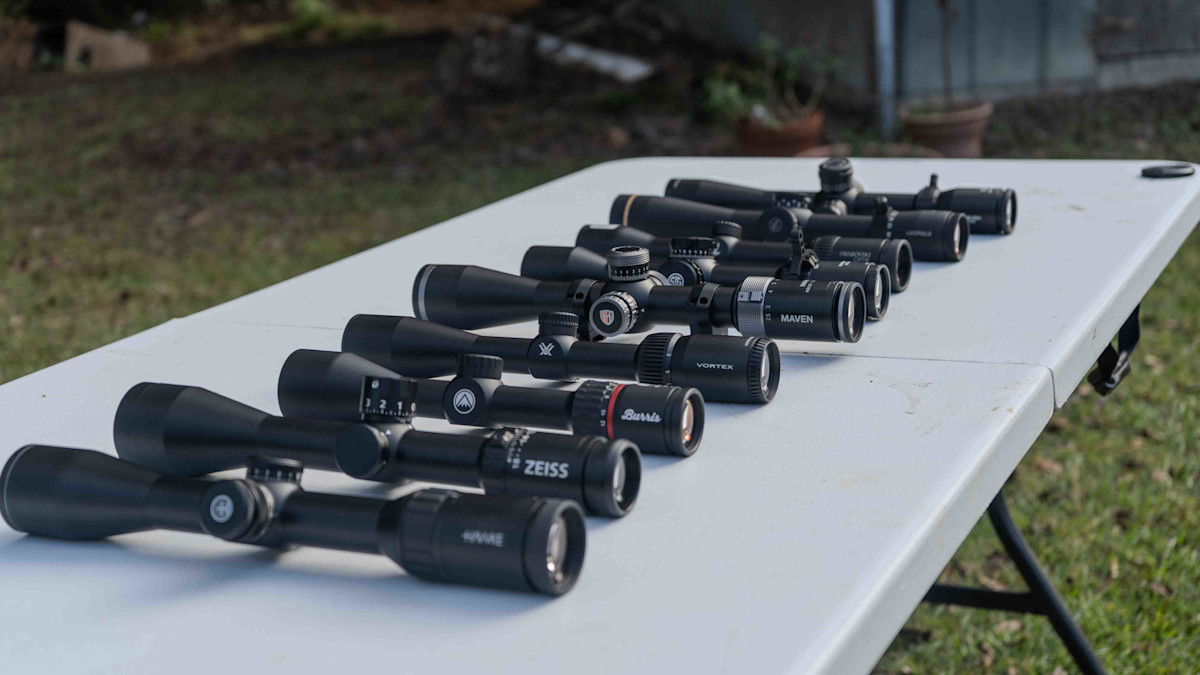

Most people don’t think about scopes the way they do rifles. You have budget-friendly, entry-level guns, and on the other end of the spectrum, you have custom rifles with carbon barrels (or stocks) that are true half-inch shooters. Some of them prompt feelings of disgust, while others invoke an audible “wow” after handling them. Scopes are no different.
Levels of durability, craftsmanship, and functionality vary at the different price points, so it’s better to understand what each tier should, or actually, offer. For this review, I looked at some of the best hunting scopes, most of them new, that range from a few hundred to just under a few thousand dollars. Here’s how they stacked up.
Jump to: The Products We Tested and Reviewed
How I Tested the Best Rifle Scopes for Hunting
When it comes to scopes, hunters (generally) focus on two primary categories: glass and tracking. Essentially, how bright and clear it is at last shooting light, and does it track accurately when I make adjustments. The tertiary categories, warranty, weight, reticle or turret options, etc., can enhance or detract from a scope’s overall value. Though, most companies now offer anywhere from a few to a dizzying amount of reticle options and magnification configurations depending on the scope.
Versatility also plays a role in a scope’s appeal and is something most hunters consider. If you can go from a squirrel rig to deer rifle to precision scope, it makes it easier to stomach the type of price tag that scope might command. A scope’s versatility, glass, and controls all contribute to its perceived value or what hunter’s are willing to pay for it.
For every category, each scope received a score from 1-5, with 5 being the highest. Here’s a breakdown of each category.
Optical Performance
To judge each scope’s optical performance, I went to the range and tested their low-light and resolution capabilities. I observed a steel target, spray-painted white with a black center dot at 300 yards for the low-light portion of the test. I then scored each scope’s ability to distinguish that dot in fading light. For the resolution, I observed a campaign sign at 100 yards and noted each scope’s ability to distinguish between the smallest letters in bright and low-light settings. I also assessed each scope for edge-to-edge clarity and color fidelity.
Controls
Scopes received a score based on their controls, which included turret clicks, magnification adjustments, reticle tracking, and illumination. I noted how each scope’s turrets and focus controls turned and whether they were responsive or mushy. Because a lot of optics companies now include exposed elevation turrets on even their entry-level scopes, I considered whether or not these were more useful or cumbersome to the scope’s overall utility.
Versatility
Because scopes can represent significant investments, I also considered the versatility of each scope. That is, how easily each scope could be used for multiple hunting and shooting applications or switched from rifle to rifle. I also included mounting in this category and considered whether or not a scope offered liberal mounting options or would require extra/special rings.
Value
The value category considers each scope’s price in relation to the three previous categories. I also factored in included accessories like flip-up lens covers, sun shades, throw levers, and, most importantly, warranty.
The Best Rifle Scopes for Hunting
| Maven RS1.2 2.5-15x44 | Leupold VX-5HD Gen 2 3-15x44 CDS | Swarovski Z5+ 2-10x42 | Burris Fullfield 3-12x42 | Vortex Crossfire HD 3-9x40 | Zeiss V3 6-18x50 | Sig Sauer Whiskey 6 3-18x44 | Hawke Endurance 30 FD 3-18x44 | Athlon Ares HLR 2.5-15x42 | |
|---|---|---|---|---|---|---|---|---|---|
| Highlight | Best Long Range | Best SFP for Hunting | Best Glass | Best Budget | Best Under $200 | Best Lightweight | Best Crossover | Best Value | Runner Up Lightweight |
| Price | $1400* | $1499* | $1769* | $269* | $179* | $849* | $999* | $739* | $769* |
| Magnification | 2.5-15x | 3-15x | 2-10x | 3-12x | 3-9x | 6-18x | 3-18x | 3-18x | 2.5-15x |
| Objective Lens | 44mm | 44mm | 42mm | 42mm | 40mm | 50mm | 44mm | 44mm | 42mm |
| Weight | 26.4 oz. (without battery) | 19.9 oz. | 15.9 oz. | 16.4 oz | 16.2 oz. | 18.2 oz | 23.8 oz. | 20.7 oz. | 18.9 oz. |
| Focal Plane | FFP | SFP | SFP | SFP | SFP | SFP | FFP | SFP | SFP |
| Illuminated Reticle | Yes | Optional | Optional | Optional | No | Optional | Optional | Yes | Yes |
| Tube Diameter | 30mm | 30mm | 30mm | 1-inch | 1-inch | 30mm | 30mm | 30mm | 30mm |
| Warranty | Lifetime | Fully Transferable Lifetime | Limited lifetime | Fully transferable lifetime | Lifetime | Transferable limited lifetime | Sig Sauer Infinite Guarantee | No Fault Lifetime | Lifetime |
| Field Notes | Field Notes | Field Notes | Field Notes | Field Notes | Field Notes | Field Notes | Field Notes | Field Notes |
Best Long Range
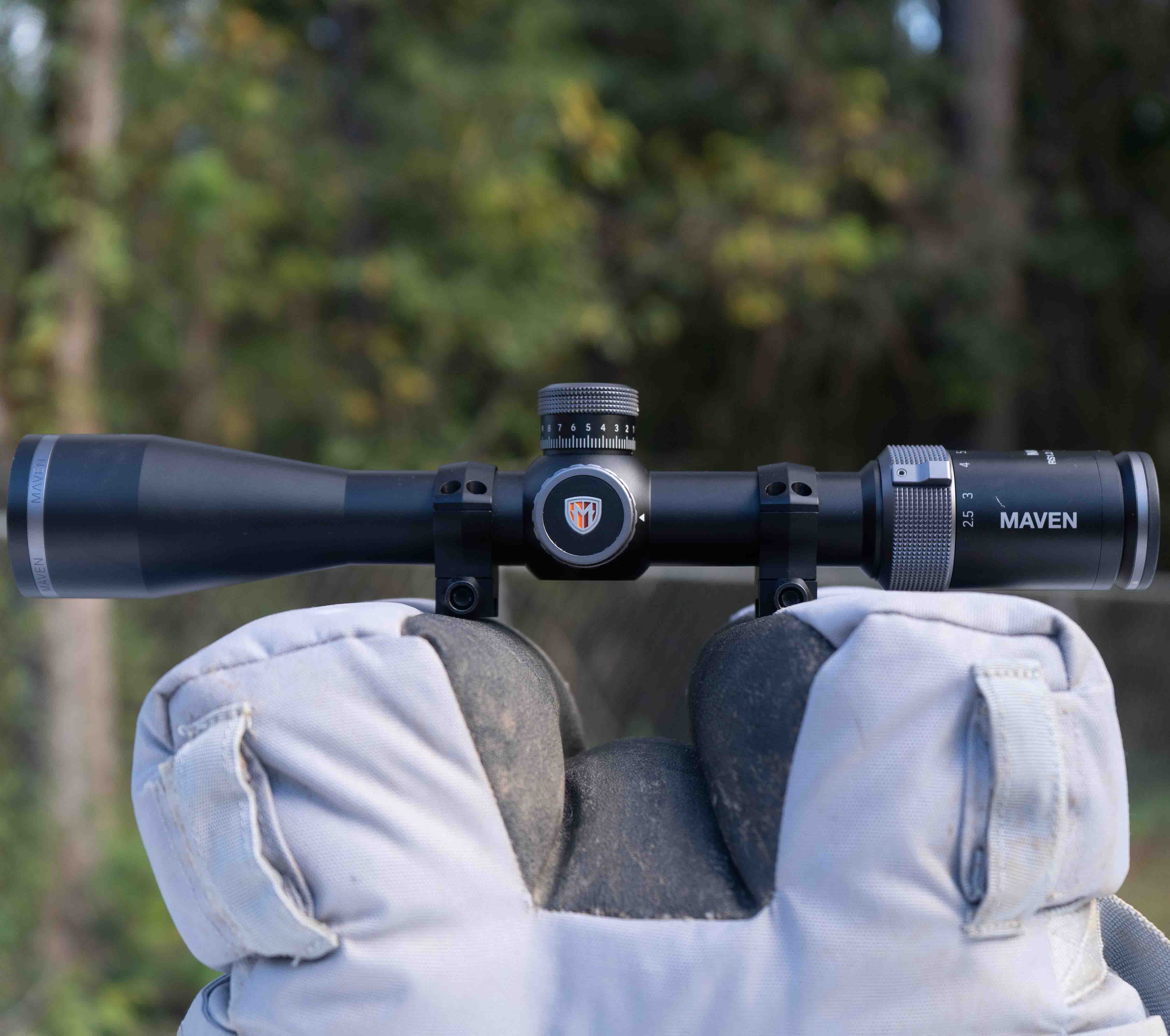
Maven RS1.2 2.5-15x44
I’ve hunted with this scope for the past three seasons, so in addition to the optics testing, I’ve also had plenty of field experience with it. So while I’ve had a few seasons to appreciate this scope’s utility, I’ve also had plenty of time to scrutinize it.
Let’s start with the glass. Maven’s RS line of scopes features their premium, made in Japan glass, which is reflected in the price ($1400). It’s sharp, crisp, and offers edge-to-edge clarity without any noticeable distortion.
The RS1.2 offers good low-light performance, though I wouldn’t say it exceeds expectations. It’s certainly good for the price point and was indistinguishable from the Leupold VX-5HD at last light. Still, Maven’s claim to fame is its DTC (Direct to Consumer) model, which theoretically offers more value at their products’ price points. This one feels more on point. For these reasons I gave it a 4.
As a long range hunting scope, the magnification range and objective lens hit a sweet spot. The scope feels more streamlined than other long range scopes with big bells and obnoxiously big turrets. It might lack the zoom that some want from long-range precision scopes, but I’d say this scope’s bread and butter for western hunters who occasionally shoot beyond 500 yards.
The scope’s turrets turn positively with crisp, definite clicks, and the reticle tracks accurately. I set the zero-stop three years ago on my Bergara B-14 Ridge 6.5 Creedmoor, and I haven’t had to adjust it since.
While the turrets are butter smooth, the parallax adjustment requires some elbow grease. The illuminated dot at the center of the reticle is pretty dim even on the highest setting. It doesn’t create a starburst effect but isn’t super useful on the lower magnification settings. For controls, it scored a 4.
I’ve used this scope in everything from thick, dense piney woods to long stretches of power line, and the RS1.2’s footprint makes it serviceable for both. Even with the MOA-2 reticle, it’s not too crowded. That type of versatility earned it a 4.
Maven lists this scope for $1400, though you can sometimes find it on Amazon for around $1150. The latter is a great deal, and the former is still a good one. It’s good glass, buttery controls, and versatility earned it a 3 in the value category.
Best SFP for Hunting
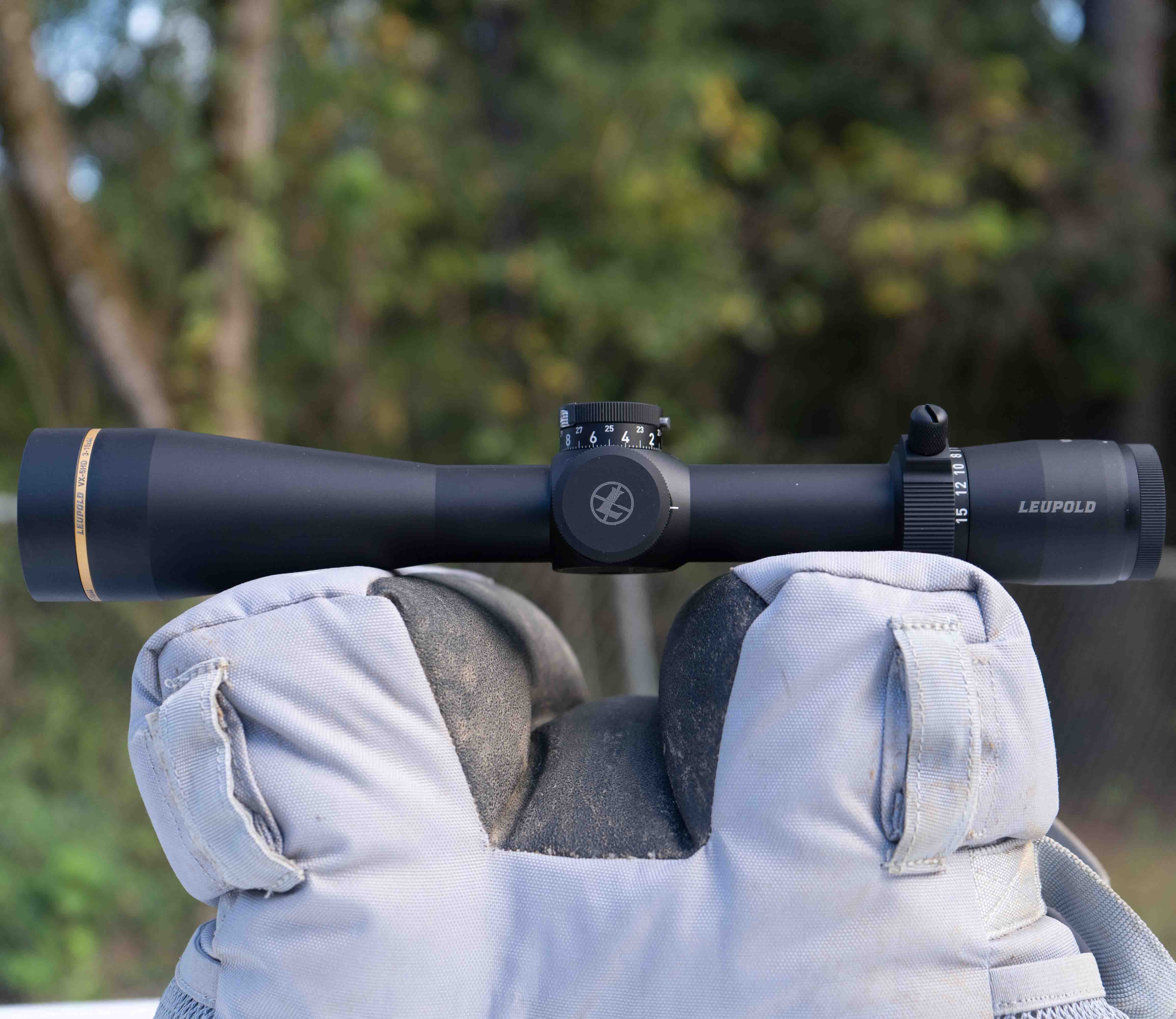
Leupold VX-5HD Gen 2 3-15x44 CDS
Given their similar size and price range, the Maven RS1.2 and Leupold VX-5HD Gen 2 made great comparisons. Let’s get this straight: this is a review of the best hunting scopes, and the VX-5HD Gen 2 is a premium hunting scope. That is both a statement of its excellent specificity and underwhelming limitations.
The CDS (Custom Dial System) SZL2 elevation turret, which is also tool-less, is incredibly handy, and each scope includes one free dial (subsequent dials are $80 each). While the VX-5HD line offers relatively simple reticles, that’s intentional. The CDS and variations of Leupold’s sparse Duplex reticle are best suited for an uncrowded sight picture and dialing to specific ranges. Coupled with the fact that it has a second focal plane reticle, these features make it an ideal hunting scope. This is a large reason why it earned a 4 in the controls category.
While the simplified duplex options make it ideal for hunters who don’t want or need a Christmas tree reticle, that poses obvious drawbacks for those who would like more holdovers or specific subtensions.
The VX-5HD Gen 2 earned a 4 in the optical performance category, just edging out the Maven RS1.2. It provides ultra-clear, crisp images, edge-to-edge clarity, and great low-light functionality. It also has great color fidelity, and I didn’t notice any major flares or aberrations.
As I mentioned, the VX-5HD Gen 2 excels as a hunting scope, specifically for big game, but the lack of reticle options was a knock against its versatility, which earned it a 3. However, coming in seven ounces lighter than the RS1.2, the VX-5HD Gen 2 feels at home on everything from a lightweight mountain rifle to a heavy barrel varmint gun.
Sometimes value is more apparent in scopes that outperform the price range. The Leupold VX-5HD offers premium glass and features that make it a great hunting scope—at a premium price. Those features don’t necessarily exceed expectations for its price tag, but they certainly deliver what’s expected. Essentially, this is a good value, worthy of a 3.
Best Glass
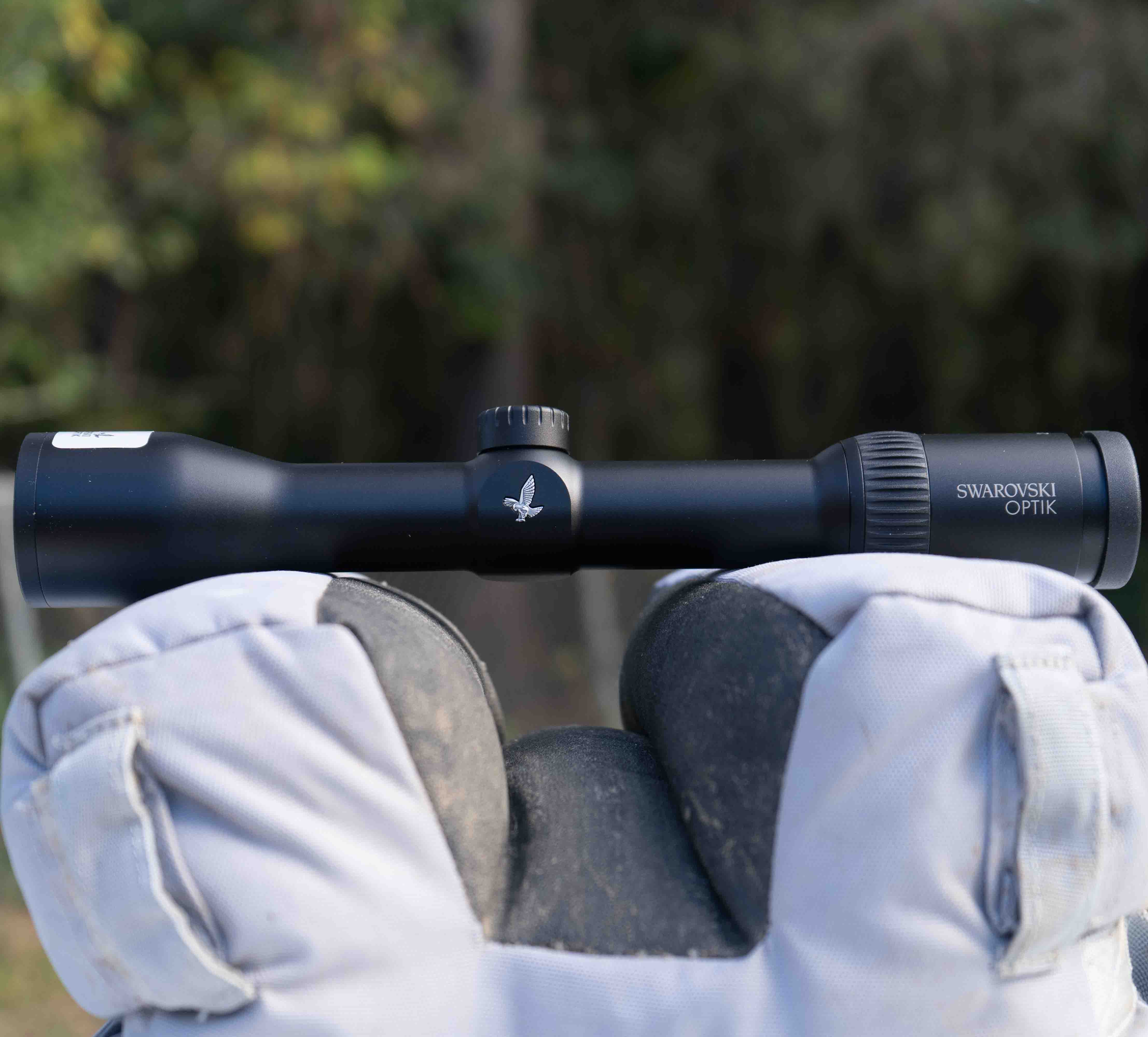
Swarovski Z5+ 2-10x42
Swarovski introduced their Z5+ line of hunting scopes in 2025, an expansion of their widely popular Z5 line. The Z5+ features a 30mm tube instead of a 1-inch and a more comprehensive ballistic elevation turret. Yet, these additions don’t detract from Swarovski’s trademark, and dare I say, European, sleekness. The Z5+ line includes everything from the lightweight 2-10x42 to a long range 5-25x56, ranging from $1669 to $2299.
Multiple color-coded ballistic rings allow you to set them at four different differences, so you can swiftly dial to them. You can also get a ring dialed to your specific ballistics, making the process even more intuitive. Not only are those ballistic controls user-friendly, they don’t come at the expense of any extra bulk or weight.
Unsurprisingly, those controls are buttery smooth and tactile, which gave it a 4 in that category. I could nitpick and point out the fixed parallax on some of the models with lower magnification settings, but I never had an issue focusing the reticle and target together out to 300 yards.
The Swarovski Z5+ ran away with the optical performance category and was the only scope to earn a 5. Crisp, clear images, edge-to-edge clarity, excellent color fidelity, and staggering low-light capabilities put it head and shoulders above the other scopes in the test, even those with decidedly larger objective lenses. If you’re a Swarovski believer, then you’re probably thinking, “no duh.” But I’m still surprised at the number of naysayers that claim their (insert any $500 optic) is “just as good” as the Austrian scope maker. I’m willing to give them the benefit of the doubt and say they’ve never actually looked through one.
Nobody accuses Swarovski of being too expensive. There’s a reason hunters are willing to save and spend a paycheck or two on them, even with their limited lifetime warranty. Swarovski offers excellent glass, which you’ll have to pay for. When thinking about the value, it’s not like you get a screaming deal. This scope is economically out of reach for most hunters (myself included). You get what you pay for, which is premium, ultra-sharp, bright European glass that will give you a lifetime of service. For value, the Z5+ earned a 3.
Best Budget
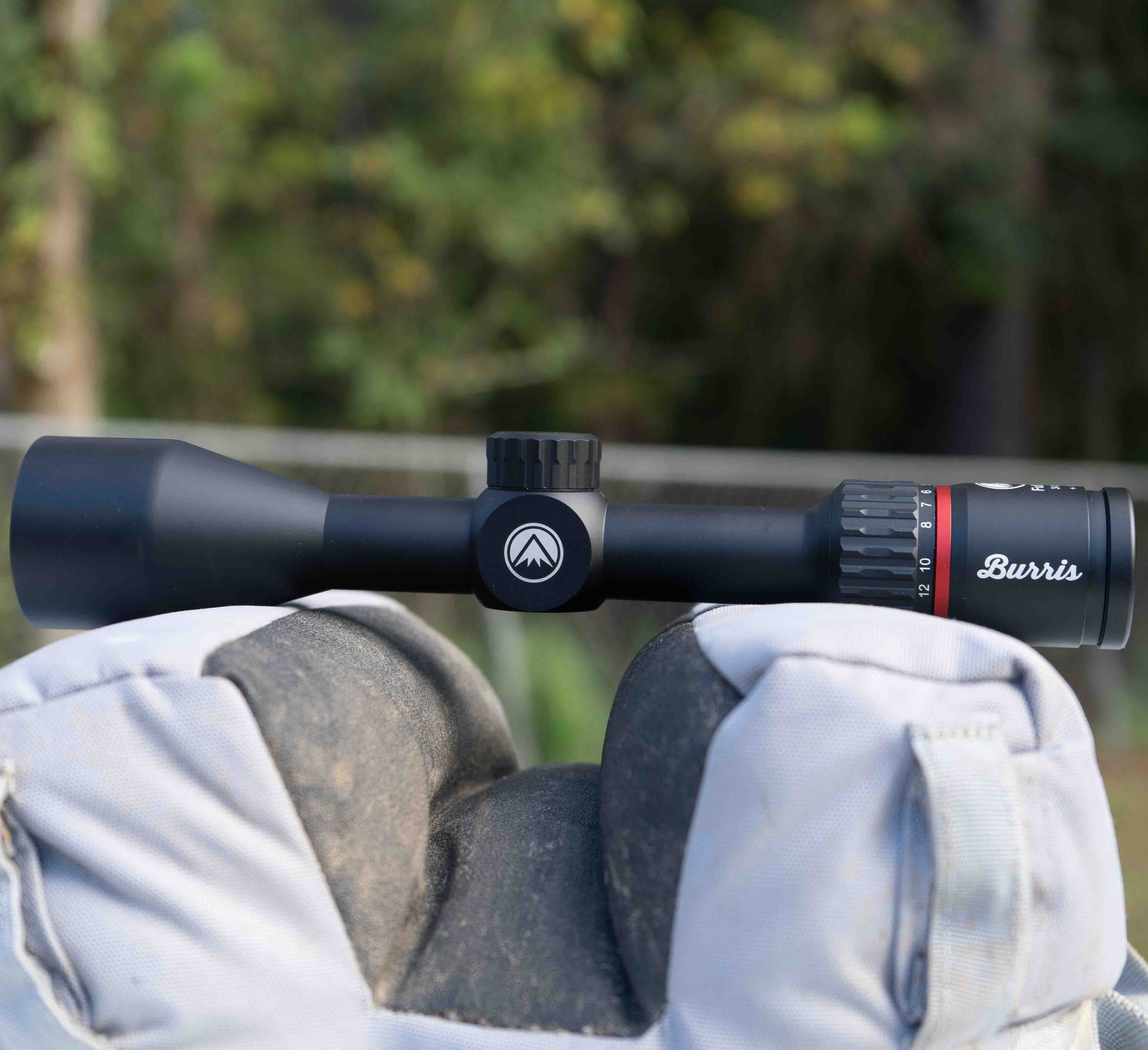
Burris Fullfield 3-12x42
If you’re looking for a scope to replace that old Tasco that finally petered out on your grandad’s (or dad’s) .30-30, look no further. This is a simple and affordable hunting scope for less than $300. It earned a 4 in the value category, largely due to its price tag and refreshing simplicity.
Its optical performance, which scored a 3, won’t wow you, but it’s certainly on par with its price range. Aside from the blue/green tint and mediocre resolution, especially at last light, it offers decent glass for a rifle scope that’s suited for deer camps east of the Mississippi.
The parallax is fixed at 100 yards, which is about as far as most folks in the market for this scope are going to shoot anyway. While the turret indexing is small, the clicks are actually definitive, unlike other scopes in this price range. Luckily, you shouldn’t have to worry or need to make adjustments after setting this scope. Burris does offer exposed turrets that you swap out, and the E3 reticle will better suit hunters who want a bit more adjustability. For controls, the Fullfield earned a 3.
If I were trying to piece together a “budget” hunting rifle setup, this scope would be at the top of my list.
Best Under $200
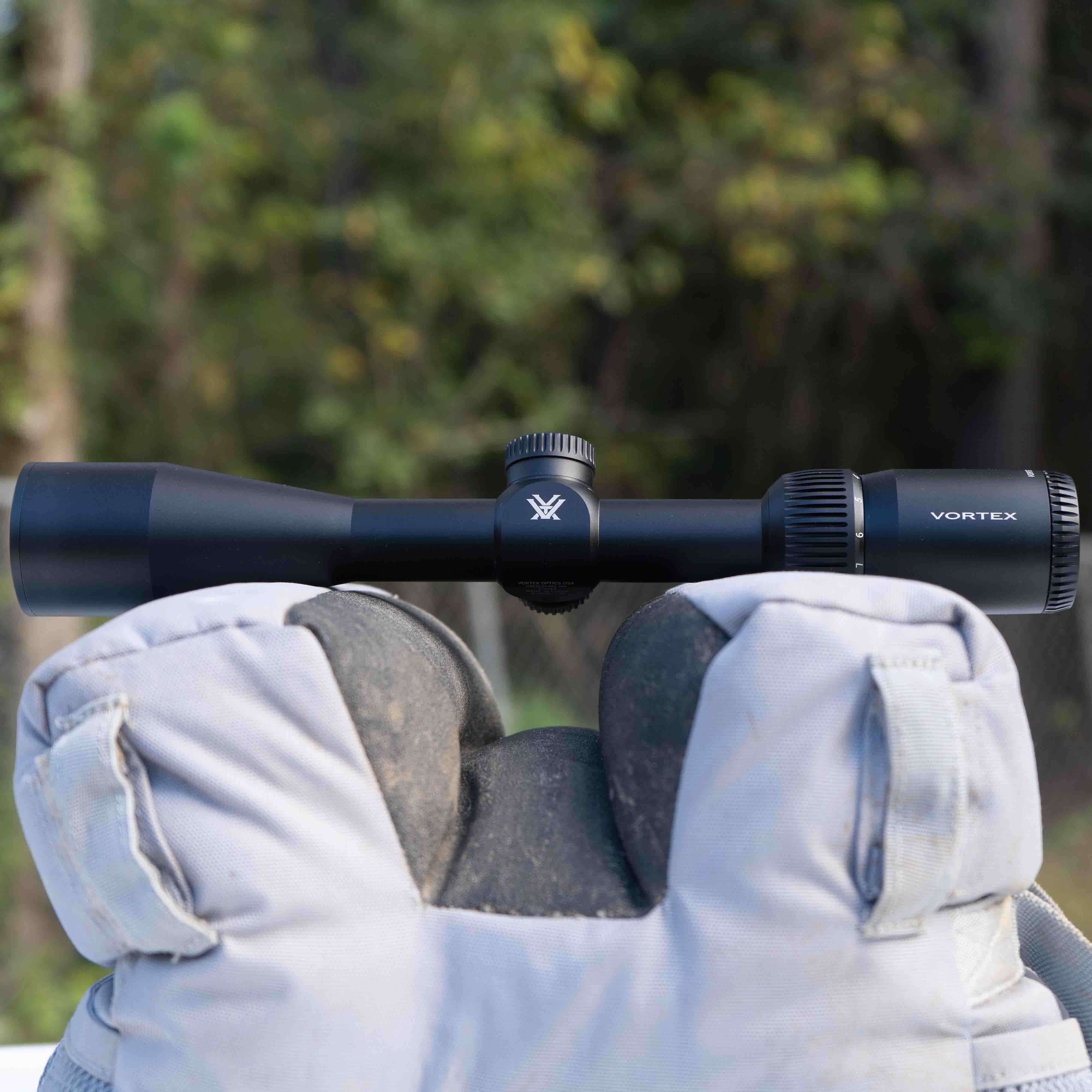
Vortex Crossfire HD 3-9x40
Like the Burris Fullfield, the Vortex Crossfire occupies the same price tier and category: affordable, simple hunting scope. At this price range, you should expect decent glass and relatively smooth controls at an affordable price. That’s what the Crossfire delivers. It doesn’t punch above its weight class, but it should give you everything you want in a sub $300 scope.
The Dead-Hold BDC reticle and classic 3-9x magnification make it a good option and value for most deer hunting rifles or small game plinkers. The controls aren’t mushy, and the turret clicks are definitive and precise. Overall, the Crossfire scored a 3 when it came to controls.
The Crossfire’s glass won’t wow you, but scopes at this price range aren’t known for doing so. Like the Fullfield, it lacked edge-to-edge clarity, and its underwhelming resolution in low light is apparent next to more expensive scopes. Still, it offers a good value at its price point, which earned it a 3.
While the 3-9x40 might not allow for long or even some mid-range shooting scenarios, the 6-18x50 version of this scope certainly can. That kind of close-to-kinda-long-range capability earned it a 3 in the versatility category.
Best Lightweight
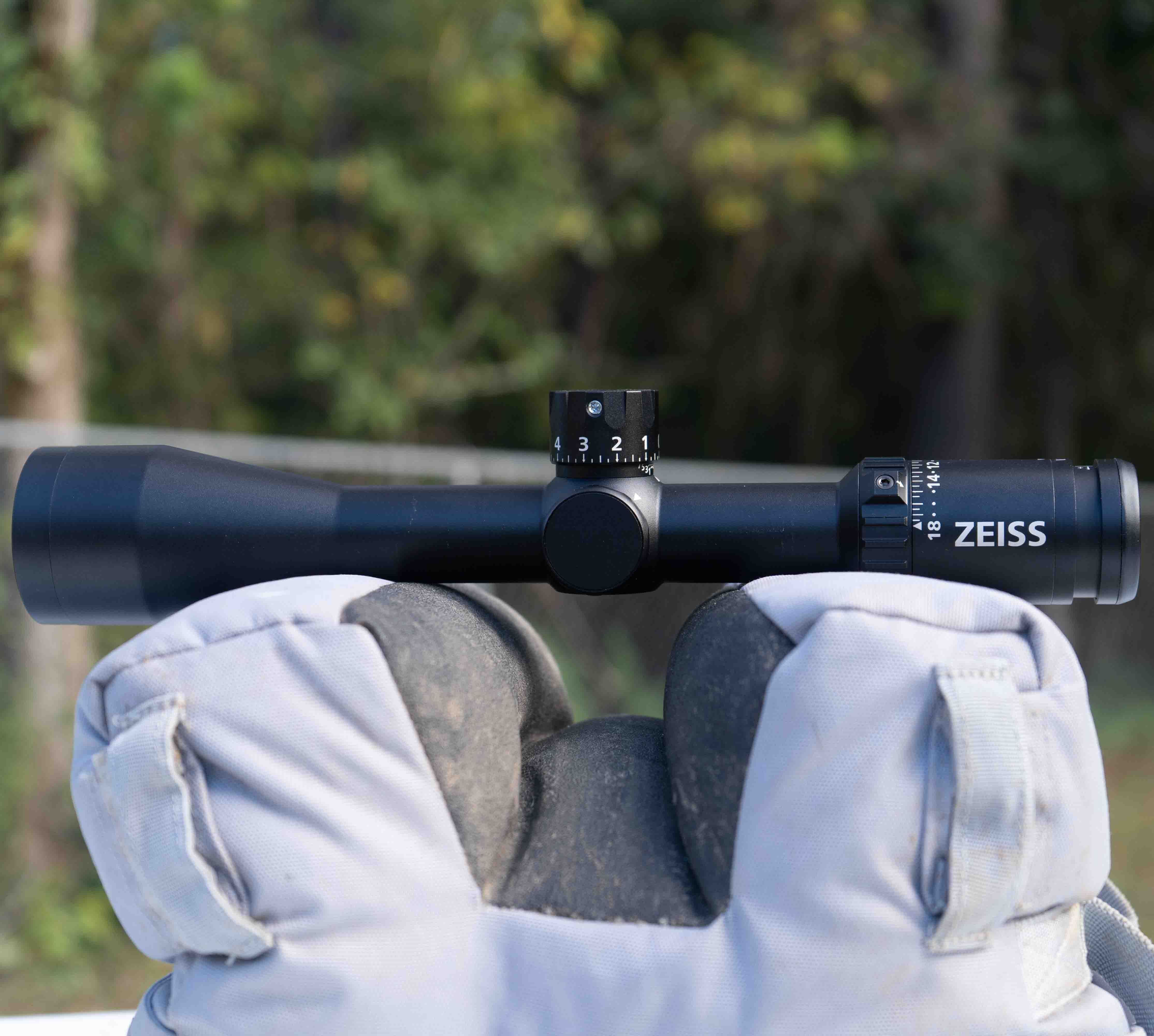
Zeiss V3 6-18x50
For a lightweight, long range hunting scope, the new Zeiss V3 6-18x50 makes an excellent option for less than a thousand bucks. The ballistic capped elevation turret has definitive, crisp clicks, so there’s no guessing as you make quick adjustments, and you can quickly dial back to zero when you need. The big drawback is that the elevation turret doesn’t lock. You could unknowingly bump this off in the field, because it turns too easily.
The V3 line of scopes comes in various configurations, and this one features an adjustable parallax, which made it easy to focus the reticle out to longer distances. It also offers plenty of eye relief for a variety of mounting options. The buttery smooth controls and precise tracking earned it a 4 in this category.
The V3’s glass was delightfully crisp and produced an excellent sight picture during last shooting light with edge-to-edge clarity. It even kept up with the Maven RS1.2 and Leupold VX-5HD. Unlike previous Zeiss scopes, which were made in Europe, the V3’s feature premium Japanese components, and the optical performance was some of the best in the test. Punching above its weight, the V3 earned a 4 in this category as well.
Depending on the configuration, you could easily have one of the most versatile scopes in the test, and its second focal plane capabilities make it an ideal hunting scope, especially for a sub-$1000 optic. No, it’s not cheap, but its low light capabilities and versatile configurations earned it 4s across the board.
Best Crossover
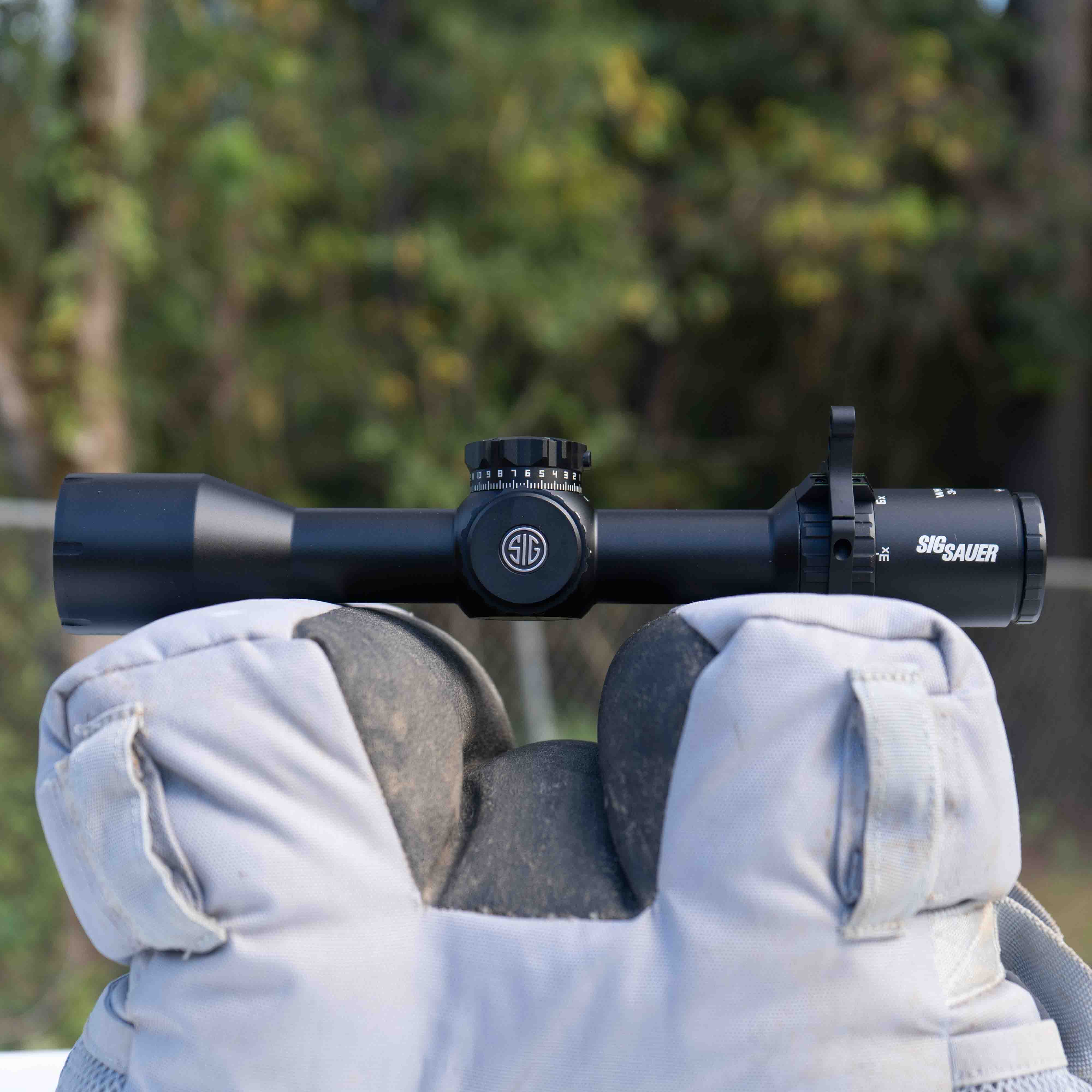
Sig Sauer Whiskey 6 3-18x44
I’ve used a few of Sig Sauer’s Whiskey scopes, and they’ve all been good crossover options for the money. The SFP reticle makes a great option for hunting scopes, but the FFP reticle makes it easy to utilize the references at farther magnification ranges, especially for hunters who want to long range hunting and shooting precision. While the Whiskey 6 offers good glass and is mostly clear edge to edge, there was a noticeable difference in the level of clarity and brightness in low light conditions like the Maven, Leupold, and Zeiss, especially for right at a grand. For this reason, it scored a 3 in the optical performance category.
What the Sig lacked in optical performance, it made up for with its smooth yet tactile controls. The locking zero stop means you don’t have to worry about knocking it off while scrambling through brush or timber, and you can quickly dial to ranges when you need. It also offers 25 MOA of travel per revolution for hunters who regularly shoot beyond 500 yards, and the adjustable parallax makes it easy to focus that FFP reticle out to farther magnification ranges. It easily scored a 4 in the controls category.
For a long range hunting scope, the Whiskey 6 offers a good value thanks to its useful FFP reticle and sweet controls. Even if its glass proved underwhelming, it’s still a good buy for Western hunters who want a scope to make quick adjustments at the range or in the field but don’t want to spend $2000.
Best Value
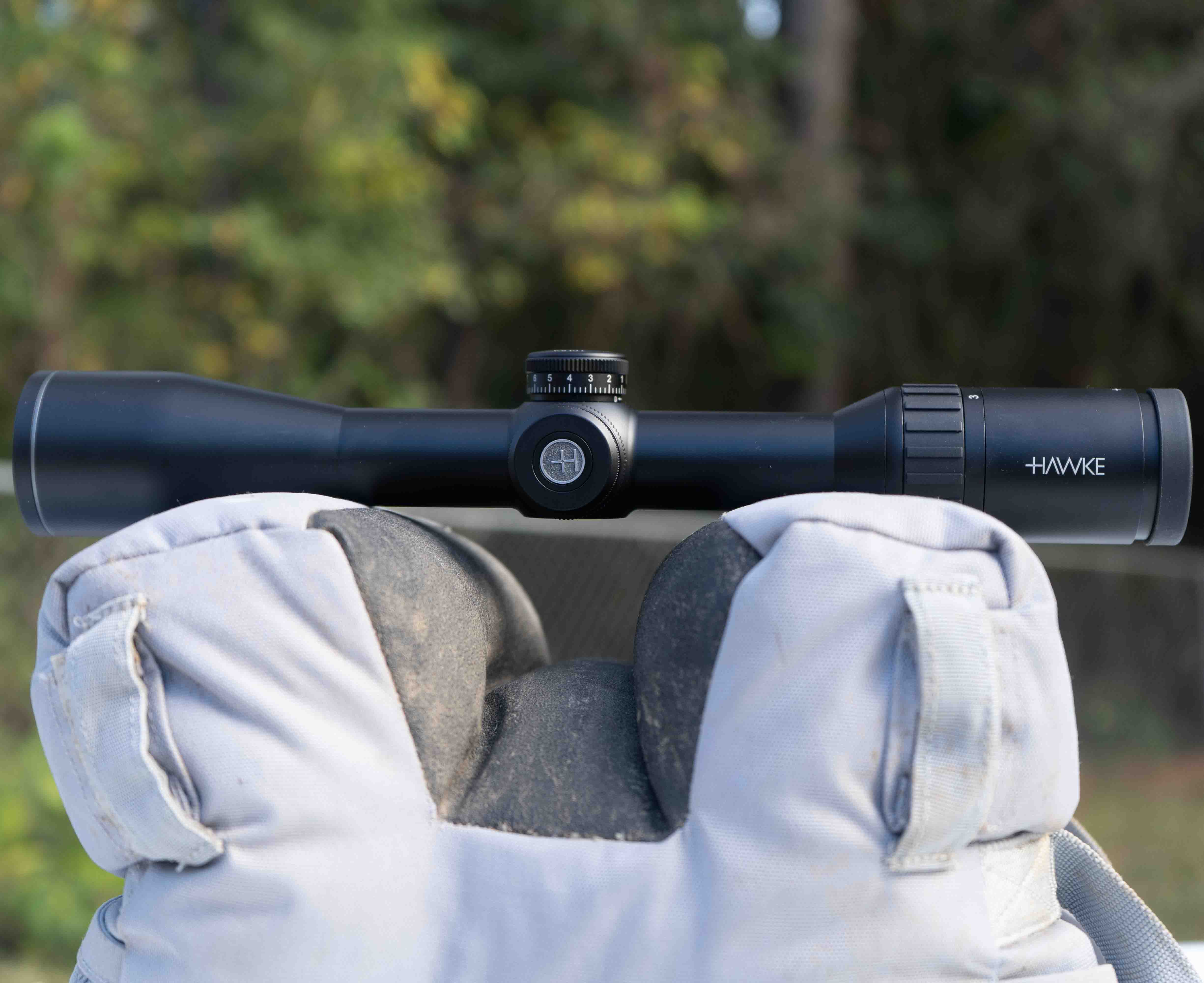
Hawke Endurance 30 FD 3-18x44
The Hawke Endurance might be the biggest surprise (and value) of the test. For around $700, you get a lightweight hunting scope with surprisingly good glass. During the low light portion of the test, the Endurance held its own with the Maven and Leupold for almost half of what those scopes cost. It produced edge-to-edge clarity and great color fidelity for its price range. I found myself constantly looking through this scope during the test to make sure I wasn’t confusing it with another one. Its glass-to-price ratio earned it a 4 in both the glass and value categories.
Controls on the Endurance are simple and intuitive, even with a push-to-lock zero stop, side parallax adjustment, and center pushbutton illuminated dot. Even with these features, the Endurance keeps a low profile and comes with a throw lever and sunshade. Its SFP reticle features four wind holds on both sides of the illuminated center dot, and five elevation references. That type of configuration bodes well for hunters who need to make quick holdovers in mid-distance shooting situations and earned the Hawke a 4 in the controls category.
The Endurance’s weight and slim profile make you forget that it’s a 30mm scope. Because the control knobs aren’t obtuse, you can mount this scope on a variety of hunting rifle setups while keeping a low profile. Though, it’s limited on the precision front, thanks to the SFP reticle. Still, it’s a highly versatile scope that earned a 3 in that category. If you’re looking for an affordable, lightweight hunting scope with great glass-to-price performance, you might want to consider Hawke Endurance.
Runner Up Lightweight
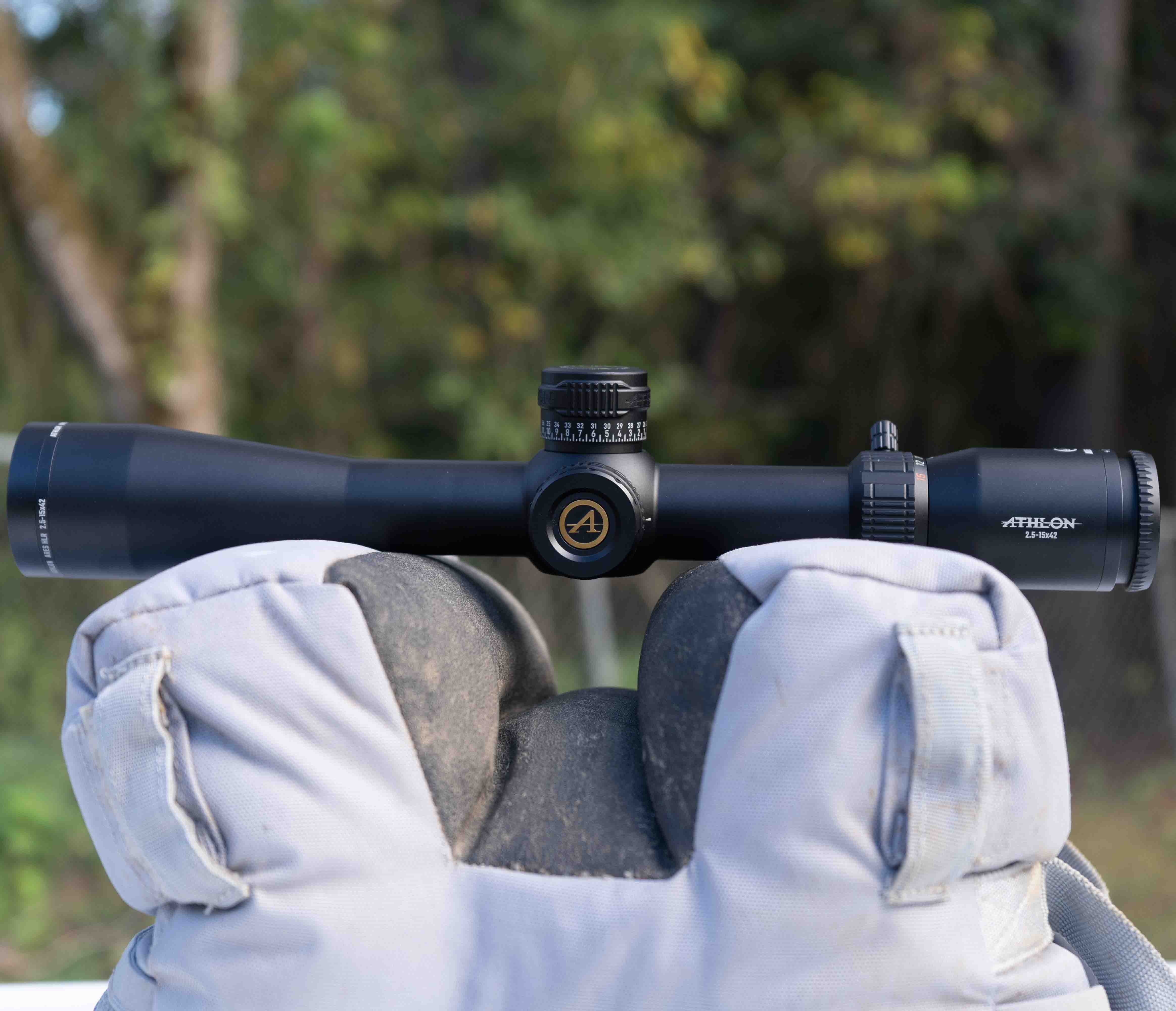
Athlon Ares HLR 2.5-15x42
Another mid-priced scope in the test, the Athlon Ares HLR should appeal to hunters who want a lightweight optic with intuitive reticle options for quick, mid-range shooting scenarios. Its light weight, magnification range, and reasonably sized objective lens make it a viable option for deer hunters who occasionally need to stretch their range but don’t need oversized turrets or complicated reticles.
While its second-focal plane reticle might hold it back from long-range precision work, it still has enough useful references for experienced shooters. It also has a nifty, yet slightly loud push-button for the lighted reticle. The turrets are responsive, nicely textured, and the controls are generally smooth, earning a 3 in the controls category. Though somewhat capable, I don’t expect most hunters are using this for a ton of precise dialing to range.
The Ares HLR offers good glass at its price point. While it didn’t “wow” during the low-light portion, it was mostly clear from edge to edge without any distortion. To me, this scope represents a good value for someone who wants to upgrade from their budget optic but isn’t ready to spend more than $1000. It’s a great value, which is why I gave it a 4 in that category, and its decent glass earned it a 3.
Stay in the loop with The MeatEater Newsletter
Related
Shop

The comments section requires Functionality cookies. Please enable Functionality cookies in Cookie Settings to view this content.