Study: The Future of Moose in the Adirondacks


Wildlife biologists in New York are currently in the midst of a multi-year research project to garner some insight into moose populations and the factors that could be affecting the population’s growth in the area.
Moose were extirpated from the Adirondacks in the late 1800s and early 1900s, due to the destruction of habitat and overhunting. But in the 1980s, moose sightings in the Adirondacks began to trickle in. Over the past few decades, moose have established a permanent population in the New York mountains, and in 2015 the state’s Department of Environmental Conservation (DEC) began actively monitoring it.
First came a multi-year study of adult moose. It was estimated based on findings that the Adirondacks have an established population of approximately 700 moose.
That population estimate is derived from the distance sampling survey, according to DEC Wildlife Biologist David Kramer. Distance sampling, which involves DEC staff locating moose and recording real-time data from a helicopter, is the main tool for monitoring the moose population in the Adirondacks.
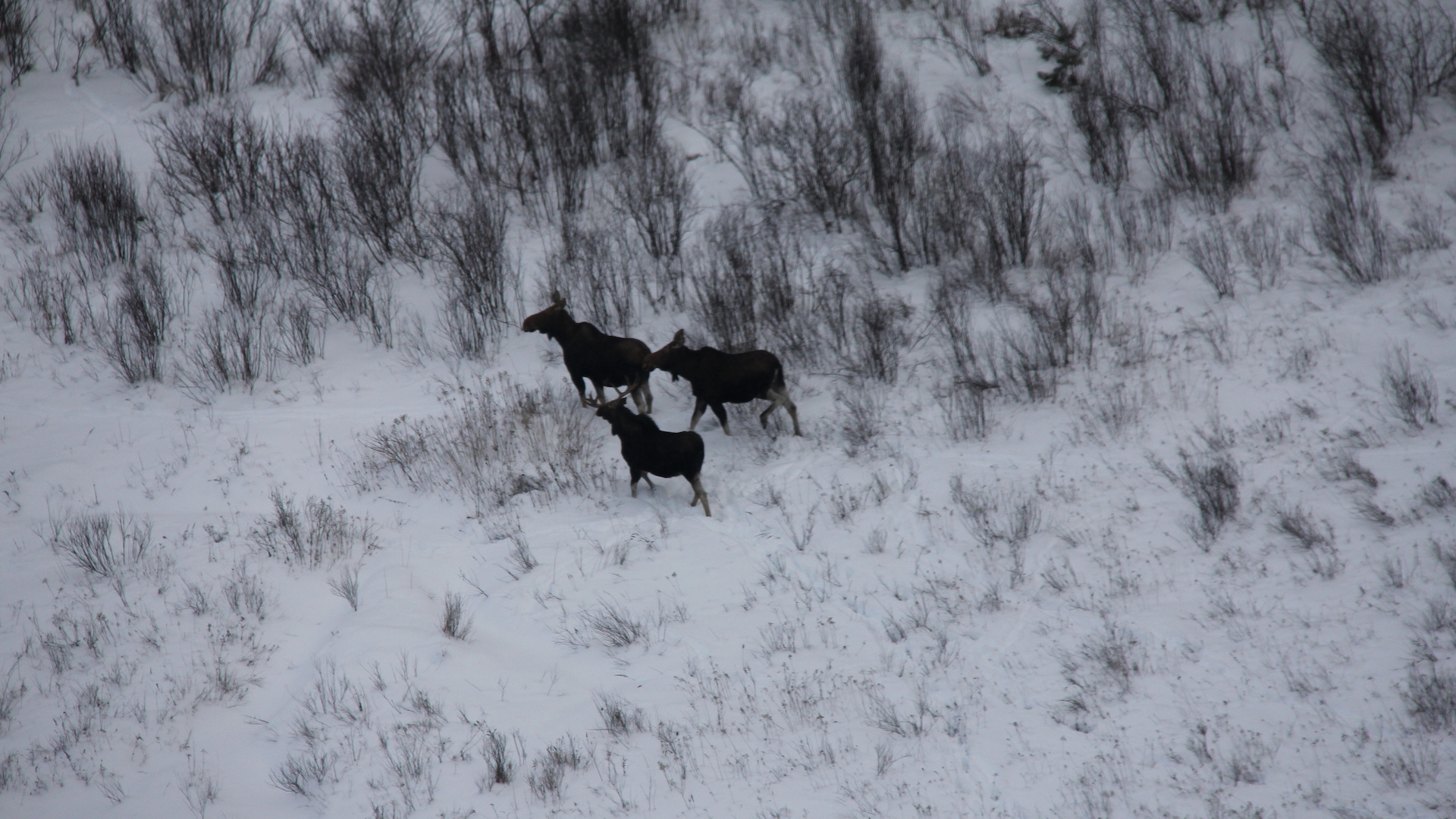
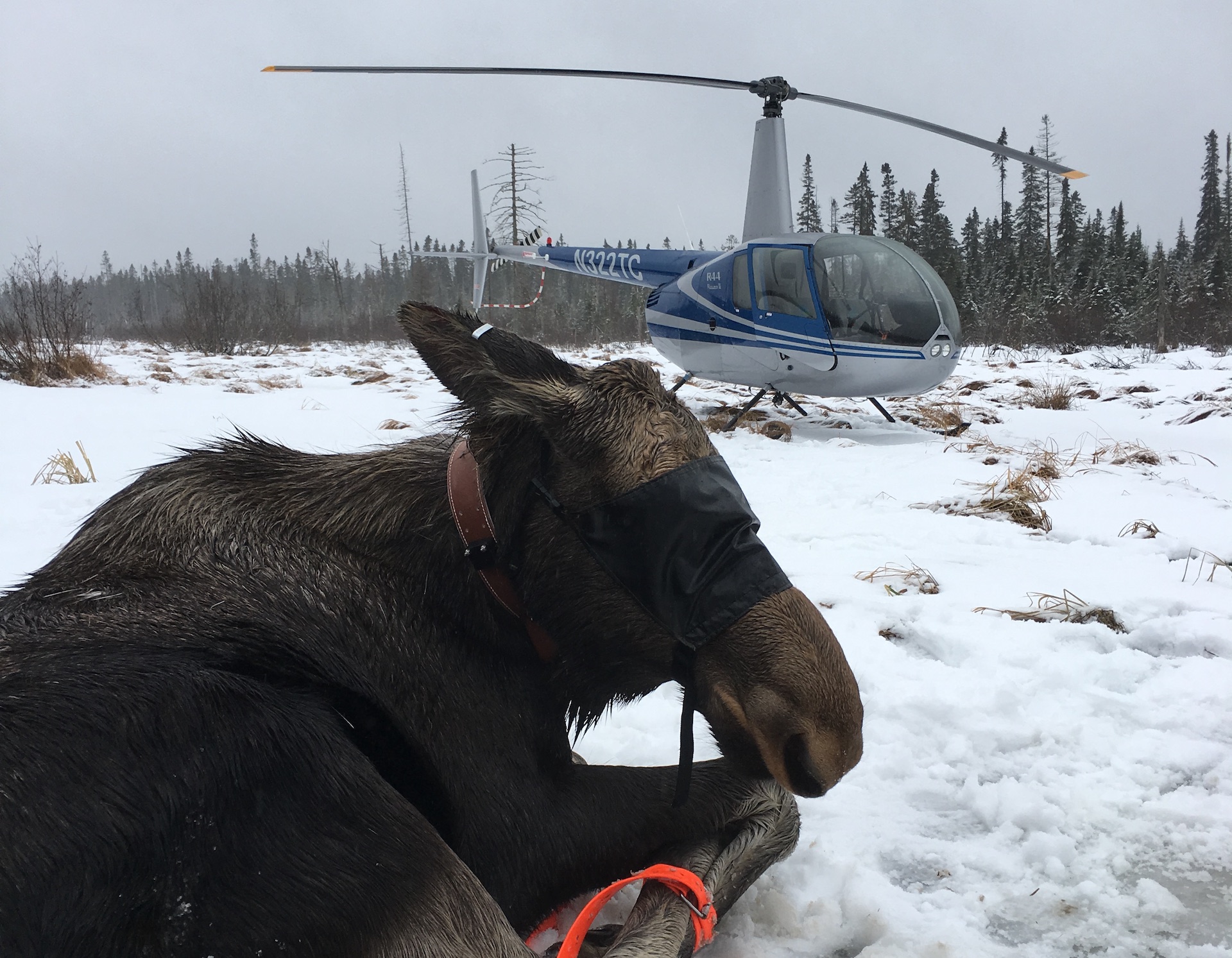
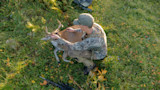
Currently, DEC is working on a project called the Adirondack Moose Research Project, which involves fitting moose with GPS monitoring collars. This study focuses primarily on calves and juvenile moose. Last winter, subcontractors of DEC Native Range Capture Services collared 11 juveniles with GPS monitoring devices. Of those 11, only one failed to survive the winter. At this writing, the state was actively engaged in collaring more juveniles. DEC uses the data obtained from the GPS collars to monitor moose activity. In addition to GPS collars, DEC also employs the use of several strategically located trail cameras to monitor moose movement.
This is the second year of calf capture, Kramer said, with plans to likely do a third as well. DEC’s wildlife biologists believe that monitoring the juveniles over the course of the study, and as they transition into adulthood, will shed some light on what factors are helping or hurting population growth.
The majority of moose sightings in New York state cluster in the Adirondack Mountains, but occasionally one will wander beyond the region’s boundary line, commonly referred to as the “blue line.” More frequently, moose are sighted along the Taconic Mountains ridge, which borders New York, Vermont, and Massachusetts.
“The bulk of our populations in the Adirondacks are in the Northern portions of the blue line,” Kramer said. “This is basically state lands west of Dannemora and Plattsburgh.”
One issue moose are facing in New York is brainworm, a fatal condition. Whitetail deer host the brain worm but are not affected by it.
“We have very high deer densities in New York, so we’re having more issues with brain worm popping up than neighboring states,” Kramer said. “Monitoring how many calves are succumbing to things like brain worm and winter tick is the primary driver behind our study.”
In some parts of New England, winter ticks are a major management concern for juvenile moose and contribute to a significant winter mortality rate.
“Neighboring states have been having an epidemic of winter tick,” Kramer said. “Ticks are killing their calves and even some of their adults. It seems that this winter tick epidemic is density-based, so the more moose there are in an area, the more likely to have an issue with winter tick. In New York, because our population is young and emergent, we don’t have that density, so winter tick has not been a huge issue here.”
The Adirondacks make an ideal habitat for moose, mostly due to the interspersion of dense conifer stands for winter cover and forage along with timber harvest, (early succession forest) plus lots of leafy forage in the summer months, Kramer said.
Like it does with many projects, DEC has partnered with key collaborators on the Adirondack Moose Research Project, including researchers from the New York Cooperative Fish and Wildlife Research Unit, the College of Veterinary Medicine at Cornell University, and the State University of New York College of Environmental Science and Forestry.
In New York, moose are a protected species with no established hunting season. When encountering moose in the wild, use caution and common sense.
“Should you come upon a moose, just keep your distance,” Kramer said. “It’s easy to get complacent thinking a moose is a docile prey species. Moose are very different from deer. A whitetail deer is very likely to run from you. A moose will not do that, especially if it is a cow with a calf. She is much more likely to confront you. If the moose seems to be disturbed by your presence just back off and do not approach a moose because they can be very aggressive.”
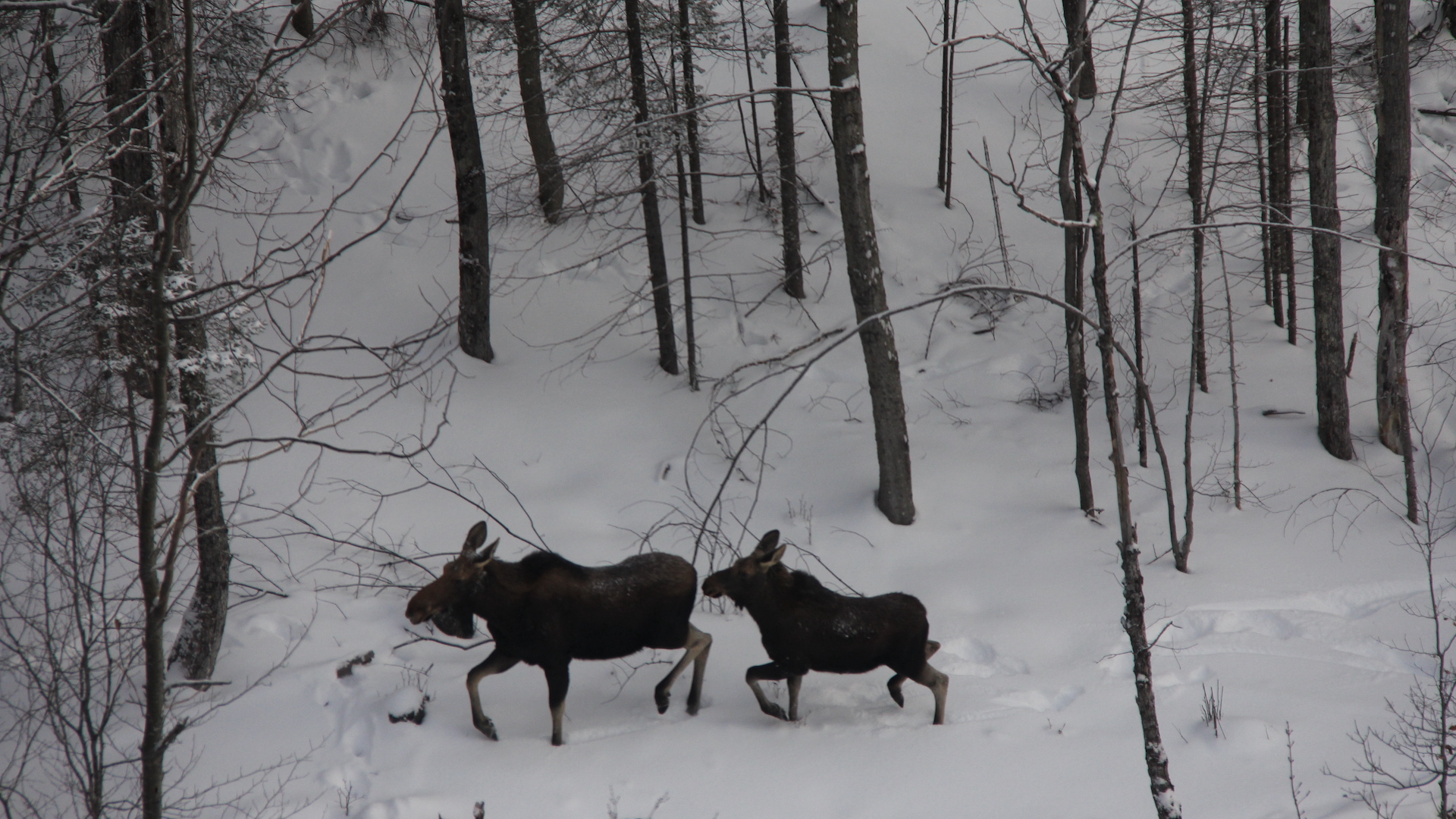
Images via Native Range Capture Services.
Stay in the loop with The MeatEater Newsletter
Shop
Related
Wildlife Management
Bar Room Banter: The Phantom Moose of Fiordland


Policy & Legislation
What's the Future of Trail Cameras in the West?

Wildlife Management
Federal Policy and Management Changes Threaten the Future of Sitka Blacktail Deer

The comments section requires Functionality cookies. Please enable Functionality cookies in Cookie Settings to view this content.