New Proposals Jeopardize BC Fishing Opportunities
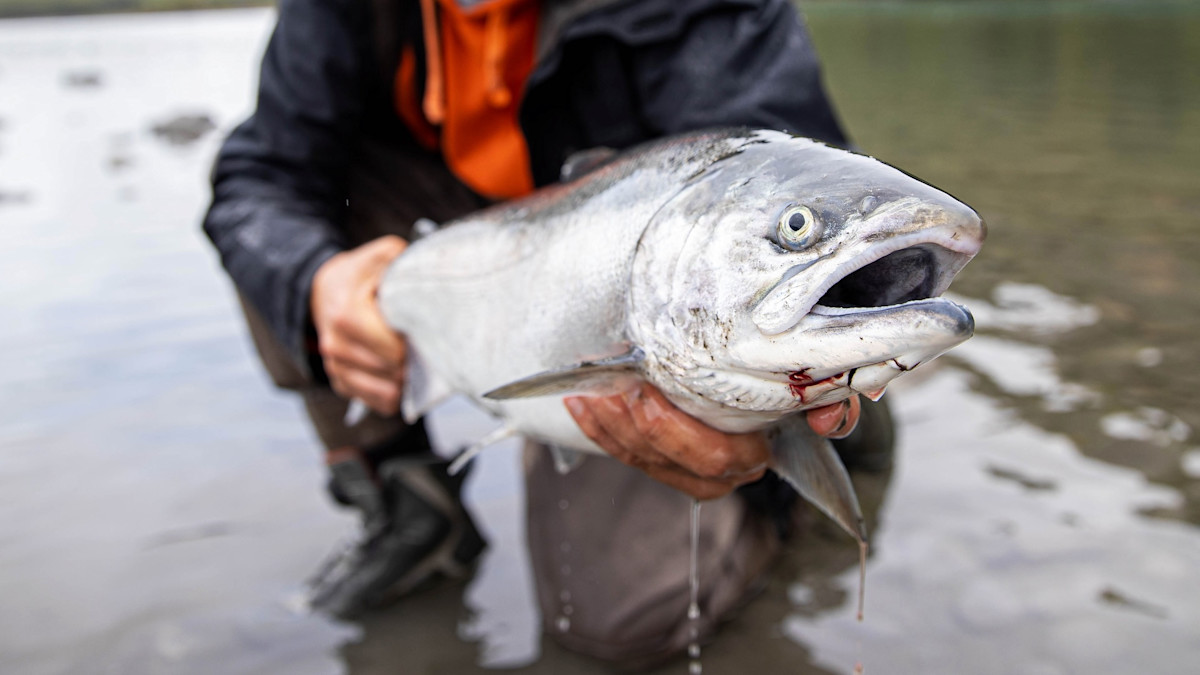

In Canada, a proposed policy change could remake recreational fishermen’s abilities to target salmon in British Columbia. The country’s fisheries management agency, Fisheries and Oceans Canada (referred to as “DFO”), is reviewing asalmon-allocation policy that’s been in place since 1999, and up for consideration are two changes that could limit anglers’ abilities to fish for iconic Chinook and Coho salmon in the province.
The first proposal, in essence, seeks to strip the designation of salmon as a public resource from the policy, while the second aims to restructure harvest priorities, putting recreational angling at the bottom of the list.
MeatEater spoke with Jesse Zeman, Executive Director at the BC Wildlife Federation, to understand what’s at stake. With regards to the first proposal, Zeman explains that the designation of salmon as a “common property resource” in Canada is essentially equivalent to the North American Model of Wildlife Conservation. It means the public owns the fish, and they’re managed in trust by the federal government. Stripping that language from the federal policy would breach that trust agreement.
“If salmon are no longer identified as a common property resource owned by all Canadians, then who owns them?” Zeman asks. “And who decides who gets to go fishing? And if they’re no longer a common property resource, then our right to fish, which is hundreds of years old, disappears. So this is a major, major, major issue for licensed anglers here in Canada.”
Surprisingly, the main proponents of the change are the Canadian First Nations, or tribes. Last month,DFO released a document highlighting various perspectives and rationales behind the proposals, noting that First Nations are concerned about the “common property resource” being a colonial concept that has been harmful to both the fish and tribal ways of life. The rationale continues, “First Nation representatives have also indicated that DFO’s management of fisheries (e.g. licensing of harvesters and fisheries opening/closures) has largely replaced the ‘common property resource’ and that what is described in the 1999 policy is no longer relevant, nor serves a useful purpose.”
An important detail here is that in Canada, tribes areconstitutionallygranted priority rights to fish for food, social, and ceremonial purposes (per section 35). The general public’s right to fish, however, is not in the constitution, and is therefore more tenuous. Rather, the public’s right to fish dates back to an 1868 law, theFisheries Act, which introduced the idea of salmon as common property, bringing about the common-law right to fish for them as a result.
“If the government of Canada is saying these fish are not owned by Canadians, then your right to fish disappears as well. And so then fishing becomes aprivilegeas opposed to aright,” summarizes Zeman.
To add a second piece to the puzzle, DFO is considering another proposal—lobbied by First Nations and the country’s Commercial Salmon Advisory Board—to remove priority for recreational fishing over commercial fishing for Chinook and Coho salmon.
Currently, the allocation framework gives recreational anglers the first shot at both species, with commercial fishing only when abundance permits. The proposal would flip that structure around, adding catch limits or caps for sport fishermen to allow for more commercial harvest, especially in years with subpar salmon runs.
Doing so would be a huge hit to the sportfishing industry, which, according to Zeman, generates 9,100 jobs and is worth about $1.3 billion a year in British Columbia. On top of that, he says, the recreational angling sector has dedicated funding mechanisms for conservation projects (fish hatcheries, habitat improvement, research, etc.) by way of license fees. “Anglers do the conservation work and salmon enhancement all over the province of British Columbia,” he said. “If we get rid of fishing, we get rid of the fish ultimately, because all these conservation pieces that we put in place and volunteer and donate to—those are going to disappear.”
While a restructuring of salmon allocation wouldn’t mean an immediate end to salmon fishing, it could be a slippery slope. Fishing lodges might have trouble booking clients if there are harvest caps in place or uncertainty in terms of fishing seasons. Individual anglers could see local waters closed until the commercial fleets working offshore have caught their portion of the catch.
The good news for anglers in the province, however, is that there’s still time to make their voices heard. The public feedback period is over, but DFO now plans to meet with stakeholder groups over the next several months. To that end, the BC Wildlife Federation is leading the charge by kicking off a series of town halls across the province.Keep your eyes peeled for local meetings on their website.
Ultimately, the final policy decisions will be up to the Prime Minister, which means the focus of sportsmen’s groups will be on finding support within parliament and growing public awareness. The decisions made in the next few months could have wide-reaching impacts on Canadian sportsmen.
Shop
Sign In or Create a Free Account
Related
Wildlife Management
New Proposals Jeopardize BC Fishing Opportunities

Wildlife Management
New Proposal Could Close and Restrict Popular Canadian Big Game Hunts