Lesser Prairie Chickens Delisted from ESA
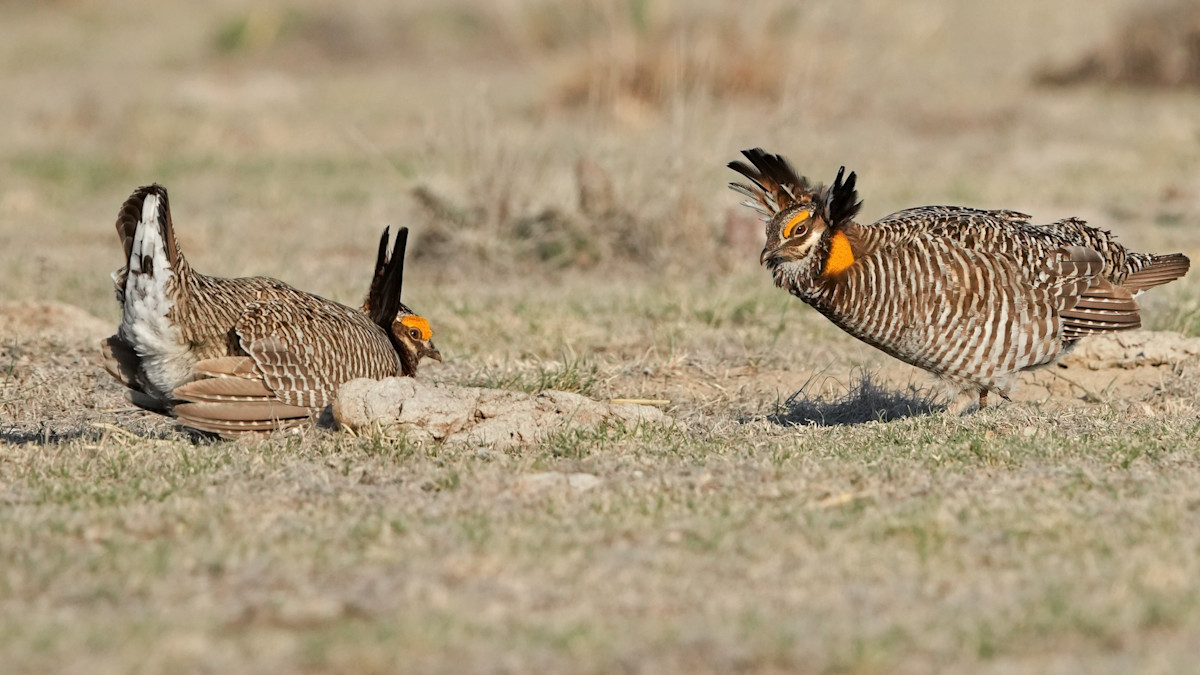

The U.S. Fish and Wildlife (FWS) recently moved to confirm the delisting of the lesser prairie chicken, a rare and long-embattled species of upland bird. The action is the latest in a back-and-forth over whether the bird should be protected under the Endangered Species Act (ESA).
The species of prairie grouse, which is distinct from the greater prairie chicken, is native to the central and southern Great Plains. It has lost roughly 85% of its range due to large-scale habitat loss and fragmentation,according to the U.S. Department of Agriculture. The steep decline of the species’ range prompted the FWS to list the species as threatened twice in the last twenty years. First, the agency listed them as threatened in 2015, though it was soon reversed by a judge. Then, the FWS listed the northern population segment as threatened and the southern segment as endangered in 2022 under the Biden Administration.
That listing was immediately challenged in court with a lawsuit brought forward by Texas, Kansas, Oklahoma, as well as the Permian Basin Petroleum Association and the National Cattlemen’s Beef Association. A federal judge sided with those entities in August, citing a flaw in the decision to classify two different population segments. On Thursday, February 26, the FWSpublished a rulethat confirmed the ruling, officially delisting the species.
Industry groups celebrated the decision, which they say will help aid ag production and energy development in the area, while some environmental groups, such as the Center for Biological Diversity, are panning the decision, arguing that the species could go extinct without federal protections.
However, Ron Leathers, Chief Conservation Officer for Pheasants Forever, says that the species’ delisting might not have such a negative impact on its survival. “Regulation alone has never recovered a species off the Endangered Species Act,” he told MeatEater. “I’m more concerned about whether we’re going make investments in the species and support the landowners that support them.”
Leathers added that voluntary conservation efforts and habitat restoration are particularly impactful for the species because of its unique habitat requirements. “These birds are different from pheasants and quail, where you can set aside moderately sized parcels and maintain populations,” he said. “Prairie chickens need big, intact landscapes, and that aligns really well with big, intact ranches. That’s one of the reasons we’re so heavily focused on supporting those private landowners; those birds will blink out if the ranches get broken up or sold out.”
From a practical standpoint, Leathers said that though lesser prairie chickens were delisted, he doesn’t expect state agencies to hold hunting seasons for them. Instead, he encourages folks interested in the rare birds to attend a spring lek viewing, which several private landowners and organizations hold.
“The opportunity is there to interact with the species,” he said. “Going and watching them dance on a lek is very unique and cool. And this particular species is indicative of big, large, intact, healthy landscapes. Helping those landscapes stay intact and the ranches to be profitable not only benefits chickens but everything else on the landscape.”
Shop
Sign In or Create a Free Account
Related

Wildlife Management
Recent ESA Changes Likely to Have Resounding Habitat Impacts

Wildlife Management
Lesser Prairie Chickens Delisted from ESA