Is Otter Trapping in Wyoming's Future?
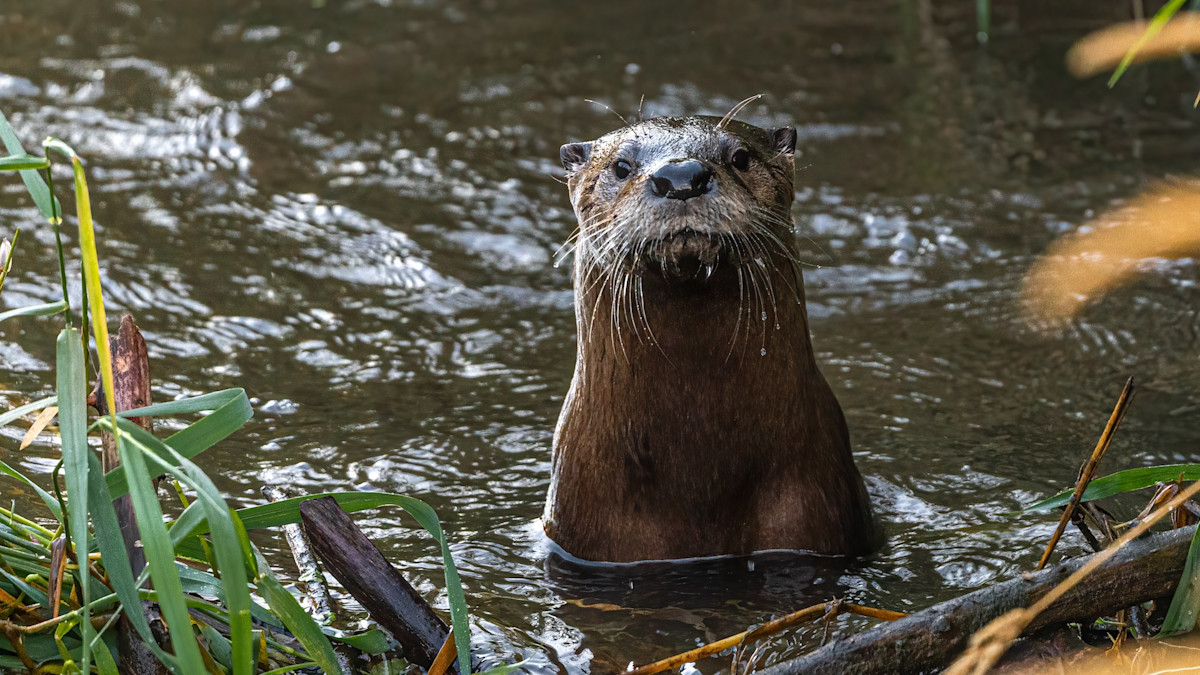

River otters may lose their protected status in Wyoming, being reclassified as a nongame species. Wyoming House Bill 45, if passed, would grant the Wyoming Game & Fish Department (WGFD) and citizens, with permission of the WGFD, the ability to use live traps in hopes of relocating problem otters or, in some circumstances when relocation is not possible, the ability to use lethal traps.
However, this bill would not grant Wyoming hunters and trappers the ability to buy an otter tag. The WGFD cannot designate a hunting or trapping season for animals classified as nongame. So, you’ll still need to go to Alaska if you were hoping to get yourself an otter pelt.
As they are currently classified in Wyoming, otters are off-limits to both the public and WGFD for trapping. Intentional trapping can only occur for research purposes. They are on a short list of protected animals in the state, including black-footed ferrets, fishers, pikas, lynx, and wolverines.
The proposed bill addresses concerns about otters' alleged over-predation of fish, particularly in privately stocked ponds. Supporters of the legislation suggest removing their protected status would grant WGFD the ability to reduce conflict between humans and otters.
Currently, landowners are limited to using passive mitigation practices like setting up an electric fence around a pond to discourage problem otters. If the bill is passed, landowners would be able to cooperate with the WGFD, taking a more active approach to relocating the otter with live traps or, in some cases, using lethal traps when all other possibilities have been exhausted.
The Wyoming Wildlife Federation (WWF) supports the proposed bill in hopes of reducing conflict and increasing the otters' social carrying capacity within the state.
Jessi Johnson, WWF's Government Affairs Director, stated, "The Federation is supportive of the bill to allow the Department a bit more flexibility in management while maintaining protections for otters by designating them as nongame species that cannot be hunted or trapped except with limited and specific permission from the Department."
Otters were initially designated a protected species in 1953. Since receiving their protected status, otters have expanded their range into a handful of rivers, mostly coming from Yellowstone. However, they are much more prevalent in western Wyoming than in the eastern side of the state.
Those opposed to the bill claim that there is inadequate scientific research on current otter populations within the state. Critics also question just how quickly otters have bounced back over the past 70 years and whether their populations are currently increasing or decreasing.
Satisfied with their current protected status, those against the bill claim that current mitigation practices, such as electric fences, are sufficient in conflict cases.
Otter researcher Dr. Merav Ben-David is opposed to the offered legislation, though voices concern for pollution.
"River otters are extremely sensitive to pollution. They feed mainly on fish and bioaccumulate toxins," Ben-David said. Deducing from this understanding, Dr. Ben-David claims otters are a great way to judge the overall health of a fishery because they are so sensitive to changes.
Wyoming Representative Andrew Byron, sponsor of the bill, says, "The testimony and media coverage has been very one-sided and inaccurate. All this piece of legislation does is give a tool to WGFD to deal with conflict. Nothing More."
If passed,HB0045 would go into effect on July 1, 2025.
Stay in the loop with The MeatEater Newsletter
Shop
Related

Wildlife Management
River Otter Mauls Three Women in Montana while Floating River


Wildlife Management
Is Otter Trapping in Wyoming's Future?
Wildlife Management
MeatEater Obtains Leaked Letter Asking Biden to Ban Beaver Trapping Nationwide

The comments section requires Functionality cookies. Please enable Functionality cookies in Cookie Settings to view this content.