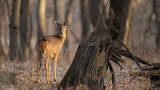
Federal Policy and Management Changes Threaten the Future of Sitka Blacktail Deer
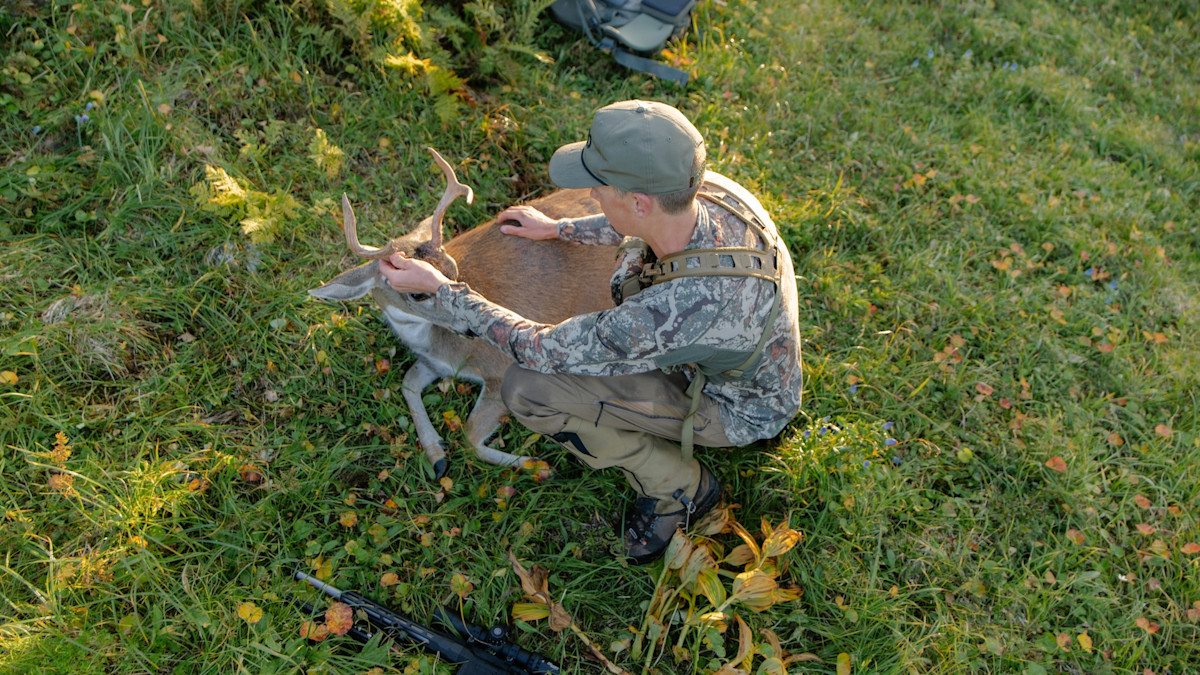

This past winter in northern Southeast Alaska broke the record for snowfall, getting more than 200 inches in my hometown.
The last time we had a similar winter was in ‘06-’07, when the Alaska Department of Fish & Game asked hunters to kill fawns out of mercy. During my last hunt that season, I remember lying in my sleeping bag listening to fawns calling out, desperate, in the darkness. Some bears didn’t hibernate, choosing to stay awake with all the food the dead deer offered.
The following season, the population was significantly reduced in northern Southeast Alaska. Some estimated the decline at 70%.
The Tongass National Forest
Sitka blacktail deer are hugely important to Southeast Alaskans. Hunting them, eating them, and sharing their meat are integral parts of communities, big and small, across Alaska’s panhandle.
A big part of what makeshunting Sitka blacktails so coolis the wild country they inhabit. Most of Southeast Alaska is the Tongass National Forest. At 17 million acres, the Tongass is the largest national forest in the country. It’s made up of rainforest, rivers, more than a thousand islands, and a strip of mainland beneath massive, towering icefields. All in all, the Tongass contains some of America’s most dynamic and ecologically intact public lands.
It’s important to understand the makeup of the Tongass when considering the way it should be managed for the future. About one third of it is made up of glaciers. Another third is maybe not quite fairly called “unproductive forest” (muskegs, alders, etc.). The last third is referred to as "productive forest," which is most valuable from both an ecological and timber perspective. Within this category, logging operations have taken all but a small percentage of historically large-diameter old-growth trees.
The remaining stands of big old-growth forest act as a buffer for heavy snows and are vital for deer surviving bad winters.
Right now, the Forest Service is asking for comment on the way the Tongass National Forest will be managed in decades to come. This piece focuses on deer, but the decisions will affect salmon, other wildlife, industries like commercial fishing and tourism, food availability, and the whole spectrum of hunters and fishermen.
These changes could be either bad or good for Sitka blacktail deer. The bad: clear-cutting large swaths of large old-growth forest and losing winter habitat. The good: cutting young growth in a way that enhances deer habitat and supports local mills and the economy.
The Rescinding of the Roadless Rule
One of the big changes for the Tongass is that theRoadless Rule, which prevents the federal government from building taxpayer-funded logging roads to facilitate the logging of old-growth forest and degrade hunting, fishing, and other outdoor opportunities, is being rescinded.
This decision was made even though during the most recent USDA public comment period, 99.2% of comments and letters were in favor of keeping the rule. There are a lot of misconceptions surrounding the Roadless Rule. It does not prohibit the building of roads in general or prevent many forms of development.
For instance, in the Tongass, pretty much every hydroelectric project, mine, and community project applied for in Roadless areas has been permitted. I personally know several locals who operate small logging operations or were once loggers who support the Roadless Rule.
Revisions to the Tongass Forest Management Plan
The Forest Service is also revising the Tongass Forest Management Plan, which acts as a guide for how the Tongass is managed. The Forest Service wrote in their2025 Assessment Reportthat thousands of acres of young growth forest are now ready for commercial harvest—and that the harvest could be done in a way that restores wildlife habitat.
Most users, from dirtbag hunters like me to Alaska Native corporations, requested this approach to forest management. The Forest Service reported that from public feedback it was clear that people want the Tongass to remain a healthy ecosystem. There has long been a push from locals to transition from the controversial logging of old-growth forest to young growth, which until recently the Forest Service supported.
That changed in March of 2026, when the Forest Service released theirPreliminary Draft Plan. The plan, along with a co-stewardship agreement with the State of Alaska, shows pressure to increase old growth production in addition to harvesting young growth forests. The changes are being made in compliance with the Trump administration’sExecutive Order 14225 (Immediate Expansion of American Timber Production).
A Collaborative Path Forward
TheAlaska Department of Fish and Gamewrites that "clearcut logging has and will continue to further reduce deer carrying capacity in some areas. Of more concern (than severe winters), habitat capability and deer numbers are expected to decline in some areas as large tracts of previously logged areas reach the closed canopy stem exclusion stage and become extremely poor deer habitat.”
Stem exclusion is when young growth forests have grown so close together that they blot out the sun, creating a closed canopy where there is no understory for Sitka blacktails to browse. If these trees aren’t thinned, a Southeast Alaska forest stand in the stem exclusion phase may languish in this unproductive state for a century.
Right now thousands of acres of young growth in the Tongass are old enough to harvestin a way that could enhance Sitka blacktail habitatand provide timber to local mills. Many users along with a collaboration of Alaska Native corporations, conservation groups, and agencies are working to make that happen. In the decades to come, the amount of young growth available for harvest will grow exponentially on both Forest Service land and land owned by Alaska Native corporations. This is an exciting opportunity that could better balance a timber industry while enhancing deer habitat.
The opportunity with young growth does not fix the habitat issues and diminished hunting opportunities that would result from clearcutting more old growth, though.
A New Season
I’m hearing varying reports of how big of a hit Southeast Alaska’s Sitka blacktail population took after this record-breaking winter. Most the deer around my house have died, though I'm hopeful it wasn't nearly as devastating in other places I hunt. Some hunters in more southern areas are reporting decent numbers. Others, farther north, offer varying and sometimes dismal observations.
One thing is for certain—record-breaking snow coinciding with the rescinding of the Roadless Rule and revisions to the Tongass Forest Plan could not make it more clear that Sitka blacktail should be a priority in terms of how the forest is managed.
The Forest Service has a comment period open until May 6thregarding the preliminary draft plan for Tongass management, as well as species of conservation concern. If managers decide to allow the increased logging of old growth and we see more winters like this one, the future of Sitka blacktail deer could be concerning. Besides salmon, there is no species in the Tongass that deserves more thought and care in terms of how the forest is managed.
If you’d like to comment,click here.
Shop
Sign In or Create a Free Account
Related
Wildlife Management
Federal Policy and Management Changes Threaten the Future of Sitka Blacktail Deer
Wildlife Management
Federal Lawsuit Escalates Fight Over the Future of Washington Wildlife Management