Wrestling with the Roadless Rule
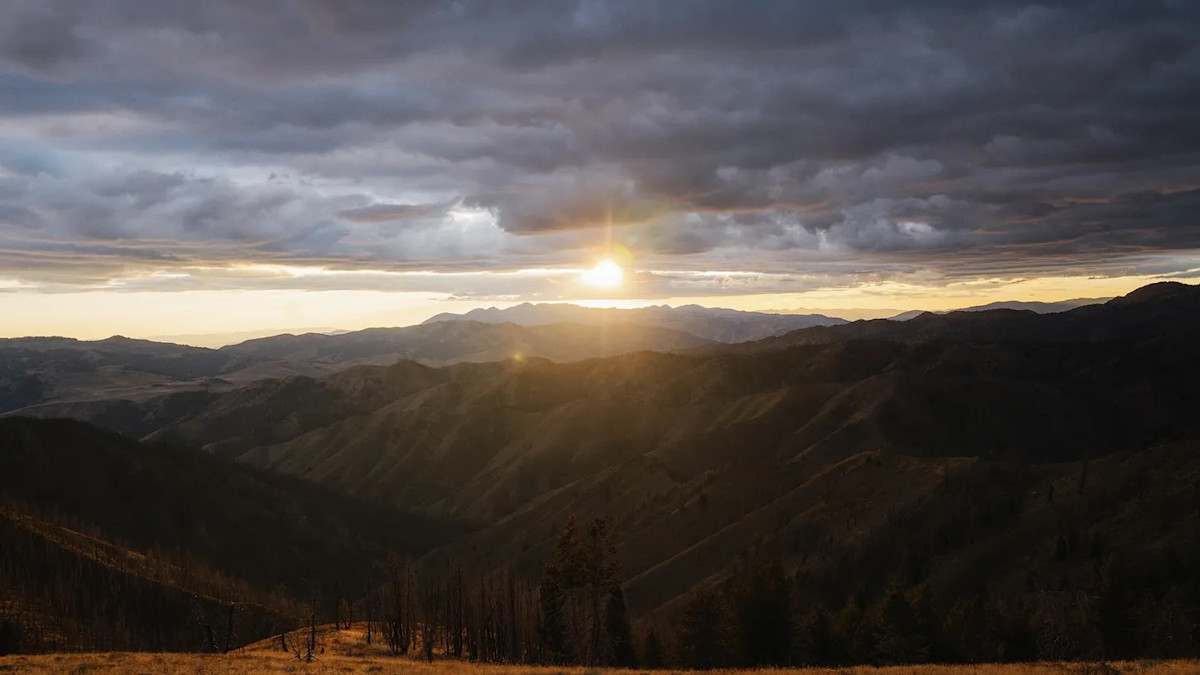

You’ve likely seen the big news already. But if not, the USDA has officially announced its proposed rule and intention to rollback the 2001 Roadless Rule in its entirety.
This means that the 44+ million acres of relatively unfragmented and still-wild national forest protected by that rule from new road construction and industrial-scale logging is now on the table for all that and more. To grossly oversimplify things, most in the hunting, fishing, and conservation world see this as a serious setback. When this rollback was first floated last summer, more than 625,000 comments were submitted in response, and ~99% opposed it.
It’s easy to see that and assume this is a no-brainer bad idea and leave it at that. But it’s not quite that simple.
I recently heard a noted thinker and journalist explain that a key tenet of debating or interrogating a viewpoint different than yours is to first consider the best possible version of that argument. You must understand and reckon with the most compelling and rational case for your opponent’s position before you can make a sound case for your own.
The Rational Case for Rolling Back the Roadless Rule
So, while many in the environmental world look at the Roadless Rollback as a disaster, it must be acknowledged that many on the other side of the issue might look at this as a similarly obvious and necessary action. And they might have some good points.
For example, Secretary of Agriculture Rollins explained in the USDA announcement that “for too long, outdated restrictions have kept tens of millions of forested acres off-limits to the very treatments that improve forest health and reduce wildfire risk to our communities.”
And here’s the thing: it has been widely acknowledged by most everyone across the natural resources world that our nation’s forests are in need of some degree of additional management. Wildfire season lasts longer than ever before, dangerous mega-fires are more common, and the impacts to the landscape, wildlife, and local communities are increasing year after year. This has a lot to do with drought, heat waves, and other climate factors. But, at least in part, it’s true that many forests are overstocked with "fuel"—otherwise known as standing dead timber and brush that can act as a tinderbox just waiting to explode.
Furthermore, many in the wildlife world acknowledge that a diversity of forest age structure and composition is good and necessary for many birds and animals. Wildlife of many types—both popular game species and threatened/endangered species—benefit from the early successional habitat and flush of nutritious growth that comes with the creation of new openings in an otherwise forested habitat. Unfortunately for many species, large swaths of our nation’s forests have instead grown into monocultures of mature timber that block sunlight from reaching the floor, eliminating the undergrowth and early successional habitat that many species require.
Some degree of increased thinning, logging, prescribed fire, and other forms of active management could absolutely help with both the fire and wildlife issues noted above. And, if I were told that the 2001 Roadless Rule was keeping that from happening across our national forests, I would have to concede that this is a problem.
Some Important Context
But that’s not exactly what’s happening.
Our national forest is comprised of about 193 million acres—split into what we’ll consider as three different designations—and it’s important to understand what can and cannot happen on each.
37 million acres are designated as wilderness—meaning no new roads, no logging, no chain saws, or motors of any kind. Here, it’s true that active management and road or motor-assisted wildfire treatments aren’t happening.
Then there’s the 58 million or so acres covered by the 2001 Roadless Rule (or state-specific variations in ID and CO), meaning most new roads are prohibited and most major logging projects are limited. But not entirely. And this is an important caveat that Roadless Rule opponents don’t highlight. The Roadless Rule was written with explicit acknowledgement of the need for wiggle room to accommodate habitat improvements for wildlife and wildfire mitigation. According to a 2026 Trout Unlimited report:
“From the beginning, it included exemptions that allow land managers to protect public safety and ecosystem health, including removing small‑diameter trees and other vegetation. These exemptions are actively used by the Forest Service to address modern fire challenges, and former Forest Service Chiefs from both Republican and Democratic administrations have stressed that the rule 'specifically permits activities aimed at preventing and mitigating wildfire risks.'
Data drawn from the Forest Service dispels the myth that the Roadless Rule prevents fuel reduction. The agency’s Rocky Mountain Research Station found that while roadless areas contain approximately 21% of the total tree cover across the National Forest System, they account for 34% of the total fuel treatment activities and 8% of total area treated. Spatial analysis using agency data shows that hazardous fuels reduction projects have reduced fire risk on nearly 2 million acres of Inventoried Roadless Areas.”
Finally, there’s somewhere around 98 million acres of forest not impacted by either of the above restrictions—leaving them largely open to whatever management actions, treatments, and logging projects the agency deems necessary—with most of these landscapes being those closest to the wildland-urban interface where fire risk and mitigation are of most concern.
The point I’m trying to highlight here is that there are many tens of millions of acres of our national forest system open to necessary roadwork, habitat improvements, wildfire mitigation, and other logging and management activities. Of course, there might be other speed bumps, regulations, litigation threats, and land management plans that might impact those actions—but it certainly is not exclusively the 2001 Roadless Rule making any of it impossible.
The Rational Case for Keeping the Roadless Rule
On the other hand, what the Roadless Rule does make possible is the equally important presence of unfragmented fish and wildlife habitat and backcountry characteristics that are becoming increasingly rare today. You might say they’re not making any more of it. And in a rapidly developing world, this stuff is more important than ever. Just as important as any of the above are the memories made in these unique places.
I killed my first elk in an inventoried roadless area (IRA); my son’s first backpacking trip began in an IRA; the forest-covered mountains I can see from my back deck, that I trail run across, and where I’ll go hunting this fall are all part of an IRA. There are millions of hunters, anglers, climbers, hikers, and bikers with stories and landscapes held dear just like this too. Slice and dice these rare landscapes with new roads, litter them with clear-cuts and an unending parade of logging trucks, and you’ve fundamentally changed the lived experience for both humans and wildlife.
The debate over public land issues such as the Roadless Rule are never quite as simple as either side likes to make it out to be. There is a gray area, nuance, and exceptions to each and every rule. We would do well to remember this. And that’s likely the case with the Roadless Rule too. Is it perfect? Probably not. Could it be improved? I’m betting so. And maybe we should do that.
But when it all nets out, and when considering the ever-more fragmented, over-developed, and rapidly diminishing natural world around us, it seems this possibly imperfect rule is still one worth fighting for. If for no other reason than to still have the chance to build it into something better.
If you would like to weigh in on the future of the Roadless Rule, the public comment period opened today and is open until September 21. Click here to submit your comment.
This article comes from the MeatEater Conservation Substack Newsletter. If you'd like to receive more content like this straight to your inbox every other week, click here.
Stay in the loop with The MeatEater Newsletter
Shop
Related
Public Lands & Waters
Act Now to Protect the Roadless Rule


Public Lands & Waters
The USFS Wants to Rescind the Roadless Rule, Speak Up Now

Public Lands & Waters
Mike Lee Is At It Again with Sneaky Roadless Rule Amendment
The comments section requires Functionality cookies. Please enable Functionality cookies in Cookie Settings to view this content.