Wyoming Hunters Accuse Ranchers of Using a Plane to Herd Elk

Editor's Note: This article has been updated since original publication.
It’s a cool, misty morning in the rolling hills and sand dunes northeast of Casper, Wyoming. It’s the middle of archery elk season—September 18, to be exact. A handful of bulls are bugling and fighting before dawn as Mark (a pseudonym, at request of the hunter) and his three buddies move into position. Both the elk and the hunters are on a small parcel of state land surrounded mostly by private ranches, save for a sliver of BLM through which the hunters hiked in from a nearby county road. It’s the last morning of what’s been a difficult few days of hunting, but it’s finally on.
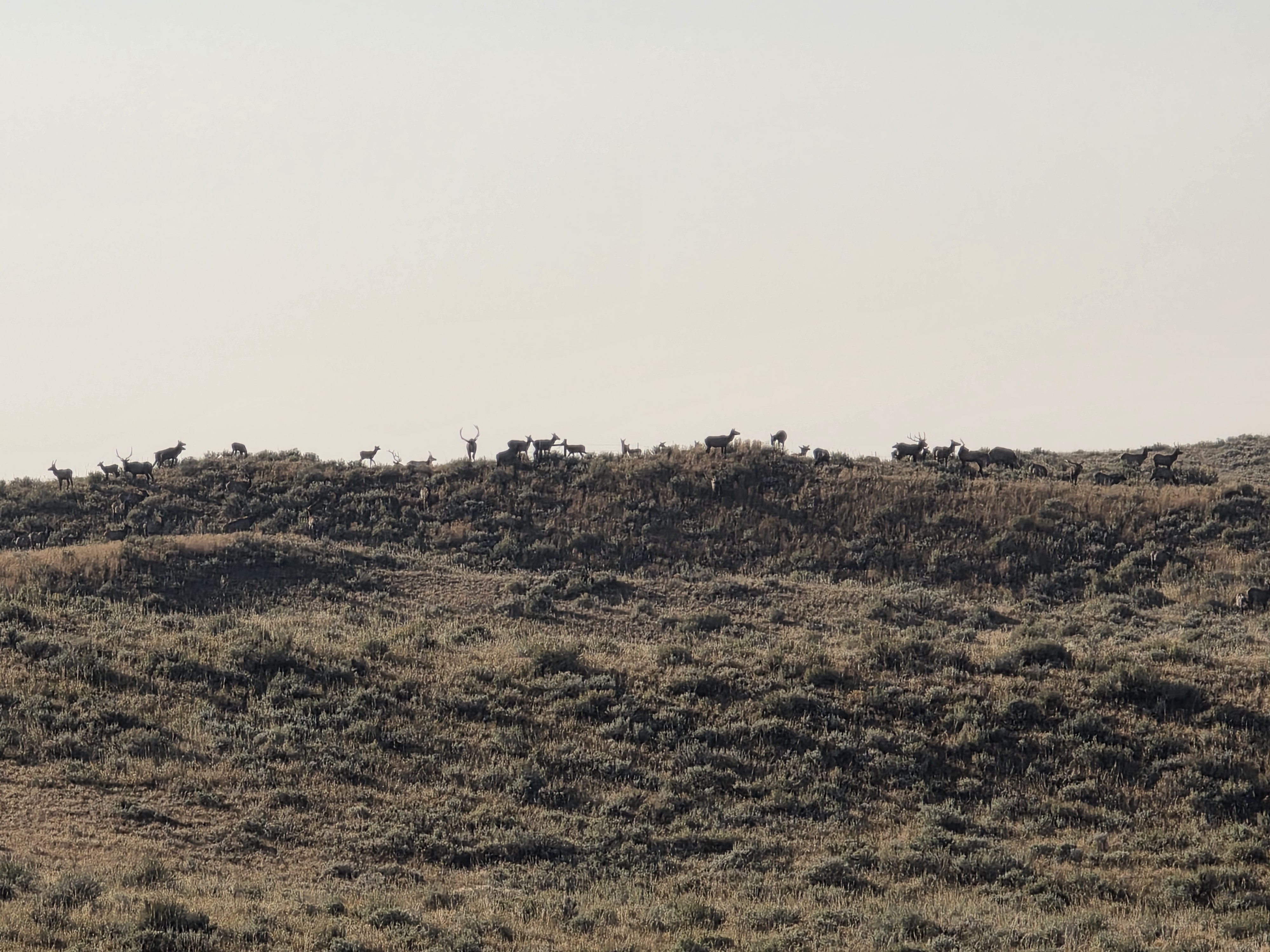
As the sun begins to rise, a faint buzzing grows louder and louder overhead. Mark recounts to MeatEater what happened next: “As soon as the sun cleared the horizon, we saw a plane in the sky. Soon afterward four-wheelers joined the plane in pushing the elk out of the area. Two from our group were in the elk, one pinned down—surrounded—as the plane made pass after pass on the elk.” Mark said that three ATVs joined the mix. From his perspective, it looked as though they were pushing the elk off the state land and onto private, as though they were herding cattle.
But herding cattle is exactly what the plane was doing. "Perhaps the hunters only saw a few cows due to the topography, but over three hundred pair were moved out of the pasture, and probably a third were in the vicinity of the hunters that morning," said Peter Nicolaysen, co-owner of the ranch.
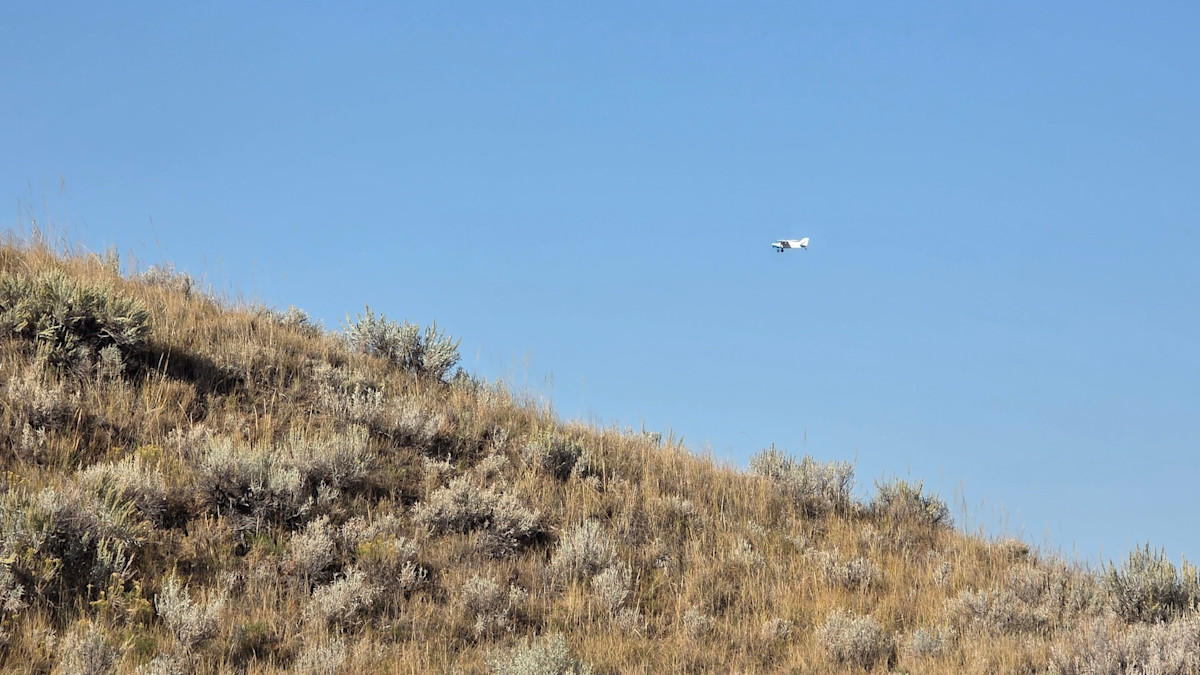
Regardless, the hunt was blown. Mark and his buddies, pissed off, snapped some pictures and videos of the plane—a small blue-and-white single-prop—and began the trek back to their cars. But they weren’t in the clear yet.
“While leaving, we were shadowed by one of the four-wheelers, which eventually confronted us for recording and taking pictures,” Mark said. “Soon after another joined, shadowing but not confronting us. The plane circled us, keeping track of our location and finally the last four-wheeler showed up—the ranch foreman or owner [identified later as Jon Nicolaysen, a co-owner of Cole Creek Sheep Company]. We were accused of attempted poaching, hunting out-of-season, and finally a threat of getting us charged with trespassing.”
At the time, the hunting party was standing on public land, with valid archery elk tags in their pockets. All three hunters told MeatEater that there are always cows present in the area, but on that particular day there were only a few in the vicinity. From their vantages, the plane and four-wheelers didn't appear to be near the cattle.
The video and ranching staff tell a different story. "In the video, you can see and hear, clear as day, a cow in the immediate vicinity of the hunters," Peter told MeatEater. "The plane circles above the cows so that the ATVs can then pinpoint their approximate location. We are a small crew, and the plane saves us a lot of time and from having to go back days later to pick up a few head."
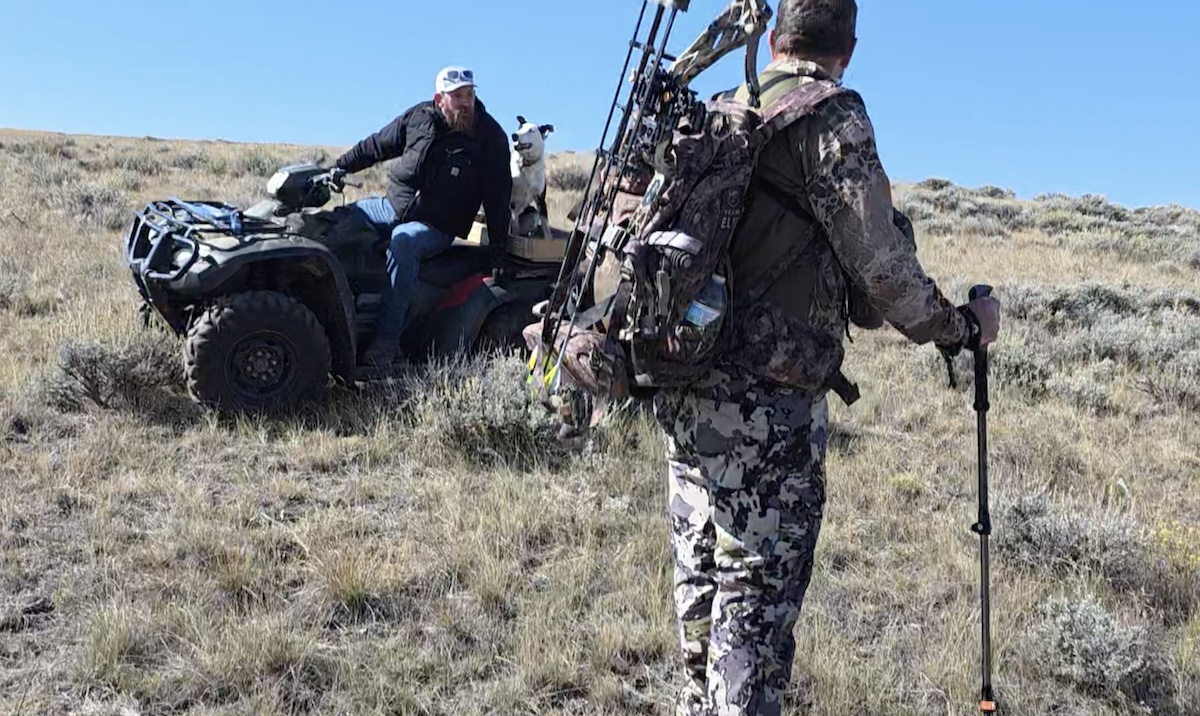
Mark, and two other members of the hunting party, recall the interaction as tense and confrontational. According to Mark, Jon told the hunters that “he would feel bad if we were hunting deer or antelope, but he had to move his cattle, and the elk were in the way.” After the conversation, Mark called the Wyoming Game and Fish Department (WGFD) to report what had happened.
Jon, however, recalled the interaction differently. “I felt like the interaction was positive,” he told MeatEeater. “It was like, ‘Hey guys, I was just checking to see where you were, and sorry, we’re moving all these cows.’ And I guess maybe that’s not how they thought it was, but I certainly wasn’t trying to intimidate. I felt like it was a friendly encounter.”
Jon said he might’ve been confused about recent changes to elk tags in the area, but maintains that he never demanded to see tags, and that it’s not his job to check, anyways.
The ranch, he explained, has contracted with a private pilot for about a decade to round up cattle in the area, both on private rangeland and on adjacent public land for which the ranch has grazing leases. The area has rolling topography, making it hard to locate cows, especially if they’re tucked into draws and depressions between sand dunes. Using a plane makes it easier to spot the cows, and their location is then communicated down to the ranch hands on ATVs.
Sometimes there’s unfortunate overlap with elk, Jon explained: “We have never done anything like use an airplane to harass or herd wildlife. And harassing hunters, that is not at all what we were doing. Now, I acknowledge that it might have ruined their hunt. But if you have elk and cattle in the same 100 yards or whatever, and we’re relying on the airplane to help us find the livestock, then, you know that’s kind of the way it goes. We’re not chasing the wildlife away. We’re not chasing the hunters away. And if the pilot says, ‘Hey, I think there’s some guys on the ground out here, just so you know,’ then because the land is not fenced separately and it’s split ownership out there, I do have the right as a private landowner to kind of see if they are abiding where they’re supposed to be.”
Jon said he’d had the day planned to move cows for a long time, and he couldn’t change his ranch operations on account of hunters in the area. Indeed, Mark and his hunting buddies corroborated that before the 18th, they’d had several days of good, uninterrupted hunting in the same spot.
The whole interaction that day could’ve been chalked up as an unlucky run-in between public land user-groups if the story had ended there. But it didn’t. One of the ranch hands recognized someone in the hunting party as a prominent member of the local community, and passed that information along to ranch management.
That afternoon, one of the hunters received a text message from Peter Nicolaysen—Jon’s brother. Peter texted the hunter, asking for the names of everyone in the hunting party, and questioning why the hunters had reported the incident to WGFD. The text string, which MeatEater viewed, left a salty taste in the hunter’s mouth.
Peter, who was busy gathering cows on the opposite side of a 10,000 acre pasture and had no interaction with the hunters in the field, told a slightly different story of the text interactions. "Our employee was visibly shaken from the event and was able to identify Mark. I wanted to understand whether the employee had reported the information to me accurately and since I had Mark’s cell number, I texted him and asked to see the video he took to make sure everything went as reported. There was never any request for contact information and certainly nothing was stated to suggest an intent to intimidate or even contact the individuals. Mark declined to give me the names and videos and accused the ranch employees of harassment."
Ultimately, two Wyoming game wardens and a BLM law enforcement officer paid the ranch a visit to assess the situation. WGFD declined to comment, but Jon said that no citations were issued.
Still, something about it didn’t sit right with Mark. This wasn’t a one-off experience. Mark said that he hunted the area roughly 20 to 25 days this fall, and estimates that he saw a plane in the air about 95% of the time, and that from his vantage, “the elk were under that plane or darn close to it every time.” Other public-land hunters, he added, have similar stories from hunting in the area.
However, just because hunters saw a plane in the area, doesn't mean it was connected to the ranch. "This was not our plane (we don’t have any aircraft)," Peter explained to MeatEater in an email. "The pilot was not our employee, and he doesn’t coordinate with us when or where he flies. What we do know is that the plane was helping us gather cows one time in this pasture, and two times in the adjacent pastures from August through October. If the plane was in the vicinity above our ranch on other occasions, it had nothing to do with us, and we were not and are not aware of it."
“Threatening hunters on public land and harassing them is beyond okay,” Mark said. “Harassing wildlife is another disgusting practice as well. Making excuses, trying to find hunters that are involved, and possibly attempting to intimidate them…that doesn’t work for me.”
On the ranch’s behalf, Jon said a couple phone calls before the hunt could’ve gone a long way. “He doesn’t need my permission to get to BLM or state land if it’s legally accessible…but it would be kind of nice if somebody is like, ‘Look, I got four guys, we saved up all this time and money to hunt, this is the day we’re going to go out there, this is the week we want to go out there.’ I mean, I’m easy to find. I could have said, ‘Hey, I am so sorry, but I’ve got this airplane and we’re moving 600 cows and we’re going to be in and out of there. If you can do it like the day before or the day after, it’ll probably be a much better hunt.’”
There are different interpretations of what occurred out on the Wyoming prairie that day in mid-September. What is clear, however, is an underlying tension between public-land hunters and landowners in the area. In this case, the hunters were understandably upset that their hunt had been ruined. And the ranchers, for their part, might not have exercised very good discretion by engaging them. The mutual respect that guides interactions in the field was lacking.
Ultimately, Casper is a small community—the hunters, ranchers, and law enforcement mentioned in this article could all contact each other with one or two phone calls. Though unconfirmed, there doesn’t seem to be any ongoing investigations in the incident, leaving it a matter of morals and ethics in acting while afield, both for hunters and landowners.
Stay in the loop with The MeatEater Newsletter
Shop
Related
Conservation News
Wyoming Hunters Accuse Ranchers of Using a Plane to Herd Elk
Wildlife Management
Forces Clash Over Future of Iconic Elk Herds

Wildlife Management
Wyoming to Use GPS Collars to Help Hunters Target Specific Elk Population

The comments section requires Functionality cookies. Please enable Functionality cookies in Cookie Settings to view this content.