Hunting Pressure Sucks, But It Won't Stop the Rut
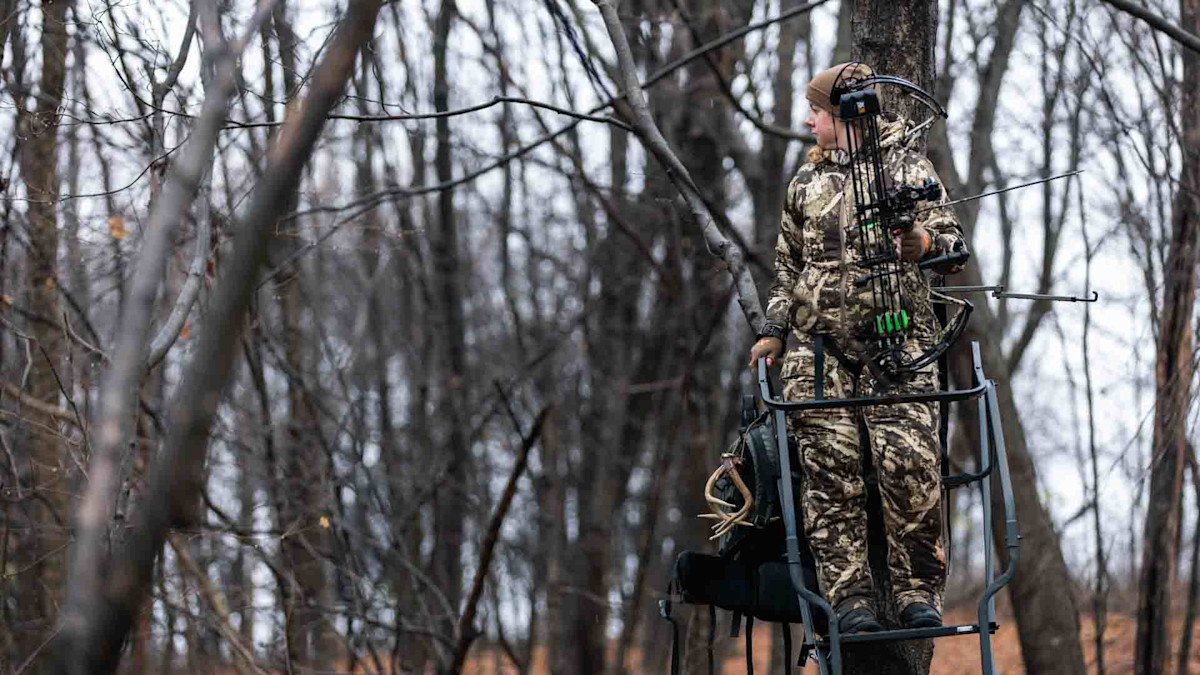

Cramped parking lots and overcrowded trailheads aren’t exactly new, but as hunting gear and digital mapping systems make it easier to access “untouched” ground, public lands can feel a lot smaller, especially in whitetail country.
Previously, hunters who could read a topo map and navigate with a compass (especially in the dark) had an advantage over hunters who found that task too daunting. The barrier to entry has never been lower for public land hunters. While that’s mostly a good thing, it creates challenges for deer hunters, especially during the rut. Luckily, that doesn’t mean you can’t find success during the rut even when the parking lot looks like a camo convention.
Trust Your Gut
Last year my father-in-law and I hunted a state that gets a ton of pressure from non-residents during the rut. We rolled in at daylight and had no intentions of hunting that day. Instead, we rode around, marked the busiest parking lots, and dove into spots I’d map-scouted for months. One of the places I marked was everything I hoped it would be. It was remote, tucked into thick cover, and covered in big, fresh buck sign. We noted a few potential trees to hang and hunt and went to check out a few more spots.
The next morning we were the first ones to the parking lot and took our time slipping into these spots, prepped for an all-day sit. As we got closer to that area, we spotted a father and his young son throwing up a pop-up blind. We went over to chat with them to let them know where we would be hunting and to just be courteous.
We still had a good 600-700 yards to cover before getting to where we would hang, and I was already considering plan-B. But when they told us they saw our truck in the parking lot and decided to make a mad dash to beat us in, I had no problem making a loop around them to get where we were going. I’m glad we did. My father-in-law shot a nice buck that afternoon, and I would end up seeing 10 different bucks in two days before shooting one on the last morning.
I probably would have bailed on that spot if it were just a traditional rut funnel. Given its location, the big, fresh sign, and the amount of cover it offered for deer, I knew we needed to trust the spot and not worry about the things we couldn’t control.
Work Smarter, Not Necessarily Harder
You don’t always need to log 20,000 steps to find a good hunting spot during the rut. Just because it’s remote doesn’t mean that’s where you’ll find deer. This can be especially true when the rut kicks up. If there’s a spot on the map that looks promising, even if it’s a mile away, you can bet others have a pin dropped on the same spot. That doesn’t mean it doesn’t deserve a peep, but don’t overlook spots that might be within earshot of the parking lot.
Deer will stay in areas where they feel safe, whether that’s 500 yards or two miles from the trailhead, it doesn’t matter. I once had some of the most consistent deer hunting activity in a spot that was within easy walking distance from the road. I found a ton of fresh feeding sign and decided to give it a sit. Not only did I see deer, but I’d see loads of them hours before legal shooting light ended. That’s about as good as you can ask for on public lands.
There wasn’t anything special about this spot, but it had cover, food, and water. I’m not sure why, but a lot of people just simply overlooked it. I hunted there a ton that season and never saw another hunter, but I would hear pickups and gunshots routinely. When the rut finally hit, I had several buck encounters and probably would have gone home with a buck if he hadn’t broken his right antler. In other words, if you come across fresh sign, even if it’s close to the road, give it a chance.
Don’t Overcomplicate It
Deer don’t completely throw caution to the wind when it’s time to rut, but you don’t need to treat them like mastermind escape artists either. They will adjust to hunting pressure, but they’re not analyzing it like you and me. If deer get bumped, they run for cover. That nearest cover might be super thick and several hundred yards away, or it could be a single blowdown one ridge over. This still applies during the rut. Just because you bump a deer or other hunters bump the deer, it doesn’t necessarily mean they’ve vacated the country.
One of my favorite ways to find deer is to ride around when most people are hunting. You can scan parking lots and take note. But, it’s not as simple as going where you don’t see a truck parked. That might be a good option, but you can use your map to do a bit more recon. Try to look at the macro picture. You can probably make a good guess as to where folks are hunting based on their parking spots. Then, look at the map and see where deer might go in response to that pressure. This is especially true for spots where people are hunting with the wrong wind. Deer will sneak out the back door in these instances, and you can look at the terrain and/or cover to anticipate where they might travel.
Look for edges in these spots. Deer naturally travel on edge habitat, and they definitely do so when they’ve been bumped from hunting pressure. If you can find that type of edge habitat between patches of cover, that’s a great spot to ambush a buck that’s looking for a hot doe or recently got bumped off his bed.
Final Thoughts
It’s easy to be discouraged by bumper to bumper traffic on public lands. Just remember, the deer need to eat and breed, and they’ll do that whether there’s an orange army in the woods or not. Deer hunting tends to reward the hardworking, savvy hunter, and that’s what it takes in highly pressured areas.
Stay in the loop with The Wired to Hunt Newsletter
Related
Shop
The comments section requires Functionality cookies. Please enable Functionality cookies in Cookie Settings to view this content.