How to Rattle in a Buck
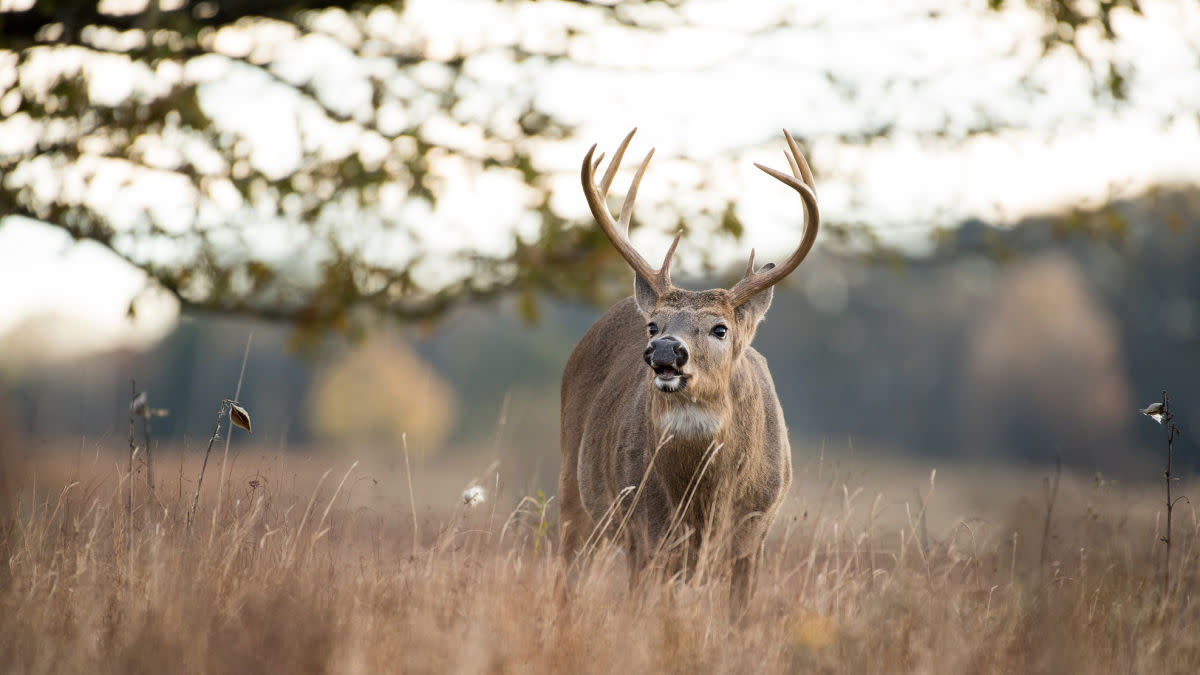

The first time I rattled in a buck I was 13 years old and riding in the back of my mom’s minivan. After watching countless big bucks get rattled in to their demise on Saturday morning hunting shows, I figured I’d give it a shot myself. While I was cracking my new rattling bag together driving home from Gander Mountain, a young buck ran into the middle of the road and promptly got T-boned. I counted it as a success.
Since then, I’ve learned rattling isn’t quite as easy as it appeared that day in Grand Rapids, but itcanbe a powerful strategy if it’s used at the right time, in the right place, in the right way.
The right time to rattle depends on two things: where you’re hunting and time of year. From my experience, and through conversations with whitetail experts, rattling success varies widely by location. If you hunt in an area with high numbers of hunters and relatively low numbers of mature bucks, rattling typically won’t work. But if you hunt in an area with low hunting pressure and many mature bucks, you can expect the opposite. For this reason, I’d approach rattling differently in Michigan (high pressure, few mature bucks) than I would in Iowa (low pressure, many mature bucks).
In a state like Michigan I rattle infrequently, if ever. And if I do it, I’ll be waiting until thepeak of rutting activitywhen the most real buck fights are occurring. In a state like Iowa, I’d start rattling earlier—maybe mid-October—and I’d use the tactic more often, as much as two to three times per hunt.Jesse Coots, an experienced whitetail bowhunter and recent Wired To Hunt Podcast guest, likes to start rattling early as well.
“I’ve killed numerous great bucks early by imitating the sparring that you hear early season,” Jesse explained. “I do it just enough to catch their attention and then I stop. Very light tickling is the ticket in my opinion.”
In Michigan or similar locations, I typically only rattle if I see a mature buck out of range—the type of deer most likely to come in for a fight. At this point I start to rattle and watch the buck’s body language. If he immediately comes my way, I’ll stop rattling and let him approach. If he runs off the other direction, I’ll stop rattling and let him clear out. If he pins his ears back and puffs up, I’ll try a little more rattling.
It’s important to note that bucks will often approach a call from downwind, putting you at risk ofbeing winded. Don’t rattle at a buck if he’s downwind unless you have some kind of natural barrier (a river, downed trees, etc.) that will stop his approach.
In a low-pressure area like Iowa, I rattle the same way to visible bucks. But I also add in some “blind calling,” s a few rattling sessions throughout the morning or evening performed without already having seen a deer. I do this to lure unseen bucks into the area.
When I’m rattling, I like to crash my antlers (or synthetic antler bag sticks) together for 20 to 30 seconds, creating varying volumes and types of noise. I’ll make big cracks and then grind them like two bucks are locked together. I’ll vary my speed and intensity up and down, imitating the natural rise and fall of a real buck fight. It’s important to match your rattling intensity to scenarios likely in your area, explains Coots.
“If you’re banging huge antlers together in a place where there aren’t a lot of big bucks, you’re going to spook things,” he said. “They know something isn’t right.”
No matter what kind of rattling I’m doing my head is always on a swivel, constantly scanning my surroundings for an approaching buck. A buck can come tearing right in, but they can also take their sweet time. Stay ready, even 10 or 20 minutes after you’ve blind called.
With the rut approaching across the country, hunters are increasingly taking their rattling antlers into the woods, and for good reason. “Rattling is extremely effective,” Coots said. “However, if done poorly, it will ruin your hunt and area. Just be smart about it.”
Feature image via Matt Hansen.
Stay in the loop withThe Wired to Hunt Newsletter
Shop
Related
Hunt
How to Rattle in a Buck on Public Land

Hunt
How to Reap a Whitetail Buck