Whale Hunts to Resume in Northwest Washington
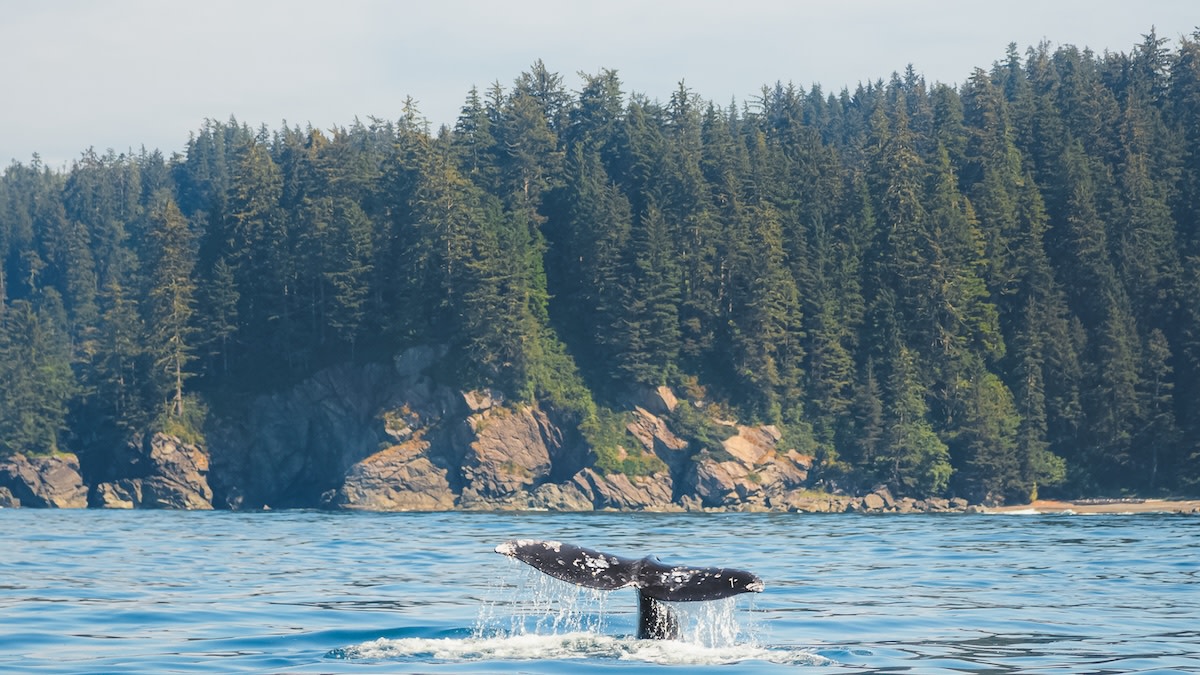

On June 13, NOAA Fisheries announced a rule allowing the Makah Tribe in Neah Bay, Washington, to resume hunting Eastern North Pacific gray whales. The tribe willingly stopped hunting the whales off the Olympic coast in the 1920s, when the population crashed due to high-seas, international harvest.
The hunt once again took the spotlight in 1999, when a one-time harvest triggered a series of protests and violent threats against the tribe. (The New York Timesreported that protesters in Seattle had signs reading, “Save a whale, kill a Makah.”) It also commenced a series of lawsuits and legal proceedings over the tribe’s right to hunt whales—some of which have taken nearly two decades to settle.
In the interim, the tribe has abided by federal regulations, refraining from hunting any more whales, all the while contending that their right to hunt the animals is clearly protected under theNeah Bay Treaty of 1855. Indeed, section four of the treaty reads: “The right of taking fish and of whaling or sealing at usual and accustomed grounds and stations is further secured to said Indians.”
In 2005, the tribe filed fora waiver to the Marine Mammal Protection Act, which prohibits the take of whales. The waiver took seven years of hearings, revisions, and public comment periods to finally be transmitted to NOAA Fisheries for approval in September 2021. It took NOAA two and a half years to approve the waiver, and the new rule is a direct result of their decision.
Under the new regulations, the Makah Tribe can hunt up to 25 whales over the next decade using traditional methods involving wooden canoes and harpoons. However, after the first harpoon is thrown, they can use motorized chase boats and rifles.
“The measures adopted honor the Makah Tribe's treaty rights and their cultural whaling tradition that dates back well over 1,000 years, and is fundamental to their identity and heritage,” Janet Coit, an administrator for NOAA Fisheries, said when the rule was announced.
But the tribe hasn’t quite cut through all the red tape yet. They still have to go through the permitting process, administered by the National Marine Fisheries Service, and it’s unclear how long that will take. They will also have to reapply for permits every three years, which is an additional legal burden.
Regardless, the tribe is excited that it could be hunting whales by this coming spring. “Everybody here is involved in one way or another. We’ve never lost sight of the importance of whales and whale hunting,” Janine Ledford, executive director of the Makah Cultural and Research Center in Neah Bay,told NPR. “We weren’t hunting for roughly 80 years, but that didn’t mean that our community—that our tribe—forgot how important whales are to us.”
Once the permits are approved, Ledfords says it will take several months for the tribe to prepare for a hunt. While they will use canoes and harpoons, the hunts will likely look different than historical hunts—which were harrowing.
The Makah Tribe’s websitedescribes what a hunt used to look like in detail. A paddle team would silently pull up alongside a whale, matching its speed. A harpooner would aim the first spear at the shoulder blades, which could disable the animal’s flippers. Then, the team would quickly paddle backward to distance themselves from the angry whale. To slow the animal down, the hunters would tie inflated seal-bladder balloons to the harpoon line. Once the whale started to tire, they would sneak in again and deliver a fatal blow with a lance. Before dragging the whale back to shore (sometimes a distance of over ten miles), a diver would hop in the water and sew the animal’s mouth shut so the body wouldn’t fill with water and sink. In all, it was risky business, but served as a pillar of the tribe’s culture for thousands of years.
At the end of the day, the new hunts will help restore part of this culture to the Makah people. “We’re going to do this, and we’re going to do it responsibly… in our manner, in our Makah way,” tribal chairman TJ Greene told a local media channel. If all goes well, this spring, there might be wooden canoes plying the waters of northwest Washington for whales.
Shop
Sign In or Create a Free Account
Related

Wildlife Management
Spring Bear Hunts Cancelled in Washington State


Wildlife Management
Will Washington State Hunters Reclaim Their Spring Bear Season?
